TL;DR
A solar backup power system pairs solar panels with a battery and controls that can safely disconnect from the grid and power selected circuits during an outage. Its usefulness depends on both battery energy, measured in kWh, and inverter output, measured in kW, plus whether the system can recharge from solar while islanded. Size it around essential loads and realistic outage conditions, not a generic promise of whole-home power.
A sunny roof can still leave your refrigerator dark during a blackout. Most standard grid-tied solar systems shut down when the utility grid fails, so workers are protected from electricity feeding back onto power lines. To keep your home running, the equipment needs a safe way to disconnect and form its own local supply.

Get backup power and energy gear delivered free with Prime
- Fast, free delivery on millions of items
- Prime Video, Amazon Music and more included
- Member-only deals all year
This guide explains what a solar backup power system includes, why battery size alone doesn’t tell you what it can run, and how to estimate the coverage you need. You’ll also get practical questions to ask an installer, from whether your panels can recharge the battery in an outage to which circuits the system will actually support.
Standard grid-tied solar usually shuts down in an outage unless approved islanding equipment can safely disconnect and supply local power.
Battery capacity in kWh indicates stored energy; inverter output in kW indicates the load it can serve at once, including motor-start surges.
Choose backed-up circuits from a written list of essential loads, and check whether pumps, air conditioning, or heating can start and run.
Ask whether the system can recharge from solar during a blackout and how cloudy weather affects that ability.
Compare installed quotes by usable capacity, continuous and surge output, outage behavior, warranty, permits, and local incentives.
What a solar backup system does when the grid goes dark
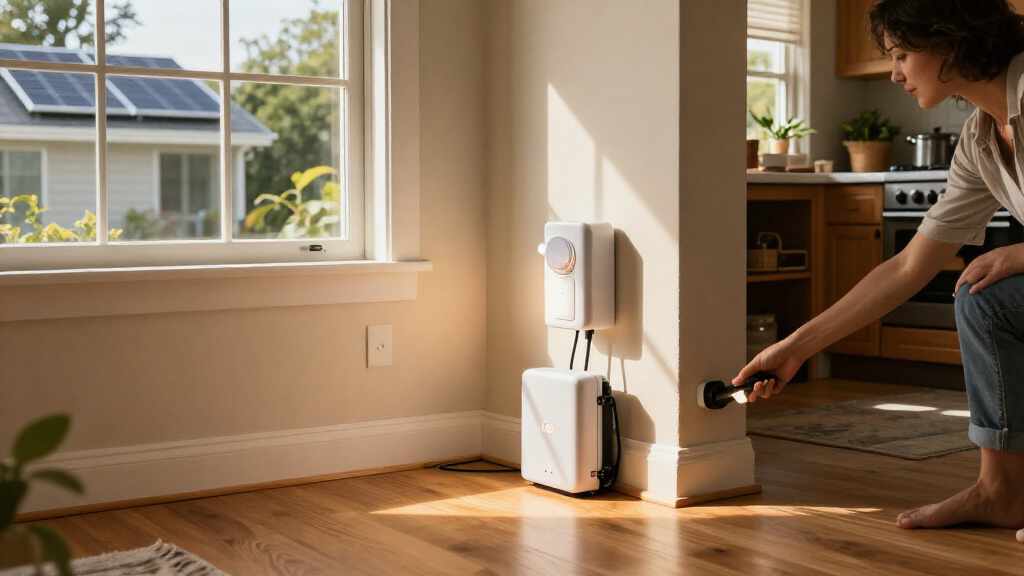
A solar backup power system combines panels, a battery, an inverter, and controls that manage electricity to keep selected circuits powered when the utility supply fails. The controls safely disconnect your home from the grid, a process called islanding, so your local system can supply power without sending electricity onto utility lines. That safety step explains why ordinary rooftop solar often switches off in a blackout: a grid-tied inverter normally follows the utility’s voltage and frequency, and without the grid it has no safe reference for operating.
Think of the grid as a broad road network and islanding as closing the gate to your own driveway before using a private generator. Once isolated, a compatible inverter can use battery energy and, if the system supports it, solar production. The isolation equipment is central to the system’s purpose: it protects utility workers and creates a stable local electrical supply for your home. For example, a family might back up its refrigerator, a few lights, internet router, and a medical device while leaving the oven and clothes dryer off.
Equipment varies. Some products integrate the inverter, battery, monitoring, and backup controls; other installations combine separate components. The labels “grid-tied,” “hybrid,” and “off-grid” describe different designs, but the label alone doesn’t prove what happens during an outage. The practical distinction is whether the equipment can disconnect, establish a local supply, and manage the selected loads together. Ask the installer to show which circuits receive power and explain the switchover behavior, including whether there is a brief interruption.
According to the system design, solar may recharge the battery while the home is islanded, or it may not. A large panel array does not guarantee blackout power if the inverter cannot operate independently of the grid. That matters because a battery’s stored energy is finite: without solar recharge, each hour of use draws down the same reserve. Verify the actual outage mode, not just the panel wattage, so you know whether the system can sustain a long outage or mainly bridge a shorter one.
Products Worth Considering

Dyson Cyclone V10 Origin Cordless Vacuum
Google Nest Smart Thermostat, Programmable Wi-Fi, Charcoal

Sonos Arc Ultra Dolby Atmos Soundbar, Black
As an affiliate, we earn on qualifying purchases.
Match battery energy and inverter power to the appliances you need
Solar backup power systems have two separate limits: battery capacity tells you how much energy is stored, while inverter power tells you how much load the system can serve at one time. Battery capacity is measured in kilowatt-hours (kWh); inverter output is measured in kilowatts (kW). The distinction matters because energy answers “how long?” while power answers “what can run together?” A system can have enough energy for many hours of modest use but still be unable to supply a high-demand appliance.
Imagine your battery has enough stored energy to run a refrigerator and lights overnight, but its inverter cannot handle the brief starting surge from a well pump. The stored energy may be there, yet the pump still won’t start. Motors in refrigerators, pumps, air conditioners, and some tools can draw a sharp burst of power at startup, like a runner pushing hard off the blocks. That surge can exceed the motor’s normal running demand, so a quote that lists only continuous output may leave out the limit that determines whether an essential appliance works at all.
Make a simple load list with your installer. A refrigerator, router, several LED lights, and phone chargers may fit a modest essential-circuit plan, while electric heating, a range, or central air can change the design substantially. The exact requirements depend on appliance ratings, how devices start, and whether you run them together. This is where household choices affect cost: backing up fewer circuits can keep the inverter and battery system smaller, while keeping large loads available may require more equipment or rules about which appliances can operate at the same time.
Ask for the system’s continuous output and its short-term surge rating, then compare those figures with the starting demands of your largest backed-up motor. Also check how long the inverter can sustain its surge rating, since a brief peak and a longer startup are different demands. If you want a sump pump to protect a basement, name it explicitly. A backup plan that keeps the lamps glowing but cannot start the pump misses the point—and may create confidence in coverage the system cannot actually provide.
Choose essential-circuit or whole-home coverage with eyes open
Essential-circuit backup focuses a smaller system on priority appliances, while whole-home backup aims to support more of the house and usually needs greater output, storage, and electrical work. The right choice depends on your outage risks, household loads, budget, and willingness to conserve power. Neither label guarantees a specific runtime: coverage describes which circuits can be energized, while runtime depends on how much energy those circuits use and whether solar can recharge the battery.
| Plan | Typical focus | Tradeoff to check |
|---|---|---|
| Essential circuits | Refrigerator, lights, internet, selected outlets, medical equipment | You may need to switch off or avoid non-backed-up circuits |
| Whole-home backup | More circuits, potentially including larger appliances | Peak demand, motor surges, panel limits, and battery count can raise requirements |
Picture a winter outage in a home with an electric furnace. A small battery may keep the router, fridge, and bedside lights on, but it may not run the furnace for long. In a mild climate, that same setup could feel generous; where freezing temperatures threaten pipes, heat may be the priority and needs its own honest load calculation. The choice is not just how many circuits to include: it is whether the system can meet the household’s most consequential needs through the likely duration of an outage.
Whole-home capability can require multiple batteries, a higher-output inverter, or panel upgrades. Ask whether “whole home” means every circuit can operate at once or merely that the system can energize the panel while you manage heavy loads. If the latter, the system’s usable coverage depends on someone remembering to limit demand, and that can be difficult during a stressful outage. A power system combines hardware and operating choices, so ask for the expected limits in plain terms and make sure they fit how your household actually uses electricity.
Estimate outage runtime using your real daily habits
You can estimate solar backup runtime by comparing usable battery energy with the energy your essential loads consume, then adjusting for charging, weather, and system settings. Any “days of backup” claim depends on assumptions about battery charge, household use, solar production, and outage conditions. A single number without those assumptions is a sales headline, not a household plan. The estimate is useful because it exposes tradeoffs: conserving energy stretches the battery, while comfort loads such as heating or cooking can use the reserve quickly.
- List essential devices and note their wattage or energy use from labels, manuals, or a plug-in meter where appropriate. This identifies which loads dominate use and may deserve a different backup choice.
- Estimate hours of use during an outage. For instance, a router might run all day while a kettle runs only briefly. The same appliance can have very different energy impact depending on how long it runs.
- Ask for usable battery capacity, not just the battery’s headline capacity, and confirm any reserve kept by the system. Some stored energy may be unavailable to protect battery life or maintain a backup reserve.
- Check solar recharge behavior during an outage and ask how clouds or shade affect charging. Recharging can extend runtime, but it should not be treated as guaranteed if production is weather-dependent.
- Plan a low-power mode for a longer outage, such as delaying laundry and limiting hot-water use. Decide in advance what you would stop using so conservation does not depend on guesswork.
For a concrete scenario, a household might keep a fridge, a few LED lights, and internet online, then charge phones during daylight. If rain covers the roof for two days, the battery may refill slowly or not enough to replace all the energy used. If sunshine returns, the system could recover some charge—provided the inverter and controls support islanded solar operation. The household may need to prioritize refrigeration and communications over discretionary loads until the battery has recovered.
Runtime is a moving target, like a car’s remaining range in traffic: load and conditions change the result. Ask the installer for estimates under a few clear scenarios, including nighttime, cloudy weather, and conservation, and request the assumptions behind each estimate. Those scenarios help distinguish a system that can cover an overnight outage from one that can support essential needs through several low-sun days.
Check solar recharge, compatibility, and safety before installation
Before buying, confirm that the panels, inverter, battery, electrical panel, and backup controls work together in the exact configuration proposed. Existing solar equipment may need added hardware, a replacement inverter, or a different wiring arrangement to provide backup. Ask for a written explanation of what will happen when grid power drops and how solar production resumes. Compatibility matters because each component has to coordinate during the transition; a mismatch can mean the panels produce power in normal conditions but cannot safely support the home when the grid is down.
Suppose you already have rooftop panels and want to add a battery. The installer should identify the inverter model and explain whether it can operate with the new battery during an outage. A system can reduce grid use during ordinary evenings yet still fail to provide backup if it lacks approved islanding controls. Ask whether your existing panels will keep producing during an outage, whether they can charge the battery at the same time as serving loads, and what happens when the battery is full or solar output changes quickly.
Battery chemistry and product features also vary. Lithium iron phosphate (LFP) is common in stationary storage because of its cycle life and thermal characteristics, but the right product depends on cost, performance, certification, installation conditions, and warranty terms. Modular batteries can let you add capacity later, though compatibility and labor costs may limit that flexibility. A product’s chemistry alone does not establish how much energy is usable, how much power it can deliver, or what service the warranty covers, so compare those details against the backup plan.
Have a licensed electrical professional handle the design and installation, follow local electrical codes and permit requirements, and follow the manufacturer’s instructions for ventilation or thermal management, water protection, and physical clearances. Don’t open energized equipment or improvise battery wiring. Ask who handles permits, inspections, commissioning, and service if the system reports a fault. These steps affect more than paperwork: commissioning confirms the controls respond as designed, while clear service responsibility helps resolve problems when the backup system is needed.
Compare the full value, not just the backup promise
A solar backup system can provide outage resilience and may also help shift grid use away from expensive hours, but those are separate benefits with separate economics. A battery that reduces electricity purchases at peak rates does not automatically provide long-duration backup. Likewise, a powerful solar array does not guarantee reliable backup if it cannot operate independently from the grid. Evaluating these benefits separately helps prevent a bill-savings estimate from obscuring whether the system meets your outage needs.
In a region with time-of-use pricing, controls might charge a battery when electricity costs less and discharge it during pricier evening hours. Another household may value quiet backup during frequent storms more than bill savings. In both cases, compare complete installed quotes that spell out usable storage, inverter output, backed-up circuits, outage recharge, warranty, and any panel work. A system optimized for daily cycling may also need a protected reserve for outages, so ask how the controls divide stored energy between savings and backup.
Incentives, export compensation, utility rules, and interconnection requirements change by location and over time. Check current local sources before treating a rebate or tax benefit as part of your payback calculation. A solar backup system may also pair with a generator, but fuel access, noise, maintenance, and operating cost affect that choice. A generator can provide another source of energy during extended low-sun conditions, but it adds equipment and operating obligations; compare that tradeoff with buying more battery capacity.
Vehicle-to-home power is another option in some setups, yet it depends on the vehicle, charger, local rules, and system integration; it is not universal. Ask vendors to separate confirmed functions from future-ready claims. A clear quote lets you compare what you can use today rather than paying for a promise whose availability depends on another product or approval.
Frequently Asked Questions
Will my solar panels work during a power outage?
Usually, a standard grid-tied solar system shuts off when the grid fails. It needs approved equipment that can safely disconnect from the utility and form a local supply before it can power backup circuits.
Do I need a battery for solar backup?
Most home solar backup systems use a battery to store energy and supply power when sunlight is low or unavailable. Other backup sources, such as a generator, can be part of a system, but the design and controls differ.
How long will a solar battery last in a blackout?
Runtime depends on usable battery capacity, starting charge, the appliances you run, solar recharging, and weather. Ask for estimates based on your essential loads under nighttime and cloudy-day conditions.
Can solar panels recharge the battery during an outage?
Many systems can recharge from panels while disconnected from the grid, but not all. Confirm that the inverter and controls support islanded solar operation and ask how the system behaves when clouds limit production.
Can a solar backup system power my whole house?
Possibly, but whole-home backup depends on peak household demand, inverter output, battery storage, motor-start surges, and the electrical setup. Large heating and cooling loads may need additional equipment or a plan to manage which appliances run together.
Can I add a battery to my existing solar panels?
Often, but compatibility depends on your existing inverter and solar equipment. An installer can tell you whether you need additional backup controls, a new inverter, or electrical panel changes.
Conclusion
Plan your backup around the appliances that protect your household, then match both battery energy and inverter power to those loads. Ask an installer to show, in writing, which circuits will work, how motor surges are handled, and whether panels can recharge the battery during an outage.
When the neighborhood goes quiet, the best system is the one that keeps your essentials humming without guesswork.