
TL;DR

Get backup power and energy gear delivered free with Prime
- Fast, free delivery on millions of items
- Prime Video, Amazon Music and more included
- Member-only deals all year
Endurance Energy says its Adélie test unit generated about 60 watt-hours of electricity from a natural hydrothermal vent near Oregon’s Axial Seamount on Sept. 27. The run lasted about 29 seconds, and the startup says it is redesigning components before another test planned for this winter.
Endurance Energy says its Adélie test unit produced about 60 watt-hours of electricity from a natural hydrothermal vent off Oregon on Sept. 27, a brief demonstration of an underwater geothermal system. The turbine ran for about 29 seconds; the company described the test as a technical milestone, but the short run and equipment failures leave its ability to provide sustained, commercial power unproven.
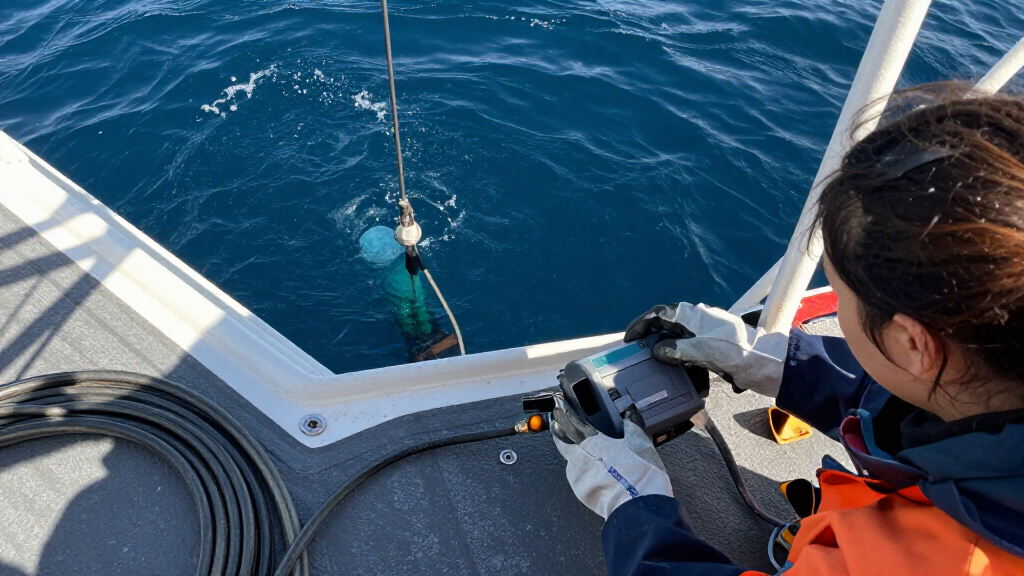
The Seattle-based startup deployed the three-ton Adélie system during a three-week expedition in September aboard the Ocean Guardian research vessel. The vessel traveled roughly 300 miles west of Oregon to Axial Seamount, an active submarine volcano on the Juan de Fuca Ridge. The equipment operated about a mile below the ocean surface.
Endurance first drilled a relatively shallow well into a vent field, but the unit did not generate power from that well. The team then moved Adélie to a nearby natural hydrothermal vent. Its organic Rankine cycle system uses heat from hot, mineral-rich fluid to drive a turbine, an approach also used in land-based geothermal projects.
According to the company, Adélie generated more power than it consumed for nearly nine seconds, sending surplus electricity to its battery backup. The run ended when the battery’s overcurrent protection activated. A power cable failed soon afterward, ending the dive. Endurance received temperature and flow-rate data in real time and operated the unit remotely through an existing fiber-optic cable network, the company said.
A Brief Test, Not a Power Plant
The demonstration offers evidence that a geothermal turbine can be connected to a deep-sea vent and produce electricity, but it does not show that the approach can deliver dependable power. The measured output was small and the operating period brief; the test also ended amid equipment problems. The result is best understood as an early engineering demonstration, not a source of electricity ready for customers.
That distinction matters because the proposed use cases involve a technology that would have to work in high-pressure, corrosive seawater and deliver power across difficult distances. Endurance has raised $63 million and is working with Tonga on a proposed 2-megawatt project intended to reduce the island nation’s reliance on imported diesel. The test did not establish that such a project is technically or economically viable.
Geologist Emily Pope, a senior fellow at the Center for Climate and Energy Solutions, told Canary Media that offshore geothermal faces substantial costs and engineering challenges. She also said islands that might appear suitable for the technology could meet energy needs more cheaply with solar power and batteries. Her assessment highlights the commercial question still facing the company: whether the difficult marine setting offers enough value to justify its added complexity.
portable underwater geothermal power generator
As an affiliate, we earn on qualifying purchases.
As an affiliate, we earn on qualifying purchases.
Why Endurance Went Offshore
Founder and CEO Andrew Redd, a former SpaceX engineer, launched Endurance in January 2025 to develop geothermal power in volcanically active areas where tectonic plates spread apart. Most next-generation geothermal efforts are focused on land, while the company is pursuing heat sources beneath the ocean.
Earlier offshore geothermal work has largely centered on research. Canary Media reported that a team of Chinese scientists produced a few watts of sustained power from a hydrothermal vent in 2016. A government-backed project in southwest Iceland drilled near the Mid-Atlantic Ridge, but corrosive seawater created engineering difficulties. Endurance says it is designing equipment from scratch for deep-sea pressure and corrosion, including using substantial amounts of titanium.
Axial Seamount is a site of ongoing oceanographic research involving the University of Washington and the National Science Foundation’s Ocean Observatories Initiative. Redd said the area offered a setting where researchers could monitor environmental conditions. The expedition used a modified geotechnical drill of the kind used to collect subsea rock samples, then a submarine robot to connect the power unit to the well.
“We follow the adage ‘make it exist, then make it good.’ Adélie made it exist, and now we know it’s possible.”
— Andrew Redd, Endurance Energy founder and CEO
Cost, Reliability and Scale
The test does not show how long a redesigned Adélie system can operate, how much electricity a future version could produce, or whether it can run reliably under deep-sea conditions. The company has not established the cost of generating and delivering power from such a site, or whether the proposed Tonga project can proceed on a commercial basis. The available account also does not identify the failed cable’s cause or give a full breakdown of the test’s energy use across the entire operating period.
Endurance’s account of the output and technical milestones comes from the company; independent confirmation of the results is not provided in the report. The demonstration also took place at a natural vent after the initial drilled well did not generate power, so it remains unclear how well the equipment will perform in the configuration the company intends to use at scale.
Winter Retest and Larger System
Redd told Canary Media that Endurance is redesigning some core Adélie components and plans to redeploy the refurbished unit this winter, aiming for higher output and a longer operating period. That test should help show whether the company can address the battery protection and cable problems encountered during the September run.
Separately, Endurance is developing a larger system that Redd said might begin generating electricity in 2027. The timeline is the company’s stated goal, not a confirmed commissioning date. Further demonstrations will need to establish sustained output, safe and reliable operation, and a credible cost case before the technology’s commercial prospects can be judged.
Key Questions
How much electricity did the seafloor test produce?
Endurance Energy said Adélie generated about 60 watt-hours over roughly 29 seconds at a natural hydrothermal vent off Oregon. The figure describes the test run, not the expected output of a commercial plant.
Did the system produce power from a drilled geothermal well?
No. The company said Adélie did not generate power from the well it drilled. The team moved the unit to a nearby natural vent, where the turbine produced electricity.
Why did the demonstration end?
According to Endurance, the battery’s overcurrent protection activated after the brief run. A power cable failed soon afterward, and the dive ended.
When will Endurance test the system again?
The company plans to redeploy a refurbished Adélie unit this winter, aiming to run it longer and generate more power. Endurance has not yet demonstrated that a future test will meet those goals.
Does the test prove offshore geothermal is commercially viable?
No. It shows that the system briefly generated electricity from a seafloor vent, but it does not establish sustained performance, commercial-scale output, or competitive costs. An independent assessment of the test results was not included in the report.
Source: rss
Fall Picks
fall essentials
As an affiliate, we earn on qualifying purchases.