
TL;DR
Michigan awarded nearly $1.9 million to five organizations to study ways to reduce emissions from energy-intensive operations. The grants fund planning and engineering work—not construction—and are intended to clarify barriers and inform future state support.
Michigan has awarded nearly $1.9 million to five organizations to study ways to reduce emissions from energy-intensive operations, including cooling systems at the Detroit Zoo and heat use at Bell’s Brewery. The grants pay for planning and engineering work to identify feasible changes, rather than funding construction, and are intended to help the state understand barriers to industrial decarbonization.

Get backup power and energy gear delivered free with Prime
- Fast, free delivery on millions of items
- Prime Video, Amazon Music and more included
- Member-only deals all year
The Detroit Zoological Society received $260,000 to develop a campus-wide model of options for cutting emissions and distributing energy more efficiently. The zoo’s polar bear and penguin exhibits require intensive cooling. Andy McDowell, the society’s director of sustainability and systems planning, said one possibility is to use large heat pumps to move heat from those exhibits to nearby buildings that need it, such as a chimpanzee habitat. Geothermal systems are another option under consideration, though their placement would need to account for animals that dig.
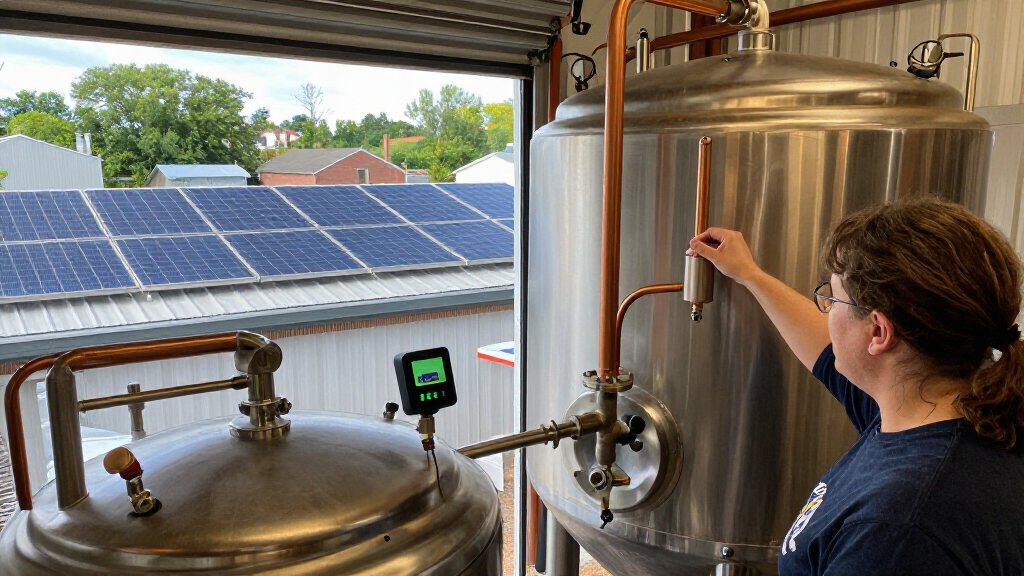
Bell’s Brewery received $350,000 for engineering design work at its Comstock facility. The study will examine ways to reduce thermal energy use, recover waste heat and electrify systems without raising operating costs. Breweries commonly use gas-fired boilers to produce steam for brewing and cleaning. Bell’s parent company, New Belgium Brewing, says reducing heat-related emissions is needed to meet its target of cutting direct emissions 55 percent by 2030 from a 2019 baseline.
The other grant recipients are Ford Motor’s Wayne assembly plant, the Michigan Green Building Collaborative in Grand Rapids, and Michigan Technological University, which will work with cement-maker Amrize on low-carbon material production in Monroe County. The project studies are due by August 2027. The state also helped launch the Michigan Industrial Clean Innovation Partnership, a public-private coalition meant to connect grant recipients with agencies, researchers, technology providers and potential investors.
Studies Target Industrial Emissions
The awards focus on facilities where cutting emissions can require major changes to equipment and energy systems. Industrial users often need high-temperature heat, and converting those processes can be technically complex. The source report also identifies a cost challenge: natural gas can be significantly cheaper than industrial electricity, which can make electrification harder to justify financially.
For the organizations receiving grants, the immediate value is the chance to assess options before committing to major capital spending. The studies could also give Michigan information about which technical and financial barriers its future programs may need to address. But the awards alone do not establish that any proposed system will be built, affordable or capable of achieving a particular emissions reduction.
Products Worth Considering

LG 77-Inch OLED evo C5 Series Smart TV (2025)

Levoit Vital Pet Pro Smart Air Purifier

Ring Wired Doorbell Plus (2nd Gen) and Chime Plus Bundle, Nickel Silver and White
As an affiliate, we earn on qualifying purchases.
Michigan’s 2050 Climate Target
The grant initiative is one of four green-energy programs established under outgoing Gov. Gretchen Whitmer. The state’s stated goal is to become carbon-neutral by 2050. The awards are aimed at industrial applications, a part of the emissions challenge that can be harder to address than adding renewable power or electrifying vehicles because many operations depend on heat and specialized equipment.
The project at Bell’s follows work by New Belgium at its Fort Collins, Colorado, brewery, where the company piloted a steam-producing heat pump made by startup AtmosZero. That experience does not establish whether the technology will suit the Michigan facility; the grant is intended to support further assessment and design at Comstock.
McDowell said the Detroit Zoo wants the study to inform its next campus master plan, ahead of the zoo’s 100th anniversary in 2028. He described the work as a way to consider how the institution can do “more healing than harm” over its next century. The grant allows the zoo to examine a coordinated campus approach that might otherwise have been financially out of reach, he said.
“We wanted to make sure that we were really clear on what the barriers were to decarbonization for a variety of different industrial applications.”
— Alessandra Carreon, chief climate officer for the Michigan Department of Environment, Great Lakes, and Energy
Plans Still Need Feasibility Checks
The grants fund studies, and no construction commitments or resulting emissions cuts were specified in the source report. It remains unclear which technologies the recipients will select, how much any eventual projects would cost, or whether they will proceed after the design stage. The report also does not provide a breakdown of the nearly $1.9 million across all five recipients beyond the amounts for the zoo and Bell’s.
For the Detroit Zoo, the potential heat-pump and geothermal approaches are options under consideration, not approved projects. At Bell’s, engineers still need to determine whether heat recovery and electrification can reduce emissions without increasing operating costs. The outcomes of the studies will depend on technical findings, economics and later investment decisions.
Project Findings Due in 2027
The five recipients are expected to complete their studies by August 2027. The work is intended to produce road maps that organizations can use to decide whether to pursue projects and to give state officials evidence about barriers to industrial decarbonization.
Carreon said the state wants the Michigan Industrial Clean Innovation Partnership to continue beyond the current grant cycle, connecting project teams with public agencies, research organizations, technology providers and potential investors. Whether additional companies join or new funding follows remains unclear. The next concrete milestone is the completion of the funded studies and the recipients’ decisions about whether to move from planning to implementation.
Key Questions
How much did Michigan award?
The state awarded nearly $1.9 million across five projects. The source report lists $260,000 for the Detroit Zoological Society and $350,000 for Bell’s Brewery.
Are the grants paying to install new equipment?
The funding is for studies, modeling and engineering design—not confirmed construction. Recipients will assess options before deciding whether to pursue capital projects.
What will the Detroit Zoo study?
The zoo will model ways to reduce emissions and use energy more efficiently across its campus. Options include moving heat from cold animal exhibits to nearby buildings and examining geothermal systems.
What is Bell’s Brewery investigating?
Bell’s will study ways to reduce thermal energy use, recover waste heat and electrify systems at its Comstock facility while assessing the effect on operating costs.
When are the studies expected to be completed?
The project studies are due by August 2027. The source report does not say when any resulting construction projects might begin.
Source: canarymedia.com