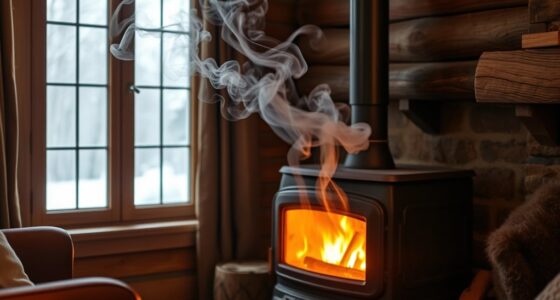
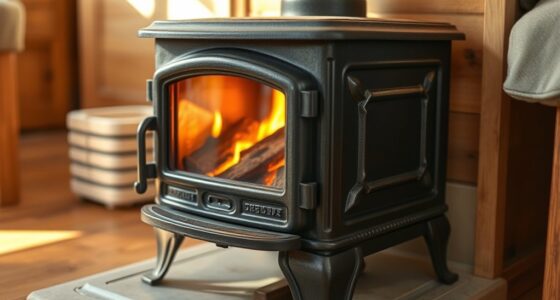
Wood stoves can be more environmentally friendly than fossil fuels when you use them responsibly, as wood is a renewable resource that completes a natural carbon cycle—trees absorb CO2 as they grow and release it when burned. Unlike fossil fuels, which release stored carbon over millions of years, wood’s impact depends on responsible sourcing and proper operation. If you want to understand how to maximize environmental and health benefits, there’s more to explore.
Key Takeaways
- Wood is a renewable resource that completes a natural carbon cycle, unlike fossil fuels which release stored carbon.
- Properly sourced and maintained wood stoves produce fewer emissions, making them more environmentally friendly than fossil fuel systems.
- Burning wood releases pollutants like particulate matter and VOCs, but these can be minimized with good ventilation and high-efficiency stoves.
- Fossil fuels release significant greenhouse gases without natural offsetting, contributing more to climate change.
- Responsible use of wood stoves offers a sustainable alternative that balances energy needs with environmental and indoor air quality considerations.
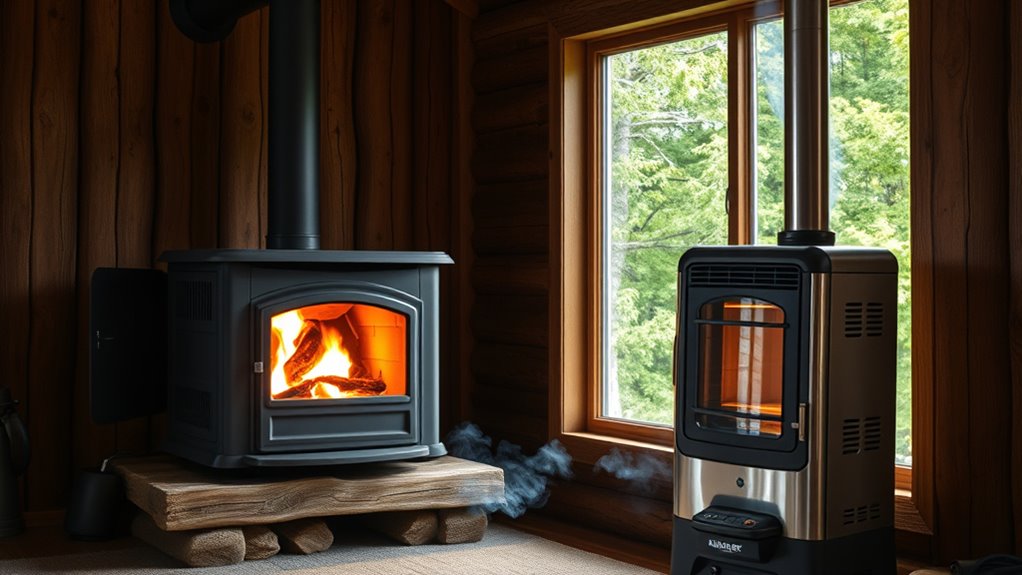
Many homeowners rely on wood stoves as a cost-effective and renewable way to heat their homes, but their use often raises concerns about fossil fuel dependence. While wood is a natural resource that can be replenished, it’s important to recognize how these stoves fit into the broader picture of renewable energy. Unlike fossil fuels, which take millions of years to form and release considerable amounts of greenhouse gases when burned, wood is considered a more sustainable option if sourced responsibly. When you burn wood, you’re fundamentally completing a natural cycle: trees absorb carbon dioxide as they grow, and when you burn the wood, that same CO2 is released back into the atmosphere. This creates a more balanced carbon footprint compared to fossil fuels, which add new carbon emissions to the atmosphere without a natural offset. However, the environmental friendliness of wood stoves isn’t just about carbon; it also depends heavily on how efficiently they operate and how the wood is sourced.
One of the key concerns with wood stoves is indoor air quality. Burning wood releases particulate matter, volatile organic compounds, and other pollutants that can impact your health. If your stove isn’t properly maintained or if you use low-quality or damp wood, these emissions can become notable indoor air pollutants. This can lead to respiratory problems, allergies, or other health issues, especially in poorly ventilated spaces. To ensure your wood stove is as environmentally friendly as possible, you should choose models that meet high efficiency standards and produce fewer emissions. Regular maintenance, including cleaning the chimney and using seasoned wood, can also minimize indoor air pollution and improve indoor air quality. Additionally, employing proper ventilation techniques can significantly reduce indoor pollutant levels. By doing so, you not only reduce health risks but also maximize the renewable energy benefits of your stove.
While wood stoves can be a renewable energy source, their overall environmental footprint depends on responsible sourcing, proper operation, and good indoor air management. When used correctly, they can considerably reduce dependence on fossil fuels and lower greenhouse gas emissions. Still, it’s crucial to balance their use with considerations for indoor air quality to protect your health and the environment. If you’re contemplating switching to a wood stove or want to improve its efficiency, focus on choosing models designed for cleaner combustion and ensure good ventilation. This approach helps you enjoy the benefits of renewable energy while maintaining a healthy indoor environment. Ultimately, a well-maintained wood stove can be a more sustainable heating solution—if you stay mindful of emissions and indoor air quality concerns.
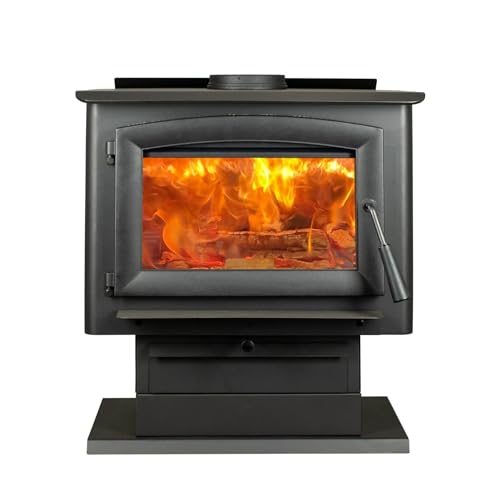
Vogelzang 2,000 Sq. Ft. Wood Stove
89,000 BTUs heats up to 2,000 square feet
As an affiliate, we earn on qualifying purchases.
As an affiliate, we earn on qualifying purchases.
Frequently Asked Questions
Do Wood Stoves Emit More Greenhouse Gases Than Natural Gas?
Wood stoves generally emit more greenhouse gases than natural gas due to higher emission levels during burning. Your carbon footprint increases with wood because it produces more particulate matter and CO2 per unit of heat. While wood is renewable, if not burned efficiently, it can be less environmentally friendly. To minimize emissions, choose well-maintained, modern stoves and burn seasoned wood to reduce your overall environmental impact.
How Sustainable Is Sourcing Wood for Wood Stoves?
Think of sourcing wood as tending a garden; if you practice sustainable harvesting, you’re ensuring the forest thrives for future generations. Your choices matter: renewable sourcing means selecting wood from well-managed forests that prioritize regrowth and conservation. When you prioritize sustainable harvesting, you’re helping maintain ecosystems, reduce deforestation, and promote long-term environmental health, making your wood stove use more eco-friendly and aligned with a greener, more sustainable future.
Can Wood Stoves Operate Efficiently in Urban Areas?
You can operate wood stoves efficiently in urban areas, but you need to take into account local regulations and noise pollution restrictions. Many cities have strict rules on emissions and installation, so make certain your stove meets those standards. Proper installation and maintenance help maximize efficiency and minimize smoke. Keep in mind, urban noise and air quality regulations might limit usage, so check with local authorities to avoid fines and ensure eco-friendly operation.
What Are the Health Impacts of Wood Stove Emissions?
You breathe in the smoky whispers of wood stove emissions, which can cloud your indoor air quality and put your respiratory health at risk. Tiny particles and harmful gases escape into your home, causing irritation, asthma, or even long-term lung issues. When you use a wood stove, you’re inviting pollutants that can turn your cozy space into a battleground for your lungs, so proper ventilation and maintenance are essential.
Are There Government Incentives for Eco-Friendly Heating Options?
Yes, many governments offer tax incentives for eco-friendly heating options like renewable energy systems. You might qualify for rebates or credits if you install solar, heat pumps, or high-efficiency wood stoves that reduce emissions. These incentives aim to encourage sustainable choices, helping you save money while supporting environmental efforts. Be sure to check local programs, as availability and requirements can vary, ensuring you maximize your benefits.

Wood Burning Stove with Heavy-Duty Steel Construction, Heats Up to 900 Sq Ft, FireBrick Lined, Large Viewing Glass & Automatic Air Curtain System
Compatible & Flexible Installation: Standard 15 cm (5.9") chimney flange. Includes 3.5m straight pipe and 1 elbow for…
As an affiliate, we earn on qualifying purchases.
As an affiliate, we earn on qualifying purchases.
Conclusion
Compared to fossil fuels, wood stoves are like a double-edged sword—offering a renewable, locally sourced heat that can reduce your carbon footprint, but also producing emissions if not used properly. Think of them as a balancing act on a tightrope, where sustainable practices tip the scale toward eco-friendliness. When managed responsibly, wood stoves can be a greener choice, helping you stay warm while treading more lightly on the planet.

YRenZ Upgraded Portable Wood Stove for Camping, Compact Tent Stove with Large Firebox, High Airtightness for Outdoor Cooking & Heating
【Upgraded Tent Camping Wood Stove】: Compact yet powerful wood stove for tents and outdoor use, with high airtightness,…
As an affiliate, we earn on qualifying purchases.
As an affiliate, we earn on qualifying purchases.

15" Oak Firewood Logs, with Fire Starters Set, Kiln-Dried Wood for Fire Pit, Seasoned Logs for Fireplace, Campfire, Firewood Bundle, Pizza Oven, Split Wood for Solo Stove, 1200 cub. in., 15-20lb
Premium Quality Firewood: Our kiln-dried firewood logs are perfect for any use, whether you need oak firewood, birch…
As an affiliate, we earn on qualifying purchases.
As an affiliate, we earn on qualifying purchases.