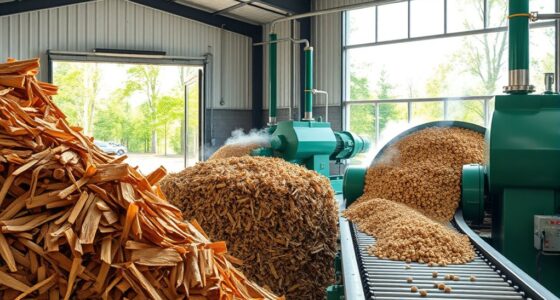

Wood-burning is often called carbon neutral because trees absorb CO₂ as they grow, and releasing that CO₂ when you burn wood creates a renewable cycle. But whether it’s truly neutral depends on how sustainably forests are managed, how quickly the carbon is released, and technological factors. Proper forest practices help maintain this balance. To understand the complexities and true environmental impact, discover what more is involved.

Get backup power and energy gear delivered free with Prime
- Fast, free delivery on millions of items
- Prime Video, Amazon Music and more included
- Member-only deals all year
Key Takeaways
- Burning wood releases CO2 that trees recently absorbed, supporting the idea of carbon neutrality if forest management is sustainable.
- Proper forest stewardship ensures ongoing carbon sequestration, maintaining the balance between emissions and absorption.
- The carbon neutrality of wood depends on the lifecycle, processing, and how quickly new trees grow to replace harvested ones.
- Unsustainable harvesting or poor management can disrupt the carbon cycle, making wood burning less environmentally friendly.
- Comparing wood to fossil fuels highlights its renewable nature, but only with responsible practices and accurate emissions accounting.
As an affiliate, we earn on qualifying purchases.
The Concept of Carbon Neutrality in Wood Burning
Have you ever wondered how burning wood can be considered carbon neutral? It all relates to carbon accounting, which tracks how much CO2 is released and absorbed during a cycle. When you burn wood, the carbon it emits was recently absorbed from the atmosphere, making it part of a renewable energy cycle. As trees grow, they absorb CO2, and when burned, that same CO2 is released back into the atmosphere. Because this process is relatively balanced over time, wood burning can be viewed as carbon neutral. However, for this to hold true, sustainable forest management must ensure that new trees are planted to replace those harvested. This cycle helps maintain a stable carbon balance, reinforcing wood as a renewable energy source in the context of climate-conscious choices. Additionally, implementing sustainable forest management practices is crucial to ensure that the carbon neutrality of wood burning remains intact over the long term. Proper forest stewardship can further enhance the carbon cycle and support environmental health. Ensuring that forest harvesting practices are environmentally responsible is essential for maintaining the carbon neutrality of wood energy.
Forest Management and Its Impact on Carbon Emissions

Effective forest management plays a crucial role in minimizing the carbon emissions associated with wood burning. Proper practices guarantee forests can regenerate and store carbon effectively. By focusing on sustainable harvesting, you prevent overexploitation that reduces forest health and increases emissions. Here are key strategies:
- Promote forest regrowth through replanting and conservation efforts, which absorb CO₂ from the atmosphere.
- Implement sustainable harvesting techniques that balance wood extraction with natural regeneration, maintaining carbon sequestration.
- Protect old-growth forests that act as significant carbon sinks, ensuring long-term climate benefits.
- Incorporate nutritional guidelines to maintain healthy forest ecosystems, supporting their capacity to sequester carbon.
With balanced management, forests remain resilient, supporting carbon storage and reducing emissions linked to wood harvesting and burning. Your role in supporting sustainable practices helps ensure forestry remains an effective tool in the climate change fight.
The Lifecycle of Wood Products and Carbon Release Timing
Sustainable forest management guarantees that wood remains a renewable resource with minimal net carbon emissions, but understanding the lifecycle of wood products is key to maximizing their climate benefits. When you consider biomass harvesting, you’re tapping into the natural carbon cycle, where trees absorb CO₂ during growth and release it upon decomposition or combustion. The timing of carbon release depends on how quickly wood is processed and used. If wood is burned soon after harvesting, carbon re-enters the atmosphere rapidly. However, if wood is stored or used in long-lived products, the carbon remains sequestered longer, delaying its release. Additionally, processing methods influence how quickly carbon is emitted back into the environment. Recognizing these timing differences helps clarify whether wood’s role in carbon cycling supports or hinders climate goals. Proper management guarantees that the lifecycle aligns with carbon neutrality objectives, which often depends on sustainable harvesting practices and wood product longevity.
Comparing Wood-Burning to Fossil Fuels
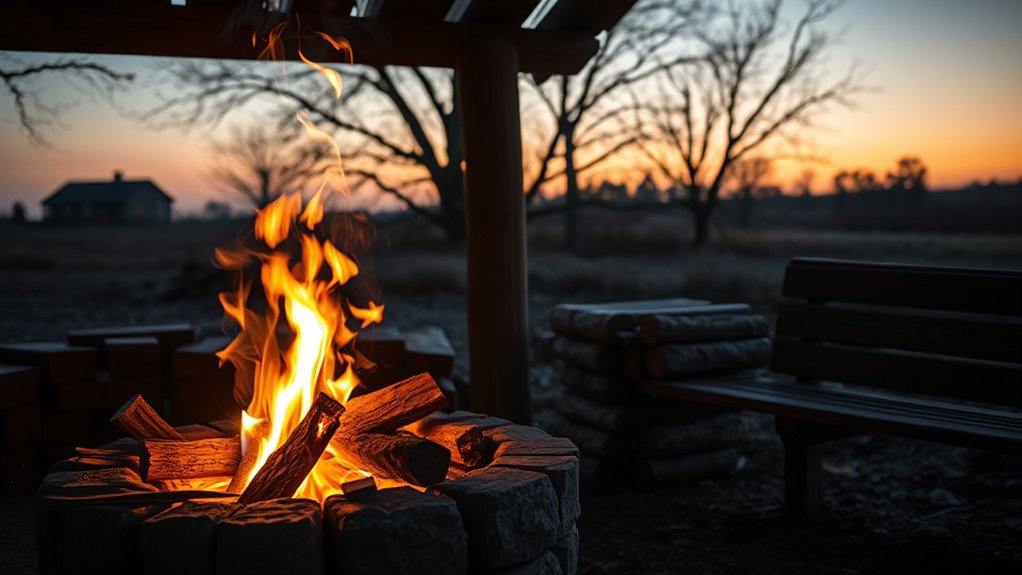
While both wood-burning and fossil fuel combustion release carbon dioxide into the atmosphere, their impacts differ considerably when it comes to carbon neutrality. First, wood is considered renewable since trees absorb CO₂ as they grow, potentially balancing emissions. In contrast, fossil fuels release carbon stored underground for millions of years, adding to atmospheric CO₂ levels. Second, burning wood can affect indoor air quality if not vented properly, while fossil fuels often produce more pollutants. Third, energy efficiency varies: modern wood stoves can be quite efficient, but fossil fuel power plants typically operate at higher efficiencies. Additionally, sustainable harvesting practices are crucial for maintaining the renewable nature of wood resources. Moreover, considering the relationship between energy sources and environmental impact can provide better insights into their sustainability. The technological advancements in combustion technology used in modern systems also influence emissions and overall environmental effects. Overall, wood-burning may seem more sustainable, but factors like indoor air quality and energy efficiency influence its true environmental impact compared to fossil fuels.
Environmental Perspectives and Future Considerations
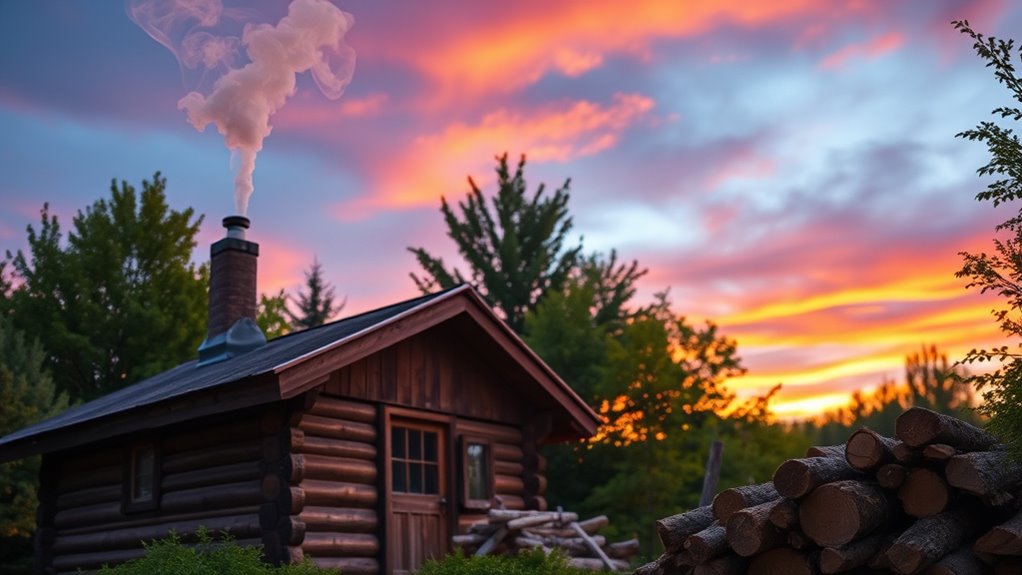
Considering the environmental perspectives surrounding wood-burning, it’s clear that its role in a future energy landscape depends on how we address its limitations and capitalize on its benefits. Many hold renewable misconceptions, assuming wood is always a sustainable option, but this isn’t always true without proper forest management. Additionally, emissions accounting is essential; accurately measuring carbon releases from combustion helps determine true environmental impact. Future considerations involve balancing forest regeneration with demand, implementing cleaner technologies, and refining policies to reflect real emissions. By understanding these factors, you can better assess wood’s potential as a renewable resource. Proper management and transparent emissions tracking will be key to ensuring wood-burning contributes positively to climate goals rather than undermining them.
Frequently Asked Questions
How Does Indoor Wood Burning Affect Local Air Quality?
Indoor wood burning releases indoor emissions that can greatly impact your air quality. When you burn wood inside, it produces particulate matter and pollutants that may circulate indoors, leading to respiratory issues and other health problems. Poor ventilation worsens this effect, increasing your exposure. To protect your air quality, ensure proper ventilation, use efficient stoves, and consider alternative heating options to minimize indoor emissions.
Are There Specific Types of Wood That Are More Sustainable?
You should look for wood that’s sustainably sourced, meaning it comes from responsible wood sourcing practices that minimize environmental impact. Check for sustainability certifications like FSC or PEFC, which guarantee the wood is harvested ethically and sustainably. Using such wood helps reduce deforestation and promotes eco-friendly practices. Choosing certified, sustainably sourced wood makes your burning more environmentally responsible, supporting forest conservation and ensuring that your wood fuel remains sustainable over time.
What Role Do Technological Advancements Play in Reducing Emissions?
Technological advancements play a key role in reducing emissions from wood-burning. You can now use improved emission monitoring systems to track pollutants more accurately, helping you minimize environmental impact. Additionally, exploring alternative fuels alongside wood can further lower carbon emissions. These innovations enable you to burn wood more efficiently, ensuring cleaner combustion and supporting sustainable practices. By staying informed about new tech, you contribute to a greener, more responsible energy future.
How Do Regional Policies Influence Wood-Burning Practices?
You might think regional policy impacts are minor, but they dramatically shape your wood-burning habits through strict regulations or lax enforcement. Wood burning regulations can encourage cleaner practices or, conversely, turn a blind eye, affecting emissions and air quality. So, while you burn wood, remember that regional policies influence how responsibly you do it, ultimately determining whether your fire is a small act of pollution or part of a sustainable solution.
Can Urban Wood Burning Be Environmentally Sustainable?
You can make urban wood burning more sustainable by focusing on urban forestry and responsible wood sourcing. Using locally sourced, sustainably harvested wood decreases transportation emissions and supports local ecosystems. Properly managing urban forestry ensures healthier trees and cleaner air, minimizing environmental impact. By choosing sustainable practices and maintaining strict regulations, you can enjoy wood-burning benefits while protecting urban environments and reducing your carbon footprint.
Conclusion
Ultimately, understanding whether wood-burning is truly carbon neutral involves considering forest health, the timing of carbon release, and how it compares to fossil fuels. You need to weigh sustainable harvesting practices, the lifecycle of wood, and future environmental impacts. By doing so, you can see the delicate balance between using wood as a renewable resource and protecting our planet. You must stay informed, stay mindful, and make conscious choices for a greener, more sustainable future.
Fall Picks
fall essentials
As an affiliate, we earn on qualifying purchases.