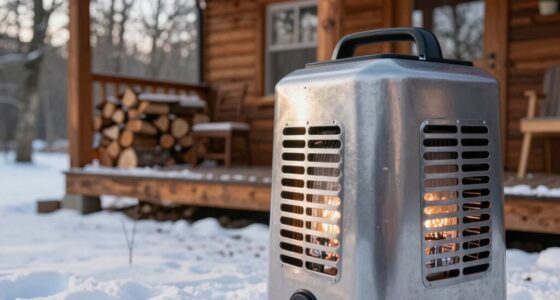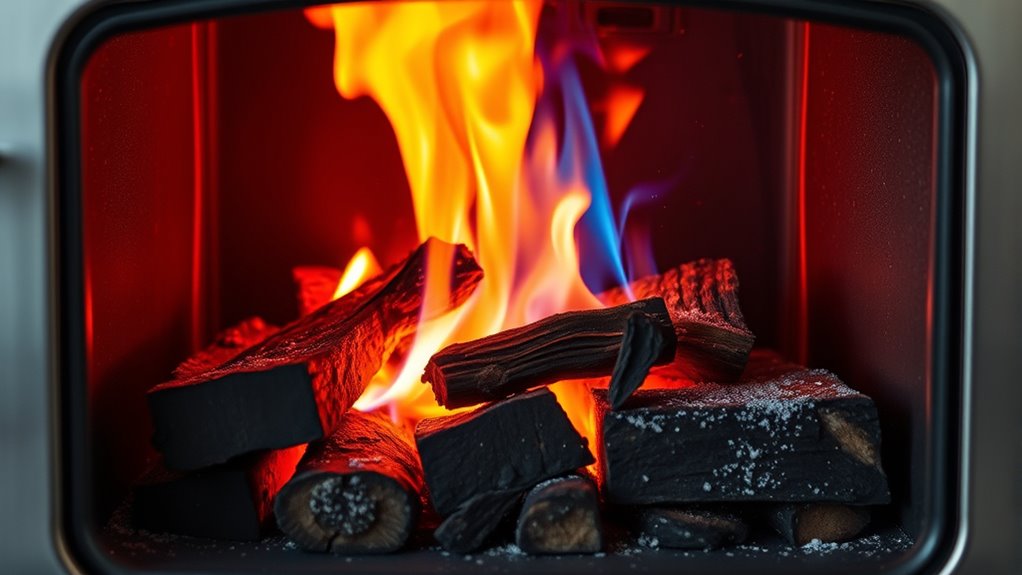

Secondary combustion in wood stoves happens when gases and unburned particles released during the initial burn are ignited, boosting efficiency and cutting emissions. This process uses additional airflow, often through an air wash system, and may involve catalytic converters to help burn gases fully. It results in more heat, less creosote buildup, and cleaner operation. To discover how these systems work together to make your stove more efficient, keep exploring these key features.
Key Takeaways
- Secondary combustion burns gases released during primary fire, increasing stove efficiency and heat output.
- It reduces emissions like smoke and particulate matter, making stove operation cleaner.
- The air wash system directs preheated air over the glass and supplies oxygen for secondary combustion.
- Catalytic converters facilitate burning unburned gases at lower temperatures, improving efficiency and reducing pollutants.
- Together, these systems enhance stove performance, fuel economy, and environmental sustainability.
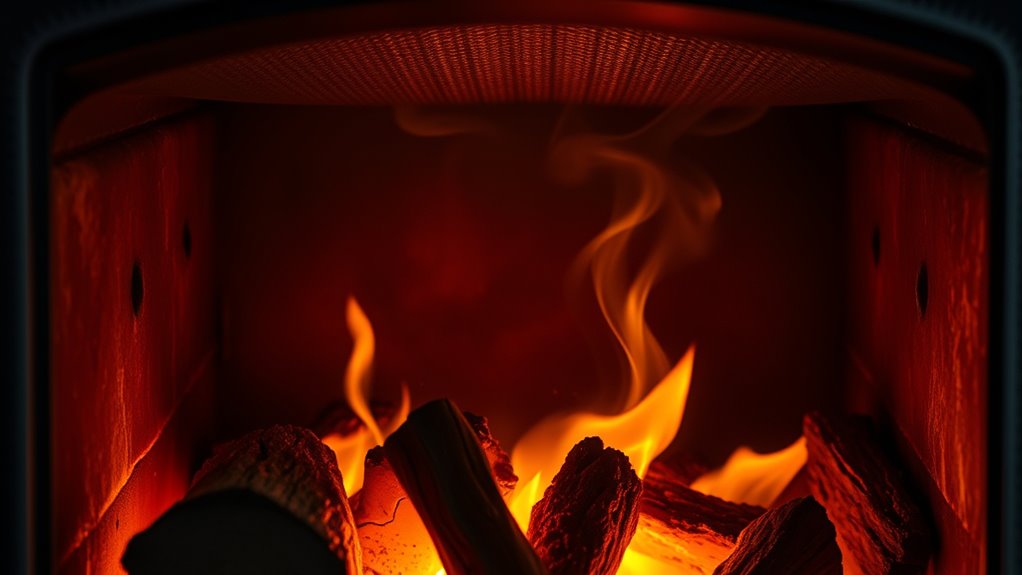
Secondary combustion in wood stoves plays a critical role in improving efficiency and reducing emissions. When you operate a wood stove, the primary fire burns the wood, releasing heat and gases. However, not all of these gases are fully burned during the initial combustion. That’s where secondary combustion comes in—it’s a process designed to ignite and burn off these leftover gases, making your stove more efficient and cleaner.
One key feature that enhances secondary combustion is the air wash system. As you might have seen, this system directs a stream of preheated air over the glass door of your stove, helping to keep it clear and allowing you to monitor the fire easily. But it also plays an essential role in secondary combustion. By controlling the airflow, the air wash ensures that the right amount of oxygen reaches the gases escaping from the primary burn, encouraging their complete combustion. This not only boosts heat output but also minimizes creosote buildup and reduces smoke emissions, making your stove more environmentally friendly.
The air wash system keeps your glass clear and supports secondary combustion for cleaner, more efficient burning.
Another important component that supports secondary combustion is the use of catalytic converters. These devices are installed within the stove’s flue or chimney and contain catalysts—usually made of ceramic or metal—that facilitate the burning of unburned gases at lower temperatures. When the gases pass through the catalytic converter, they react with the catalyst, igniting and burning off before they exit the chimney. This process greatly improves the stove’s efficiency because more heat is extracted from the same amount of wood, and it cuts down on harmful emissions like particulate matter and volatile organic compounds.
You might wonder how these systems work together. The air wash system ensures that enough oxygen is available at the right moment for secondary combustion to occur, while the catalytic converter provides an ideal environment for burning off the residual gases that are difficult to ignite otherwise. By supporting each other, these features allow your wood stove to operate cleaner and more efficiently, translating into more heat with less fuel and fewer pollutants released into the atmosphere. Understanding secondary combustion can help you optimize your stove’s performance and environmental impact.
wood stove secondary combustion kit
As an affiliate, we earn on qualifying purchases.
As an affiliate, we earn on qualifying purchases.
Frequently Asked Questions
How Does Secondary Combustion Improve Stove Efficiency?
Secondary combustion improves stove efficiency by optimizing the combustion process, which burns off remaining gases and particles. This results in more complete fuel burning, producing more heat and less smoke. You benefit from better heat retention, as the stove captures more energy from the same amount of wood. Overall, secondary combustion makes your wood stove run cleaner, hotter, and more efficiently, saving you fuel and reducing emissions.
Can Secondary Combustion Reduce Emissions Significantly?
Yes, secondary combustion can substantially reduce emissions by burning off unburned gases and particles. When you enable secondary combustion in your wood stove, it boosts combustion efficiency, leading to cleaner burning and fewer pollutants released into the environment. This process helps you meet environmental standards and improves air quality. Overall, secondary combustion is a vital feature for minimizing emissions and making your wood stove more eco-friendly.
What Maintenance Is Required for Secondary Combustion Systems?
You should regularly perform wood stove maintenance, including secondary combustion cleaning, to keep the system operating efficiently. Check and clean the secondary air inlets and burn plates to prevent ash buildup, which can hinder proper combustion. Inspect for soot or creosote, and ensure the system’s components are free of debris. Routine maintenance helps improve heat output, reduce emissions, and prolong your stove’s lifespan. Schedule annual professional inspections for maximum performance.
Does Secondary Combustion Affect Stove Lifespan?
Think of secondary combustion as the secret heartbeat of your wood stove; it can actually extend its lifespan. By improving the wood stove design and optimizing the combustion chamber, secondary combustion burns off gases more efficiently, reducing wear and tear. This not only makes your stove last longer but also enhances its performance. So, yes, secondary combustion positively impacts your stove’s durability and keeps it working smoothly for years to come.
Are All Wood Stoves Equipped With Secondary Combustion?
Not all wood stoves come with secondary combustion features. Many modern designs include a dedicated combustion chamber that promotes secondary combustion to improve efficiency and reduce emissions. When shopping for a wood stove, check its design to see if it has this feature. Stoves with secondary combustion typically have vents or air controls that introduce air above the fire, ensuring more complete burning of gases and smoke.
Conclusion
Think of secondary combustion like a skilled chef adding the final touch to a delicious dish. It’s the secret boost that guarantees every bit of wood burns cleanly and efficiently, leaving behind only warmth and ash. When you understand this process, your wood stove becomes a trusty partner in your cozy home, turning raw fuel into radiant comfort just like a master chef turns simple ingredients into a masterpiece. Embrace it, and enjoy the warm, clean glow.