
TL;DR

Get backup power and energy gear delivered free with Prime
- Fast, free delivery on millions of items
- Prime Video, Amazon Music and more included
- Member-only deals all year
A report by The Brattle Group, commissioned by The Pew Charitable Trusts, finds that expanding virtual power plants could reduce the cost of building power infrastructure for data center demand that fails to materialize. In a modeled scenario where U.S. electricity load growth falls 5% short of forecasts through 2030, VPP expansion cuts estimated customer costs from overbuilding by $33 billion between 2030 and 2040.
A report published Thursday by The Brattle Group says expanding virtual power plants could help U.S. utilities limit costly grid construction if data center electricity demand grows less than forecast. In a modeled scenario where load growth is 5% below projections through 2030, greater use of VPPs reduces estimated customer costs from overbuilding by $33 billion between 2030 and 2040.
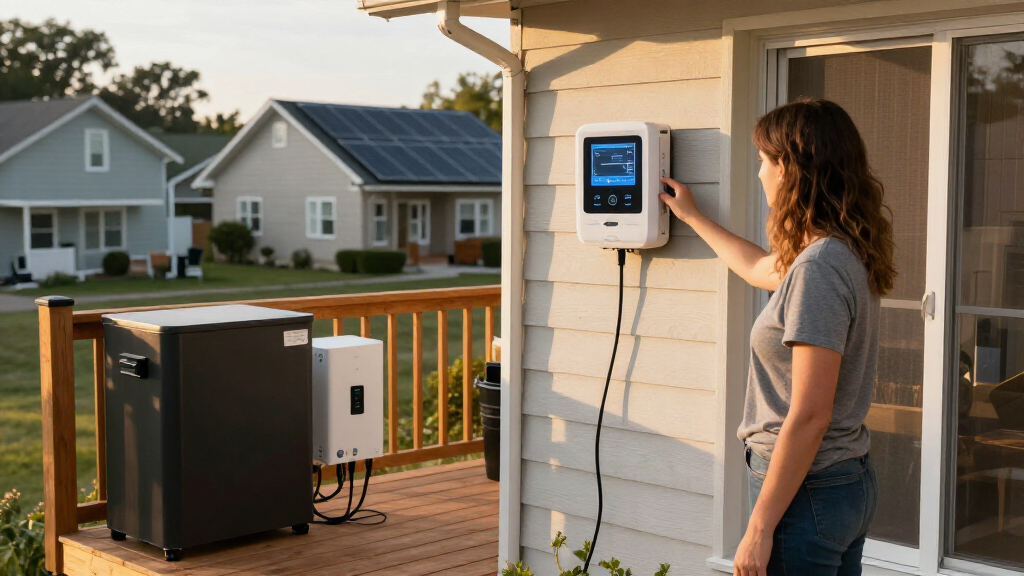
The report was prepared for The Pew Charitable Trusts and examines virtual power plants, or VPPs: coordinated networks of distributed energy resources such as rooftop solar, home batteries and other equipment. Utilities can use those resources to reduce pressure on the existing grid, for example by drawing on stored electricity or asking participating customers to use less power during peak demand, as explored in California’s virtual power plant plans.
The United States had 113 gigawatts of distributed energy resources that could be used in VPPs in 2025, according to the report, including capacity relevant to virtual power plants in the PJM grid. Its analysis says growing that capacity to 524 gigawatts by 2050 could avoid $614 billion in grid investments and reduce the average household electricity bill by $122 a year by 2050. Those are projections, not observed savings.
For its demand-risk analysis, Brattle modeled a nationwide case in which actual load growth comes in 5% below forecasts between now and 2030. The report estimates that overinvestment in power plants and grid infrastructure would add about $84 billion in costs for utility customers from 2030 to 2040. Expanding VPPs in that scenario cuts the estimated overbuilding costs by $33 billion, or roughly 40%, the report says.
A Flexible Alternative to Long-Lived Grid Builds
Utilities must plan infrastructure before they know how much electricity new data centers will use. Building too little could constrain reliability and economic growth; building too much could leave customers paying for plants, power lines or substations that prove unnecessary. The report presents VPPs as a way to reduce that risk because their capacity can be added in smaller increments than conventional infrastructure.
That flexibility does not mean VPPs are free or automatically available. Programs require operating systems and payments to participating households and businesses. Brattle says the grid benefits in its analysis outweigh those payments, but utilities still need confidence that the resources can be delivered when needed before relying on them instead of construction.
The findings matter to household customers because utility infrastructure costs are generally recovered through electricity bills. The report’s modeled savings suggest that demand flexibility could reduce some exposure to mistaken forecasts, though the size of any real-world effect will depend on adoption, program design and actual demand.
Products Worth Considering

Philips Hue Smart Light Starter Kit with Bridge and 4 White and Color A19 Bulbs

TCL 43-Inch 4K UHD Smart LED Roku TV (43S435, 2021 Model)

Bose Lifestyle Ultra Wireless Home Speaker, White Smoke
As an affiliate, we earn on qualifying purchases.
Planning Around Uncertain Data Center Demand
The data center boom has made electricity-demand forecasts harder to rely on, according to the report and Brattle lead author Ryan Hledik. Utilities face pressure to prepare for rapid growth while the eventual scale and timing of that demand remain uncertain. Traditional power plants and grid infrastructure can take years to plan and build, and their costs can persist even if expected demand does not arrive.
VPPs have already been examined as a way to meet peak demand or reduce the need for new grid assets. Brattle’s analysis adds a specific focus on using them as a hedge against forecast error. It also points to state efforts to protect customers from paying for infrastructure built for data centers that fail to materialize, while noting that the reach of those policies is uncertain.
The report identifies policy approaches including VPP mandates adopted by Colorado, Illinois, Maryland and Virginia. Pew has also published a policy playbook and a state policy explorer tool. These steps provide options for state governments and utilities, but the report does not establish that any one approach will produce the modeled nationwide savings.
“These are smaller modular resources we can bring online, once the necessary systems are in place.”
— Ryan Hledik, Brattle Group principal and lead author
Forecasts, Participation and Costs Remain Open
The report’s figures are based on modeled scenarios; they do not show that utilities have already avoided the stated investments or that customers have received the projected bill reductions. The analysis does not settle how much data center demand will materialize, where it will occur, or how quickly utilities can add dependable VPP capacity.
It also remains uncertain how well state customer-protection policies will shield households if forecast demand fails to appear. VPPs require program administration, technology and compensation, and the report’s results depend on enough customers and businesses participating and responding when the grid needs support. The source material does not provide a timetable or a detailed breakdown of VPP costs for each utility or state.
Utilities Must Put VPPs Into Plans
The next step identified by Pew is for utilities to account for VPP capacity and its potential value in grid planning. State regulators and lawmakers can weigh policies such as mandates, while utilities can develop programs and determine how to compensate participants without making incentives so changeable that customers lose interest.
Data center developers could also help expand these resources. Hledik pointed to Google’s work with VPP aggregator Voltus to seek one gigawatt of distributed capacity across the PJM Interconnection region. Whether that effort, state policies or utility programs lead to broad deployment remains to be seen. Future planning decisions and actual demand growth will show how much of the report’s projected cost reduction can be realized.
Key Questions
What is a virtual power plant?
A virtual power plant coordinates distributed resources, such as home batteries and rooftop solar, so they can support the grid. Utilities may also use participating customers’ flexibility to reduce electricity use during periods of high demand.
How much could VPPs reduce overbuilding costs?
In Brattle’s modeled scenario where load growth is 5% below forecasts through 2030, VPP expansion reduces estimated customer costs from overbuilding by $33 billion from 2030 to 2040. This is a projection, not a measured saving.
What does the report project for household bills?
The report estimates that increasing VPP-eligible distributed energy capacity to 524 gigawatts by 2050 could lower the average household electricity bill by $122 a year by that year. The estimate depends on the report’s assumptions and is not a guarantee of future bills.
Why might VPPs be useful if data center demand is uncertain?
VPP capacity can be added in smaller increments, giving utilities more flexibility than committing early to large, long-lived infrastructure projects. Utilities still need confidence that participating resources will be available when needed.
Source: canarymedia.com