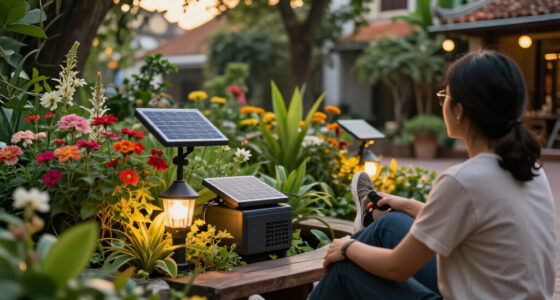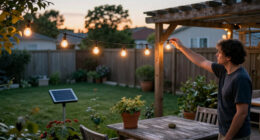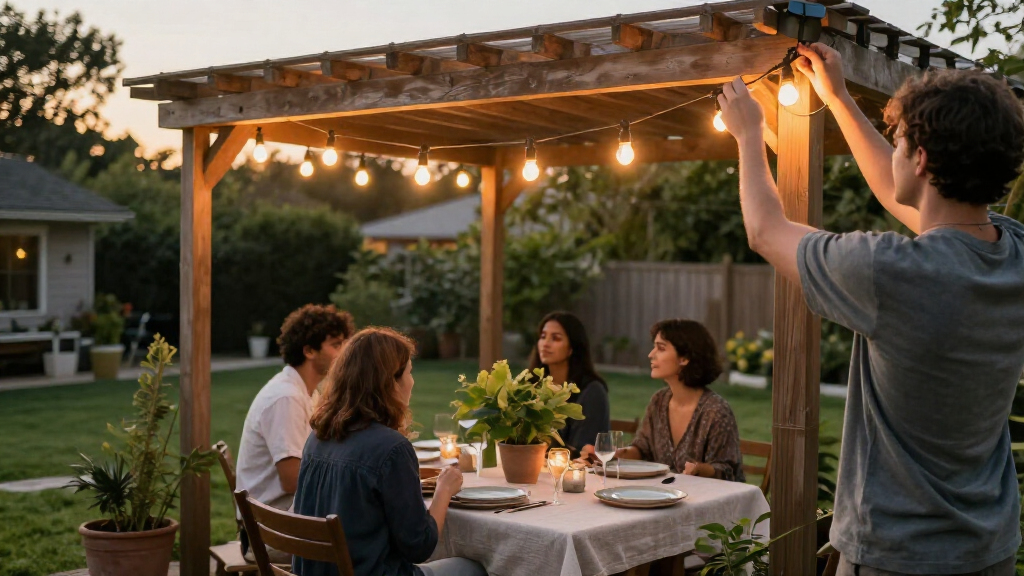
Choosing solar-powered outdoor string lights means deciding where you can get reliable sunlight and how much flexibility you need when installing the lights. Sets with a separate, adjustable panel keep the solar collector apart from the bulbs, while integrated-panel designs combine them in one unit or place the collector directly on the string. That difference affects where the lights can hang, how reliably they charge, and how simple they are to set up.

Get backup power and energy gear delivered free with Prime
- Fast, free delivery on millions of items
- Prime Video, Amazon Music and more included
- Member-only deals all year

addlon 100FT 54LED Solar String Lights Outdoor Waterproof with Remote, USB
- ✔ Lighting length: 100 ft, arranged as two 50 ft strings
- ✔ Panel lead: 6 ft
- ✔ Bulbs: 50 G40 LED bulbs plus 4 spares
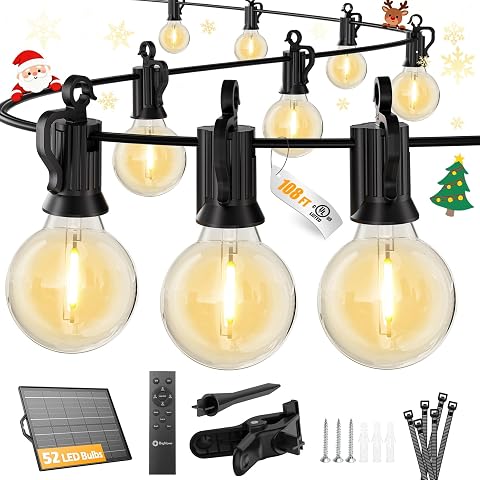
Brightown 108FT 52LED Solar String Lights Outdoor with Remote & USB Port
- ✔ Total length: 108 ft stated
- ✔ Bulbs: 50 G40 LED bulbs plus 2 spares
- ✔ Bulb spacing: 2 ft
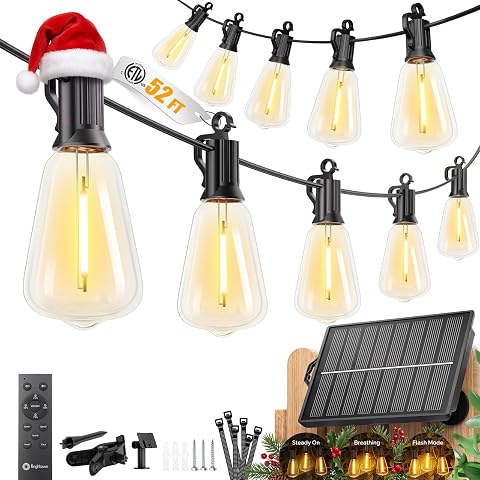
Brightown 52FT Solar String Lights Outdoor Waterproof, Last 30+ Hrs Runtime
- ✔ Total length: 52 ft including lead wire
- ✔ Bulbs: 15 ST38 LED bulbs plus 1 spare
- ✔ Bulb spacing: 3 ft
Neither design guarantees bright, all-night lighting: output and runtime depend on panel size, battery capacity, weather, season, and the amount of direct sun. A separate-panel set is usually the better fit for a shaded patio, covered pergola, or long fence. An integrated-panel set can make more sense for a sunny balcony or small garden where easy installation matters more than flexible panel placement.
At a Glance
| Criteria | Solar string lights with a separate, adjustable panel | Solar string lights with an integrated panel | Winner |
|---|---|---|---|
| Panel placement | Panel can be mounted in a sunnier spot, away from the lights | Panel stays with the lights or sits on the same fixture | A |
| Installation | Requires positioning the panel and routing its cable | Fewer parts and a simpler setup | B |
| Charging reliability | More adaptable when the hanging area is shaded | Works best when the entire installation receives direct sun | A |
| Runtime and brightness | Depends on panel and battery specs; placement can improve charging | Depends on panel and battery specs; poor placement can limit charging | Depends |
| Coverage and layout | Good for long or partly shaded runs, subject to cable reach | Convenient for compact, sunny areas | Depends |
| Maintenance and durability | More cable and a separate mounting point to manage | Fewer connections, though the panel may be harder to reposition | B |
| Value | Worth paying more when flexible placement solves a real sunlight problem | Often better value for simple, sunny installations | Depends |
addlon 100FT 54LED Solar String Lights Outdoor Waterproof with Remote, USB
The addlon is the most balanced choice in this group for a buyer who wants to light a larger outdoor area without giving up flexibility when the weather limits solar charging. Its listing describes 100 feet of lighting plus a six-foot panel lead, split into two 50-foot sections, with bulbs spaced two feet apart. That layout can make it easier to cover a patio or pergola evenly than the 52-foot Brightown, which is better suited to a smaller footprint. The Brightown 108-foot set reaches farther, but addlon’s stated 5000mAh battery and four timer options make its operating details especially clear.USB backup matters because a solar panel can struggle through extended cloudy or rainy periods. Addlon says a USB charge takes about four hours and claims up to 28 hours of warm illumination; we should treat that runtime as conditional on charging and brightness. The remote offers three brightness levels, three modes, and 2, 4, 6, or 8-hour timers, giving more timer choices than either Brightown set. Its tradeoff is the E17 pin-type base, which differs from the E12 base on both Brightown products, so replacement bulbs need to match. The described IP65 rating and shatterproof bulbs suit routine outdoor use, though buyers still need to mount the panel for useful sun exposure. For coverage plus charging control, this is our strongest all-around fit.
Pros:
- 100 feet of lighting in two 50-foot sections, plus a six-foot solar-panel lead.
- Stated 5000mAh battery with solar and USB charging backup.
- Remote offers three brightness levels, three modes, and four timer durations.
- Two-foot bulb spacing and four spare bulbs support broad decorative coverage.
Cons:
- E17 bulb base differs from the E12 base used by both Brightown options.
- The two-section layout may require more planning than a single continuous string.
- The claimed runtime depends on charging conditions and selected brightness.
Best for: Buyers lighting a medium or large patio who want USB backup, multiple timer choices, and evenly spaced bulbs.
Not ideal for: Shoppers with a compact balcony, or anyone who specifically needs E12 replacement bulbs or a single continuous 100-foot lighting run.
Bottom line: Choose addlon for the best balance of broad coverage, charging flexibility, and remote control options in this lineup.
“Choose addlon for the best balance of broad coverage, charging flexibility, and remote control options in this lineup.”
Brightown 108FT 52LED Solar String Lights Outdoor with Remote & USB Port
When the main challenge is spanning a long fence, pergola, or backyard seating area, Brightown’s 108-foot set offers the longest stated reach of these three picks. The listing describes 50 bulbs spaced two feet apart, plus two spares, and includes cable ties and a panel mounting clip. Compared with the shorter Brightown 52-foot set, this is better suited to wrapping a larger layout without buying a second string. It also has more bulbs than the addlon set as described, though addlon includes four replacement bulbs and splits its lighting into two 50-foot sections.The remote provides four brightness levels, three lighting modes, and 6- or 8-hour timers. Solar charging is backed by USB-C charging, and Brightown claims 36-plus hours of continuous illumination. That is the highest runtime claim among these products, but it should not be read as a guaranteed result for every brightness setting or season. The listed 3W adjustable panel and IP65 rating add useful context for outdoor placement, but the panel still needs access to daylight. One important limitation is that the string cannot be connected to another one, so buyers should measure their route before choosing it. Its E12 bulbs also match the shorter Brightown’s base, while addlon uses E17. This is our reach-first pick for wide spaces, with setup planning as the price of its length.
Pros:
- 108 feet of stated total string length with two-foot bulb spacing.
- USB-C backup charging and a claimed 36-plus-hour runtime.
- Remote controls four brightness levels, three modes, and two timer settings.
- Includes spare bulbs, cable ties, and a solar-panel mounting clip.
Cons:
- The string cannot be connected to another set, limiting expansion.
- Only 6- and 8-hour timer choices are listed.
- The long run needs enough mounting points and a well-positioned panel.
Best for: People who need one long, two-foot-spaced string to cover a broad fence, pergola, or backyard entertaining area.
Not ideal for: Small balconies or layouts that need linked strings, or buyers who want timer choices beyond six or eight hours.
Bottom line: Pick this Brightown when maximum reach and two-foot spacing matter more than expandable wiring or flexible timer settings.
“Pick this Brightown when maximum reach and two-foot spacing matter more than expandable wiring or flexible timer settings.”
Brightown 52FT Solar String Lights Outdoor Waterproof, Last 30+ Hrs Runtime
This shorter Brightown makes more sense for a balcony, porch, or modest patio than the 100-foot-plus alternatives. Its listing gives 52 feet total including a nine-foot lead wire, with 15 bulbs plus one extra and three-foot spacing. That wider interval means fewer light points along a given run than the two-foot spacing on the longer Brightown and addlon sets, so the effect is more open and less densely dotted. For a small space, that can be an advantage: there is less cable to route and fewer mounting points to plan.The set retains useful controls for a compact pick: a remote with four brightness levels, three modes, and 6- or 8-hour timers. It supports solar and USB charging, and the listing claims 30-plus hours of runtime, the longest stated figure after the 108-foot Brightown’s 36-plus-hour claim? Actually 36-plus is higher; this 30-plus figure is below it, but above addlon’s 28-hour claim. Runtime claims are not directly comparable without matching conditions. Its IP65 rating, shatterproof bulbs, and adjustable panel suit outdoor decorative use, while the hook on each bulb can simplify hanging. The tradeoff is clear: it covers much less area and has fewer bulbs than either long-string option. Its E12 base matches the 108-foot Brightown but not addlon’s E17. Choose it for a smaller footprint and a straightforward layout, not for broad backyard coverage.
Pros:
- Compact 52-foot total length includes a nine-foot lead wire.
- Solar and USB charging with remote dimming, modes, and timer controls.
- IP65 rating, shatterproof bulbs, and an adjustable solar panel are listed.
- Hook-at-every-bulb mounting can help with flexible placement.
Cons:
- Only 15 bulbs plus one extra, fewer than either longer alternative.
- Three-foot spacing creates a less dense pattern than the two-foot-spaced sets.
- The listing’s 30-plus-hour runtime depends on charging and brightness conditions.
Best for: Apartment dwellers and homeowners who need decorative lighting for a small porch, balcony, or compact patio.
Not ideal for: Buyers covering a large pergola or fence, or anyone who wants denser bulb spacing across a long run.
Bottom line: Choose the 52-foot Brightown for a smaller space where simple coverage matters more than bulb density or reach.
“Choose the 52-foot Brightown for a smaller space where simple coverage matters more than bulb density or reach.”
As an Amazon Associate we earn from qualifying purchases.
Key Differences
The main practical divide is placement. If the best place for attractive lighting is under a roof, beneath tree cover, or along a shaded wall, an integrated panel may not receive enough sun to charge well. A separate panel can sit in a sunnier location while the bulbs hang where you want them. That flexibility is a meaningful advantage, though it depends on the connecting cable reaching the chosen spot and the panel having a secure mounting position.
For a sunny, compact space, the separate panel may add setup work without improving everyday use. Integrated designs usually have fewer pieces to position and fewer cable connections to manage. Neither format alone tells you how bright the bulbs will be or how long they will stay on: compare stated battery capacity, charging time, light modes, bulb type, and any runtime claims, and treat performance figures as dependent on sunlight and conditions. Paying more for a separate panel makes sense when it can get substantially better sun; otherwise, a simpler set may deliver better value.
Detailed Comparison
Panel placement (Solar string lights with a separate, adjustable panel wins — major)
A wins by a major margin when the lights need to hang in shade: its collector can be mounted separately in direct sun. B keeps the setup compact, but the panel and lights share a location, limiting charging if that spot is shaded. In a fully sunny area, this advantage shrinks.Installation (Solar string lights with an integrated panel wins — moderate)
B wins by a moderate margin for simplicity. There are fewer components to mount and position, while A requires placing both the string and panel and managing the connecting cable. If the panel location is obvious and accessible, the extra setup for A is modest.Charging reliability (Solar string lights with a separate, adjustable panel wins — moderate)
A wins by a moderate margin in mixed-light environments because the panel can be moved to a sunnier patch. This can improve the chance of a full charge, but does not guarantee longer lighting if the panel is undersized, days are cloudy, or the battery is limited. In a sunny location, the designs may perform similarly.Runtime and brightness (major difference)
Neither design wins by format alone, so this depends on the specific set. Battery capacity, panel output, bulb power, and brightness settings matter more than whether the panel is integrated. Check comparable specifications and remember that runtime can fall after overcast weather or during shorter winter days.Coverage and layout (moderate difference)
This depends on the area and the product’s cable length. A is often more adaptable for a long run where the sunny panel location differs from the hanging route, but the panel cable sets a limit. B suits a compact, open location when the panel can receive sun where the lights are installed.Maintenance and durability (Solar string lights with an integrated panel wins — minor)
B has a minor practical edge from having fewer separate connections and mounting points. A adds a cable and panel mount that need securing and occasional inspection. Actual weather resistance, materials, replaceable batteries, and warranty matter more than layout alone; check the product’s ratings for outdoor use.Value (moderate difference)
There is no universal winner. A earns its extra cost when moving the panel into sun meaningfully improves charging or makes a shaded design possible. For a sunny, straightforward installation, B is generally the stronger value because its simpler setup avoids paying for flexibility you may not use.Solar string lights with a separate, adjustable panel: Pros and Cons
Pros:
- Panel can charge in a sunny spot while lights hang elsewhere
- Useful for shaded patios, pergolas, and walls
- Flexible layout when the cable reaches the desired panel location
Cons:
- More parts and setup work
- Cable length can restrict panel placement
- Separate mount and connections need secure installation
Solar string lights with an integrated panel: Pros and Cons
Pros:
- Simple, compact installation
- Fewer connections and separate mounting points
- Good value when lights and panel can both sit in direct sun
Cons:
- Shaded hanging locations can limit charging
- Less freedom to choose panel orientation and position
- A sunny spot for the lights may not suit the desired layout
Who Should Choose What
Choose Solar string lights with a separate, adjustable panel if:
- Your preferred hanging area is shaded but you have a nearby sunny place for the panel.
- You need to separate the collector from a covered patio, pergola, or wall.
- You are willing to manage an extra cable and mount for better placement options.
Choose Solar string lights with an integrated panel if:
- Your balcony, garden, or patio gets direct sun where the lights will hang.
- You want a quick, uncomplicated installation with fewer parts.
- You would rather save money than pay for panel-placement flexibility you do not need.
Skip both if: Skip both if the only available panel location receives little direct sunlight and you need dependable bright lighting for long periods. A mains-powered or rechargeable option may suit that use better.
Value for Money
A separate-panel set is worth paying more for when it solves a real location problem: the lights can hang where you want them while the panel gets better sun. Its value depends on cable reach, panel output, and a convenient mounting spot; flexibility alone cannot compensate for a weak battery or prolonged cloudy weather. Compare the complete specifications rather than paying a premium just for a separate panel.
For an installation where both the panel and bulbs receive direct sunlight, an integrated design is usually the better value. The simpler layout can save setup effort without giving up a useful charging advantage. Whichever design you choose, check outdoor weather ratings, battery replacement details, bulb type, light modes, and warranty before comparing prices.
Final Verdict
Choose solar string lights with a separate, adjustable panel if the best place for the bulbs is shaded and you can mount the collector in direct sun. That placement flexibility is the deciding factor and can make the extra setup and cost worthwhile. Choose an integrated-panel set for a sunny, compact space where easy installation and lower cost matter more than separating the panel from the lights.
Before buying, compare battery capacity, panel output, bulb type, and realistic runtime details: those specifications determine brightness and staying power more directly than the panel layout. If your available location gets little sun and dependable, bright all-night lighting is essential, skip both solar formats.
Frequently Asked Questions
Are separate-panel solar string lights brighter?
Not automatically. Brightness depends on the bulbs and their power, while a separate panel can improve charging if it gets more sun than an integrated panel would. Compare the products’ brightness specifications and light modes directly.
Can integrated-panel string lights work under a covered patio?
They can if the panel still receives enough direct sunlight, but a roof or deep shade may restrict charging. For covered spaces, a set with a separate panel is usually easier to position for sun, provided its cable reaches a suitable location.
Do solar string lights stay on all night?
Some may, under favorable charging and settings, but all-night runtime is not guaranteed. Sun exposure, season, battery capacity, brightness level, and light mode all affect how long they run. Check the manufacturer’s runtime claim and the conditions behind it.
Is a separate solar panel worth the extra cost?
It is worth paying more when the lights need to hang in shade and you have a sunnier place for the panel. If both can sit in direct sun together, the integrated design is usually better value.