In a multi-level home, you should think about how stove heat rises and causes stratification, with warm air accumulating near the ceiling and cooler air settling near the floor. This uneven heat distribution can make upper floors warmer and lower levels cooler. To improve comfort and efficiency, use fans or vents to promote air mixing and balance temperatures across all levels. Keep exploring to learn strategies that help you manage heat more effectively throughout your home.

Get backup power and energy gear delivered free — and shop member deals
- Fast, free delivery on millions of items
- Access to Prime Big Deal Days deals on October 6–7
- Prime Video, Amazon Music and more included
Key Takeaways
- Heat from the stove rises and creates natural airflow, influencing temperature distribution across multiple levels.
- Recognize that warm air stratifies at ceiling level, leaving lower areas cooler without proper circulation.
- Use fans, vents, and strategic placement of heaters to promote even heat mixing throughout the home.
- Insulate floors and ceilings to reduce heat loss and enhance overall warmth from stove-generated heat.
- Manage airflow to prevent drafts and hot spots, improving comfort and energy efficiency in multi-story spaces.
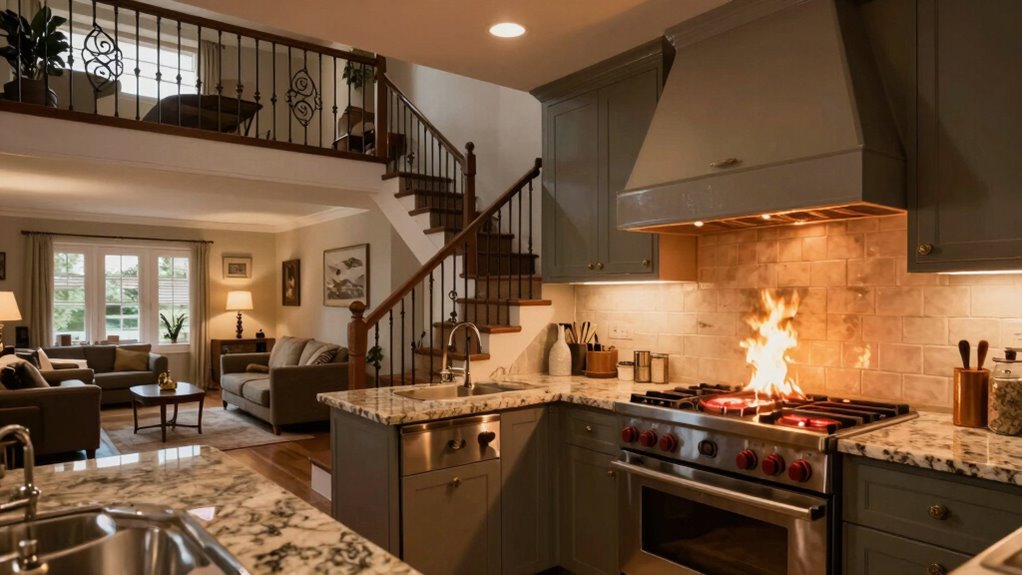
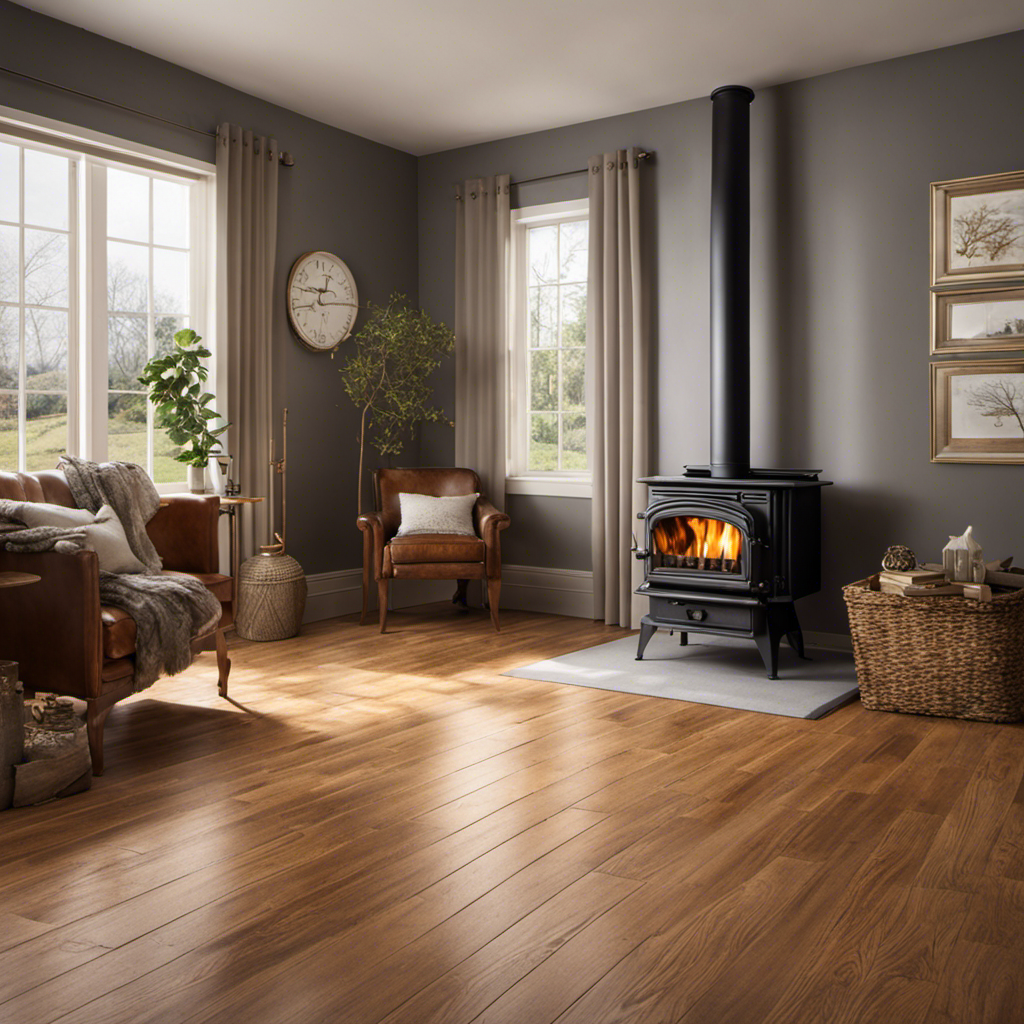
Have you ever wondered how the heat from your stove affects the different levels of your home? When you turn on your stove, heat doesn’t just stay in one place. Instead, it moves through your living space via thermal circulation, which is the natural flow of warm air rising and cooler air sinking. This process plays an essential role in how evenly your home heats up, especially when you have multiple levels. You might notice that the upper floors get warmer faster or that the lower levels stay cooler longer. That’s because of heat stratification, the tendency of warm air to accumulate at the ceiling level while cooler air settles near the floor. Understanding this helps you anticipate where heat will go and how to manage it effectively.
Heat from your stove rises, causing uneven warmth; managing thermal circulation helps distribute heat evenly across all home levels.
When your stove heats a room, the warm air naturally rises due to buoyancy, creating a vertical temperature gradient. This means the ceiling can become noticeably warmer than the floor, leading to uneven heating. If you don’t account for thermal circulation, you might find that the upstairs feels comfortable while the lower level remains chilly, or vice versa. To counteract heat stratification, you can use fans or ceiling vents to promote better air mixing, ensuring that warm air doesn’t just accumulate at the top. By encouraging thermal circulation, you help distribute heat more evenly across all levels, reducing energy waste and improving comfort. Recognizing the role of thermal circulation can help you better plan your heating strategies. Additionally, proper ventilation can prevent stale or overly dry air, further enhancing comfort levels. Incorporating airflow management techniques can significantly improve overall temperature consistency. Properly managing airflow is also crucial for preventing drafts and hot spots that can make certain areas uncomfortable. Furthermore, understanding thermal dynamics can guide you in selecting the right heating solutions for your specific home layout, making your system more efficient and effective.
In multi-level homes, the challenge lies in balancing heat so each area reaches a cozy temperature without overworking your heating system. Since warm air rises, the upper floors tend to get warmer naturally, but the lower floors often need a little extra help. Strategic placement of vents, fans, or even small space heaters can promote better thermal circulation, pushing warm air downward or outward where it’s needed most. You might also consider insulating floors and ceilings to minimize heat loss and prevent the formation of hot and cold layers. These adjustments help your stove’s heat reach all levels efficiently, making your entire home more comfortable. Proper insulation reduces the impact of heat stratification, ensuring more consistent temperatures across different levels and improving overall energy efficiency. In addition, sealing leaks and improving insulation can help maintain desired temperatures longer without additional heating.
Ultimately, thinking about how your stove’s heat moves through your home means recognizing the importance of thermal circulation and managing heat stratification. By actively encouraging the movement of warm air and reducing temperature differences between levels, you create a more balanced, cozy environment. This understanding allows you to optimize your heating efforts, save energy, and enjoy a more uniformly comfortable home, regardless of how many stories it has.
Frequently Asked Questions
How Does Insulation Affect Stove Heat Distribution?
Insulation plays a key role in how stove heat distributes in your home. Good thermal insulation helps retain heat, preventing it from escaping quickly and ensuring the warmth spreads evenly. Without proper insulation, heat can escape through walls or floors, making it harder to maintain a comfortable temperature on all levels. By improving insulation, you enhance heat retention, ensuring your stove’s warmth reaches every corner of your multi-level home efficiently.
What Is the Optimal Stove Placement for Even Heating?
Place your stove centrally on the main living level to maximize heat distribution. This position allows warmth to radiate evenly throughout the space, reducing cold spots. Avoid corners or areas blocked by furniture, which can hinder heat flow. Keep doors open or use fans to promote circulation. The ideal placement ensures consistent, comfortable warmth across all levels, making your home more energy-efficient and cozy.
How Do Different Stove Types Impact Multi-Level Heating?
Oh, the joys of choosing between a cozy wood stove or a modern pellet one—because nothing says “efficient heating” like relying on something that either burns fossil fuels or wood with varying heat retention. Wood stoves excel in heat retention but can be inefficient in stove efficiency, while pellet stoves offer better efficiency but less warmth. Your choice impacts how evenly heat travels, making multi-level homes a delightful game of “hot or not.”
Can Ceiling Fans Improve Heat Circulation?
Ceiling fans can definitely improve heat circulation in your multi-level home. By running fans clockwise on a low setting, you push warm air that rises to the ceiling back down into the living space. This helps distribute heat evenly, reducing hot and cold spots. Proper use of ceiling fans enhances overall comfort and can even lower heating costs by making better use of the heat generated by your stove or HVAC system.
How Do Outdoor Temperatures Influence Indoor Stove Heating?
Imagine a chilly wind creeping through cracks, reminding you how outdoor climate and temperature fluctuation directly impact your indoor stove heating. When outdoor temperatures dip, your stove works harder to maintain warmth, especially during sudden cold snaps. Conversely, milder weather eases the load, making heat distribution more consistent. You can optimize comfort by adjusting stove settings based on outdoor conditions, ensuring your home stays cozy no matter the weather outside.
Conclusion
Remember, managing stove heat in multi-level homes is like balancing a delicate dance—each step affects the whole. If you adjust your approach thoughtfully, you’ll create a cozy, comfortable space on every floor. Think of your home as a symphony, where harmony depends on understanding how heat moves and behaves. With a little patience and strategic planning, you’ll master the art of keeping every level warm and inviting—turning your house into the perfect crescendo of comfort.
Fall Picks
fall essentials
As an affiliate, we earn on qualifying purchases.