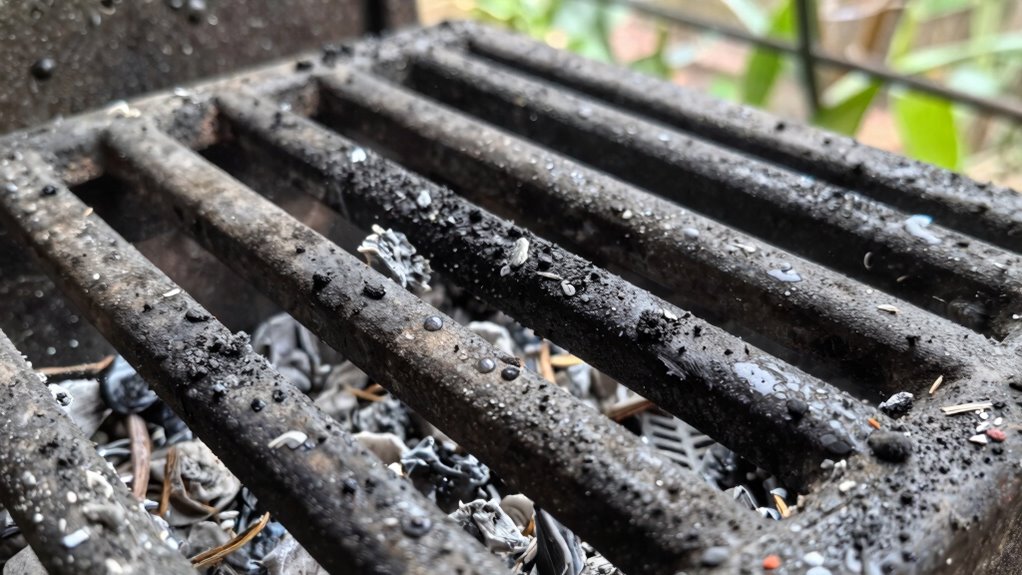

Humid spring air causes leftover ash and soot to absorb moisture, turning into sticky, clumpy messes that are harder to sweep and clean. Damp ash tends to stick to surfaces and tools, making cleanup more difficult. Moisture also encourages mold and mildew growth, which can spread unnoticed and impact air quality. Additionally, the humidity helps soot particles become more airborne, increasing inhalation risks. To protect your space, understanding these effects will help you learn effective cleaning tips.
Key Takeaways
- Humid spring air causes ash to absorb moisture, turning it into a sticky, clumpy mess that’s harder to clean.
- Moisture spreads soot unevenly, making thick layers more stubborn and difficult to remove.
- Increased humidity promotes mold and mildew growth on residual ash and soot, complicating cleanup.
- Damp soot particles become more airborne, raising respiratory health risks indoors.
- Moisture causes ash to harden, requiring specialized cleaning tools and more effort to remove effectively.

As spring brings increased humidity, leftover ash and soot from fireplaces or stoves can change in ways you might not expect. You might think that once the fire is out and the ash cools, there’s little to worry about. But higher moisture levels can cause ash residue and soot buildup to behave differently, impacting your home’s air quality and cleanliness. When humidity rises, ash residue doesn’t stay static; it can absorb moisture from the air, turning into a damp, clumpy mess. This damp ash is harder to sweep up and often becomes sticky, clinging to surfaces and creating a mess that’s more difficult to clean. Soot, which is a fine particulate, is even more affected. Moisture can cause soot to spread or settle unevenly, forming thicker layers that are more stubborn to remove. As a result, what may have been a manageable layer of soot during dry months can become a persistent and more challenging buildup.
Increased humidity causes ash and soot to become damp, sticky, and harder to clean during spring.
Increased humidity also encourages the formation of mold and mildew around the residue. Ash that has absorbed moisture creates an ideal environment for mold spores to settle and grow, especially in hidden corners or beneath furniture. This not only hampers your efforts to keep your home clean but also poses health risks. The tiny particles of soot that become damp can become more airborne, increasing the likelihood of inhalation and respiratory irritation. If you don’t clean the ash residue and soot buildup regularly, these particles can settle into carpets, upholstery, or even your HVAC system, exacerbating indoor air quality problems. Recognizing the importance of proper ventilation can help mitigate these issues.
You might notice that during humid springs, cleaning your fireplace or stove area requires more effort. The damp ash sticks to tools and surfaces more readily, and sweeping alone might not suffice. You’ll need to use damp cloths or specialized vacuums designed for fine particles to remove the soot and ash thoroughly. Ignoring this can lead to persistent stains and residual odors that are difficult to eliminate later. Furthermore, moisture from the environment can cause ash residue to harden or turn into a crusty deposit, further complicating cleanup. Additionally, increased humidity can accelerate the development of mold growth, which can be difficult to identify and remove if not addressed promptly. Being aware of how indoor air quality can decline due to these factors underscores the importance of regular cleaning and proper ventilation.
As an affiliate, we earn on qualifying purchases.
Frequently Asked Questions
How Does Humidity Influence Ash Color Over Time?
Humidity accelerates ash oxidation, causing it to darken and become more powdery over time. It also promotes soot discoloration, making the residue appear duller or grayer. When the air is humid, moisture interacts with leftover ash, speeding up chemical changes and affecting its color. So, you’ll notice ash and soot changing hues faster in moist spring air, leading to a more noticeable and quicker discoloration process.
Can High Moisture Levels Cause Soot to Become More Toxic?
Yes, high moisture levels can make soot more toxic. Moisture encourages chemical reactions in soot particles, increasing their toxicity levels. Studies show that damp soot contains higher concentrations of harmful substances, posing greater health risks when inhaled. When humidity is high, soot becomes more chemically reactive, which can amplify its harmful effects on your respiratory system. So, it’s essential to handle damp soot carefully to avoid health hazards.
Does Spring Humidity Affect the Smell of Leftover Ash?
Spring humidity can influence the smell of leftover ash, making it more noticeable during ash disposal and soot cleaning. High moisture levels cause ash particles to release more volatile compounds, intensifying odors. When you handle ash, the damp environment can trap smells, so it’s important to ventilate well and wear a mask. Properly disposing of ash and thorough soot cleaning help minimize lingering odors and maintain a fresh indoor environment.
Are Certain Types of Ash More Affected by Humidity?
Certain types of ash are definitely more affected by humidity, especially those with complex ash composition. As spring humidity rises, soot stability varies, making some ashes cling together or become more powdery. You might notice that fine, mineral-rich ash breaks down or becomes sticky, while others resist changes. This suspense in reaction depends on the ash’s composition, and understanding this helps you predict how leftover ash and soot will behave in moist conditions.
How Can I Prevent Ash Buildup During Humid Seasons?
To prevent ash buildup during humid seasons, you should regularly remove ash and soot from your fireplace or stove to prevent moisture retention. Use a high-quality ash removal tool for thorough cleaning. Additionally, control moisture by keeping the area well-ventilated and dry, and consider using a dehumidifier if necessary. Proper moisture control minimizes ash clumping and reduces buildup, making cleanup easier and maintaining your heating system’s efficiency.
Conclusion
So, next time you’re wondering if leftover ash and soot will be affected by the humid spring air, consider this: moisture can indeed cause these residues to clump, spread, or even encourage mold growth. While some might think ash is inert and unaffected, the reality is that humidity can change its appearance and behavior. Don’t dismiss the impact—your cleanup routine might need adjusting to keep your space clean and safe.