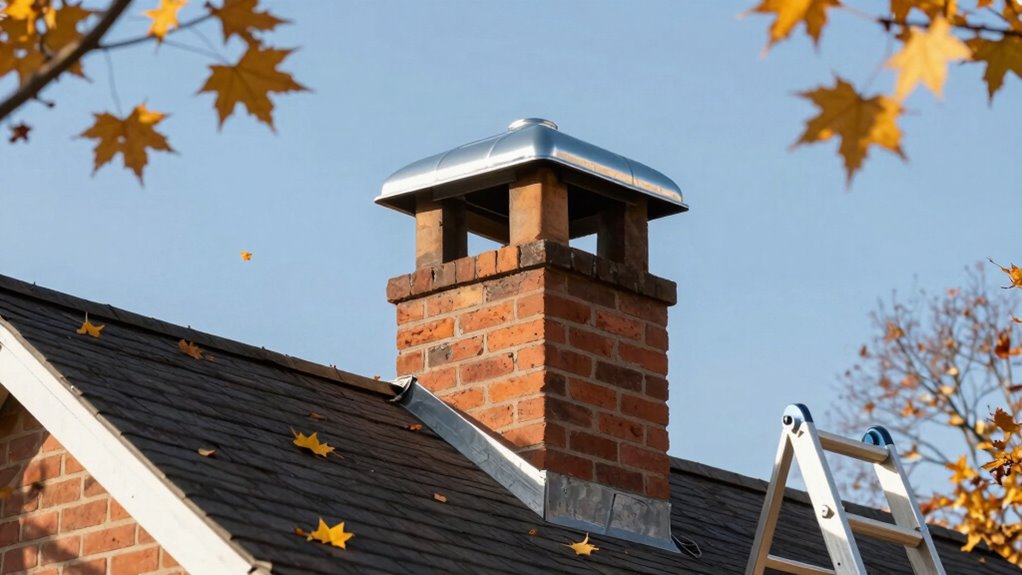

The best time of year to replace a chimney cap is during spring or fall when the weather is mild. These seasons offer ideal conditions for safe and efficient installation, avoiding issues caused by snow, freezing temperatures, or summer heat. Installing before the rainy season helps prevent water damage and leaks. Choosing the right timing ensures your chimney remains protected longer. Keep exploring to find out how weather and materials affect your chimney cap replacement.
Key Takeaways
- Replace during spring or fall for moderate weather and easier scheduling.
- Avoid winter installations due to snow, cold, and safety concerns.
- Aim for pre-rainy season replacement to prevent water damage and leaks.
- Schedule in mild seasons to reduce installation delays and complications.
- Promptly replace damaged caps to prevent further deterioration and costly repairs.
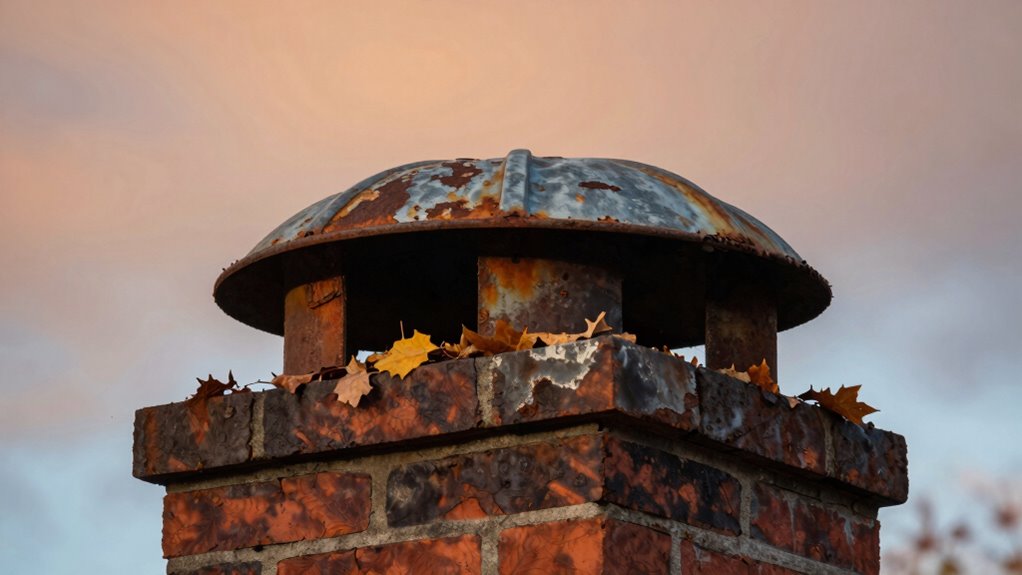
Wondering when to replace your chimney cap? The timing largely depends on the condition of your current cap and the weather patterns in your area. As a homeowner, you want to ensure your chimney remains protected from debris, animals, and moisture, which can cause significant damage if neglected. One of the first considerations is the material your chimney cap is made of. Common chimney cap materials include stainless steel, galvanized steel, copper, and sometimes aluminum. Stainless steel is highly durable and resistant to rust, making it ideal for long-term protection. Copper, while more expensive, offers excellent longevity and a classic appearance. Galvanized steel is more affordable but may corrode faster in humid or salty environments. Knowing the material helps you assess whether it’s time for a replacement, especially if you notice rust, corrosion, or other signs of deterioration.
Installation costs can vary depending on the material and the complexity of the job. Typically, stainless steel caps are slightly more expensive upfront but may save you money over time due to their durability. Copper caps tend to be pricier but can last decades with minimal maintenance. If your current cap has become loose, warped, or damaged, it’s worth considering a replacement sooner rather than later to prevent water leaks and animal entry. The best time of year to replace your chimney cap is often during the milder seasons—spring or fall—when weather conditions are more predictable. Doing it during these times reduces the risk of working in harsh weather and allows for easier installation. Additionally, choosing the right installation time can help ensure your chimney’s ongoing protection and reduce the likelihood of unexpected repairs.
Weather plays a significant role in the timing of your replacement. Installing a new chimney cap during winter, for example, might be challenging due to snow and freezing temperatures, which can affect installation costs and safety. Conversely, summer might bring about higher demand and scheduling delays, especially in peak home repair seasons. Spring and fall strike a good balance, offering moderate weather and more flexible scheduling. Additionally, replacing your chimney cap before the rainy season begins helps prevent water damage to your chimney’s interior and reduces the risk of leaks. Proper material selection can also influence the optimal timing for replacement, ensuring your chimney remains protected in the long run. It’s also essential to consider local climate factors, which can accelerate wear and tear on certain materials, necessitating earlier replacement. If you notice signs of damage — such as leaks, rust, or pest intrusion — don’t delay; addressing these issues promptly can save you money and hassle down the line. Additionally, understanding the expected lifespan of your chimney cap material can help you plan replacements proactively and avoid unexpected failures.

Shelter 9" x 9" Single Flue Bolt-On Chimney Cap, Fully Assembled, Stainless Steel
- Chimney Protection: Protects from birds, rain, and snow
- Easy Bolt-On Installation: Secures onto existing flue tiles easily
- Unobstructed Draft: Maximizes airflow for chimney efficiency
As an affiliate, we earn on qualifying purchases.
As an affiliate, we earn on qualifying purchases.
Frequently Asked Questions
How Long Does a Chimney Cap Typically Last?
A chimney cap typically lasts 5 to 10 years, depending on the material and weather conditions. Regular chimney maintenance is essential to guarantee it functions properly and maintains venting safety. You should inspect your chimney cap annually for damage or rust and replace it if you notice issues. Proper upkeep helps prevent debris buildup, animals, or water damage, keeping your chimney safe and efficient year-round.
Can I Replace My Chimney Cap Myself?
Yes, you can replace your chimney cap yourself, but don’t rush into a DIY installation without considering chimney safety. If you’re comfortable with basic tools and working at heights, it’s doable. However, a wrong fit or improper installation can cause problems later. Carefully follow safety guidelines, wear protective gear, and double-check the fit. When in doubt, consulting a professional guarantees your chimney stays safe and functional.
What Signs Indicate I Need a New Chimney Cap?
You need a new chimney cap if you notice rust, corrosion, or damage to the cap materials, which can compromise chimney safety. Also, if animals or debris get into your chimney, it’s a sign the cap isn’t effective anymore. Regular inspections help identify these issues early, ensuring your chimney remains safe and functions properly. Replacing a damaged or worn cap maintains proper airflow and prevents potential hazards.
Are There Seasonal Advantages to Replacing a Chimney Cap?
Replacing your chimney cap during seasonal maintenance offers advantages, especially in fall or early spring. Doing it before heavy use guarantees fire safety considerations are met, preventing debris buildup and animal intrusion. Plus, seasonal changes make it easier to schedule repairs without disrupting your fireplace use. Addressing this task proactively helps maintain chimney efficiency and safety, giving you peace of mind during peak fire season and beyond.
How Does Weather Affect Chimney Cap Replacement Timing?
Weather patterns directly influence when you should replace your chimney cap. Harsh winter storms or heavy rain can delay repairs, risking water damage or debris buildup. Conversely, mild, dry seasons are ideal for seasonal maintenance, giving you clear conditions to work safely. By choosing a time when weather is predictable, you guarantee your chimney stays protected, and you avoid costly repairs caused by weather-related delays.
Conclusion
So, when’s the right time to replace your chimney cap? It’s not just about avoiding that sudden downpour or pesky critters — it’s about protecting your home when you least expect it. The right moment might surprise you, lurking just around the corner. Don’t wait for disaster to strike; stay ahead of the game. Because sometimes, the smallest upgrade can make the biggest difference — and the true test is what happens next.