TL;DR

Get backup power and energy gear delivered free with Prime
- Fast, free delivery on millions of items
- Prime Video, Amazon Music and more included
- Member-only deals all year
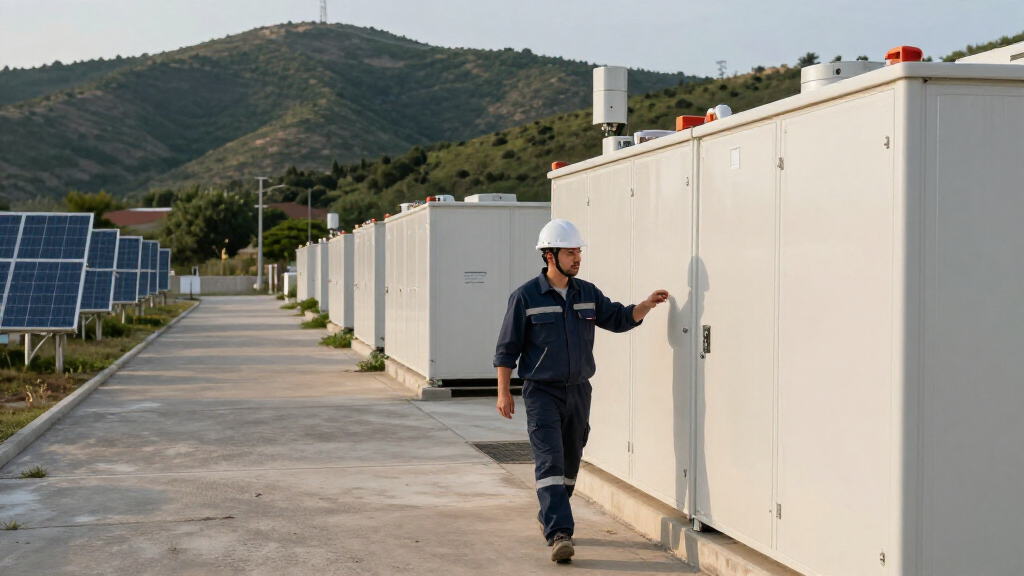
Metlen and Karatzis Group inaugurated a 330 MW/790 MWh battery energy storage system in Larissa, Thessaly, on October 14. The partners describe it as Greece’s largest standalone battery project; Energy Storage reported that it uses Jinko ESS’s SunTera G2 equipment, while the project’s grid connection limits power injection to 330 MW.
Metlen and Karatzis Group inaugurated a 330 MW/790 MWh battery energy storage system in Larissa, Thessaly, on October 14, opening a large standalone storage project intended to support Greece’s electricity system. The partners describe it as the country’s largest standalone battery project; Energy Storage reported that it features Jinko ESS SunTera G2 equipment.
The inauguration took place in the presence of Prime Minister Kyriakos Mitsotakis, Environment and Energy Minister Stavros Papastavrou, and local and national officials. The facility was developed through a joint investment vehicle in which Karatzis Group owns 51% and Metlen owns 49%.
Metlen said it was responsible for the project’s construction, operation and maintenance. The company described the work as drawing on experience from storage projects in international markets. The announcements by the project partners did not identify the battery supplier. Energy Storage said it had confirmation that the facility uses Jinko ESS’s SunTera G2 system; Jinko had previously published details of a 395 MW/790 MWh supply matching the project’s energy capacity.
The two power figures refer to different project parameters. The installation has a reported equipment capacity of 395 MW and 790 MWh, while its grid connection agreement caps maximum active power injection at 330 MW at the local high-voltage substation. Energy Storage reported that the difference reflects an overbuild, equivalent to an approximately 1.2-to-1 DC-to-AC ratio. The project’s energy capacity and grid export limit should not be read as the same measure.
Storage Adds Flexibility to Greece’s Grid
Battery storage can hold electricity and return it to the grid at a later time, helping manage changes in supply and demand. That capability is relevant as Greece adds renewable generation, whose output varies with weather and time of day. The Thessaly facility’s 790 MWh energy capacity and 330 MW grid injection limit make it a substantial single project, though the source material does not provide operating data showing how it will dispatch energy or affect prices.
The project also illustrates the difference between a battery’s installed capacity and the amount it is authorized to export at a particular connection point. Its reported equipment rating exceeds the 330 MW connection cap, while its storage duration is approximately two hours when calculated against the 395 MW equipment rating. Actual output to the grid remains subject to the connection limit and operating conditions.
For investors and energy planners, the opening is a concrete addition to Greece’s storage pipeline, but it does not by itself establish how much storage the country will have in service by a future date. Mitsotakis said the government aims for 3–4 GW of storage projects operating or under development by 2028. That figure is a stated ambition, not a confirmed current total.
Top picks for "metlen karatzi inaugurate"
As an affiliate, we earn on qualifying purchases.
How the Project Reaches the Grid
The facility is located in Larissa, Thessaly, and connects through a high-voltage substation governed by an agreement with Greece’s transmission system operator, identified in the report as ADMIE/IPTO. That agreement limits the plant’s maximum active power injection to 330 MW. The reported 395 MW equipment figure reflects the installed system rather than the permitted export level at that connection.
The project adds to Metlen’s energy storage activity beyond Greece. In August 2026, the company signed a balance-of-plant contract with UK developer Pulse Clean Energy for the 129 MW/362 MWh Penn BESS in England’s West Midlands. The source also reported that Metlen had agreed to sell the Tamarico II hybrid solar and battery project in Chile to Copec subsidiary Copec Flux. Tamarico II comprises 165 MW of solar and 725 MWh of storage, with potential expansion to 925 MWh.
““I am particularly proud that today, here in Thessaly, we are inaugurating Greece’s largest standalone energy storage facility in Eastern Europe and one of the largest across the European Union.””
— Evangelos Mytilineos, Metlen executive chairman
Supplier Details and Operating Data
The project partners’ inauguration announcements did not name Jinko ESS as the supplier. The supplier identification comes from Energy Storage, which said it had confirmation that the project uses Jinko’s SunTera G2 system; Jinko had separately published a supply figure matching the project’s 790 MWh capacity. The source does not include a direct supplier statement tied to the inauguration.
The available report does not give the project’s commercial operation date, commissioning status beyond the inauguration, expected annual throughput, ownership of the operating company, or revenue arrangements. It also does not specify how frequently the battery is expected to charge and discharge, or how much electricity it will deliver under typical operating conditions. The announced target for 2028 is a government ambition, and the source does not state how much of that target is already operating or under development.
Commissioning and Grid Operations
The next evidence of the project’s practical contribution will come from its operating and grid-dispatch performance. The source material does not set out a separate commissioning schedule or a date for routine commercial operation, so that timing remains unconfirmed. Further information from Metlen, Karatzis Group, Jinko ESS or ADMIE/IPTO could clarify the facility’s operating status, supplier role and permitted dispatch arrangements.
Greece’s stated 3–4 GW storage goal by 2028 provides a policy milestone against which future projects can be measured. Whether the country reaches it will depend on projects moving through development, connection and operation; the Thessaly inauguration is one addition, not confirmation that the national target has been met.
Key Questions
Where is the battery storage project?
It is in Larissa, Thessaly, Greece, and connects at a local high-voltage substation.
What are the project’s power and energy ratings?
The project is described as 330 MW/790 MWh. Energy Storage reported equipment figures of 395 MW/790 MWh, while the grid agreement caps maximum active power injection at 330 MW.
Who supplied the battery system?
Energy Storage reported that the project uses Jinko ESS’s SunTera G2 system. The project partners’ inauguration announcements did not identify the supplier.
Who owns the project investment vehicle?
Karatzis Group holds a 51% stake and Metlen holds the remaining 49%, according to the report.
What is Greece’s storage target?
At the inauguration, Prime Minister Kyriakos Mitsotakis cited a government ambition for 3–4 GW of storage projects to be operating or under development by 2028. The source does not give a current total against that target.
Source: rss
Halloween Picks
halloween
As an affiliate, we earn on qualifying purchases.