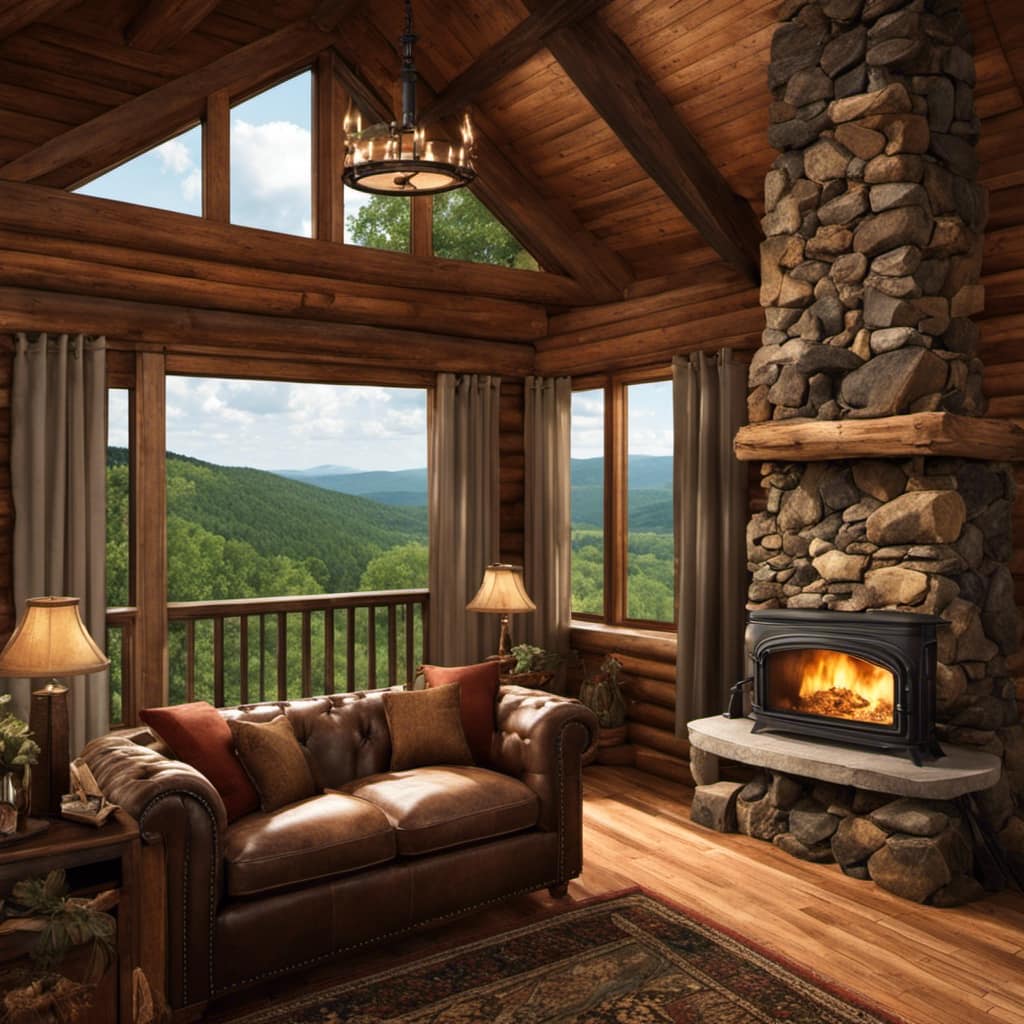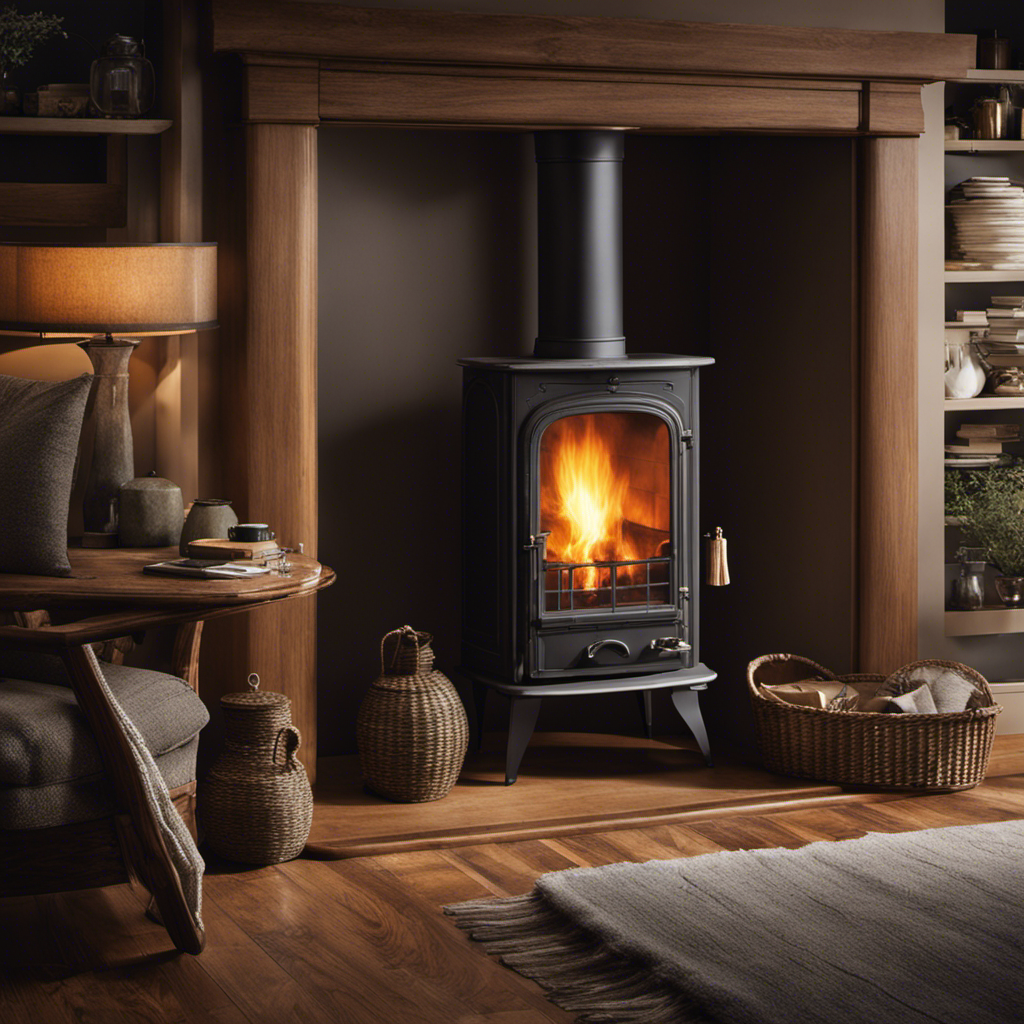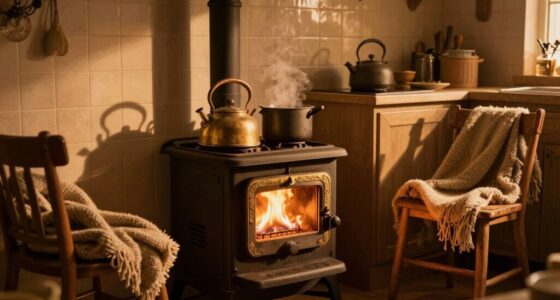
To establish a daily heating routine with your small stove, light it early during peak activity times to build steady heat, then manage airflow by adjusting the damper and air intake for even burning. Add small amounts of dry, seasoned fuel consistently, and let the fire die down naturally in the evening. Regularly clean ash and check vents for safety. Continuing this routine helps maximize warmth, safety, and efficiency—more tips await to help you get the most out of your stove.

Get backup power and energy gear delivered free with Prime
- Fast, free delivery on millions of items
- Prime Video, Amazon Music and more included
- Member-only deals all year
Key Takeaways
- Light the stove early in the day to reach and maintain a steady, comfortable temperature aligned with daily activity patterns.
- Add small, dry fuel increments regularly to promote consistent and efficient burning throughout the day.
- Adjust airflow and damper settings to control the burn rate and prevent overheating or smoldering.
- Gradually reduce heat in the evening to allow the fire to die down naturally and conserve fuel.
- Perform safety checks and ventilation maintenance daily to ensure safe, efficient operation.
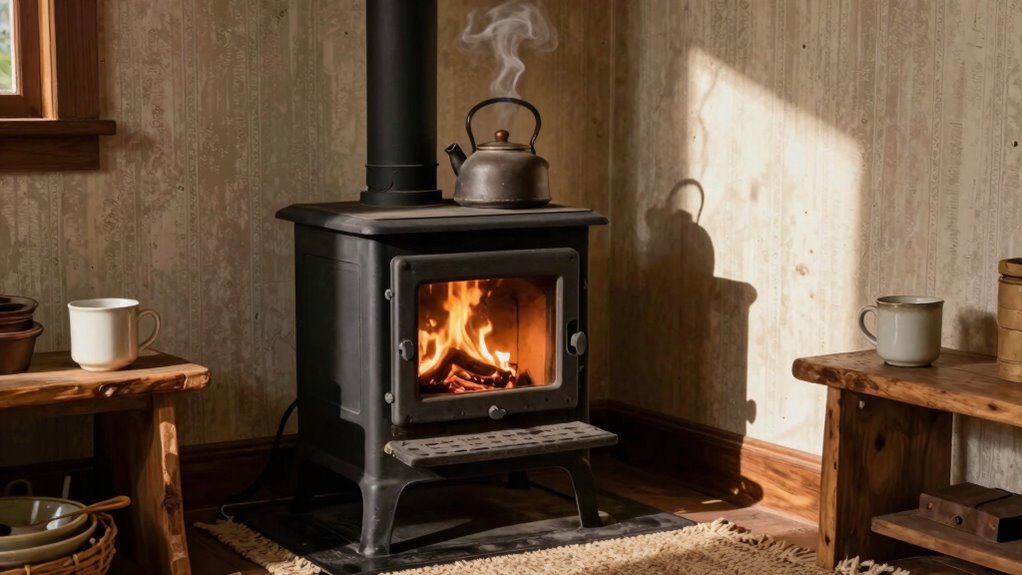
Ever wondered how a small stove can efficiently heat a room? It’s all about understanding the rhythm of your daily routine and how to maximize your stove’s performance. You want to get the most warmth out of every burn while keeping safety top of mind. To do that, you need to master efficiency enhancement—using your stove in a way that conserves fuel and maximizes heat. Start by lighting it early in the day when you’re most active in the space, allowing it to reach a steady temperature before you settle in for longer periods. Keeping the stove well-maintained is vital; regularly cleaning out ash and checking for any blockages ensures it runs smoothly and safely. Use seasoned, dry wood or appropriate fuel, as damp or improper materials reduce efficiency and can produce dangerous creosote buildup. When you load the stove, avoid overfilling it, which can hinder airflow and cause incomplete combustion, wasting fuel and increasing the risk of smoke spillage. Instead, add small, manageable amounts of fuel consistently to keep the fire burning evenly.
Throughout the day, adjusting the damper and air intake allows you to control the burn rate, helping you maintain a comfortable temperature without overdoing it. It’s a delicate balance—too much airflow can cause the fire to burn too fast, wasting fuel and creating excess heat that’s hard to control, while too little can smother the fire, leading to inefficient heating. To guarantee safety precautions, always keep a safe distance from flammable objects and never leave a burning stove unattended for extended periods. Confirm your stove is installed on a non-combustible surface, and keep a fire extinguisher nearby, just in case. Regularly inspect the chimney or vent system, as blockages or creosote buildup can cause dangerous smoke or fire hazards. Additionally, understanding the importance of biodiversity helps us appreciate the balance needed for sustainable living, even in our everyday household practices. Proper ventilation is crucial for safe operation and to prevent harmful fumes from accumulating inside your home. As evening approaches, you might find it helpful to gradually reduce the stove’s heat to prevent overheating, especially if you’re heading to bed. Letting the fire die down naturally before shutting it off ensures less residual heat and reduces the risk of accidental ignition. Establishing a consistent routine—lighting the stove at ideal times, managing airflow carefully, and following safety precautions—helps you create a daily rhythm that maximizes warmth, minimizes fuel waste, and keeps your home safe. Additionally, educating yourself on chimney maintenance can help prevent dangerous buildup and ensure efficient operation. Recognizing the importance of regular cleaning not only improves stove performance but also extends its lifespan. It’s not just about keeping warm; it’s about working smart with your small stove to enjoy comfort and safety every day.
As an affiliate, we earn on qualifying purchases.
Frequently Asked Questions
How Much Fuel Does a Small Stove Consume Daily?
You’ll typically use about 1 to 3 pounds of fuel daily with a small stove, depending on its fuel efficiency and combustion rate. If your stove has a high fuel efficiency, it burns fuel more effectively, reducing consumption. Keep an eye on the combustion rate—if it’s high, you’ll need more fuel. Regularly monitoring these factors helps you manage your fuel use and keep heating costs predictable.
Can a Small Stove Effectively Heat a Large Room?
A small stove can effectively heat a large room if the space has good insulation efficiency. For example, a well-insulated 400-square-foot room can stay warm with a small stove, but poorly insulated spaces may need additional heating. Keep in mind, the stove’s heat output and the room’s insulation are key factors. Proper placement and draft sealing can enhance the stove’s effectiveness in larger areas.
What Safety Precautions Are Needed for Small Stove Use?
You need to prioritize fire safety measures and ventilation requirements when using a small stove. Always guarantee proper clearance around the stove and keep combustible materials away. Install a smoke and carbon monoxide detector nearby, and regularly check for leaks or blockages in ventilation. Use a fire-resistant hearth pad beneath the stove, and never leave it unattended while in use. These precautions help prevent accidents and ensure safe, efficient heating.
How Often Should a Small Stove Be Cleaned?
You should clean your small stove at least once a week during regular use. Regular chimney maintenance is essential to prevent creosote buildup and guarantee safe operation. Always dispose of ash properly, letting it cool completely before discarding. This routine keeps your stove functioning efficiently and safely. If you use it heavily, consider cleaning more frequently to avoid blockages and maintain ideal heating performance.
Is a Small Stove Suitable for Year-Round Heating?
A small stove can be suitable for year-round heating, but “don’t put all your eggs in one basket.” It offers good energy efficiency for small spaces, helping you save on energy costs. However, a cost comparison shows it’s best for supplemental heat rather than full-home heating. Consider your climate and heating needs to determine if a small stove can reliably keep your home warm year-round.
Conclusion
By understanding the daily rhythm of your small stove, you become the conductor of a cozy symphony, guiding warmth through your home with gentle, deliberate motions. Like a steady heartbeat, your stove’s rhythm keeps the space alive and inviting, turning cold mornings into warm conversations and chilly nights into comforting retreats. Embrace this dance, and you’ll find that your small stove isn’t just heating—it’s nurturing a daily melody of comfort that makes every day a little brighter.
Columbus Day / Indigenous Peoples' Day Picks
long weekend sales
As an affiliate, we earn on qualifying purchases.