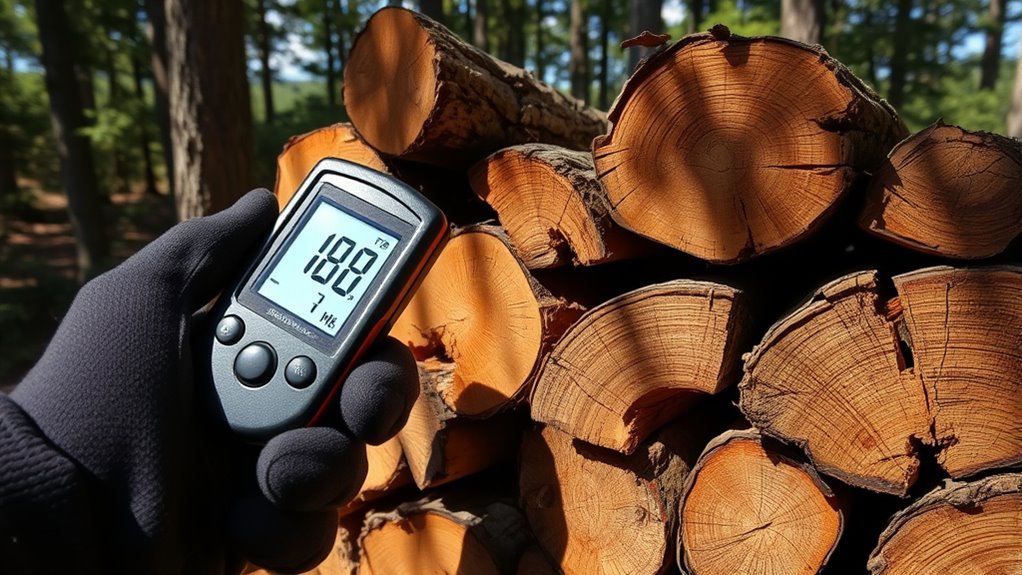
Before burning your wood, you should check its moisture content with a moisture meter designed for wood. Simply insert the probes into the logs and get an instant reading. Ideally, fire requires wood with about 20% moisture or lower for efficient and clean burning. Regular checks help guarantee your wood is properly seasoned, reducing smoke and creosote buildup. Keep going to discover expert tips on using moisture meters and seasoning your wood for the best results.
Key Takeaways
- Use a moisture meter to accurately measure the wood’s moisture content before burning.
- Insert the meter’s probes into the wood to get an immediate reading of moisture levels.
- Ensure the moisture content is around 20% or less for optimal, clean combustion.
- Regularly check freshly cut or stored wood to monitor drying progress.
- Properly seasoned wood reduces smoke, creosote buildup, and enhances safety during burning.
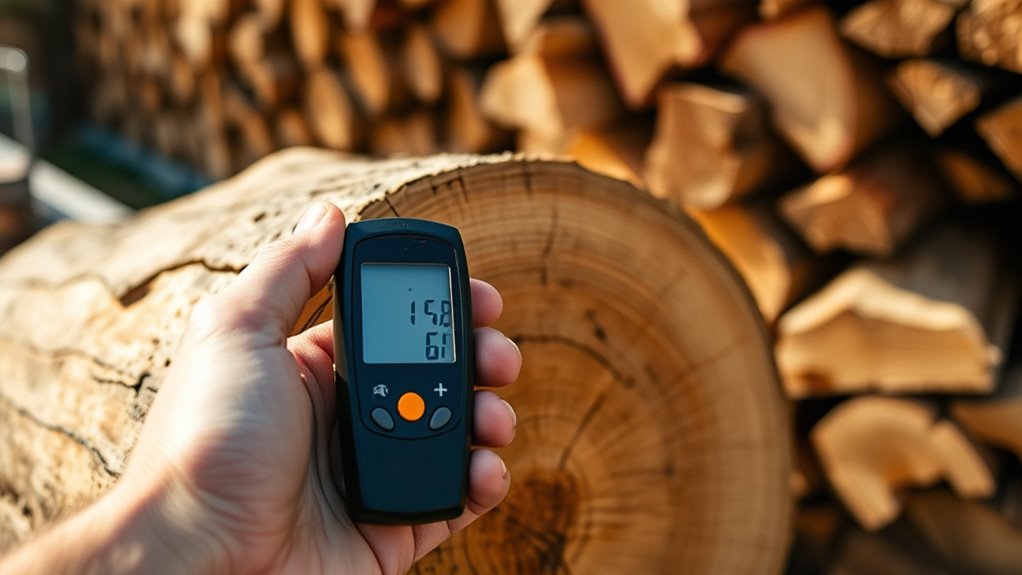
Understanding the moisture content in wood is essential for ensuring the quality and durability of your projects. When it comes to burning wood, knowing its moisture level can make a significant difference in efficiency, safety, and the overall experience. If you skip this step, you risk producing excess smoke, creosote buildup, and even dangerous chimney fires. To accurately measure moisture, a moisture meter becomes your best tool. This device quickly assesses the moisture content by inserting its probes into the wood, giving you a clear reading that indicates whether the wood is ready to burn or needs more seasoning. Regularly checking moisture levels with a moisture meter helps you maintain the best burning conditions.
Wood seasoning is a vital process that reduces the moisture content of freshly cut logs. Green or unseasoned wood can contain moisture levels exceeding 50%, which isn’t suitable for burning. Proper seasoning involves drying the wood outdoors or in a well-ventilated space until the moisture content drops to around 20% or less. Using a moisture meter during this process allows you to monitor progress and determine the ideal time to burn the wood. It’s a simple yet effective way to ensure your firewood is properly prepared, which in turn improves combustion and minimizes smoke.
Properly seasoned wood has moisture content around 20% or less for efficient burning and minimal smoke.
When you use a moisture meter, you get immediate feedback that helps you avoid common mistakes, such as burning wood that’s still too wet. Wet wood not only burns inefficiently but also produces more creosote, which can clog your chimney and pose fire hazards. By checking moisture levels before lighting a fire, you save yourself time, money, and potential hazards. It’s worth noting that different types of wood have varying ideal moisture levels, but generally, anything below 20% is considered good for burning.
Investing in a good moisture meter is a smart move if you’re serious about wood burning. These devices are generally affordable and easy to use—simply insert the probes into the wood, and you get an instant reading. Some meters are designed specifically for wood, providing accurate measurements even in tough conditions. Regularly checking your wood’s moisture content ensures you’re burning dry, seasoned wood, which burns cleaner and more efficiently, producing less smoke and ash.

Wood Moisture Meter for Wood, Like Hardwood and Softwood Replaceable Pin Moisture Tester with Batteries
Instant & Accurate Readings – Measures up to 12mm deep for precise wood moisture results. Save readings with…
As an affiliate, we earn on qualifying purchases.
As an affiliate, we earn on qualifying purchases.
Frequently Asked Questions
How Does Ambient Humidity Affect Wood Moisture Levels?
Ambient humidity directly impacts wood moisture levels because higher air moisture increases wood humidity, making it harder to dry out. When the air is humid, your wood absorbs moisture from the environment, leading to less efficient burning and more smoke. Conversely, in low humidity conditions, wood dries faster and burns cleaner. To guarantee ideal burning, check air moisture and store your wood in a dry place, especially during humid weather.
What Are the Best Tools for Measuring Wood Moisture Accurately?
You should use moisture meters and humidity gauges for the most accurate measurements. A moisture meter directly tests the wood’s internal moisture content, giving you precise readings. Humidity gauges can help monitor ambient air moisture, which influences wood drying. Together, these tools guarantee your wood is properly seasoned, preventing inefficient burning or creosote buildup. Invest in quality moisture meters and humidity gauges to keep your firewood safe and effective.
Can Seasoned Wood Still Have High Moisture Content?
You might think seasoned wood is always dry, but it can still have high moisture content if not properly stored. Even if it looks dry on the outside, the inside could retain moisture, reducing burning efficiency. Always check the moisture content with a reliable meter before burning, especially with seasoned wood. This guarantees you’re burning dry wood, which produces cleaner heat and less creosote buildup.
How Long Should Wood Cure Before It’s Considered Dry?
You should wait at least 6 to 12 months during the seasoning process for your wood to be considered dry, depending on the type and storage conditions. Aim for a moisture content below 20%, which meets typical moisture thresholds for safe burning. Proper curing guarantees the wood is less likely to produce smoke and creosote, making your fires cleaner and more efficient. Always test moisture levels before burning for best results.
Does Wood Type Influence Ideal Moisture Content for Burning?
Yes, wood type influences the ideal moisture content for burning. Denser woods like oak and hickory tend to retain moisture longer due to their high density, requiring longer drying times. Lighter woods, such as pine, dry faster and need less curing time. Understanding wood density helps you determine when your firewood reaches the most favorable moisture level, usually around 20%, ensuring efficient burning and less creosote buildup.
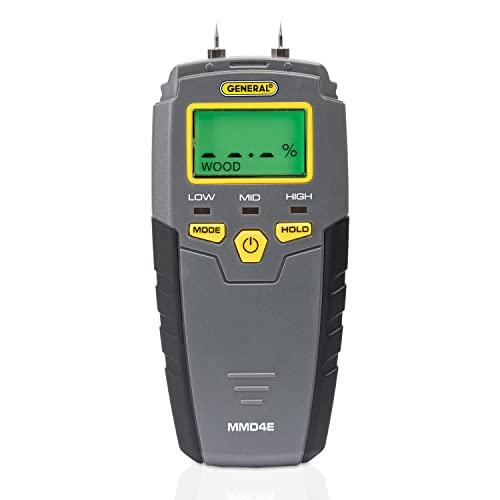
General Tools MMD4E Digital Moisture Meter, Water Leak Detector, Moisture Tester, Pin Type, Backlit LCD Display With Audible and Visual High-Medium-Low Moisture Content Alerts, Grays
HUMIDITY SENSOR: Our handy meter tool can quickly determine what level of remediation is needed to keep your…
As an affiliate, we earn on qualifying purchases.
As an affiliate, we earn on qualifying purchases.
Conclusion
Now that you know how to check your wood’s moisture, you’re ready to make every fire count. But beware—if you overlook this vital step, you might face unexpected smoke, creosote buildup, or even dangerous chimney fires. The secret to a perfect burn lies in the moisture level, and the choice is yours. Will you risk it? Or will you take that extra moment to guarantee your wood is just right? The fire’s future awaits your decision.

Mecurate Digital Pin Type Wood Moisture Meter with 3 Colored Indicators, Moisture Detector 2 Mode 8 Calibration Large Backlit for Wood, Wall, Firewall (Orange)
✅【Accurate & Trusted Measures, Identify Moisture Level】With accurate & trusted performance, Mecurate moisture meter can detect moisture content…
As an affiliate, we earn on qualifying purchases.
As an affiliate, we earn on qualifying purchases.
Wood Moisture Meter for Wood, Like Hardwood and Softwood Replaceable Pin Moisture Tester with Batteries
Instant & Accurate Readings – Measures up to 12mm deep for precise wood moisture results. Save readings with…
As an affiliate, we earn on qualifying purchases.
As an affiliate, we earn on qualifying purchases.