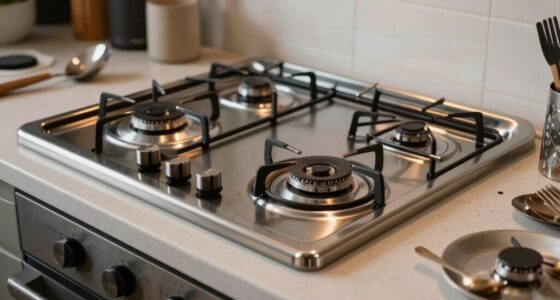
To inspect and replace stove gaskets and seals, regularly check for cracks, tears, or warping around the oven door and burners. Make certain the gasket sits evenly and feels tight when closed; look for any gas smells or uneven heating as warning signs. If you find damage or suspect leaks, clean the area thoroughly and replace the gasket with the right high-temperature material. Staying vigilant helps prevent hazards—continue to explore how proper maintenance keeps your stove safe and efficient.
Key Takeaways
- Regularly inspect oven door and burner gaskets for cracks, tears, warping, or looseness to identify signs of damage.
- Clean gasket surfaces thoroughly before replacement to ensure proper adhesion and sealing.
- Use high-temperature silicone gaskets recommended by the manufacturer for durability and heat resistance.
- Remove old gaskets carefully, then attach new ones evenly around the perimeter, ensuring a secure fit.
- Test for leaks by checking for gas odors or uneven oven temperatures after installation.

Your stove’s gaskets and seals play a essential role in maintaining its efficiency and safety. They guarantee that heat stays within the oven and prevent unwanted air or gases from escaping. Properly functioning gaskets are especially critical for gas leak prevention, as any deterioration can lead to dangerous leaks that pose fire hazards or health risks. When inspecting your stove, start by checking the seals around the oven door and burners. Look for cracks, tears, or signs of wear, such as warping or looseness. If you notice any damage, it’s time to replace the gaskets to guarantee your stove operates safely and efficiently.
Choosing the right gasket material is imperative for durability and safety. Different materials offer varying resistance to heat, chemicals, and wear. For instance, high-temperature silicone gaskets are popular because they withstand thermal cycling and resist degradation over time. When selecting gasket material, consider the manufacturer’s recommendations for your specific stove model. Using the appropriate material not only prolongs gasket life but also enhances gas leak prevention by maintaining a tight seal. Avoid using makeshift solutions like paper or cloth, as these materials won’t withstand the heat and can compromise safety.
Proper gasket installation is equally important. Before installing a new gasket, clean the sealing surface thoroughly, removing any debris, grease, or old adhesive that might prevent a proper seal. When fitting the gasket, ensure it sits evenly around the entire perimeter and is securely attached. A poorly installed gasket can lead to gaps, allowing gases to escape and increasing the risk of leaks. Regularly check the gasket’s condition, especially if you notice unusual gas odors, uneven oven temperatures, or decreased efficiency. Addressing these issues promptly can prevent more serious problems down the line.
Maintaining your stove’s gaskets and seals is straightforward but requires vigilance. Schedule inspections periodically, particularly if your stove is used frequently or if it’s an older model. Replacing worn or damaged gaskets promptly keeps your appliance running safely and helps prevent gas leaks. Remember that selecting the right gasket material and installing it properly are fundamental steps in guaranteeing a secure seal. Proper installation techniques can significantly reduce the chances of vulnerability to leaks, which is crucial for safety. By doing so, you safeguard your household from potential hazards and keep your stove operating at peak performance. Regular maintenance and attentive inspection are your best defenses against gas leaks and guarantee your cooking environment remains safe and efficient.
stove oven door gasket replacement
As an affiliate, we earn on qualifying purchases.
As an affiliate, we earn on qualifying purchases.
Frequently Asked Questions
How Often Should Stove Gaskets Be Replaced?
You should replace stove gaskets as part of regular oven insulation checks, typically every 1 to 2 years, or if you notice drafts, uneven heating, or difficulty maintaining temperature. During stove maintenance, inspect the gaskets for cracks or wear. Replacing worn gaskets guarantees your oven seals properly, improves energy efficiency, and maintains consistent cooking temperatures. Regular upkeep helps your stove perform at its best and extends its lifespan.
Can I Replace Stove Seals Myself Without Professional Help?
Imagine the soft, pliable gasket sealing your stove like a gentle hug, keeping heat in. You can definitely do a DIY repair if you’re comfortable with basic tools, but always follow safety precautions. Turn off the power, wear gloves, and work in a well-ventilated area. With patience and attention, replacing stove seals yourself is doable, saving money while ensuring your appliance functions safely and efficiently.
Are There Different Gasket Types for Various Stove Models?
Yes, there are different gasket types for various stove models. You need to take into account gasket materials like silicone, fiberglass, or rubber, which offer different heat resistance and durability. Check your stove’s compatibility before purchasing, as not all gaskets fit every model. Properly matching the gasket to your stove ensures a tight seal and safe operation. Always verify the specifications to choose the right gasket type for your appliance.
What Are Signs of a Failing Stove Gasket Besides Leaks?
When your stove gasket fails, you’ll notice uneven oven temperature, longer cooking times, and food not browning properly. These signs indicate that the gasket material isn’t sealing well anymore. You might also see drafts or cold spots inside the oven. If the gasket becomes brittle, cracked, or warped, it’s time to replace it. Keep an eye on these signs to maintain a consistent temperature and ideal cooking performance.
How Do I Choose the Right Replacement Gasket?
To choose the right replacement gasket, start by considering material options like silicone, rubber, or fiberglass, depending on your stove’s needs. Make certain to verify compatibility considerations such as size, shape, and heat resistance to guarantee it fits your appliance properly. Measure the old gasket carefully, and consult your stove’s manual or manufacturer’s recommendations to select a durable, heat-safe gasket that matches your stove’s specifications.
Conclusion
Regularly inspecting and replacing your stove gaskets and seals keeps your appliance running smoothly, like a well-oiled machine. Think of these parts as the unsung heroes safeguarding your kitchen from smoke and heat leaks. When you give them proper care, you prolong your stove’s life and ensure safety with every cook. So, stay vigilant—think of your stove as a trusted friend that needs a little TLC to keep performing at its best.