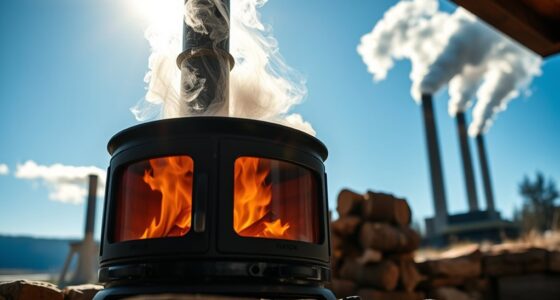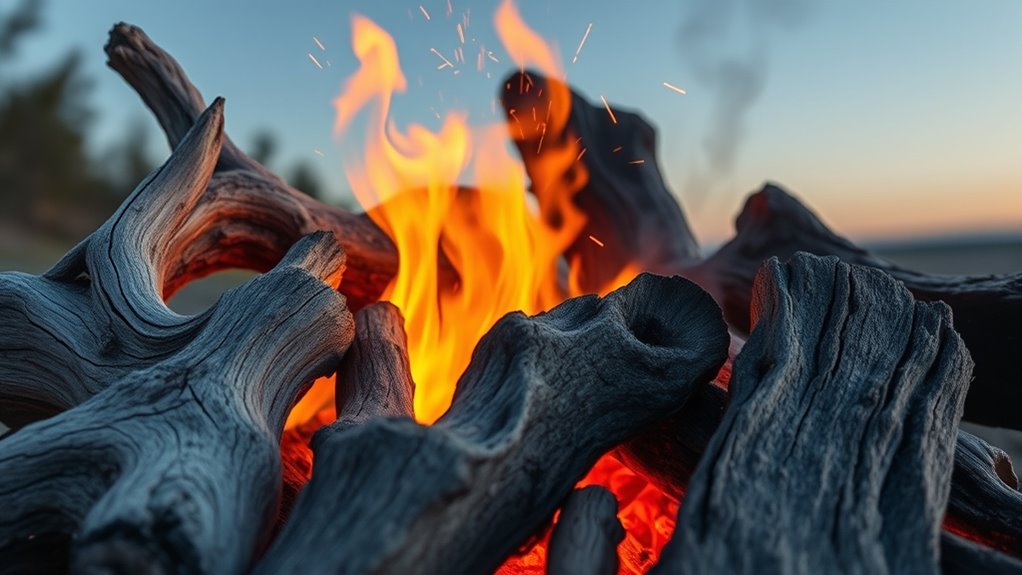

You cannot safely burn driftwood or treated lumber because it releases toxic chemicals, fumes, and residues that harm your health and the environment. Burning these materials pollutes the air, deposits hazardous substances on soil and water, and can cause dangerous chimney fires. Many regions restrict burning treated wood due to safety concerns. To protect your health and the environment, it’s best to find proper disposal methods or eco-friendly alternatives—discover more about safe options ahead.
Key Takeaways
- Burning driftwood releases toxic fumes containing salt, sand, and impurities, harming health and the environment.
- Treated lumber contains chemicals like arsenic and chromium, which emit hazardous fumes when burned.
- Many regions prohibit burning treated wood due to health and safety regulations.
- Residue buildup from burning increases chimney fire risks and requires proper maintenance.
- Safer disposal includes recycling or waste management; avoid burning to protect health and ecosystems.
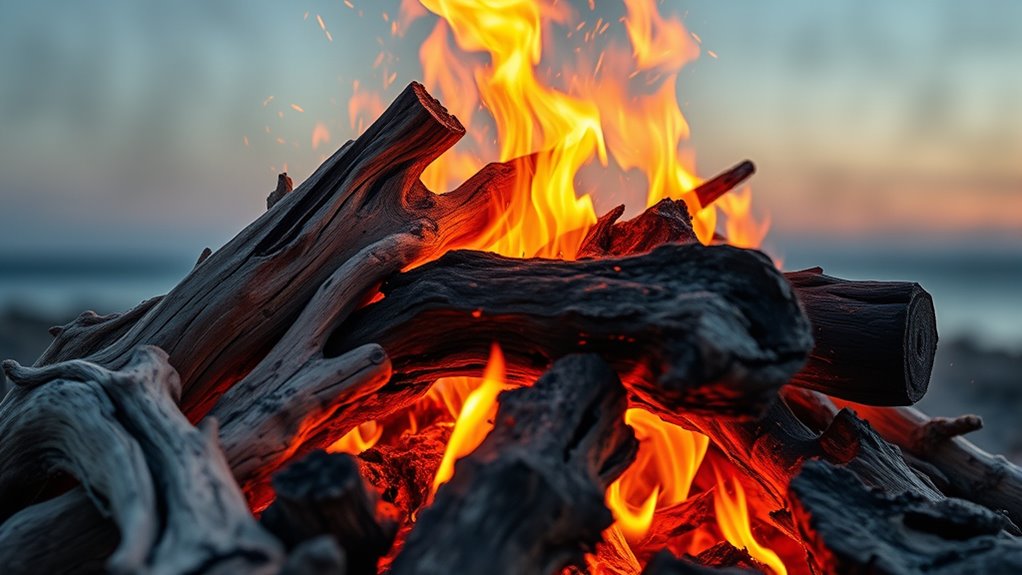
Have you ever wondered whether burning driftwood or treated lumber is safe? It’s a common question among outdoor enthusiasts and homeowners who want to make the most of their fire pits or fireplaces. While the idea of burning driftwood might seem appealing because it’s free and readily available, it’s important to understand the environmental impact and safety considerations involved. Burning driftwood can release pollutants into the air, including ash and chemicals that may harm the environment and your health. Driftwood often contains salt, sand, and other impurities from the water, which can produce toxic fumes when burned. Additionally, if the wood has been collected from polluted waters or areas contaminated with chemicals, burning it releases hazardous substances that can linger in the air and settle on the ground, impacting local ecosystems.
When it comes to treated lumber, safety considerations become even more critical. Treated wood is infused with chemicals—often preservatives like chromated copper arsenate or other substances designed to resist pests and rot. Burning treated lumber releases toxic fumes, including arsenic, chromium, and other hazardous chemicals, which are dangerous to breathe in and can contaminate soil and water nearby. These fumes are not only harmful to your respiratory health but can also pose long-term environmental risks. Many regions have strict regulations prohibiting the burning of treated wood precisely because of these safety concerns. Ignoring these rules can lead to health issues, especially for children, pets, or anyone with respiratory conditions.
Furthermore, burning driftwood or treated lumber can produce creosote and other residues that build up in chimneys and flues, increasing the risk of dangerous chimney fires. These residues are difficult to clean and can pose serious safety hazards if not managed properly. From an environmental standpoint, burning wood that’s not suitable for combustion contributes to air pollution and may violate local laws or regulations. It’s always safer and more responsible to dispose of driftwood and treated lumber through appropriate channels, such as recycling centers or waste management programs, rather than risking the health and safety of yourself and the environment. Additionally, modern alternatives like eco-friendly fuels can provide safer options for outdoor fires without harmful emissions.
eco-friendly fire pit fuel
As an affiliate, we earn on qualifying purchases.
As an affiliate, we earn on qualifying purchases.
Frequently Asked Questions
Is Burning Driftwood Legal in All Areas?
Burning driftwood legality varies by location due to driftwood regulations and treated lumber restrictions. You should check local laws because some areas ban burning driftwood if it contains certain contaminants or invasive species. Additionally, treated lumber is often prohibited because it releases toxic fumes when burned. Always verify with your local fire department or environmental agency to guarantee you’re following the rules and avoiding potential fines or health hazards.
What Are the Long-Term Environmental Impacts of Burning Treated Wood?
Burning treated wood might seem harmless, but it’s not. The long-term environmental impacts include harmful chemical emissions that pollute the air and contribute to respiratory issues. Plus, soil contamination occurs as toxic residues seep into the ground, threatening plant and animal life. Ironically, your attempt to dispose of waste by burning could lead to lasting environmental damage, making the problem worse than the original discarded wood.
Can I Burn Driftwood Indoors Safely?
You shouldn’t burn driftwood indoors because it often has high moisture content, which causes excessive smoke and creosote buildup. Plus, burning driftwood releases unpleasant scents that can linger and irritate your lungs. Even if it seems harmless, it’s best to avoid indoor fires with driftwood. Instead, opt for properly seasoned firewood that’s dry and stored for safe, clean burning, ensuring a healthier and more pleasant indoor environment.
How Does Burning Treated Lumber Affect Air Quality?
Burning treated lumber is like releasing a toxic tornado into your home’s air quality, and it substantially worsens pollutant emissions. The chemicals in treated wood, including arsenic and formaldehyde, are released when burned, contaminating the air you breathe. This pollution can cause serious health issues, from respiratory problems to long-term illnesses. It’s best to avoid burning treated lumber altogether to protect your health and the environment.
Are There Safer Alternatives to Burning Untreated or Treated Wood?
You should avoid burning untreated or treated wood for safer disposal. Instead, consider eco-friendly alternatives like composting or recycling wood scraps. For larger amounts, check local wood disposal regulations or contact disposal facilities. If you want to burn wood, explore alternative burning methods such as using a wood stove with proper ventilation, which minimizes harmful emissions. Always prioritize safe disposal to protect your health and the environment.

Sealegend 30 Feet Chimney Sweep Kit Chimney Brush, Chimney Cleaning Kit and Rotary Chimney Cleaning System, Fireplace Brush Tool with 9 Nylon Flexible Rods
[Button Locking Design] The chimney sweep kit features a beautiful chrome-plated button design that ensures that it will…
As an affiliate, we earn on qualifying purchases.
As an affiliate, we earn on qualifying purchases.
Conclusion
In the end, burning driftwood or treated lumber isn’t just about safety; it’s about protecting your health and the environment. You must avoid harmful fumes, prevent pollution, and preserve natural resources. You need to stay informed, stay cautious, and stay responsible. Burning responsibly isn’t just a choice; it’s a duty. By making mindful decisions, you can enjoy your fires while safeguarding your surroundings for today and tomorrow.
fireplace residue remover
As an affiliate, we earn on qualifying purchases.
As an affiliate, we earn on qualifying purchases.
recycling driftwood and treated lumber
As an affiliate, we earn on qualifying purchases.
As an affiliate, we earn on qualifying purchases.