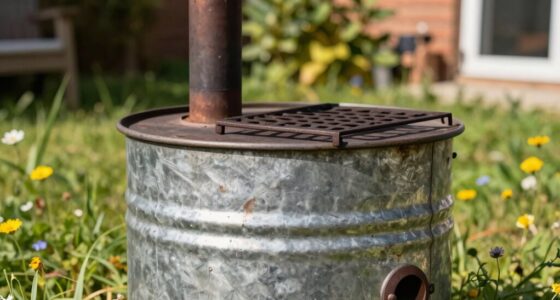
When building a cooking surface or oven over a wood stove, choose fireproof materials like firebrick, refractory cement, or heat-resistant tiles that can withstand high temperatures safely. Make certain your ventilation system, such as chimney or exhaust fans, can handle the added heat and smoke, and check local safety codes for compliance. Proper planning and material selection make your setup durable and safe. Keep exploring to discover more tips for a successful and secure installation.

Get backup power and energy gear delivered free with Prime
- Fast, free delivery on millions of items
- Prime Video, Amazon Music and more included
- Member-only deals all year
Key Takeaways
- Use fireproof, heat-resistant materials like firebrick or refractory cement for the cooking surface to withstand high temperatures.
- Evaluate and upgrade ventilation systems to ensure proper airflow and remove smoke, fumes, and excess heat effectively.
- Confirm existing chimney capacity and consider extending or upgrading it to handle additional venting needs safely.
- Ensure compliance with local safety codes and regulations regarding materials, ventilation, and construction permits.
- Plan the layout carefully, prioritizing safety, durability, and ease of maintenance for a functional, long-lasting cooking setup.

Creating a cooking surface or oven over a wood stove can greatly enhance your kitchen’s functionality and efficiency. When planning this addition, safety and practicality are your top priorities. To guarantee your new setup is both durable and safe, you need to pay close attention to using the right fireproof materials. These materials, such as firebrick, refractory cement, or heat-resistant tiles, are vital because they withstand high temperatures without deteriorating or posing fire hazards. Avoid using combustible materials like wood, drywall, or vinyl in the construction of your cooking surface or oven, as they can easily catch fire or degrade over time. Properly choosing fireproof materials not only protects your kitchen but also ensures the longevity of your installation.
Ventilation considerations are equally essential when building over a wood stove. Wood stoves produce smoke, fumes, and excess heat that need to be properly vented to avoid smoke buildup, carbon monoxide poisoning, or fire risks. Before you begin, assess your existing chimney or vent system to confirm it can handle the additional load of a cooking surface or oven. You might need to upgrade or extend your ventilation system to guarantee it effectively directs smoke outside. Installing a range hood or exhaust fan above the new cooking area can greatly improve air quality by removing smoke, steam, and odors. Remember, good ventilation isn’t just about comfort—it’s about safety. Proper airflow prevents dangerous buildup of combustible gases and ensures that your kitchen remains a safe workspace. Additionally, understanding local building codes and permitting requirements can help ensure your installation complies with safety regulations. Proper airflow prevents dangerous buildup of combustible gases and ensures that your kitchen remains a safe workspace. Remember, good ventilation isn’t just about comfort—it’s about safety. Proper airflow prevents dangerous buildup of combustible gases and ensures that your kitchen remains a safe workspace.
As an affiliate, we earn on qualifying purchases.
Frequently Asked Questions
What Materials Are Safest for Constructing a Cooking Surface Over a Wood Stove?
You should choose materials with high heat resistance and proven material safety. Cast iron and soapstone are excellent because they handle high temperatures well and are safe for cooking. Firebrick and certain types of ceramic also work, providing durability and safety. Avoid plastics or materials that release toxins when heated. Always guarantee the materials you select are specifically rated for high-temperature use, so your cooking surface remains safe and effective.
How Do I Ensure Proper Ventilation With an Added Oven or Surface?
You must prioritize proper ventilation to keep your space safe. Install ventilation ducts that direct smoke evacuation efficiently, preventing dangerous buildup. Make sure the ducts are unobstructed and positioned correctly to draw out smoke and fumes as you cook. Regularly inspect and clean them to maintain airflow. By doing this, you’ll enjoy your cooking space without risking smoke infiltration or health hazards—keeping safety and comfort firmly under your control.
Can I Retrofit an Existing Wood Stove to Include a Cooking Surface?
Yes, you can retrofit an existing wood stove to include a cooking surface through a DIY renovation. Consider alternative stove types designed for easy modifications, and guarantee you follow safety guidelines. You’ll need to reinforce the stove top, add a sturdy cooking surface, and check that proper ventilation remains intact. Always consult manufacturer instructions or a professional to prevent safety hazards and ensure the retrofit works efficiently.
What Are the Safety Considerations for Building Over a Wood Stove?
Coincidences often reveal safety risks, so you must prioritize them. When building over a wood stove, guarantee a proper fire escape route is accessible, and keep smoke alarms functional and nearby. Use fire-resistant materials, maintain adequate clearance, and avoid blocking vents. Regularly inspect for smoke or heat buildup. These steps help prevent fires, protect your family, and ensure safe cooking while enjoying the cozy warmth of your stove.
How Do I Maintain Even Heat Distribution Across the Cooking Surface?
To maintain even heat distribution, you should use a thick, cast iron or brick surface that retains heat well. Adjust the fire to control temperature, ensuring consistent heat levels across the surface. Regularly monitor the heat with a thermometer, and rotate cookware to prevent hot spots. Proper insulation and airflow management also help distribute heat evenly, giving you better temperature control for cooking your meals perfectly.
Conclusion
Creating a cooking surface or oven over your wood stove can transform your outdoor kitchen and boost efficiency. Did you know that wood stoves can reach temperatures up to 700°F, making them versatile for cooking and baking? By constructing a sturdy surface or oven, you maximize heat use and enjoy delicious meals year-round. With a little effort, you’ll turn your wood stove into a true culinary centerpiece, saving energy and adding convenience to your outdoor cooking experience.
Halloween Picks
halloween
As an affiliate, we earn on qualifying purchases.