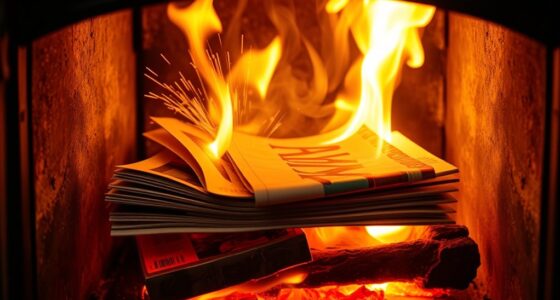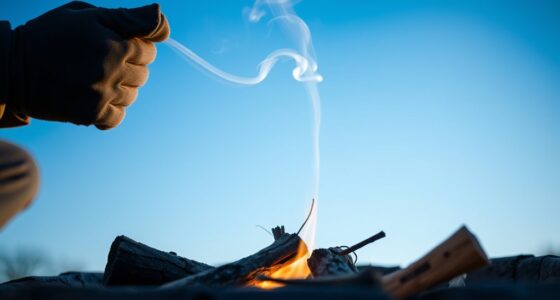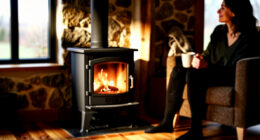
Avoid burning chemically treated, painted, or stained woods, as they release toxic fumes that can harm your health and damage your chimney. Stay away from green or unseasoned wood, which contains high moisture and produces excessive smoke and creosote buildup, increasing fire risk. Also, steer clear of driftwood with salt and pollutants or any wood infused with chemicals. Knowing which fuels to skip can help keep your home safe and air clean—learn more to protect your hearth.
Key Takeaways
- Avoid burning chemically treated or infused woods, such as those with preservatives like CCA, due to toxic fumes and health risks.
- Refrain from burning softwoods like pine or cedar alone, as they produce more creosote and soot, increasing chimney fire risk.
- Do not burn green or unseasoned wood, which contains high moisture, leading to more smoke, creosote buildup, and indoor air pollution.
- Steer clear of driftwood and woods containing salt or pollutants, as they can corrode chimney components and release harmful substances.
- Avoid burning painted, stained, glued, or chemically infused woods due to the release of hazardous fumes and potential appliance damage.
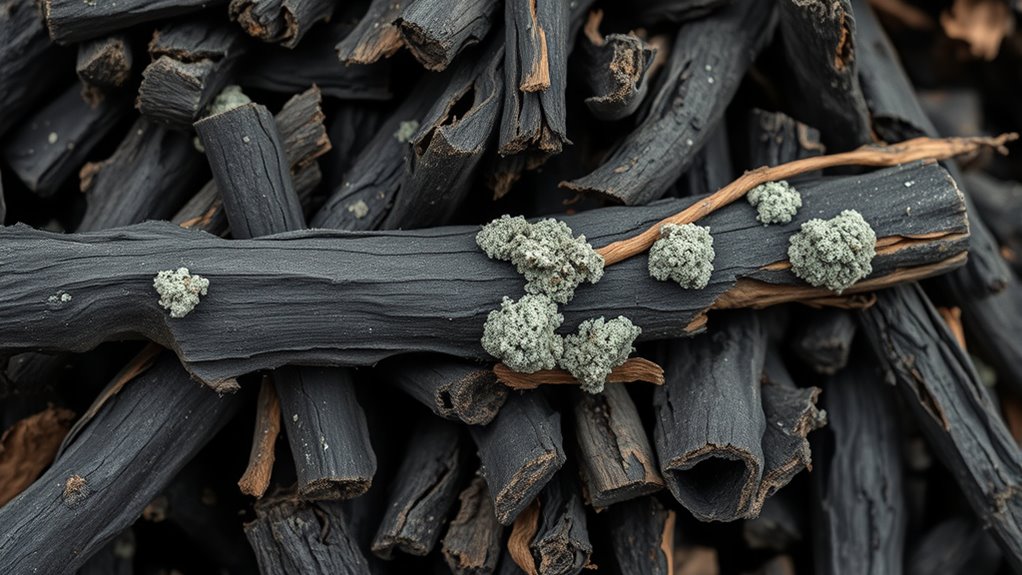
When you’re choosing wood for burning, it’s essential to know which types can cause more harm than good. Not all wood is created equal, and some can pose serious safety hazards while degrading indoor air quality. Burning certain types of wood releases toxic chemicals, increases the risk of chimney fires, and introduces pollutants into your home environment. Being aware of these dangers helps you select safer options and maintain a healthier living space.
One of the most important considerations is avoiding pressure-treated or chemically infused woods. These woods are often treated with preservatives like chromated copper arsenate (CCA) or other chemicals to prevent rot and pests. When burned, they release hazardous toxins such as arsenic, chromium, and other carcinogens, which can settle in your lungs or contaminate your indoor air. Burning these woods not only jeopardizes your health but also creates safety hazards, as the fumes can ignite or cause corrosion in your chimney or stove components. Never burn painted, stained, or glued woods either, since they contain volatile compounds that release dangerous fumes when heated.
Softwoods like pine, cedar, and spruce, while commonly used for fireplaces, can also pose issues if burned improperly. These woods tend to produce more creosote—a flammable tar buildup—inside your chimney, increasing the risk of chimney fires. They also release higher levels of resin and sap, which can cause excessive soot and unpleasant odors. Burning softwoods in a controlled manner and ensuring proper chimney maintenance can mitigate some risks, but it’s wise to limit their use or combine them with seasoned hardwoods.
Another category to avoid includes driftwood and green or unseasoned woods. Driftwood may contain salt, chemicals, or pollutants from water exposure, which can corrode metal components and produce toxic fumes. Unseasoned or “green” wood contains high moisture content, which not only reduces burning efficiency but also generates more smoke and creosote, further impairing indoor air quality. Excess smoke and creosote are associated with safety hazards, such as chimney fires and respiratory issues, especially for those with asthma or allergies.
In short, avoiding chemically treated woods, certain softwoods, driftwood, and green or unseasoned woods helps you protect your home from safety hazards and maintain good indoor air quality. Choosing properly seasoned hardwoods and reputable sources ensures a cleaner, safer burn. Being mindful of what you burn is the first step toward a healthier, safer fireplace experience.
chemically treated firewood for fireplace
As an affiliate, we earn on qualifying purchases.
As an affiliate, we earn on qualifying purchases.
Frequently Asked Questions
Can Burning Treated Wood Cause Health Issues?
Burning treated wood can definitely cause health issues because it releases harmful chemical emissions into the air. These emissions can lower indoor air quality, leading to respiratory problems, headaches, and other health concerns. You should avoid burning treated wood in your fireplace or stove to protect your health and guarantee good indoor air quality. Instead, stick to natural, untreated wood that burns cleaner and safer.
Is It Safe to Burn Recycled or Painted Wood?
Burning recycled or painted wood isn’t safe because it can release harmful chemicals. Studies show that paint fumes and chemical residues from recycled wood can cause respiratory issues and environmental pollution. Recycling concerns highlight that treated or painted wood often contains toxins, so burning it releases dangerous fumes into your home and the air. For safety, stick to natural, untreated wood to avoid health risks and environmental harm.
Do Exotic or Imported Woods Produce More Pollutants?
Exotic and imported woods often produce more pollutants when burned because they can contain higher levels of resins, oils, and chemicals from treatments or finishes. These substances release toxic fumes and particulate matter into the air, making them less safe to burn. You should avoid burning exotic or imported woods, especially if you’re concerned about indoor air quality or environmental impact. Stick to well-seasoned, untreated local woods for safer, cleaner burning.
How Does Burning Softwood Differ From Hardwood Safety-Wise?
Burning softwood can pose more fire hazards and produce more wood smoke than hardwood, making it less safe. Softwoods like pine or cedar ignite quickly, creating intense flames and more creosote buildup, increasing your risk of chimney fires. You might feel safer with hardwood, but neglecting proper burning techniques can still lead to dangerous smoke inhalation or fire hazards. Always choose seasoned hardwood for safer, cleaner fires.
Are There Legal Restrictions on Burning Certain Types of Wood?
You might face legal restrictions on burning certain woods like wooden pallets and construction scraps, as they often contain treated or painted materials that are hazardous. Check your local regulations before burning these items, since doing so can release toxic chemicals and violate environmental laws. Burning untreated, natural hardwoods and softwoods is usually legal, but avoid these restricted materials to stay compliant and protect your health.

Premium Seasoned Firewood – Mixed Hardwoods (Oak, Maple & Cottonwood) | Ready to Burn | Ideal for Fireplaces, Wood Stoves & Outdoor Fires | Small Bundle 3 Pieces 11 1/2-12 Inches
Wood Type: Mixed hardwoods – primarily Oak, with Maple and Cottonwood
As an affiliate, we earn on qualifying purchases.
As an affiliate, we earn on qualifying purchases.
Conclusion
To keep your fires safe and clean, steer clear of burning pressure-treated, painted, or stained wood. These woods release harmful chemicals and toxic fumes, turning your cozy hearth into a dangerous forge. Think of it as avoiding the blackened ruins of a once-glorious castle—better to keep your flames pure and bright. Stick to seasoned hardwoods like oak or maple, and your fire will burn safely, like a noble knight’s torch guiding the way.
fireplace softwood logs
As an affiliate, we earn on qualifying purchases.
As an affiliate, we earn on qualifying purchases.

Wood Moisture Meter for Wood, Like Hardwood and Softwood Replaceable Pin Moisture Tester with Batteries
Instant & Accurate Readings – Measures up to 12mm deep for precise wood moisture results. Save readings with…
As an affiliate, we earn on qualifying purchases.
As an affiliate, we earn on qualifying purchases.