Heating with wood stoves provides you with a reliable, renewable heat source that can lower your energy costs and keep you warm during power outages. However, it also means you’ll need to source, store, and tend the wood, plus deal with emissions from older models. Proper installation, maintenance, and sustainable harvesting are essential for safety and environmental benefits. If you want to explore the full picture, including the pros and cons, keep browsing further.
Key Takeaways
- Wood stoves are a renewable, carbon-neutral heating option when responsibly sourced, reducing environmental impact compared to fossil fuels.
- Proper installation and maintenance are essential for safety, efficiency, and minimizing air pollution from emissions.
- They provide reliable, off-grid heat during power outages, offering independence and consistent warmth.
- Initial installation costs can be high, and ongoing expenses include wood procurement, storage, and stove upkeep.
- Efficiency varies by model; well-maintained stoves burn less wood, produce fewer pollutants, and save costs in the long run.
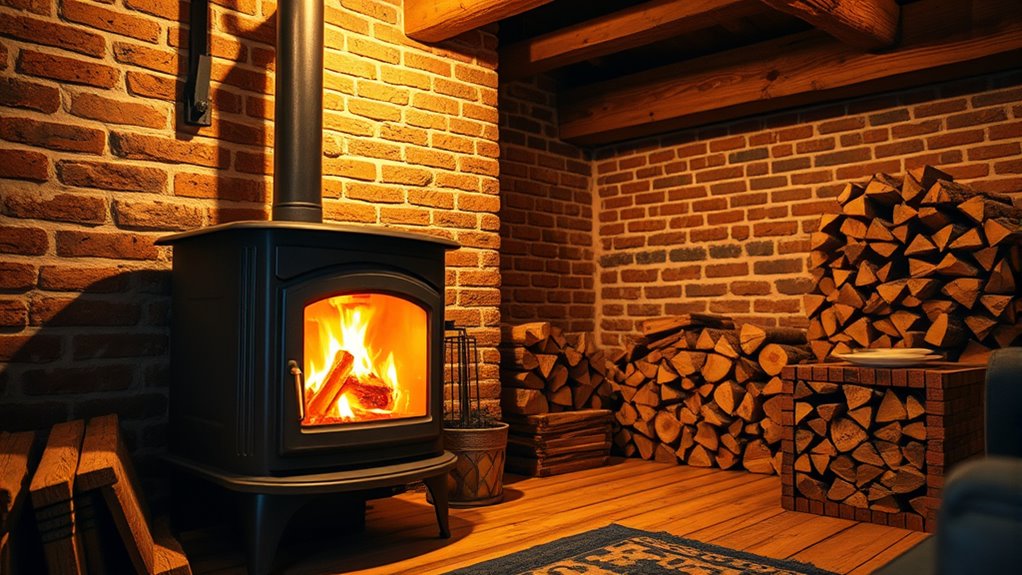
Heating with wood stoves offers a cozy and cost-effective way to warm your home, especially if you have access to cheap or renewable wood sources. One of the primary advantages is that wood is a renewable resource, and when sourced responsibly, it can reduce your reliance on fossil fuels. This shift can lessen your home’s overall carbon footprint, as burning wood releases only as much carbon dioxide as the tree absorbed during its growth. However, it’s important to contemplate the environmental impact carefully. Poorly managed wood harvesting or inefficient stoves can contribute to air pollution through the release of particulate matter and volatile organic compounds. Modern EPA-certified stoves have considerably reduced emissions, but older models might still pose environmental concerns. When evaluating installation costs, you’ll notice that setting up a wood stove involves more than just buying the appliance. You’ll need to guarantee proper clearance from combustible materials, a suitable chimney or venting system, and possibly some foundation work. These installation costs can add up, especially if your home isn’t already equipped for wood stove use. While the initial investment might seem high, many find that the long-term savings on heating bills outweigh these expenses, especially during colder months.
Once installed, a wood stove offers a reliable heat source that can operate independently of electricity, making it a good backup during outages. Plus, you get the satisfaction of using a natural, renewable fuel. But keep in mind, the ongoing process of sourcing, storing, and tending to wood requires effort. You’ll need a safe storage space to keep your wood dry and accessible, and regular maintenance to keep your stove functioning efficiently. The efficiency of your stove directly impacts your fuel consumption and environmental footprint. An inefficient stove burns more wood and releases more pollutants, which can negate some environmental benefits. Additionally, the use of sustainable harvesting practices can help mitigate environmental concerns associated with wood heating.
In terms of cost, besides installation, you should think about ongoing expenses like purchasing or cutting wood, maintenance, and potential repairs. If you have easy access to inexpensive or free wood, this can make heating with a wood stove especially economical. But if you need to buy wood regularly or pay for delivery, the costs can increase. Overall, heating with a wood stove can be a smart choice if you’re mindful of environmental impacts and willing to invest in proper installation and maintenance. It combines cost savings with a cozy atmosphere, but it’s essential to weigh these benefits against the initial installation costs and environmental considerations.
Top picks for "advantag disadvantag heat"
Open Amazon search results for this keyword.
As an affiliate, we earn on qualifying purchases.
Frequently Asked Questions
How Does Wood Stove Heating Impact Indoor Air Quality Long-Term?
Wood stove heating can impact your indoor air quality long-term by increasing airborne particulates and indoor pollution. When you burn wood, tiny particles and toxins are released into the air, which you breathe in over time. This can lead to respiratory issues and worsen allergies. To minimize these effects, guarantee proper ventilation, use EPA-certified stoves, and maintain regular chimney cleaning, helping you enjoy warmth without compromising your indoor air quality.
Are There Specific Safety Measures for Children and Pets Around Wood Stoves?
Like a vigilant guardian, you need to prioritize child safety and pet protection around wood stoves. Keep children and pets away from hot surfaces, install safety gates, and use a heat-resistant screen to prevent accidental burns. Regularly inspect and maintain the stove and chimney, and store fire-starting materials safely out of reach. These measures help create a safe environment, ensuring your loved ones stay protected from potential hazards.
What Are the Best Practices for Sustainable and Eco-Friendly Wood Burning?
To burn wood sustainably and eco-friendly, you should prioritize sustainable harvesting, ensuring you only use wood from well-managed forests. Use dry, seasoned wood for efficient, clean combustion, which reduces emissions and ash buildup. Maintain your stove and chimney properly to minimize smoke and pollutants. Additionally, consider using modern stoves designed for eco-friendly combustion, which maximize heat output while minimizing environmental impact, helping you stay warm responsibly.
How Does Wood Stove Maintenance Compare to Other Heating Systems?
Did you know that regular maintenance can boost your wood stove’s efficiency by up to 30%? You’ll find it compares favorably to other systems because you need to do chimney cleaning and ash removal regularly to prevent creosote buildup and guarantee safe operation. Unlike some systems that require costly repairs, simple upkeep keeps your stove running smoothly, making it a practical choice for those who prioritize easy maintenance.
Can Wood Stoves Be Integrated With Modern Home Automation Systems?
Yes, you can integrate wood stoves with modern home automation systems. Many models now offer smart integration and automation compatibility, allowing you to control the stove remotely via smartphone apps or voice commands. This setup enhances convenience and safety, letting you monitor and adjust the heating as needed. Keep in mind, though, that not all wood stoves are compatible, so check the specifications before investing in smart features.
Conclusion
Heating with a wood stove can be a rewarding experience, offering warmth and a cozy atmosphere. However, it’s not without its challenges, like maintenance and emissions. Weigh the pros and cons carefully before making your decision. Remember, every coin has two sides, so don’t rush into it without considering all factors. When done right, a wood stove can be a great addition to your home, but stay informed to keep things running smoothly.