TL;DR

Get backup power and energy gear delivered free with Prime
- Fast, free delivery on millions of items
- Prime Video, Amazon Music and more included
- Member-only deals all year
A GreenBuildingAdvisor report found that one heat-pump water heater’s energy use rose during 2024 and 2025, then returned to its usual range after a household member who preferred baths moved out. The writer also linked the spike to a clogged filter and dirty coil during a basement remodel, but could not measure each factor’s contribution separately.
A GreenBuildingAdvisor report traced a home’s unusually high heat-pump water-heater energy use in 2024 and 2025 to two factors: increased hot-water demand after a family member moved in and dust that dirtied the heater’s filter and coil during a basement renovation. Energy use returned to its usual range after that person moved out in July 2025, though the writer said the two causes could not be separated precisely.
Author Allison A. Bailes III compared the home’s monthly and annual energy records. Annual use in 2024 was 89% higher than in 2020, and 2025 was also abnormally high. The report does not give a single measured share of the increase attributable to water use versus equipment condition.
The monthly pattern helped challenge an initial explanation. Use began rising sharply near the end of 2023, before the basement renovation started in February 2024. Bailes said his stepson, who preferred baths, had moved into the home in August 2023 and stayed for two years. After he moved out at the end of July 2025, the heater’s use fell toward its earlier range.
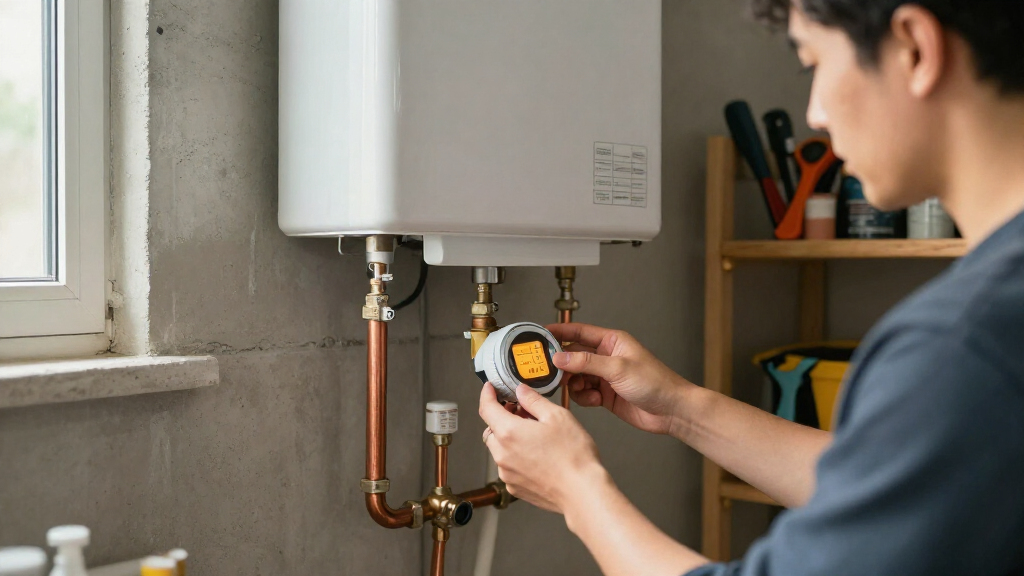
The renovation still mattered, the report said. Dust and construction particles accumulated on the heat-pump water heater’s filter and coil. Bailes cleaned the coil in April 2025, while the graph showed a marked energy-use drop in July. That timing is consistent with a possible equipment effect, but it does not establish the cleaning as the sole cause: household demand changed around the same period. The remodel also placed the heater in conditioned basement space, which Bailes said likely improved its efficiency in winter 2024-25.
Household Demand and Heater Condition
The report shows why a higher utility reading does not automatically point to a malfunction. Hot-water habits, indoor air conditions and maintenance can all affect a heat-pump water heater’s electricity use, and changes may overlap. In this case, the timing of a household member’s arrival and departure tracked the rise and fall, while dust on components provided a separate plausible contributor.
For homeowners, the practical point is to compare energy data with changes in occupancy, bathing habits, seasonal conditions and maintenance. A dirty filter or coil can impair operation, but the report does not quantify the savings from cleaning or establish a universal expected increase. Tracking monthly use can help identify when a change began and guide a closer inspection.
Products Worth Considering

Levoit Vital 100S-P Air Purifier

Levoit Core 400S-P Smart Air Purifier for Large Rooms

Philips Hue Secure Wired Video Doorbell, 2K, Black
As an affiliate, we earn on qualifying purchases.
The Timeline Behind the Spike
Bailes said he has tracked household electricity bills since moving into the home in 2019 and separately monitored the water heater. From 2020 through mid-2023, monthly use generally followed a seasonal pattern: about 60 kilowatt-hours (kWh) per month in winter and roughly 20 to 30 kWh per month in summer. Use had crept upward between 2020 and 2023 before the larger rise.
Two changes then overlapped. His stepson moved in during August 2023, and a basement renovation began in February 2024, exposing the heater to dust. The stepson left at the end of July 2025. Bailes also reported that the basement had not been heated before the winter of 2024-25; the renovation brought the heater into conditioned space. The 2026 annual figure in the report is an estimate for the last four months of that year, not a completed full-year total.
“The jolt in energy use those two years actually was caused by both things.”
— Allison A. Bailes III, GreenBuildingAdvisor contributor
How Much Each Factor Added
The report does not provide monthly hot-water volume, so it cannot quantify how much extra electricity came from baths and other household demand. Nor does it isolate the effect of the dirty filter and coil from the effect of cleaning them. The sharp decline after July 2025 coincided with the stepson’s departure, while coil cleaning had occurred in April; that sequence does not establish a precise causal share for either change.
The report concerns one household and one heat-pump water heater. Its figures do not establish how much energy use should rise in other homes or how much a particular cleaning will save. The source also gives an estimate, rather than a final annual total, for 2026.
Track Use and Check Components
Bailes recommends covering and turning off a heat-pump water heater during dusty work, checking and cleaning its filter regularly, and cleaning the coil and other components when they become dirty. He also suggests considering upgraded filtration. Owners should follow the manufacturer’s instructions for shutdown, cleaning and restarting rather than assuming every unit can be handled the same way.
For a household investigating a sudden increase, the next useful step is to compare monthly energy readings with occupancy, hot-water routines, seasonal conditions and maintenance dates. If use remains unusually high after basic checks, the owner can consult the manufacturer’s guidance or a qualified service professional. The report does not identify a universal threshold that signals a fault.
Key Questions
What caused the reported water-heater energy increase?
The writer attributed it to higher hot-water demand after a family member moved in and dust on the filter and coil during a basement renovation. He could not calculate each factor’s contribution.
Did cleaning the coil bring energy use down?
The coil was cleaned in April 2025, and the data showed a sharp drop in July. But the family member who preferred baths also moved out at the end of July, so the report cannot attribute the decline to coil cleaning alone.
How much did energy use rise?
Annual use in 2024 was 89% higher than in 2020. The report describes 2025 as abnormally high but does not give an equivalent percentage for that year.
What maintenance does the report recommend?
Check and clean the filter regularly, clean the coil and other components when dirty, and protect the unit from dust during remodeling. Follow the heater manufacturer’s instructions for maintenance and shutdown.
Does this explain every increase in water-heater energy use?
No. This is a report about one home. Other causes may apply elsewhere, and the article does not establish a universal expected energy increase or savings from cleaning.
Source: greenbuildingadvisor.com