
To vent your pellet appliance safely and efficiently, guarantee your chimney is in good condition, free of obstructions, and inspected regularly. Use stainless steel vent pipes for durability and keep them straight with proper supports, maintaining a gentle slope. Properly seal and insulate the system to prevent leaks and condensation. Always follow manufacturer instructions and local codes, and keep vent terminations outside away from windows and doors. Continuing will reveal key tips for ideal venting and safety.

Get backup power and energy gear delivered free with Prime
- Fast, free delivery on millions of items
- Prime Video, Amazon Music and more included
- Member-only deals all year
Key Takeaways
- Use corrosion-resistant materials like stainless steel for vent pipes to ensure durability and safety.
- Keep vent pipes straight, short, and properly sloped (about 1/4 inch per foot) to optimize airflow.
- Install vent terminations outside, away from windows and doors, to prevent exhaust re-entry.
- Regularly inspect and clean vent systems to prevent creosote buildup, blockages, and leaks.
- Follow manufacturer instructions and local building codes for proper installation, sealing, and support.
Proper venting is essential for the safe and efficient operation of pellet appliances. When you install your pellet stove or insert, ensuring proper venting helps prevent dangerous buildup of carbon monoxide and other combustion gases. One of the critical aspects of venting is maintaining chimney safety. Your chimney acts as the primary pathway for exhaust gases, so it must be structurally sound, free of obstructions, and correctly designed to handle the high temperatures and corrosive byproducts generated by pellet appliances. Regular inspections are vital; a cracked or blocked chimney can cause dangerous gases to leak into your living space or lead to inefficient operation. Always follow local building codes and manufacturer instructions for chimney installation and maintenance to ensure safety.
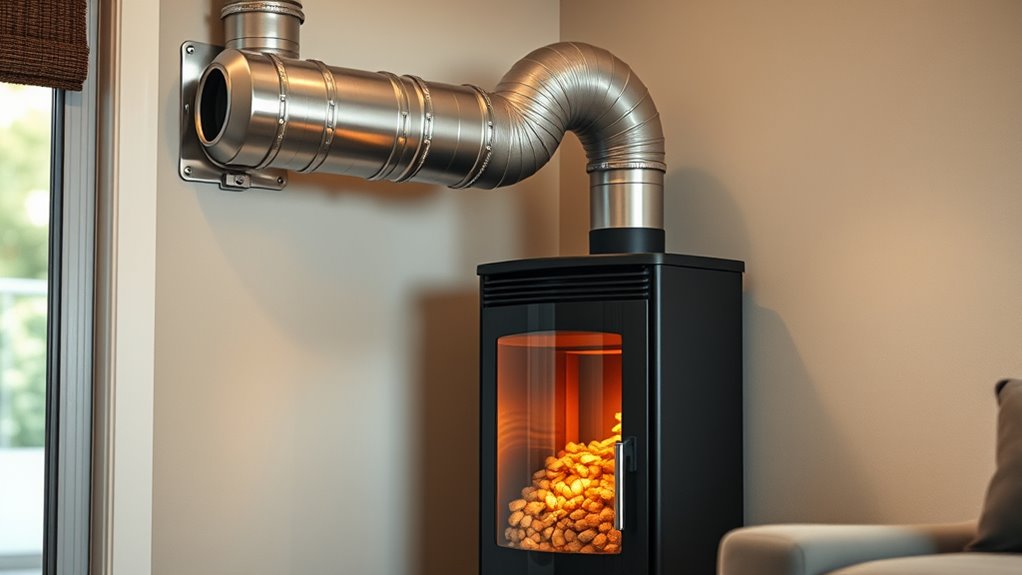
In addition to chimney safety, choosing the right vent pipe materials is crucial. Not all materials are suitable for pellet appliance venting, as some may degrade or emit harmful fumes when exposed to high temperatures or corrosive flue gases. Typically, vent pipes made from stainless steel are the most reliable choice because they resist corrosion and withstand the heat produced by pellet stoves. Aluminum vent pipes are sometimes used for shorter runs or indoor applications, but they are generally less durable and may not be suitable for long-term use or outdoor venting. Avoid using plastic vent pipes, as they can melt or deform when exposed to the heat and are not rated for high-temperature exhaust. Always check that the vent pipe materials you select are compatible with pellet appliance specifications, and ensure they are properly sealed and supported to prevent leaks or disconnections. Material compatibility is essential to prevent premature deterioration of the venting system.
The vent pipe setup should be as straight and short as possible, avoiding unnecessary bends that can trap soot and restrict airflow. When designing your venting system, keep in mind that proper slope—usually about 1/4 inch per foot—is essential to allow gravity to assist in venting exhaust gases out of your home effectively. Proper venting also involves ensuring that the vent termination is positioned correctly outside, away from windows, doors, and vents to prevent exhaust gases from re-entering your living space. Additionally, using proper insulation around the vent pipe can help maintain temperature and prevent condensation inside the pipe, which could lead to corrosion or blockages. Maintaining regular cleaning and inspections of the vent system is also crucial to remove creosote buildup and ensure ongoing safety and efficiency. Incorporating proper venting techniques ensures a safer and more efficient operation of your pellet appliance. Remember, the goal is to create a sealed, efficient system that safely expels all combustion byproducts while preventing leaks, blockages, or backdrafts.
stainless steel pellet stove vent pipe
As an affiliate, we earn on qualifying purchases.
As an affiliate, we earn on qualifying purchases.
Frequently Asked Questions
Can I Vent My Pellet Stove Outdoors Without a Chimney?
Yes, you can vent your pellet stove outdoors without a chimney by using chimney alternatives designed for outdoor venting. These systems typically include direct vent kits that allow safe, efficient outdoor venting, eliminating the need for a traditional chimney. You need to guarantee proper installation, sealing, and adherence to safety guidelines. Outdoor venting can be a good option if you lack space or prefer a cleaner look, but always follow manufacturer instructions for safe operation.
Are Special Permits Needed for Pellet Appliance Venting?
You usually need a permit for pellet venting regulations, especially if you’re installing or modifying your vent system. Local building codes often require you to obtain permits to ensure safety and compliance. Check with your local authorities or fire department to confirm permit requirements for pellet appliance venting. Failing to get the necessary permits can lead to fines or safety issues, so always follow the proper procedures before proceeding.
How Often Should Vent Pipes Be Inspected or Cleaned?
You should inspect your pellet appliance’s vent pipes at least once a year and clean them as needed, typically every 1-3 months depending on usage. Regular inspection and cleaning prevent buildup of creosote and debris, ensuring safe operation and efficient performance. If you notice reduced airflow or unusual odors, increase the cleaning frequency and schedule an inspection sooner. Staying consistent with your inspection schedule keeps your appliance running smoothly and safely.
Can I Retrofit My Existing Fireplace for Pellet Venting?
You can retrofit your existing fireplace for pellet venting, but be aware of retrofit challenges and venting compatibility issues. It’s not always straightforward, as some fireplaces may require significant modifications or specialized venting systems. To guarantee safety and efficiency, consult a professional installer who can assess your setup, recommend compatible venting options, and handle any necessary upgrades. Don’t risk improper installation—proper venting is vital for safe operation.
What Are the Signs of Venting System Blockages or Leaks?
You’ll notice signs of vent blockages or leaks if your pellet appliance’s efficiency drops, you see excess smoke, or smell unusual odors around the unit. Listen for strange noises, and check for soot or moisture buildup. Regular leak detection and inspecting the vent system help prevent problems. If you spot any of these signs, it’s essential to address them quickly to guarantee safe operation and prevent damage.
Conclusion
So, now that you know the venting rules for pellet appliances, imagine yourself as the ultimate venting hero—dodging house fires and smoky disasters with a flick of your wand (or wrench). Follow these rules, and you’ll keep your home warm and your neighbors blissfully unaware of your venting prowess. After all, nothing says “I’ve got my venting game on point” like a safe, efficient pellet stove—and maybe a medal for being the neighborhood’s most responsible homeowner.
Fall Picks
fall essentials
As an affiliate, we earn on qualifying purchases.