
To keep your small wood stove running safely and efficiently, regularly schedule chimney cleanings to prevent creosote buildup and check for cracks or damage. Inspect door seals, gaskets, and the firebox for wear, replacing parts as needed. Remove ashes and check stovepipes for obstructions. Also, maintain exterior surfaces and guarantee airflow controls like dampers function smoothly. Staying on top of these tasks helps your stove perform at its best—if you want to learn more, keep exploring this essential maintenance guide.
Key Takeaways
- Schedule regular chimney cleanings to prevent creosote buildup and ensure proper airflow.
- Inspect door seals, gaskets, and firebricks for wear, replacing as needed to maintain safety and efficiency.
- Remove ashes frequently and check the firebox for damage to promote optimal combustion.
- Examine stovepipes for obstructions, corrosion, and secure connections to prevent heat loss and hazards.
- Test and adjust airflow controls and dampers to optimize heat output and emissions.
Regularly tuning up your small wood stove guarantees it operates safely and efficiently throughout the heating season. One of the first steps to assure this is scheduling a chimney cleaning. Over time, creosote and soot build up inside your chimney, increasing the risk of dangerous chimney fires and blocking proper ventilation. During cleaning, you’ll want to carefully remove soot and debris from the flue, inspecting for any cracks or damage. This process not only promotes better airflow but also helps prevent hazardous buildup that could compromise your stove’s safety and performance.
Scheduling regular chimney cleanings prevents dangerous creosote buildup and ensures safe, efficient stove operation.
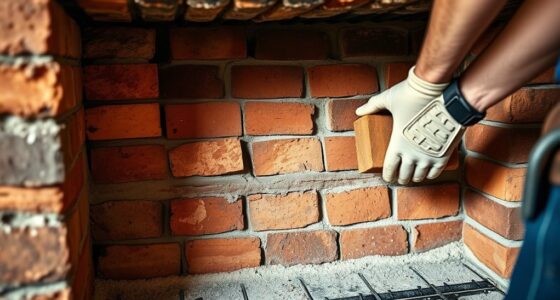
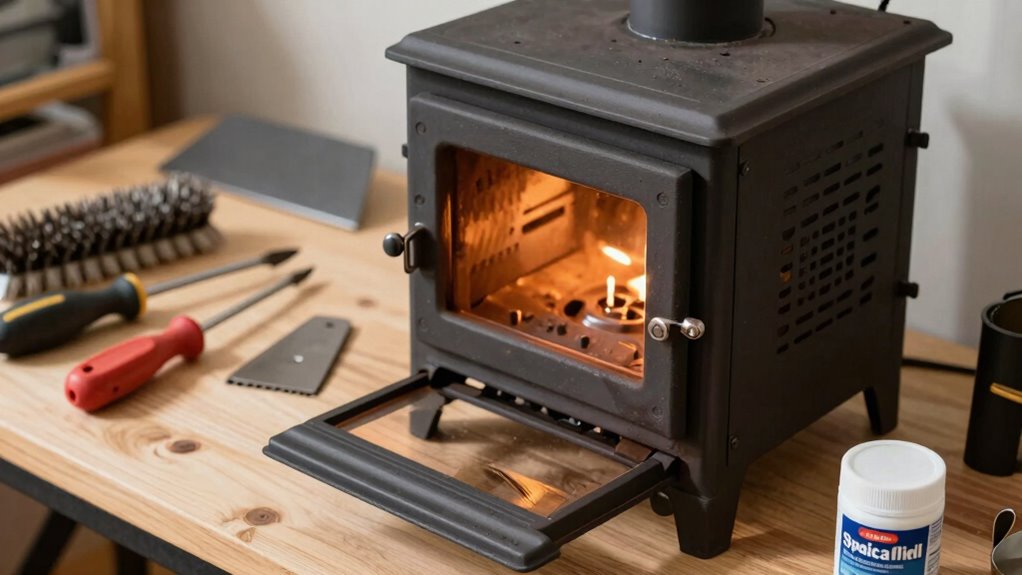
While you’re at it, don’t forget to perform safety inspections. Check that all stove components are in good condition, including door seals, gaskets, and the firebricks. Worn or damaged gaskets can cause air leaks, reducing efficiency and increasing the risk of smoke escaping into your living space. Make certain that the stove’s exterior isn’t rusted or cracked, and that no parts are loose. Regular safety inspections give you peace of mind, catching issues early before they develop into costly repairs or safety hazards. Additionally, paying attention to chimney maintenance can help you identify potential problems before they become serious. Incorporating routine inspections into your maintenance routine can extend the lifespan of your stove and ensure it functions optimally.
Next, focus on the stove’s interior. Remove ashes regularly to maintain proper airflow and prevent buildup that could hinder combustion. While cleaning out ashes, inspect the firebox for any signs of warping or damage. It’s also wise to check the stovepipe for obstructions or signs of corrosion. Properly maintained stovepipes improve heat transfer and reduce the chance of dangerous leaks or exhaust issues. Additionally, understanding inspection practices can help you catch issues early and maintain peak performance. Maintaining a clean and well-inspected interior helps ensure your stove operates safely and efficiently.
Maintaining the stove’s exterior is equally important. Wipe down the surface with a damp cloth and inspect for rust or paint deterioration. Applying a high-temperature paint or sealant can help prolong the stove’s lifespan. Additionally, check the stovepipe’s connection points to ensure they’re tight and secure, preventing leaks or disconnections during operation. This not only enhances safety but also preserves the stove’s appearance and durability. Regular exterior maintenance can also prevent deterioration caused by weather exposure or corrosion.
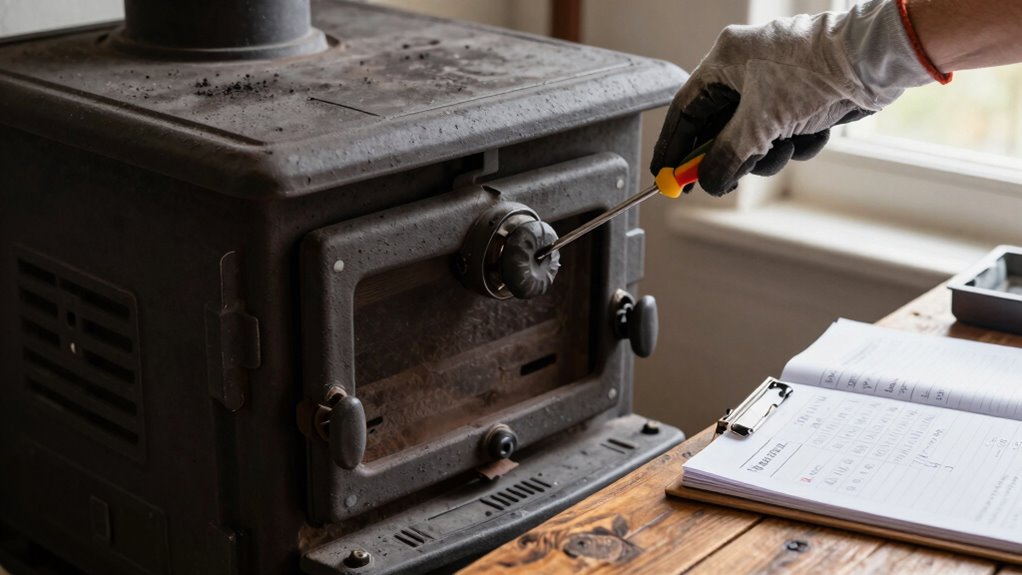
Finally, verify the operation of your stove’s damper and air controls. These regulate airflow and combustion efficiency. Test their movement and make adjustments if needed. Properly functioning controls help you manage heat output and reduce emissions, making your stove safer and more efficient. Regularly checking these controls ensures you can respond quickly to changing heating needs and optimize stove performance. Understanding how to operate and maintain these airflow controls is essential for safe and effective stove operation.
As an affiliate, we earn on qualifying purchases.
Frequently Asked Questions
How Often Should I Replace the Stove’s Gaskets?
You should replace your stove’s gaskets whenever they show signs of wear or damage, usually every 1 to 3 years, depending on usage. Gasket materials like fiberglass or silicone degrade over time, reducing their effectiveness. Regular inspections help you determine the replacement frequency; if you notice drafts, leaks, or difficulty maintaining a consistent burn, it’s time to swap out those gaskets for new ones to maintain efficiency and safety.
Can I Perform the Tune-Up Myself or Hire a Professional?
You can perform DIY maintenance if you’re comfortable with basic tools and safety precautions, but for a thorough and safe tune-up, hiring a professional is recommended. A professional inspection guarantees all components are functioning correctly and can identify issues you might miss. If you’re unsure about your skills, it’s best to rely on a professional to avoid potential damage or safety hazards, ensuring your stove operates efficiently and safely.
What Safety Precautions Are Necessary During a Tune-Up?
During a tune-up, prioritize safety by always wearing protective gear like gloves and goggles to prevent burns and debris injuries. Keep a fire extinguisher nearby in case of emergencies and make sure it’s in working condition. Before starting, disconnect the stove from power sources, if applicable, and work in a well-ventilated area to avoid inhaling fumes. These precautions help you stay safe while maintaining your wood stove effectively.
How Do I Identify Rust or Corrosion Issues Early?
You might notice rust or corrosion early if you see paint peeling or dark spots on your stove’s surface. Smoke leaks can also indicate corrosion or cracks. Regularly inspect the stove’s seams, joints, and firebox for discoloration or buildup. Catching these signs early helps prevent further damage. Address issues promptly by cleaning affected areas and replacing compromised parts, ensuring your stove remains safe and efficient.
What Are Signs My Stove Needs an Urgent Repair?
If your stove shows unusual smoke, strange odors, or difficulty igniting, it needs urgent repair. You might also notice decreased stove efficiency, with less heat output despite burning fuel properly. Cracks, leaks, or visible rust are warning signs that require immediate fireplace maintenance. Addressing these issues promptly ensures your stove operates safely and efficiently, preventing potential fire hazards or further damage. Always prioritize safety for effective stove performance.
Conclusion
Regularly tuning up your small wood stove can boost efficiency by up to 25% and reduce emissions. By following this simple checklist, you’ll guarantee safer, more reliable heat all season long. Don’t overlook small maintenance tasks—they make a big difference in performance and longevity. Keeping your stove in top shape means less hassle and more cozy warmth. Stay proactive, and you’ll enjoy the comfort and savings that come with a well-maintained stove year after year.