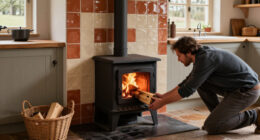
To replace fire bricks and internal linings, carefully remove any broken or damaged bricks using gentle tools like a chisel or hammer, guaranteeing you don’t damage surrounding areas. Select suitable, heat-resistant materials such as fire clay bricks or refractory panels, and fit them tightly into place, checking for proper alignment. After installation, perform an initial fire to test for heat leaks or fit issues. Continue exploring for detailed steps to ensure your stove remains safe and efficient.

Get backup power and energy gear delivered free — and shop member deals
- Fast, free delivery on millions of items
- Access to Prime Big Deal Days deals on October 6–7
- Prime Video, Amazon Music and more included
Key Takeaways
- Inspect the internal lining regularly for cracks or wear to identify damaged bricks needing replacement.
- Carefully remove broken or worn bricks using gentle tools like a chisel or small hammer to avoid damaging surrounding parts.
- Select appropriate replacement materials such as fire clay bricks, refractory panels, or ceramic tiles rated for high temperatures.
- Fit new bricks tightly, ensuring proper alignment and sealing to prevent heat leaks and maintain appliance efficiency.
- After installation, perform a small test fire and inspect for proper fit, safety, and heat retention to ensure optimal operation.

Over time, fire bricks and internal linings can wear out or become damaged, reducing the efficiency and safety of your fireplace or stove. When this happens, you need to consider replacing these components to restore proper function and prevent potential hazards. The first step involves understanding fire brick installation and selecting the right internal lining materials. Fire bricks are designed to withstand high temperatures and protect the structural integrity of your appliance. Damaged or cracked bricks can cause heat loss, increase fuel consumption, and pose safety risks. Replacing them promptly ensures your stove or fireplace operates safely and efficiently.
The process begins with inspecting your existing internal lining to identify which bricks or panels are compromised. Once you’ve pinpointed the damaged areas, you can start the replacement process. Proper fire brick installation is crucial; it involves carefully removing the broken bricks without damaging adjacent ones and then fitting new bricks tightly into place. You might need to use a chisel or a small hammer to loosen the old bricks gently. When installing new fire bricks, ensure they fit snugly and align correctly with the existing structure. Gaps or poor fitment can lead to heat leakage and reduce the appliance’s effectiveness. Additionally, understanding the importance of insulation in maintaining high efficiency can help you choose the best materials for your specific setup.
Choosing the right internal lining materials is equally important. Common options include fire clay bricks, refractory panels, or ceramic tiles, each with specific advantages. Fire clay bricks are popular because they’re durable, heat-resistant, and relatively easy to work with. Refractory panels offer quick installation and a clean look, but may not be as customizable. Ceramic tiles can be decorative while serving as a protective lining, but they might not withstand extreme heat as well as specialized refractory materials. Make sure to select materials rated for your appliance’s maximum temperature to ensure longevity and safety.
When installing new internal lining materials, always follow manufacturer instructions and safety guidelines. Proper sealing and fitting are essential to prevent heat leaks and ensure the durability of your repair. After replacing the bricks or panels, perform a thorough inspection to confirm everything is secure and correctly aligned. Lighting a small fire initially can help check for any issues like improper fit or heat loss. Regular maintenance and timely replacement of worn or damaged internal linings will keep your fireplace or stove running safely and efficiently for years to come.
fire brick replacement kit for stove
As an affiliate, we earn on qualifying purchases.
As an affiliate, we earn on qualifying purchases.
Frequently Asked Questions
How Often Should Fire Bricks Be Inspected for Damage?
You should examine your fire bricks regularly, ideally every 1 to 3 months, depending on use. During each inspection, perform a damage assessment to check for cracks, chips, or deterioration. Frequent inspections help catch damage early, preventing further issues. If you notice any signs of damage, address them promptly to maintain safety and efficiency. Consistent inspection frequency ensures your stove or fireplace remains in good condition and operates safely.
What Safety Precautions Are Necessary During Replacement?
When replacing fire bricks, you should always wear protective gear like gloves, goggles, and a dust mask. For example, in a recent case, neglecting ventilation safety led to inhaling harmful dust, causing health issues. Guarantee proper ventilation by opening windows and using fans. Always handle materials carefully, and keep a fire extinguisher nearby. These precautions protect you from burns, dust inhalation, and other hazards during the replacement process.
Can I Replace Fire Bricks Myself or Hire a Professional?
You can do a DIY replacement of fire bricks if you’re comfortable working with high temperatures and have the right tools, but for safety and proper installation, hiring a professional is recommended. Professionals ensure the job is done correctly and safely, reducing risks of damage or hazards. If you lack experience or proper equipment, it’s best to opt for professional installation to guarantee your stove’s longevity and safe operation.
Are There Eco-Friendly Options for Replacement Materials?
Yes, eco-friendly materials are available for replacement fire bricks and linings. You can choose sustainable replacements like kiln-fired clay bricks or recycled refractory materials, which reduce environmental impact. These options often have lower embodied energy and produce fewer emissions during manufacturing. By selecting eco-friendly options, you’re helping to minimize your fireplace’s carbon footprint while maintaining safety and efficiency. Always verify suppliers’ sustainability credentials to guarantee you’re making the best environmentally conscious choice.
How Do I Dispose of Old or Damaged Fire Bricks?
Think of your old fire bricks as forgotten treasures waiting to be reborn. You should recycle or repurpose them to minimize environmental impact. Check local recycling facilities or construction sites that accept bricks—some might reuse them in landscaping or building projects. Avoid sending them to landfills, as this contributes to waste and pollution. Recycling options help reduce waste, conserve resources, and give your old bricks a second life.
Conclusion
Replacing fire bricks and internal linings might seem like a formidable task, but it’s a manageable one that restores your stove’s efficiency. Think of it as giving your fireplace a fresh start, much like a new chapter. While the process requires some effort, the warmth and comfort you’ll regain outweigh the inconvenience. With careful work, you turn a worn-out interior into a cozy haven, proving that even the toughest repairs can lead to a brighter, warmer future.
Fall Picks
fall essentials
As an affiliate, we earn on qualifying purchases.