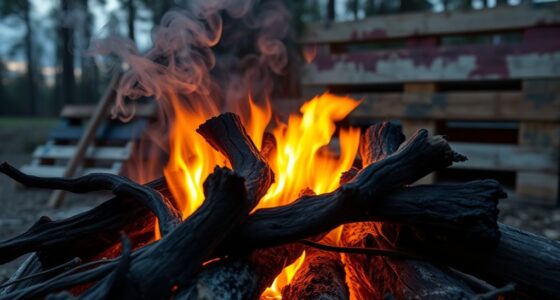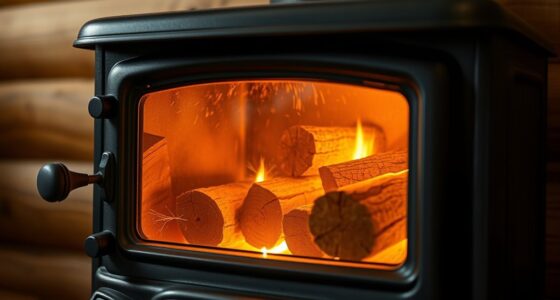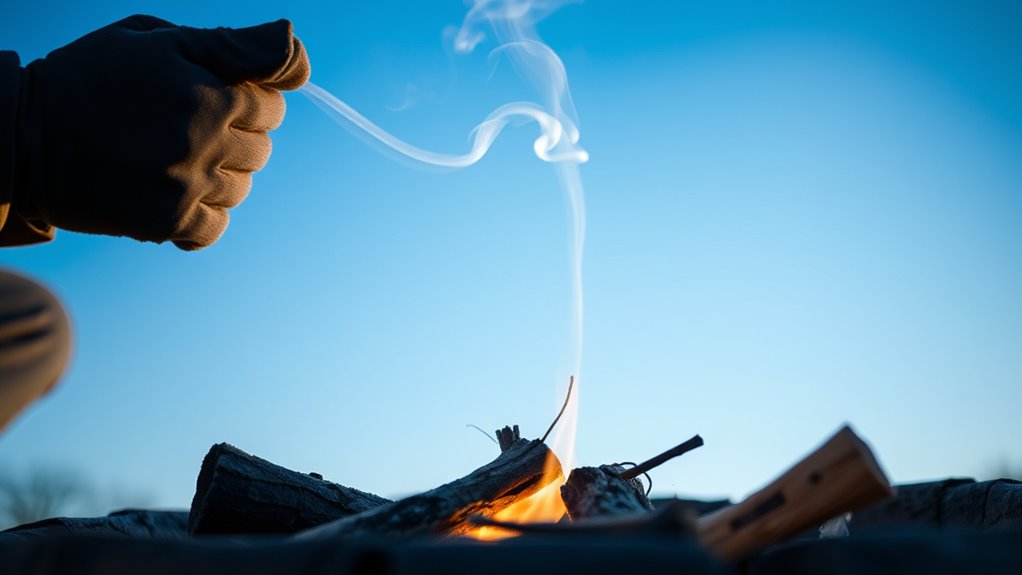
To reduce smoke when starting a fire, use only dry, seasoned hardwoods and lightweight materials like paper or firelighters for quick ignition. Build your fire with a tight, well-ventilated structure, such as a teepee or crisscross pattern, to improve airflow. Adjust vents to control oxygen and avoid overcrowding the fire with wood. Mastering these techniques will help you create a cleaner, hotter burn—exploring further can reveal even more effective fire-starting tips.
Key Takeaways
- Use dry, seasoned wood and quick-lighting materials like paper or firelighters for easier ignition.
- Arrange firestarter at the center with small, dry kindling around it to promote good airflow.
- Control airflow by adjusting vents and gently blowing on flames to ensure complete combustion.
- Avoid overcrowding the fire with too much wood initially; add fuel gradually for cleaner burning.
- Maintain chimney and stovepipe cleanliness to ensure proper smoke venting and reduce smoke backflow.
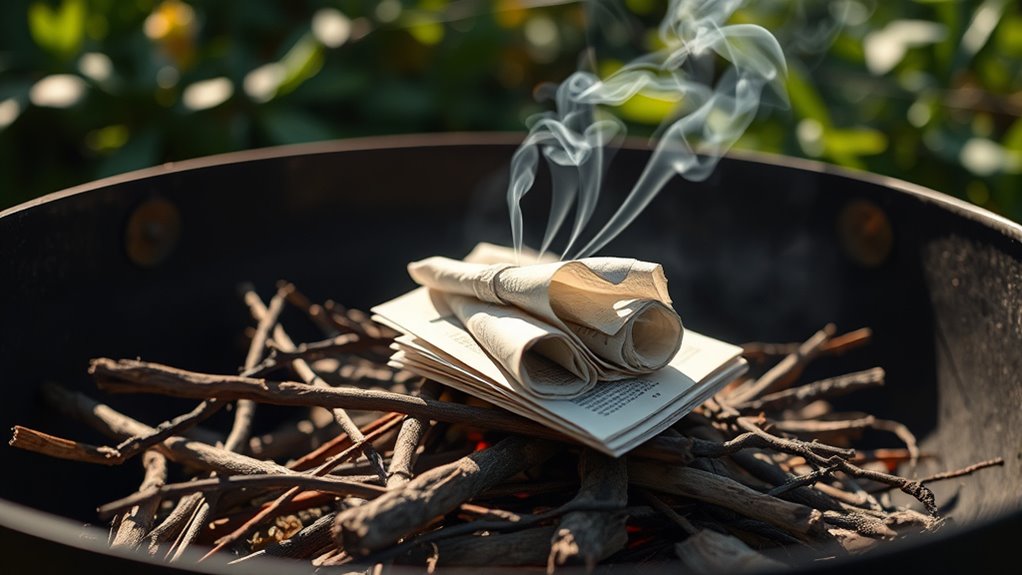
Starting a fire without producing excessive smoke can be challenging, but with the right techniques, you can minimize smoke right from the start. The key lies in employing effective firestarter techniques and understanding smoke reduction methods. Your goal is to ignite your fire efficiently while limiting the amount of unburned fuel and smoke produced. To do this, choose dry, seasoned wood and materials that ignite easily. Wet or green wood tends to smolder and generate more smoke, so always opt for well-dried supplies. Using the proper firestarter techniques is vital—lightweight, quick-burning materials like dry paper, cardboard, or commercial firelighters can help get the fire going fast and cleanly. When arranging your fire, place your firestarter material at the core, and surround it with small, dry kindling arranged in a teepee or crisscross pattern. This setup ensures good airflow, which promotes complete combustion and reduces smoke.
Another essential smoke reduction method involves controlling airflow. Too much air can cause incomplete combustion, leading to more smoke, while too little airflow can smother the fire. Find a balance by adjusting vents or openings if you’re using a stove or fire pit. When starting the fire, gently blow on the flames or use a bellows to supply just enough oxygen to sustain a steady burn. This helps the fire burn hotter and cleaner, reducing smoke output. Avoid overcrowding the fire with too much wood at once; instead, add small amounts gradually, allowing the fire to establish a strong, clean burn before adding more fuel.
Timing also plays a role in smoke reduction. Light your fire early in the day when the wood is driest, and give it time to establish a good flame before adding larger logs. This ensures a more complete combustion process, minimizing smoke. Additionally, consider the type of wood you’re using—hardwoods like oak or maple tend to burn cleaner than softwoods such as pine, which release more resin and produce more smoke. Properly maintained chimneys and stovepipes are also vital; ensure they’re clean and unobstructed so smoke can exit efficiently, preventing backdrafts and excessive smoke production indoors or in enclosed spaces. In recent years, some communities have hosted remote hackathons focused on sustainable and clean-burning technologies for outdoor fires and stoves, which could offer innovative solutions for smoke reduction.

Duraflame Fire Starter for Indoor and Outdoor Use – Quick Ignition Logs for BBQ, Fireplace, Fire Pit and Campfires (24 Pack)
Start Fires Effortlessly: With our Fire Starters, igniting indoor and outdoor fires has never been easier. Skip the…
As an affiliate, we earn on qualifying purchases.
As an affiliate, we earn on qualifying purchases.
Frequently Asked Questions
What Types of Wood Produce the Least Smoke?
You should choose hardwoods like maple, oak, or cherry for the least smoke production. These types of wood produce less smoke because they burn cleaner and have a lower moisture content. To maximize smoke reduction, verify your wood is well-seasoned, dry, and stored properly. Avoid softwoods like pine or cedar, which tend to produce more smoke due to higher resin and moisture content. Properly prepared, hardwoods will give you a cleaner, less smoky fire.
How Does Weather Affect Smoke Production When Starting a Fire?
Weather greatly impacts smoke production when starting a fire. On windy days, wind influence can cause uneven burning and more smoke, so shield your fire from strong gusts. Cooler, damp weather lowers fire temperature, making it harder to ignite and increasing smoke output. To reduce smoke, build your fire in calm, dry conditions, and guarantee good airflow for higher fire temperature, which promotes cleaner combustion and less smoke.
Can Fire Starters Help Reduce Smoke?
Fire starters can help reduce smoke by improving fire starter effectiveness, ensuring your fire ignites quickly and burns cleaner. When you use quality, eco-friendly fire starters, you minimize environmental impact since they often produce less smoke and harmful emissions. This makes starting your fire more efficient and environmentally conscious, helping you avoid prolonged smoke production and reducing overall pollution. Always choose fire starters designed to burn cleanly for the best results.
What Safety Precautions Should I Take to Minimize Smoke Inhalation?
Ever wondered how to stay safe while minimizing smoke inhalation? You should always use proper ventilation techniques, like opening windows or vents, and wear protective gear such as masks and goggles. Keep your face away from the smoke and avoid inhaling directly. Are you prepared to protect yourself effectively? Taking these precautions helps reduce health risks, making your fire-starting safer for you and everyone around you.
How Long Should I Let a Fire Burn to Reduce Smoke Emissions?
You should let your fire burn long enough for a good, steady chimney draft—usually 15 to 20 minutes—before adding more wood. Proper fire pit placement ensures good airflow, which helps reduce smoke. As the fire stabilizes, it burns more efficiently, producing less smoke. Keep the fire small and manageable initially, then gradually build it up, maintaining ideal airflow to minimize smoke emissions effectively.

15" Oak Firewood Logs, with Fire Starters Set, Kiln-Dried Wood for Fire Pit, Seasoned Logs for Fireplace, Campfire, Firewood Bundle, Pizza Oven, Split Wood for Solo Stove, 1200 cub. in., 15-20lb
Premium Quality Firewood: Our kiln-dried firewood logs are perfect for any use, whether you need oak firewood, birch…
As an affiliate, we earn on qualifying purchases.
As an affiliate, we earn on qualifying purchases.
Conclusion
By following these simple tips, you can turn your fire-starting process into a gentle breeze rather than a smoky storm. Think of it as guiding a delicate dance, where each step minimizes chaos and maximizes warmth. With patience and proper technique, you’ll master the art of starting fires that burn clean and bright, leaving behind only the glow of a well-tended flame. Remember, a little care goes a long way in keeping smoke at bay.

Sealegend 30 Feet Chimney Sweep Kit Chimney Brush, Chimney Cleaning Kit and Rotary Chimney Cleaning System, Fireplace Brush Tool with 9 Nylon Flexible Rods
[Button Locking Design] The chimney sweep kit features a beautiful chrome-plated button design that ensures that it will…
As an affiliate, we earn on qualifying purchases.
As an affiliate, we earn on qualifying purchases.

Stainless Steel Fire Pit Vent Cover – 9" x 4", Commercial Grade 16 Gauge, Flat Vent Cover
Size: Designed to fit gas fire pits and grills, measuring 9" x 4" with a ventilation cutout of…
As an affiliate, we earn on qualifying purchases.
As an affiliate, we earn on qualifying purchases.