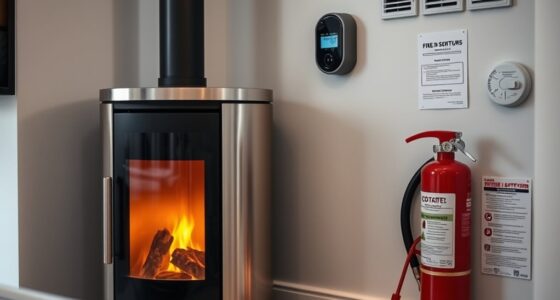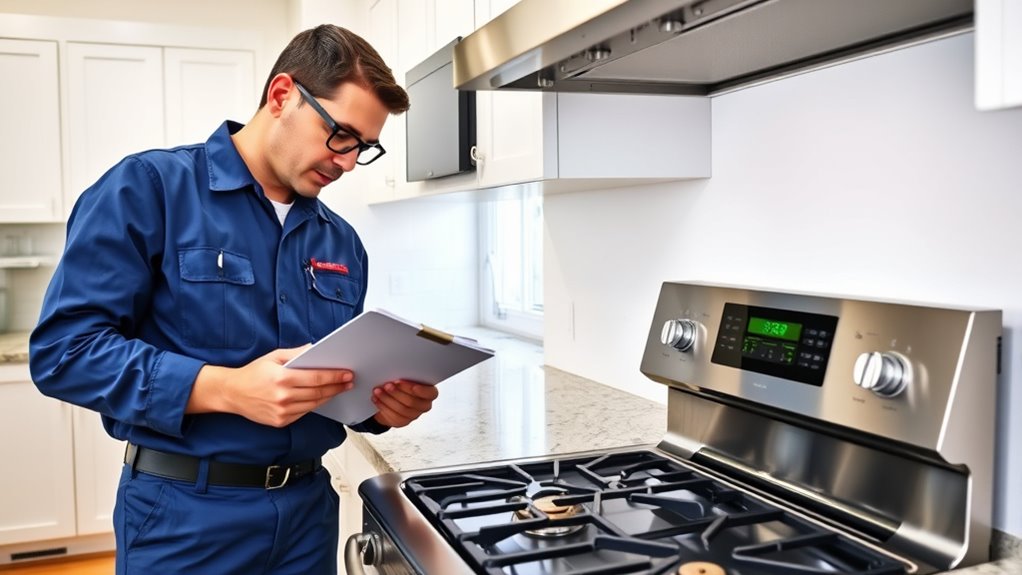
When you install a new stove, you need to get the necessary permits from your local building department to guarantee safety and compliance with codes. An inspection is typically required before you can use the stove, where inspectors check venting, electrical connections, and clearances to prevent hazards. Confirming all paperwork and inspections are complete helps protect your home and meets legal standards. Keep going to discover the detailed steps and tips for smooth approval.
Key Takeaways
- A permit must be obtained from the local building authority before installing a new stove.
- Inspections are required after installation to ensure safety, venting, electrical connections, and clearance compliance.
- Submit detailed specifications of the stove, including make, model, and installation location, for permit approval.
- Certified inspectors verify that the installation meets all safety standards and building codes before granting approval.
- Compliance with permits and inspections minimizes fire hazards, gas leaks, and electrical issues, ensuring safe stove operation.
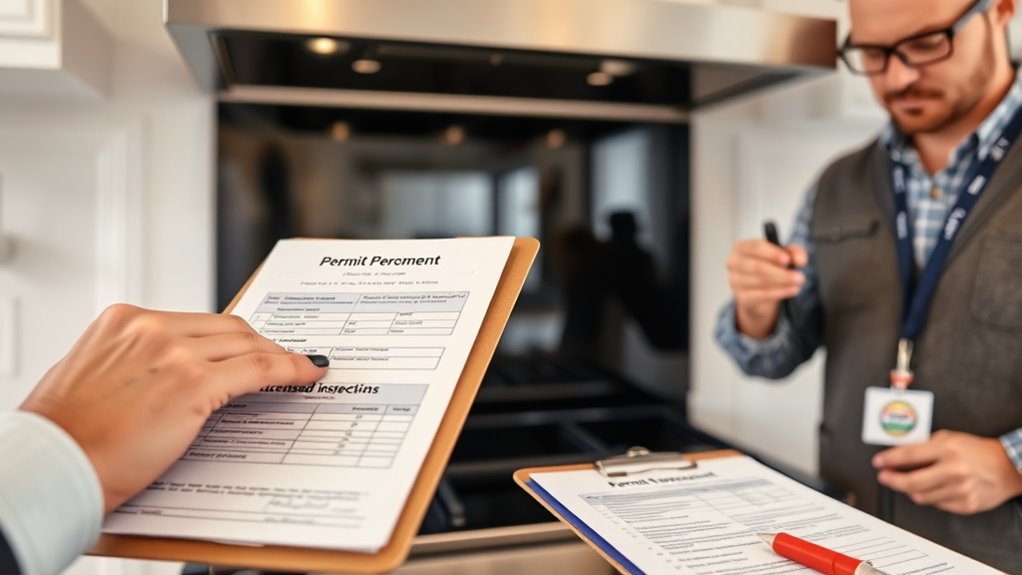
Installing a new stove often requires permits and inspections to guarantee safety and code compliance. This process isn’t just bureaucratic red tape; it’s a essential step to ensure your home remains safe and that your appliance meets recognized standards. When you’re upgrading or installing a new stove, local building codes and fire safety regulations come into play. These rules are designed to prevent hazards such as fires, gas leaks, or electrical malfunctions, which could put your household at risk. Securing the necessary permits signals that your installation adheres to these standards, giving you peace of mind that your home is safe.
The permit process typically involves submitting plans or specifications of your intended installation to your local building department. They want to verify that your stove complies with appliance standards—these are the safety and performance criteria set by regulatory agencies like the National Fire Protection Association (NFPA) and the Underwriters Laboratories (UL). These standards cover everything from proper venting, electrical wiring, to adequate clearance from combustible materials. By following these guidelines, you minimize the risk of fire hazards and ensure that your appliance functions efficiently. When inspectors review your installation, they check that all safety measures are in place, such as proper ventilation, secure connections, and adherence to clearance distances. They’re looking to prevent potential fire hazards and ensure your stove operates safely within your home’s environment.
Expect to provide detailed information about your stove’s make, model, and installation location when applying for permits. Sometimes, you’ll need to have an electrician or licensed contractor handle the installation, especially if electrical work is involved. Once your permit is approved, you can proceed with installation, but it’s essential to schedule an inspection afterward. During this inspection, a qualified professional will verify that everything complies with the local codes and appliance standards. If they find issues, you’ll need to address them before your stove can be officially approved for use. This step is necessary because it ensures the installation is safe, fire-resistant, and in line with all applicable regulations.

MaksPRO WB28X29963 Lp Conversion Kit fits Range
MaksPRO Range Lp Conversion Kit
As an affiliate, we earn on qualifying purchases.
As an affiliate, we earn on qualifying purchases.
Frequently Asked Questions
Do All Stove Installations Require Permits Regardless of Location?
Not all stove installations require permits, but it depends on your local regulations and installation requirements. You should check with your city or county building department to see if permits are necessary for your specific situation. Even if permits aren’t always required, obtaining one can guarantee your installation meets safety standards and passes inspections. Always verify local rules to avoid potential fines or safety issues down the line.
How Long Does the Permit Approval Process Typically Take?
Think of the permit approval process as a garden that needs time to bloom. Typically, the permit timeline ranges from a few days to a few weeks, depending on your local authority’s efficiency. The approval duration can vary, but most often, you’ll see results within 7-14 days. To stay ahead, check with your city’s building department for specific timelines, ensuring your stove project can start smoothly and on schedule.
Are There Any Exemptions for Certain Types of Stove Installations?
Some exempt installations, like certain portable or small-scale stoves, might not require permits, especially if they meet specific safety standards. If you’re dealing with a special case, such as a retrofit or non-standard setup, you should check local regulations, as exemptions vary by jurisdiction. Always verify whether your stove qualifies for an exemption before proceeding, and consult your local building department to avoid any compliance issues.
What Are the Common Consequences of Installing a Stove Without a Permit?
Installing a stove without a permit can lead to serious consequences. Nearly 60% of permit violations result in fines or penalties, emphasizing the risk involved. Without proper permits, you amplify safety hazards like gas leaks or fires, endangering your home and loved ones. Authorities may also require you to undo or redo the installation, causing delays and extra costs. Always follow local regulations to ensure safety and avoid costly repercussions.
Can Homeowners Handle Inspections Without Professional Help?
You can handle inspections yourself, but you need to prioritize DIY safety and meet inspector requirements. Make sure you understand local codes, use proper tools, and double-check your work to guarantee everything complies. Inspectors look for safety hazards and code violations, so being thorough is essential. If you’re unsure about any step, consulting a professional can help you avoid costly mistakes and ensure your stove installation passes inspection smoothly.

Pellet Stove Fresh Air Intake Kit, 2" x 60" Outside Cold Air Kit for Pellet Stove Pipe, Aluminum Flex Vent Pipe for Corn with Wall Plate Screen & Screw Hose Clamps
Fitment: Pellet Stove Fresh Air Intake Kit tube inner diameter: 2" i.d; The flex pipe stretch length: up…
As an affiliate, we earn on qualifying purchases.
As an affiliate, we earn on qualifying purchases.
Conclusion
Getting the right permits and inspections for your new stove is like planting a sturdy tree—you lay a solid foundation to guarantee everything grows safely and smoothly. When you follow the proper steps, you’re building a safe, reliable setup that stands the test of time. So, take these steps seriously, and your new stove will be the shining centerpiece of your kitchen, ready to serve you well for years to come.

Stanbroil One Stop Gas Appliance Hook Up Kit – Brass Gas Ball Valve and Flexible Gas Connector with Fittings for Garage Heaters, Gas Stoves, Wall Mounted Heaters, Gas Fireplace and Gas Dryer
Highly durable, easy to install and use for most gas appliances
As an affiliate, we earn on qualifying purchases.
As an affiliate, we earn on qualifying purchases.

Agriculture Solutions Alcohol Refractometer for Spirit Alcohol Volume Percent Measurement with Automatic Temperature Compensation (ATC), Range 0-80% v/v.
It is designed for testing Spirit Alcohol Volume Percent, ideal for Brandy, Whisky, Vodka etc. Not recommend for…
As an affiliate, we earn on qualifying purchases.
As an affiliate, we earn on qualifying purchases.