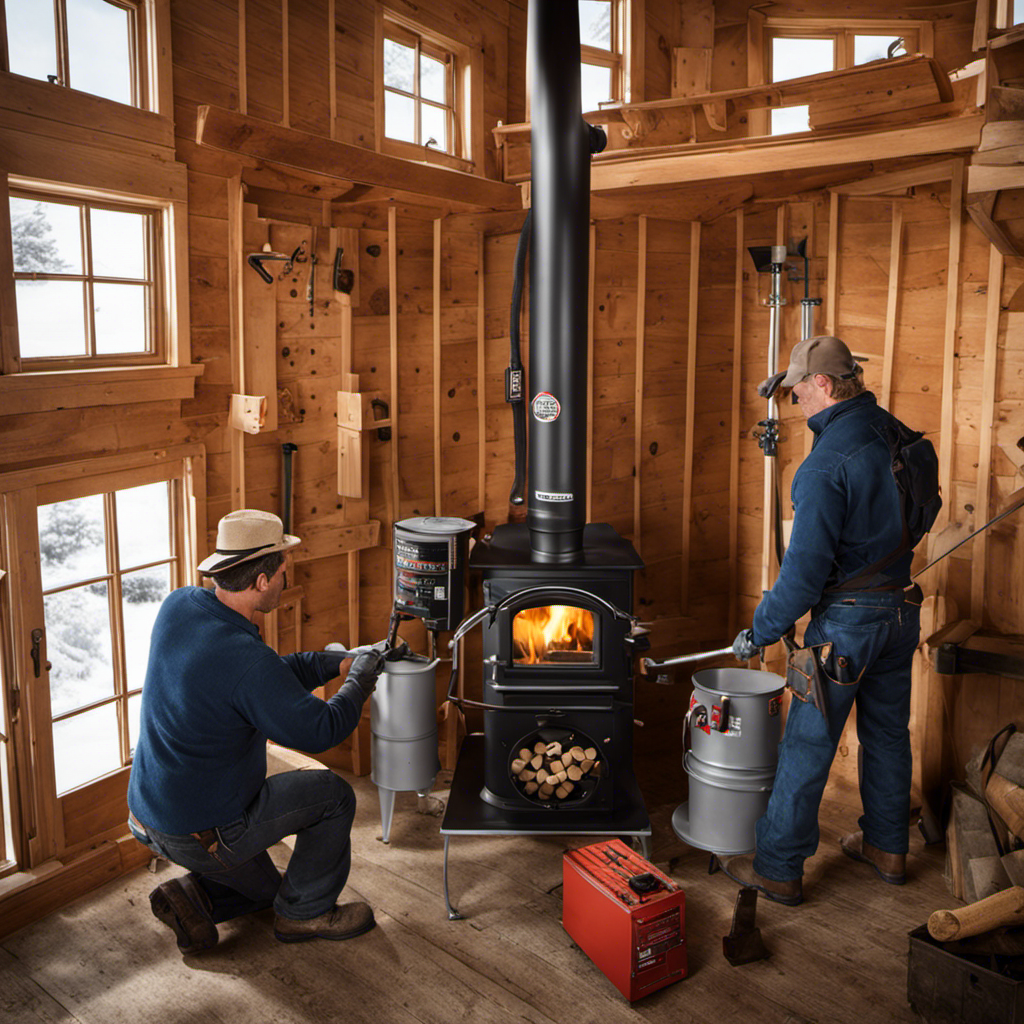
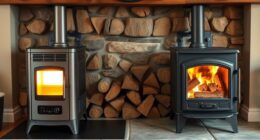
To maximize pellet stove efficiency, you need to balance burn rates and heat output. Running the stove at the right setting ensures thorough combustion, which uses less fuel and produces consistent warmth. Higher burn rates generate more heat quickly but can waste fuel if not controlled properly. Low burn rates save fuel but might reduce heat. Proper maintenance and operation help optimize both factors, achieving efficient warmth. Keep exploring to discover how to fine-tune your stove’s performance for better savings and comfort.
Key Takeaways
- Efficient pellet stoves convert more fuel into heat, reducing burn rates and increasing heat output per unit of fuel.
- Proper maintenance and airflow management optimize combustion, lowering burn rates while maximizing heat delivery.
- Adjusting burn rates can balance fuel consumption with desired heat output, improving overall efficiency.
- Good heat transfer methods, like fans and proper placement, enhance warmth without increasing fuel use.
- Selecting a stove suited to your space and operating it correctly ensures optimal burn rates and consistent heat output.
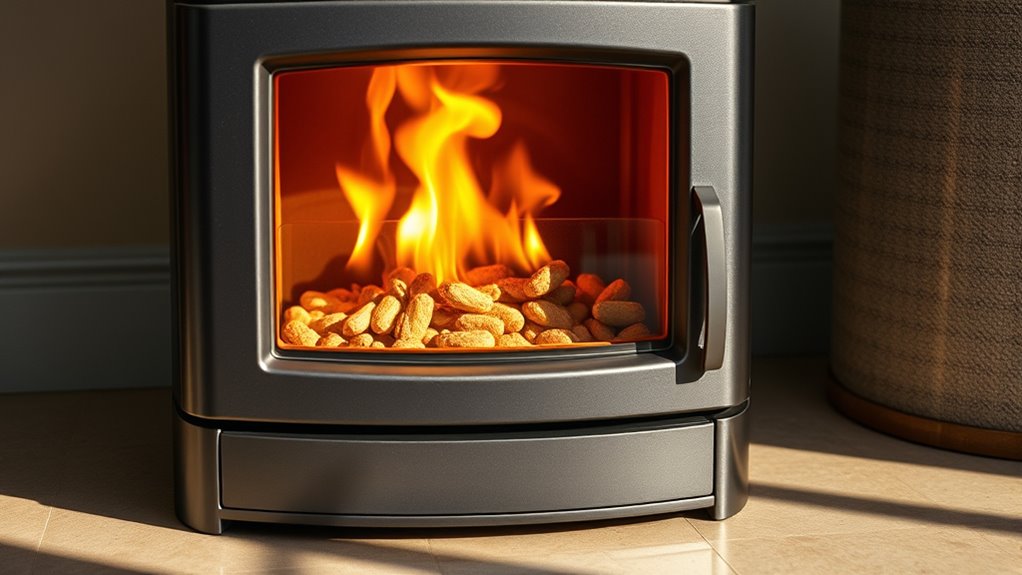
Pellet stove efficiency determines how well your stove converts fuel into heat, impacting both your energy bills and environmental footprint. When your stove operates efficiently, it uses less fuel to produce the same amount of warmth, which means you save money and reduce emissions. To maximize efficiency, understanding how fuel consumption and heat transfer work together is essential. Fuel consumption refers to how much pellet fuel your stove uses over time, while heat transfer focuses on how effectively that heat is distributed into your living space.
Pellet stove efficiency maximizes warmth while reducing fuel use and emissions.
The key to good pellet stove efficiency lies in minimizing fuel consumption without sacrificing heat output. A highly efficient stove burns pellets thoroughly, extracting maximum energy from each piece. This means less waste and more consistent heat. If your stove isn’t burning fuel completely, you’re likely to notice increased fuel use, uneven heating, and more ash buildup. Proper maintenance, such as cleaning the burn pot and ensuring good airflow, can improve combustion and reduce unnecessary fuel consumption. When combustion is optimized, your stove converts more of the fuel’s energy into usable heat, rather than losing it through incomplete burning or excess smoke.
Heat transfer plays an equally essential role in efficiency. Once the stove produces heat, how effectively that heat is moved into your room determines overall performance. A well-designed pellet stove directs heat into your living space through natural convection or fans, ensuring warmth reaches every corner. If heat transfer is poor—due to insulation issues, inadequate airflow, or stove placement—much of the generated warmth stays trapped inside the appliance or escapes through poorly sealed areas, wasting fuel and reducing comfort. Proper placement, good insulation, and the use of fans or blowers can enhance heat transfer, ensuring you get maximum warmth from every pellet.
Balancing fuel consumption and heat transfer is fundamental. If your stove burns fuel quickly but doesn’t transfer heat efficiently, you’ll spend more money and energy. Conversely, a stove with excellent heat transfer but high fuel consumption still isn’t ideal. Striving for a model with high combustion efficiency and good heat transfer capabilities will give you the best results. Regular maintenance, choosing a stove suited to your space, and proper operation are essential to achieving optimal efficiency. When both fuel consumption is minimized and heat transfer is maximized, you’ll enjoy warm, comfortable spaces while keeping energy costs low and your environmental impact smaller. Additionally, attention during operation can significantly improve overall performance by ensuring consistent and efficient use of fuel and heat distribution.
Frequently Asked Questions
How Does Pellet Quality Affect Stove Efficiency?
Higher-quality pellets, with consistent pellet composition, directly boost your stove’s combustion efficiency. When pellets burn evenly and produce minimal ash, your stove operates more efficiently, saving you money and maximizing heat output. Lower-quality pellets tend to have more binders and moisture, which can cause incomplete combustion, decreasing efficiency and increasing maintenance. Choosing premium pellets ensures better pellet composition, leading to cleaner burns and superior stove performance.
Can Pellet Stoves Operate Effectively in Extremely Cold Climates?
Yes, pellet stoves can operate effectively in extremely cold climates if you consider climate adaptability and insulation requirements. You’ll need to make certain your home is well-insulated to retain heat efficiently. Additionally, choosing a stove with a high heat output and adjusting burn rates helps maintain consistent warmth. Proper installation and regular maintenance also guarantee peak performance, making pellet stoves a reliable heating option even in severe winter conditions.
What Maintenance Is Needed to Sustain Optimal Burn Rates?
Ironically, maintaining peak burn rates isn’t as simple as just letting it run. You need to clean filters regularly to prevent soot build-up and guarantee efficient airflow. Inspect the auger for jams or wear, which can reduce fuel delivery. By staying on top of these tasks, you’ll keep your pellet stove running smoothly, maximizing heat output and energy efficiency. Don’t neglect these simple maintenance steps—they’re key to consistent performance.
Are There Safety Concerns With High Heat Output?
High heat output from your pellet stove can pose safety concerns if you don’t follow proper safety precautions. Always guarantee adequate ventilation, keep combustible materials away, and use heat regulation features if available. Regularly inspect the stove for any damage or blockages, and never operate it unattended during intense heating periods. By maintaining these safety measures, you can enjoy efficient warmth while minimizing risks.
How Do Different Pellet Types Influence Heat Output?
Like a symphony, different pellet types influence heat output. You’ll notice that hardwood pellets tend to give higher heat due to better combustion efficiency, while softwood or biomass pellets may produce less heat. Choosing the right pellet type directly impacts your stove’s performance, ensuring you get consistent warmth. By understanding these differences, you optimize heat output and efficiency, making your heating experience both cozy and cost-effective.
Conclusion
By mastering pellet stove efficiency, you can maximize warmth while minimizing waste. With careful control of burn rates and heat output, you’ll create cozy comfort confidently and cost-effectively. Remember, maintaining your stove’s performance is like tending a tender flame—tune it regularly, and you’ll turn chilly nights into cheerful, charming warmth. So, stay savvy, stay selective, and let your stove’s steady, spirited blaze brighten your home with lasting, lovable heat.

Terra grew up with a soul deeply connected to nature. Her earliest memories are of sun-drenched meadows, whispering woods, and the rhythmic dance of waves on a moonlit night. Every gust of wind, rustling leaf, and distant horizon beckoned her with tales waiting to be told.