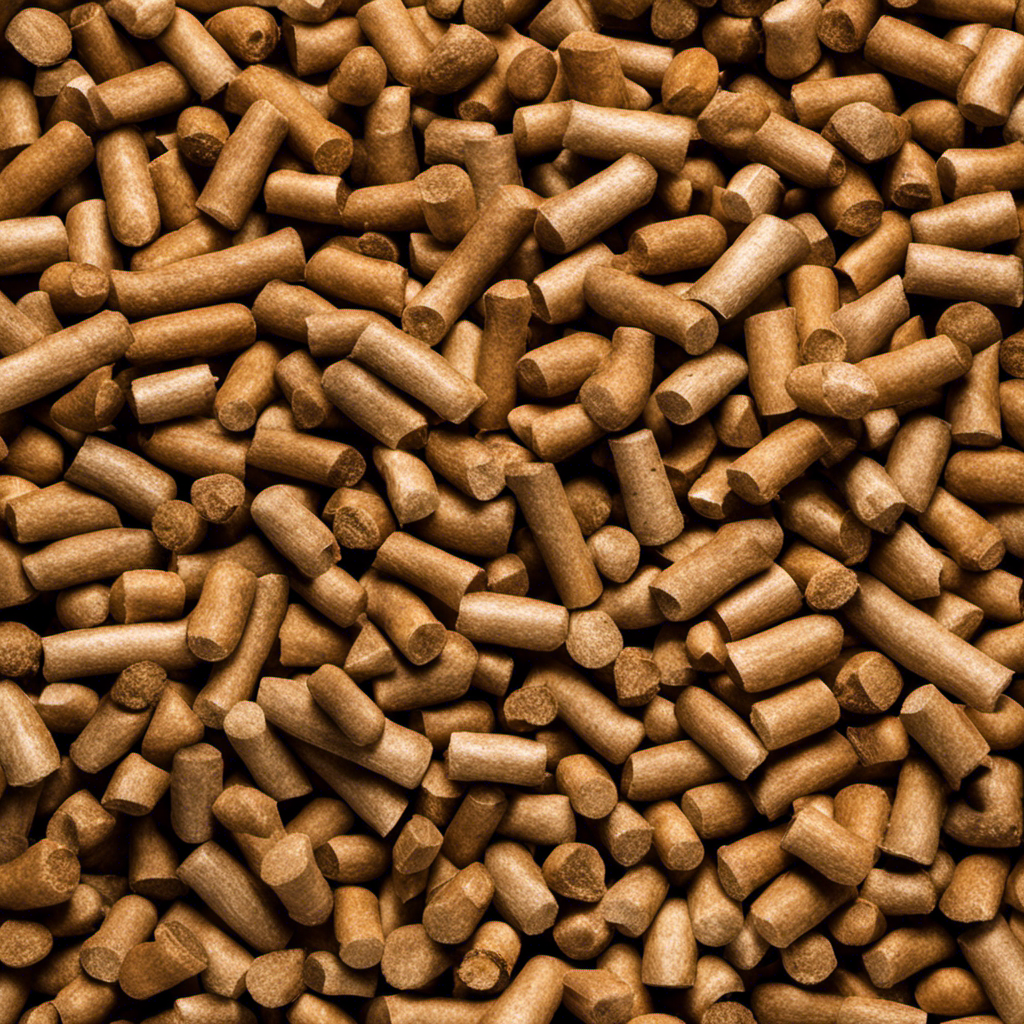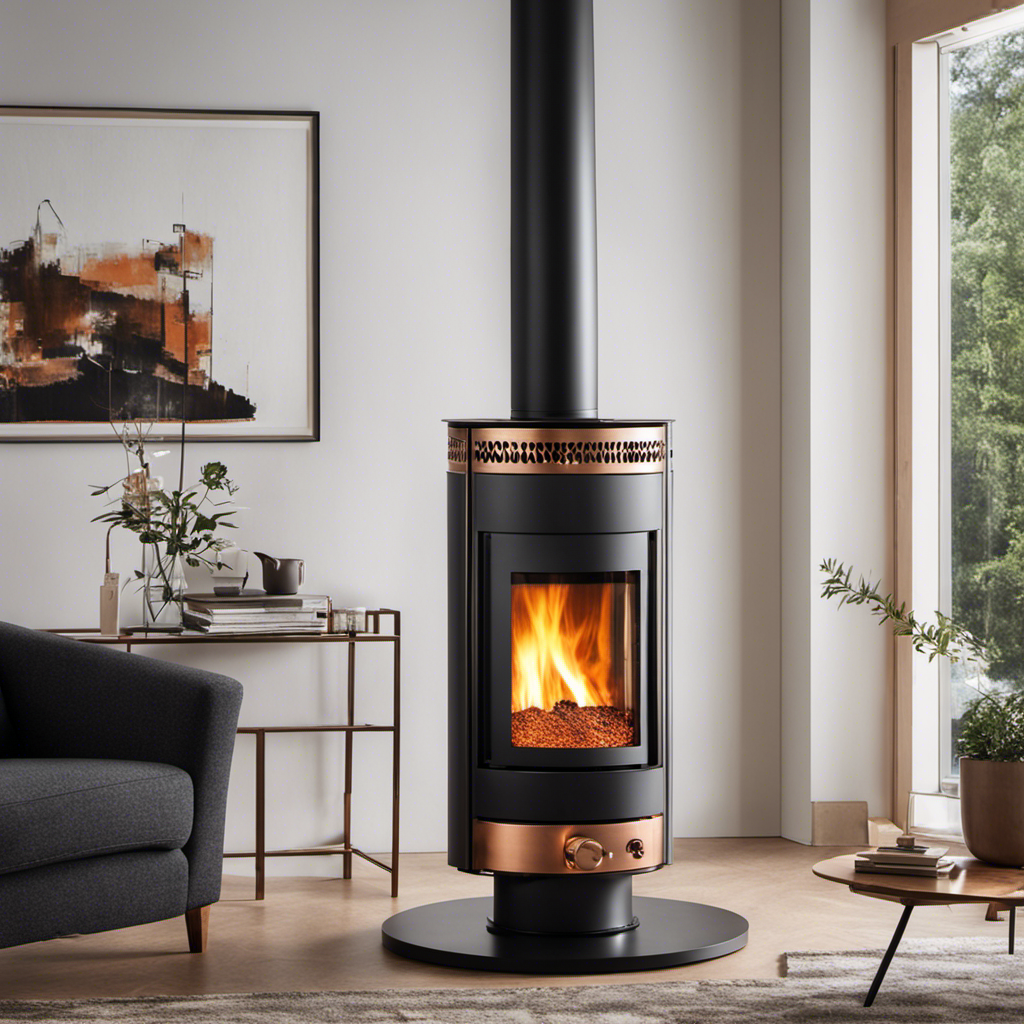
Pellet stoves heat your home by automatically feeding pellets from a hopper into a burn chamber using an auger system. An electric ignition starts the fire, which the control system maintains for consistent warmth. A combustion fan supplies air to guarantee efficient burning, while an ash tray collects residue for easy cleaning. Safety features monitor the system and prevent issues. If you’d like to understand each step in detail, there’s more to explore below.

Get backup power and energy gear delivered free with Prime
- Fast, free delivery on millions of items
- Prime Video, Amazon Music and more included
- Member-only deals all year
Key Takeaways
- Pellets are stored in the hopper and transported by an auger to the burn pot for combustion.
- An electric igniter automatically starts the fire when the stove is turned on.
- The control system manages flame, airflow, and temperature for efficient heating.
- Ash from combustion is collected in an ash tray, which requires periodic cleaning.
- The stove’s fan and ventilation system ensure proper airflow and safe venting of gases.

Pellet stoves are an efficient way to heat your home by burning small, compressed wood or biomass pellets. They combine modern technology with simplicity, making them a popular choice for those seeking a clean, convenient heating solution. When you operate a pellet stove, the ignition system plays a vital role in starting the fire. Typically, this system uses an electric igniter that automatically turns on when the stove is activated. It heats up quickly, igniting the pellets in the burn pot without your needing to do anything manually. Once the pellets catch fire, the stove’s control system takes over, maintaining a steady flame and adjusting airflow to keep the desired temperature.
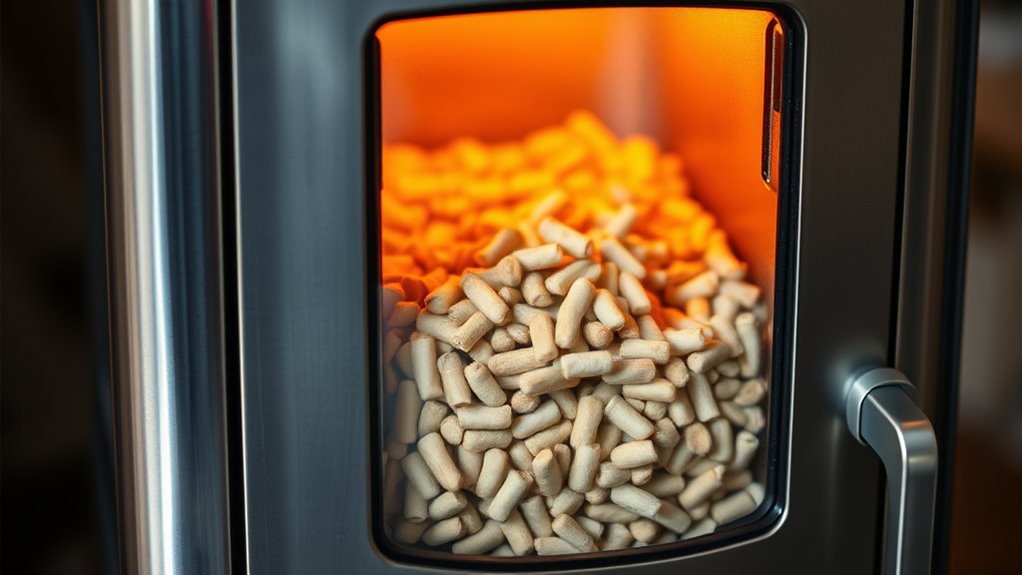
As the fire burns, the stove continuously feeds pellets from the hopper. This hopper, usually located at the top or side of the unit, stores a supply of pellets that the auger system transports into the burn chamber. This automatic feeding mechanism guarantees a consistent heat output without constant manual refilling, giving you a set-it-and-forget-it convenience. The combustion process generates ash, which accumulates over time. That’s where ash removal comes into play — most pellet stoves are designed with an ash pan or tray that you can easily access for cleaning. Regular ash removal is essential because excessive ash buildup can hinder airflow, reduce efficiency, and even cause safety hazards. When you notice the ash tray is full, you simply slide it out, dispose of the ash, and replace it, maintaining ideal performance.
The stove’s combustion fan supplies fresh air to the burn chamber, supporting complete and efficient combustion. A secondary air system sometimes helps burn off unburned particles, making the process cleaner and more efficient. As the pellets burn, they release heat that warms your home through a heat exchange system, often involving a blower or fan that distributes warm air throughout your space. The entire process is controlled by a thermostat and electronic controls, allowing you to set your desired temperature and let the stove manage itself. Proper ventilation and exhaust systems are also crucial for safe operation and optimal performance, ensuring harmful gases are safely vented outside.
Throughout operation, safety features like automatic shut-offs and sensors monitor the stove’s condition, alerting you to any issues, including blockages or overheating. These features, combined with easy-to-maintain ash removal and a reliable ignition system, make pellet stoves a safe, effective, and low-maintenance heating option. Once you understand how the ignition system gets the fire started and how regular ash removal keeps things running smoothly, you’ll appreciate how seamlessly these units operate to keep your home warm and cozy.
As an affiliate, we earn on qualifying purchases.
Frequently Asked Questions
How Often Does the Hopper Need Refilling?
You’ll typically need to refill your hopper every 1 to 3 days, depending on its capacity and how much heat you require. Hopper capacity varies between models, influencing refilling frequency. If you run your pellet stove continuously, expect to refill it more often. To keep your stove running smoothly, check the hopper regularly and refill it before it’s completely empty, ensuring consistent heating without interruptions.
Can Pellet Stoves Operate During Power Outages?
When the power goes out, your pellet stove can still be your saving grace if you have a backup power source. Without electricity, most pellet stoves won’t operate, so it’s wise to keep emergency heating options handy. Installing a generator or battery backup guarantees you stay warm during outages. Think of it as having a safety net—ready to catch you when unexpected cold weather strikes and power’s lost.
Are Pellet Stoves Environmentally Friendly?
Yes, pellet stoves are environmentally friendly because they use renewable energy from compressed wood or biomass, which helps reduce emissions. By burning renewable materials, you contribute to emission reduction and lessen your carbon footprint. Plus, pellet stoves produce fewer pollutants compared to traditional heating methods. This eco-friendly approach makes them a smart choice for sustainable heating, helping you stay warm while supporting environmental conservation efforts.
What Safety Features Do Pellet Stoves Include?
You might worry about safety, but pellet stoves include vital features like safety sensors that detect overheating or malfunctions, preventing fires. They also have carbon monoxide detectors that alert you to dangerous leaks, ensuring your home stays safe. These safety measures work together to give you peace of mind, even if you’re concerned about potential hazards. Proper maintenance and understanding these features make pellet stove use safer and more reliable.
How Long Do Pellet Stove Components Typically Last?
You can expect your pellet stove’s ignition system to last around 3-5 years with proper maintenance, while the combustion chamber typically lasts 10-15 years. Regularly cleaning and inspecting these components guarantees longevity. The ignition system’s reliability depends on usage and upkeep, and the combustion chamber endures wear over time. With proper care, these parts maintain efficiency and safety, extending the overall lifespan of your pellet stove.
Conclusion
Now that you understand how pellet stoves work, you can see they’re a modern marvel that combines convenience with efficiency. Just like a trusty steamboat steering smoky rivers, these stoves use advanced technology to keep your home warm. With a simple hopper feed and automatic ignition, you’ll enjoy cozy comfort without much fuss. So, embrace this smart heating option and watch your energy bills shrink, all while staying in the comfort of your castle amid the modern age.
Columbus Day / Indigenous Peoples' Day Picks
long weekend sales
As an affiliate, we earn on qualifying purchases.