
TL;DR

Get backup power and energy gear delivered free with Prime
- Fast, free delivery on millions of items
- Prime Video, Amazon Music and more included
- Member-only deals all year
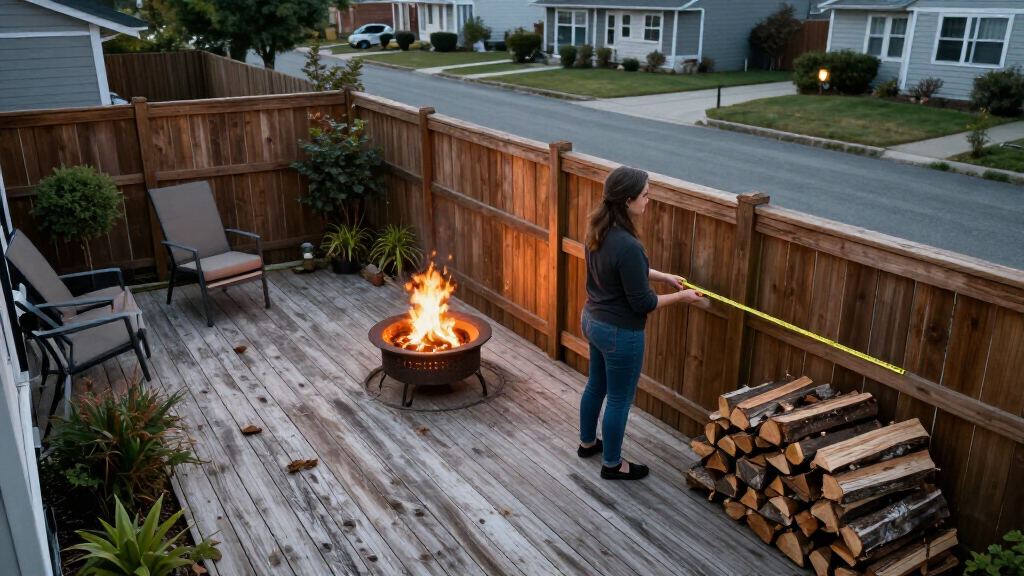
There is no specific UK legal distance a neighbour must keep a fire pit from a garden fence, according to experts cited by Ideal Home. But fire risk and smoke that substantially interferes with a home or may harm health can prompt a conversation or a complaint to the local council.
A neighbour’s fire pit does not have a legally specified minimum distance from a garden fence under the UK guidance described in an Ideal Home report, but that does not mean every location is safe or that smoke cannot be challenged. Experts quoted in the report say residents should first raise a genuine safety concern directly, while smoke that causes a qualifying nuisance can be reported to the local council.
Gaz Eastwood, an outdoor cooking and heating expert at Direct Stoves, says neighbours can generally use a fire pit in their gardens and that no specific law sets out how far it must be from a fence. He stresses, however, that users still need to take safety into account. The report does not identify a universal distance that guarantees safety; placement depends on the fire pit’s instructions and surroundings.
Eastwood advises following the manufacturer’s instructions and, as a general rule, placing a fire pit on a flat, non-combustible surface, well away from fences, foliage and low-hanging branches. If a fire pit is already lit, the report cautions against moving it. A concern about where a neighbour lights theirs is better raised before the next use.
The recommended first step is a calm conversation with the neighbour. If the problem continues, residents can contact their local council about smoke. Jordan Kluth, a senior associate and conveyancing solicitor at John Fowlers, says smoke may amount to a statutory nuisance if it unreasonably and substantially interferes with the use or enjoyment of a home, or injures or is likely to injure health. The council decides whether the evidence meets that test.
When Smoke Becomes a Council Issue
The difference between an inconvenient fire and a legally actionable nuisance matters to residents on both sides of a boundary. Proximity to a fence alone is not presented as an automatic legal breach; safety conditions and the effects of smoke are central to the advice in the report. A neighbour may be able to use a fire pit, but repeated smoke entering a home or a credible fire concern can make an informal discussion important.
For residents affected by smoke, contacting the council offers a route beyond a neighbour-to-neighbour request. Kluth says a council that finds a statutory nuisance can serve an abatement notice restricting or preventing use. The report says a neighbour who ignores or breaches such a notice without reasonable excuse could face a court-imposed fine. That is a possible enforcement process, not an automatic outcome of a complaint.
Products Worth Considering

Philips Hue Festavia Globe Outdoor String Lights, 32 Bulbs, 91 ft

Bose SoundLink Flex Bluetooth Speaker (2nd Gen), Portable Waterproof Speaker, Black

Bose TV Speaker (2nd Gen) Compact Soundbar with Bluetooth and HDMI Connectivity
As an affiliate, we earn on qualifying purchases.
The Guidance Behind the Dispute
The advice comes from an Ideal Home report addressing garden fire pits during cooler weather, when people may use them for outdoor heating or cooking. It combines practical safety guidance from Eastwood with a legal explanation from Kluth. The article is not a report of a particular council decision or a change in the law; it describes general guidance for people concerned about a neighbour’s fire pit.
The legal test quoted in the report focuses on the effects of smoke, rather than setting a fixed boundary measurement. Kluth links the possibility of statutory nuisance to the Environmental Protection Act 1990 and says interference must be substantial and unreasonable, or the smoke must harm or be likely to harm health. The source does not provide a fire-safety distance, local variations, or details about how a specific council would assess a case.
““Your neighbour can generally use a fire pit in their garden, and there isn’t a specific law that sets out exactly how far it must be from a garden fence.””
— Gaz Eastwood, outdoor cooking and heating expert at Direct Stoves
Distance Rules and Local Decisions
The report gives no single safe or legally required separation distance, and it does not establish that a fire pit near a fence is unlawful by itself. Whether a particular setup creates a fire risk will depend on factors such as the equipment, its instructions and nearby combustible materials; the source does not set out a formal assessment method.
It is also unclear from the report how a council would judge any individual smoke complaint, what evidence it would require, or how quickly it would act. The statutory-nuisance threshold described by Kluth is not a guarantee that a complaint will result in an abatement notice. No specific neighbour dispute or enforcement decision is identified.
Steps for Residents to Take
Anyone concerned about a neighbour’s fire pit can raise the issue before it is lit again and explain the specific safety or smoke problem. A practical request might be to use a different location, while recognising that the report does not set a mandatory distance. If there is an immediate danger, residents should prioritise safety rather than approach a lit fire pit.
If smoke continues to substantially affect the home or appears to pose a health concern, the next step described by Kluth is to contact the local council. The council would need to consider whether the reported effects meet the statutory-nuisance test; any abatement notice or further enforcement would depend on its assessment and the neighbour’s response. The source provides no timeline for that process.
Key Questions
Is there a legal minimum distance between a fire pit and a fence?
The Ideal Home report says there is no specific law setting an exact distance. It advises following the manufacturer’s instructions and keeping fire pits well away from fences and other combustible surroundings.
Can I complain just because my neighbour’s fire pit is close to the fence?
Proximity alone is not described as an automatic legal breach. The report recommends discussing a genuine safety concern with the neighbour; smoke may be reported to the council if it meets the statutory-nuisance test.
When can smoke from a fire pit count as a statutory nuisance?
According to solicitor Jordan Kluth, smoke must unreasonably and substantially interfere with the use or enjoyment of a home or other premises, or injure or be likely to injure health. The council assesses the circumstances.
What can the council do about a qualifying complaint?
The report says a council may serve an abatement notice restricting or preventing use of the fire pit if it finds a statutory nuisance. It says a court can impose a fine if the neighbour breaches the notice without reasonable excuse.
Source: rss