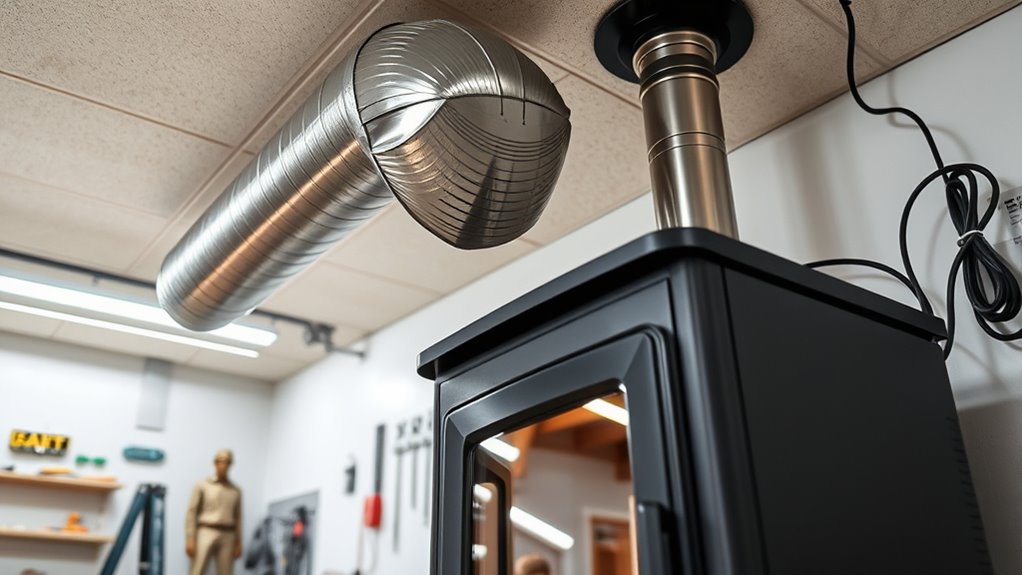
When installing a pellet stove, you need to connect it to an exterior vent using stainless steel pipe, ensuring a slight upward slope for proper drainage. Verify you have the right electrical setup, preferably a dedicated, grounded circuit, and hire a qualified electrician if needed. Proper venting and wiring are vital for safety and efficiency, so making certain everything complies with local codes is essential. Keep in mind, there’s more to guarantee a safe and reliable setup as you continue.
Key Takeaways
- Connect the pellet stove to an exterior vent with approved stainless steel pipe, ensuring proper slope and sealing for safe venting.
- Verify electrical requirements and install a dedicated, grounded circuit with professional assistance to support the stove’s power needs.
- Use proper venting components, maintain clearances from combustibles, and insulate vent pipes to prevent heat loss and ensure safety.
- Ensure easy access for maintenance and cleaning, and schedule professional inspections to confirm venting and electrical system compliance.
- Consider backup power options and regularly inspect connections to maintain safe, efficient, and reliable stove operation.
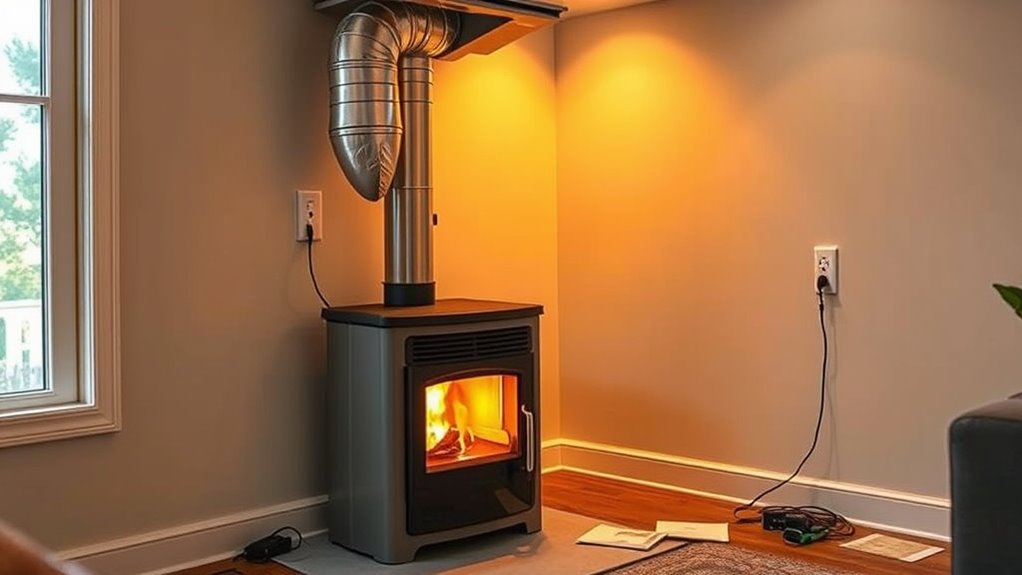
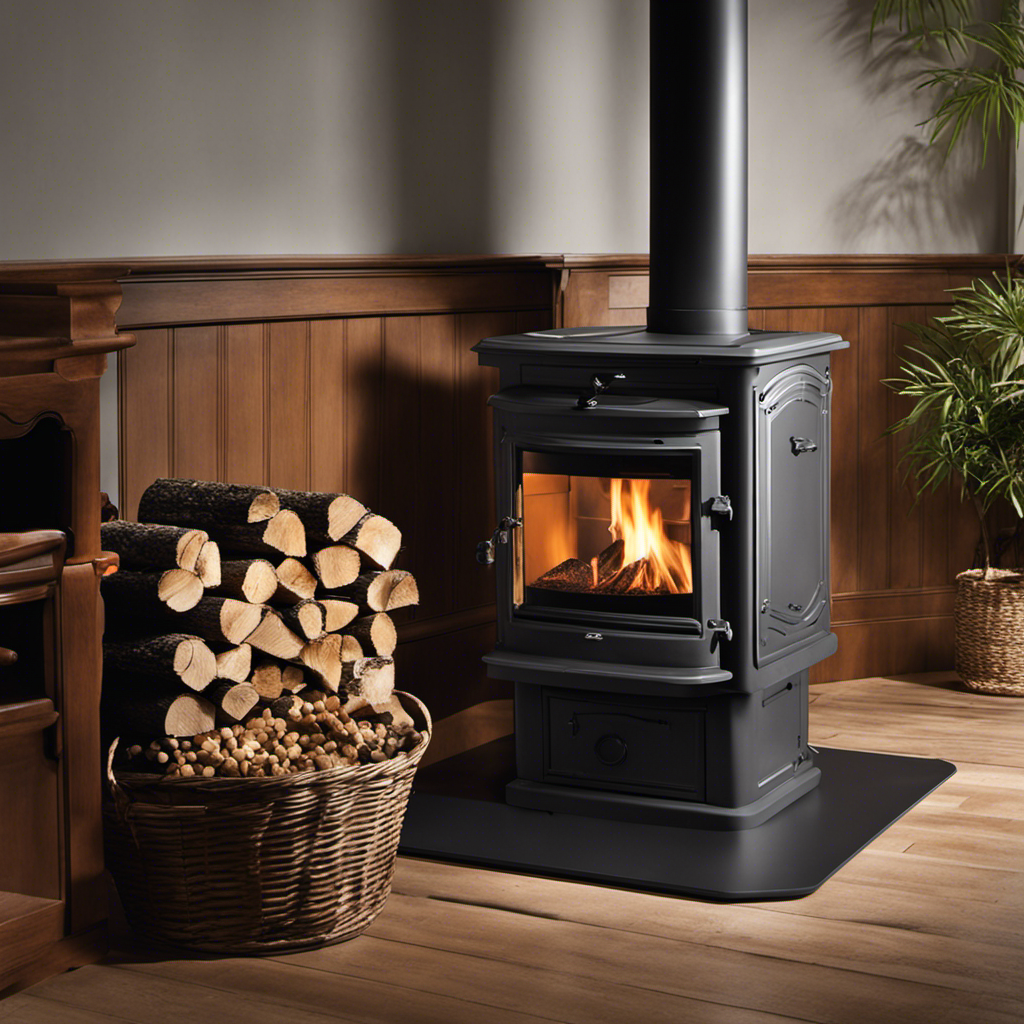
Installing a pellet stove can be a practical and efficient way to heat your home, but it requires careful planning and preparation. One of the most important aspects is guaranteeing proper venting and electrical setup to guarantee safe operation and compliance with local codes. First, you’ll need to understand the chimney requirements for your specific stove model. Pellet stoves produce exhaust gases that must be vented safely outside. Most stoves require a dedicated venting system, often a stainless steel pipe, that connects from the stove to an exterior vent. The venting must be installed with a slight upward slope to prevent condensation buildup and ensure proper draft. You should check local building codes, as they often specify minimum clearance from combustible materials, proper sealing, and the use of approved venting components. Adequate insulation around the vent pipe might also be necessary to prevent heat loss and protect surrounding structures.
Next, consider the electrical wiring needed to operate your pellet stove. Although many models have simple plug-in power cords, some require a dedicated circuit to handle their electrical load safely. You’ll need to verify the stove’s power requirements and ensure your home’s electrical system can support it without overloading. It’s advisable to have a qualified electrician install a dedicated outlet or circuit breaker for the stove. This approach minimizes risks like electrical shorts or fires. Also, check if your stove has a control panel or sensors that rely on stable power; in such cases, a dedicated and properly grounded circuit becomes even more critical. Remember, do not attempt to modify the electrical wiring yourself if you’re not experienced—improper wiring can lead to dangerous situations or damage to your stove.
Additionally, installing a standby backup power system can help ensure your pellet stove remains operational during power outages, enhancing safety and convenience. In addition to venting and electrical considerations, make sure the installation space allows for easy access for maintenance and cleaning. Proper clearance around the stove not only facilitates safe operation but also ensures that your venting system remains unobstructed. It’s wise to have a professional inspection after installation to verify that all venting and electrical connections meet safety standards and local codes. Taking these steps seriously helps prevent potential hazards such as carbon monoxide leaks, electrical fires, or inefficient stove performance. Planning for chimney requirements and electrical wiring upfront will save you trouble down the line, ensuring your pellet stove functions safely and efficiently, providing cozy warmth for years to come.
Frequently Asked Questions
Can I Vent My Pellet Stove Through a Brick Chimney?
Yes, you can vent your pellet stove through a brick chimney, but you need to make sure it’s clean and free of obstructions. Before installing, have your chimney cleaned to prevent blockages and check for cracks. Use appropriate venting materials designed for pellet stoves to ensure safety and efficiency. Proper venting prevents dangerous fumes from entering your home and ensures your stove operates smoothly.
What Type of Electrical Outlet Is Required for Installation?
Power up your pellet stove with the right electrical outlet. You’ll need a standard 115-volt electrical outlet, typically a grounded, three-prong receptacle, to meet the power requirements. Make certain the outlet is properly installed and easily accessible for safe operation and maintenance. Avoid overloading circuits—using a dedicated outlet is best. By providing a proper power source, you keep your stove functioning flawlessly and safely.
Is a Dedicated Circuit Necessary for the Pellet Stove?
Yes, a dedicated circuit is necessary for your pellet stove’s electrical requirements. This guarantees it gets enough power without overloading other circuits. You should install a separate circuit breaker, usually 15 or 20 amps, depending on your stove’s power needs. This circuit necessity helps prevent electrical issues and ensures safe operation. Always follow the manufacturer’s guidelines and local electrical codes for proper installation.
How Long Does It Take to Install the Venting System?
Did you know that venting installation accounts for about 40% of the total pellet stove setup time? Typically, the installation timeline for venting varies from a few hours to a full day, depending on venting complexity. If your home requires extensive modifications or long runs, expect longer installation times. Planning ahead helps guarantee you’re prepared for potential delays and can coordinate with professionals to streamline the process.
Are There Specific Electrical Codes to Follow for Pellet Stove Wiring?
Yes, there are specific electrical codes you must follow for pellet stove wiring. You need to make certain electrical safety by complying with local wiring regulations, such as using the correct wire gauge and grounding procedures. Always install a dedicated circuit to prevent overloads. Check your local electrical codes or consult a professional to ensure your wiring meets safety standards, reducing the risk of fire or electrical hazards.
Conclusion
Installing your pellet stove properly ensures safe, efficient heating. Remember, venting and electrical needs are vital for essential performance and safety. Did you know that pellet stoves can reduce heating costs by up to 50% compared to traditional fireplaces? By following the right steps and guidelines, you’ll enjoy consistent warmth and peace of mind all winter long. Take your time, stay informed, and enjoy the cozy comfort your new stove provides.

Terra grew up with a soul deeply connected to nature. Her earliest memories are of sun-drenched meadows, whispering woods, and the rhythmic dance of waves on a moonlit night. Every gust of wind, rustling leaf, and distant horizon beckoned her with tales waiting to be told.