
TL;DR

Get backup power and energy gear delivered free with Prime
- Fast, free delivery on millions of items
- Prime Video, Amazon Music and more included
- Member-only deals all year
A Sept. 29 Green Building Advisor report examines how remote monitoring in heat pumps gives manufacturers and contractors access to operating data and may help identify problems sooner. The report raises questions about who controls that data and how it may be used, but the available source does not provide specific ownership policies or answers.
Remote monitoring systems are giving some heat-pump manufacturers and HVAC contractors access to detailed equipment data, a development that could help identify faults before homeowners notice them. A Sept. 29 report by Green Building Advisor describes the technology and raises questions about who controls the resulting household data and how it may be used.
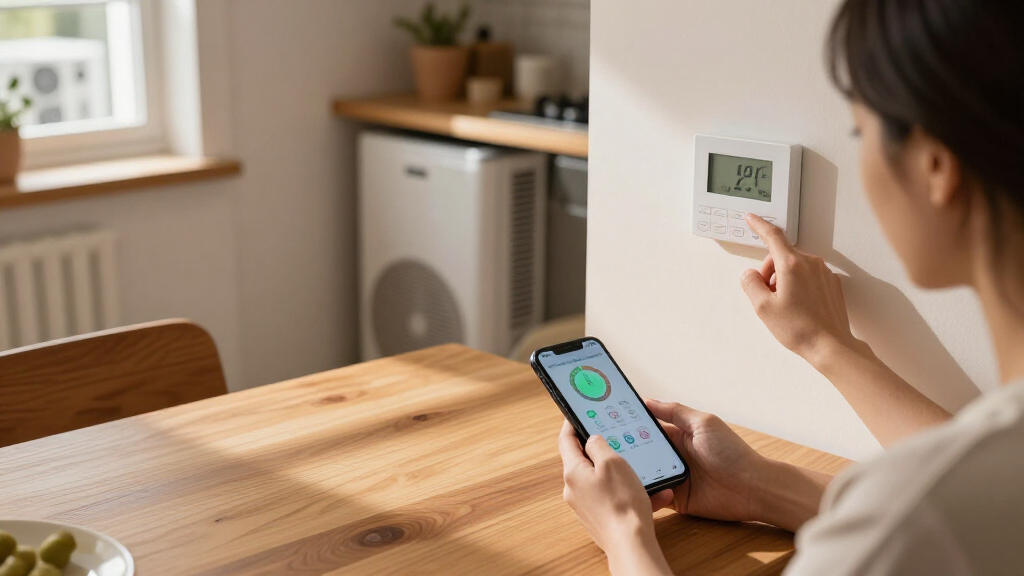
Connected heat pumps can provide information such as temperature and humidity levels, airflow rates, refrigerant pressure and defrost-cycle behavior. According to Green Building Advisor, manufacturers and installers can use these readings to monitor equipment performance and look for signs of trouble. The report says this may reduce unnecessary service calls and shorten diagnosis when a system needs attention.
The report identifies Daikin and Carrier as large HVAC companies offering remote-monitoring services. It names Daikin’s SkyportCare as a system that uses a smart-home thermostat and the company’s cloud platform to give contractors access to heat-pump performance data. The source does not specify the data collected by every service or provide detailed terms for customers.
Remote monitoring can also support a service process in which a contractor learns of a potential problem before the homeowner does. Green Building Advisor describes systems as potentially detecting issues and prompting a technician visit, but the supplied report does not establish how often this happens, what decisions are automated, or whether homeowners must approve a visit.
Monitoring Changes Service and Data Access
For homeowners, monitoring may make maintenance more efficient: a technician who has equipment readings in advance could spend less time identifying a fault or making an unnecessary visit. Those benefits depend on the system, the accuracy of its readings and how the service is operated; the report provides no measured results or comparison of service outcomes.
The same data flow raises practical questions because readings about home temperatures, equipment operation and system demand leave the household and become available to companies or contractors. Who may view them, how long they are retained, and whether they are shared or used for purposes beyond servicing can affect a homeowner’s privacy and control. The available source flags these questions without answering them.
From Remote Control to Diagnostics
Heat pumps have joined a wider market of connected home devices that can be controlled through apps or integrated with smart-home systems. Remote control lets users adjust settings from elsewhere; remote monitoring adds ongoing performance data that can be viewed by service providers, according to the report.
Green Building Advisor’s article, written by Justin R. Wolf, places the newer monitoring services within that shift toward connected homes. It suggests that an all-in-one smart heat pump from one manufacturer could point toward future HVAC designs, but the supplied material does not identify that product or establish how widely such systems are being adopted.
“Who owns the data? And to what ends?”
— Justin R. Wolf, Green Building Advisor
Who Controls the Monitoring Records
The supplied report does not explain whether homeowners own the collected data, what permissions they grant when enabling monitoring, or whether they can limit access or request deletion. It also does not detail retention periods, security protections, sharing practices or whether data may be used for purposes beyond diagnosis and service.
Other operational details remain unspecified: the report does not say how frequently monitoring detects a problem before a homeowner notices, how alerts are verified, or who decides whether a technician is dispatched. These points may vary by manufacturer, product and service agreement. The available source does not provide customer contract language or company responses resolving them.
Customer Terms Will Shape Adoption
Homeowners considering a monitored heat pump can review the manufacturer’s and installer’s service terms for details on data collection, access, retention and sharing. The report does not announce a new regulation, company policy or deadline addressing those questions.
Further clarity would depend on manufacturers and contractors explaining how their systems handle customer data and what controls users have. The report points to connected, data-enabled HVAC as a possible direction for the market, while the scope of adoption and the terms governing household information remain unsettled in the source material.
Key Questions
What information can a remotely monitored heat pump provide?
The report lists temperature and humidity, airflow, refrigerant pressure and defrost-cycle behavior among the readings some systems can share.
Who can access that heat-pump data?
Green Building Advisor says manufacturers and HVAC contractors can access data through some monitoring services. The supplied material does not set out the access terms for every product.
Can remote monitoring identify a problem before the homeowner notices?
That is a stated purpose of the systems described in the report. It does not provide figures showing how often they detect problems early or how alerts are handled.
Does the report say who owns the data?
No. It raises ownership and use as open questions but does not provide a definitive answer or describe specific customer data policies.
Source: rss
Halloween Picks
halloween
As an affiliate, we earn on qualifying purchases.