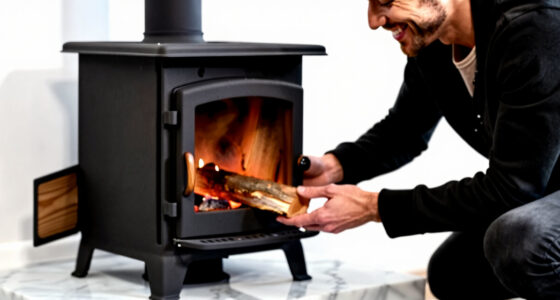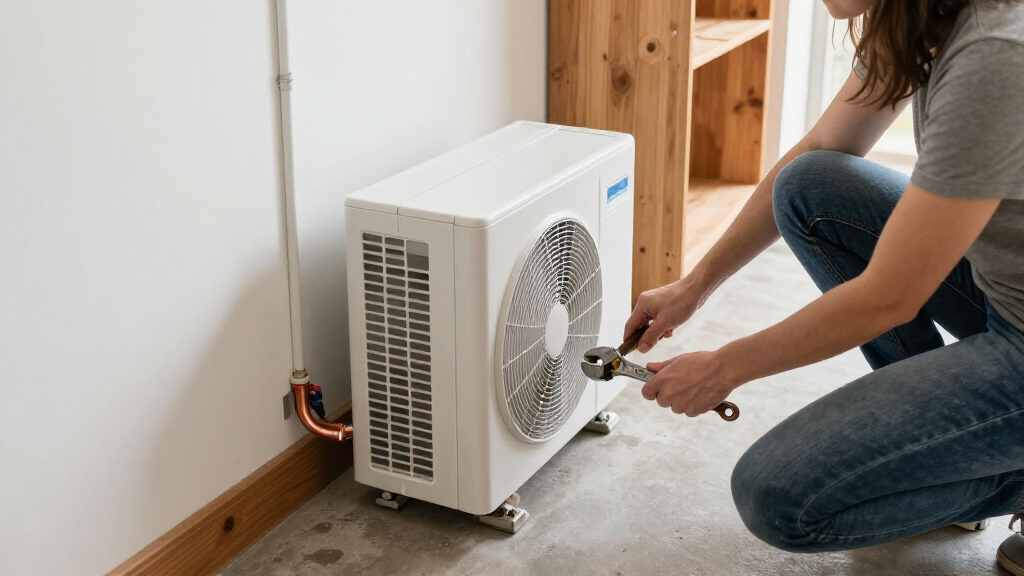

The best home heating system overall in this roundup is the DELLA Serena mini split, which combines heating and cooling with smart controls for homes that can use ductless equipment. The Goodman 100,000 BTU furnace is a stronger fit for larger homes already set up for a central forced-air system, while the EnviMAX panel heater suits quiet, targeted heating in a single room. These options serve very different needs: whole-home systems require more planning and installation, while electric room heaters are simpler but heat a smaller area. Capacity, existing ducts, electrical service, climate, and installation needs matter as much as the equipment itself. Read on for the full breakdown and a guide to choosing a system that fits your home.

Get backup power and energy gear delivered free with Prime
- Fast, free delivery on millions of items
- Prime Video, Amazon Music and more included
- Member-only deals all year
Key Takeaways
- The DELLA Serena earns the overall spot for combining a ductless heat pump, cooling, and Wi-Fi controls, while its installation needs make it a poor fit for someone seeking a plug-in heater.
- The two Goodman furnaces share an 80% efficiency rating and single-stage operation; their different heating capacities make home sizing more important than choosing by model number alone.
- The EnviMAX and HICFM serve different room-heating priorities: the EnviMAX uses fanless convection for quiet operation, while the HICFM uses a fan to circulate heat.
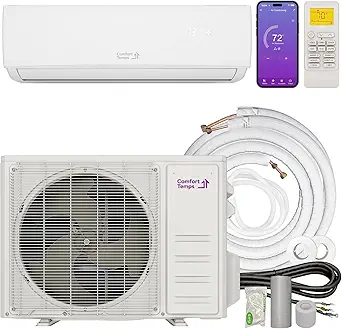
- The Comfort Temps mini split offers ductless heating and cooling for a smaller-scale installation, but its stated 12,000 BTU capacity should be matched to the space and climate.
- The HEATIT mat targets floor comfort in a limited area, so it works as a focused supplemental option rather than a substitute for a whole-home heating system.




| home heating system | Voltage | Model | Coverage | Efficiency |
|---|---|---|---|---|
| HICFM 120V 1500W Wall-Mount El | 120V | HWS-15 | Up to 175 sq. ft. | — |
| DELLA Serena 18,000 BTU 22 SEE | 208–230V | — | Up to 1,000 sq. ft. | 22 SEER2 |
| Goodman 100,000 BTU 80% Effici | — | GR9S801005CN | — | 80% AFUE |
| EnviMAX 220V Hardwired Electri | 220V | EM1022D | 300–350 sq. ft. | — |
| Comfort Temps 12,000 BTU Ductl | 115V | — | — | 20.5 SEER2 |
| Goodman 80,000 BTU 80% Efficie | — | GR9S800803BN | — | 80% AFUE |
| HEATIT 35 sq. ft. Electric Rad | 120 V | — | 35 sq. ft. | — |
More Details on Our Top Picks
HICFM 120V 1500W Wall-Mount Electric Fan Heater with Thermostat
The HICFM is a practical fit when I need direct, thermostat-controlled heat in a room of up to 175 sq. ft. Its 1500-watt output and downflow louvers push warmth toward the occupied part of the room, while the built-in thermostat helps maintain a selected temperature. Compared with the EnviMAX 1000W panel heater, it offers more output and adjustable thermostat control, but relies on a fan and may be more noticeable in a quiet bedroom. The compact wall-mounted design keeps floor space open, though installation requires a suitable wall opening and a 120V supply. Overheat protection and a warning light add useful safeguards, but this is a room heater rather than a whole-home system.
Pros:- Built-in thermostat maintains the selected temperature
- 1500W output is suited to rooms up to 175 sq. ft.
- Downflow louvers direct warmth toward the floor
- Overheat protection and warning light are included
Cons:- Requires a wall installation and opening
- Limited to a 120V electrical supply
- Fan-driven heat may be less suitable for noise-sensitive rooms
Best for: Homeowners who want thermostat-controlled supplemental heat in a bathroom, office, or other room up to 175 sq. ft.
Not ideal for: Buyers heating a whole home, or anyone who needs a portable heater or cannot make a wall opening and provide 120V power.
- Brand:HiCFM
- Model:HWS-15
- Heating capacity:1500W (5120 BTU)
- Voltage:120V
- Coverage:Up to 175 sq. ft.
- Mounting:Indoor wall mount
- Dimensions:4.4 × 10.8 × 12.2 in (D × W × H)
- Weight:12.9 lb
Our verdict“Choose the HICFM for compact, thermostat-controlled supplemental heat when a permanent wall installation is practical.”
DELLA Serena 18,000 BTU 22 SEER2 Smart Wi-Fi Mini Split Heat Pump
The DELLA Serena makes the most sense when I want one ductless system to handle both heating and cooling across a larger zone. Its 18,000 BTU capacity is listed for spaces up to 1,000 sq. ft., giving it broader reach than the Comfort Temps 12,000 BTU mini split, which is sized for up to 550 sq. ft. Inverter operation and a 22 SEER2 rating distinguish it on efficiency, while Wi-Fi and Alexa or Google Home support make routine adjustments easier. The tradeoff is a 208–230V supply and professional installation; changing the included line-set length also calls for refrigerant adjustment. Its 22 dB mute mode may suit quiet spaces, but the installation demands and larger capacity make it excessive for a small room.
Pros:- Heating and cooling in one inverter-driven ductless system
- 18,000 BTU capacity is listed for areas up to 1,000 sq. ft.
- Wi-Fi, Alexa, and Google Home compatibility
- 22 dB mute mode and included 16.4 ft. copper line set
Cons:- Requires professional installation
- Uses 208–230V power
- Altering line-set length requires refrigerant adjustment
Best for: Owners of larger open-plan spaces who want ductless heating and cooling with app or voice control.
Not ideal for: Renters, small-room buyers, or households without 208–230V power and access to professional installation.
- Cooling capacity:18,000 BTU/h
- System type:Ductless heat pump
- Efficiency:22 SEER2
- Coverage:Up to 1,000 sq. ft.
- Voltage:208–230V
- Power:1,450W
- Refrigerant:R-32
- Connectivity:Wi-Fi; Alexa and Google Home compatible
- Installation kit:16.4 ft. copper line set
Our verdict“Pick the DELLA Serena for a larger zone where app-controlled heating and cooling justify professional installation.”
Goodman 100,000 BTU 80% Efficiency Multi-Speed Single-Stage Upflow/Horizontal Furnace (GR9S801005CN)
For a home already set up for gas forced-air heating, the Goodman GR9S801005CN stands apart from the wall heaters and mini splits here: 100,000 BTU is intended for a central system, not a single room. Its multi-speed blower and upflow or horizontal orientation offer installation flexibility, while the 80% AFUE rating is a more modest efficiency profile than a heat pump such as the DELLA Serena. This is a better fit for buyers prioritizing substantial furnace output and a stated 10-year parts and unit-replacement warranty, subject to qualified installation and timely registration. The tradeoffs are clear: it cannot be installed downflow, is unavailable for installation in California, and needs separately sourced accessories such as venting or LP conversion kits.
Pros:- 100,000 BTU heating capacity for central furnace applications
- Multi-speed blower supports upflow or horizontal installation
- Stainless steel tubular dual-diameter primary heat exchanger
- Includes stated 10-year parts and unit-replacement warranty when conditions are met
Cons:- 80% AFUE is less efficient than higher-efficiency furnace options
- Cannot be installed in a downflow configuration and is unavailable in California
- LP conversion and venting accessories are sold separately
Best for: Homeowners replacing a compatible central gas furnace who need high heating capacity and an upflow or horizontal configuration.
Not ideal for: California buyers, homes requiring downflow installation, or households seeking a ductless or electric system.
- Model:GR9S801005CN
- Heating capacity:100,000 BTU
- Efficiency:80% AFUE
- Blower:Multi-speed
- Heating stages:Single-stage
- Installation orientation:Upflow or horizontal; not downflow
- Cabinet width:21 in
- Heat exchanger:Stainless steel tubular, dual-diameter primary
- Warranty:10-year parts limited; conditions apply
Our verdict“Choose this Goodman when a compatible central gas system needs high output and its installation orientation and location restrictions fit.”
EnviMAX 220V Hardwired Electric Panel Wall Heater – 1000 Watts, Fanless Convection Design
The EnviMAX suits buyers who value quiet, steady supplemental warmth more than fast, adjustable output. Its fanless convection design avoids the airflow noise of the HICFM wall heater, making this the more bedroom-friendly choice in the lineup. The slim 3-inch profile also keeps floor space clear, and the stated cool-to-the-touch surface and wall-sensing shutoff may appeal to homes with children or pets. Its 1000W output is listed for 300–350 sq. ft., but its fixed 90°F temperature output offers less precise control than the HICFM’s built-in thermostat. Hardwiring and a 220V supply narrow installation options, so I would skip it where electrical access is uncertain or where users want portable, responsive heat.
Pros:- Fanless operation avoids forced-air noise
- Slim 3-inch profile preserves floor space
- Cool-to-the-touch exterior and wall-sensing safety feature
- Listed coverage of 300–350 sq. ft.
Cons:- Requires hardwiring and a 220V supply
- Fixed 90°F output limits temperature adjustment
- 1000W output is intended for supplemental room heat rather than whole-home heating
Best for: Households seeking quiet, wall-mounted supplemental warmth for a bedroom, office, or bathroom with suitable 220V wiring.
Not ideal for: Buyers who need portable heat, thermostat-based temperature selection, or installation on a 120V circuit.
- Model:EM1022D
- Voltage:220V
- Power:1000W
- Current:4.5A
- Coverage:300–350 sq. ft.
- Mounting:Hardwired wall mount
- Thickness:3 in
- Warranty:3 years
Our verdict“Choose the EnviMAX for quiet supplemental warmth if fixed output and hardwired 220V installation suit the room.”
Comfort Temps 12,000 BTU Ductless Mini-Split AC and Heat Pump with Wi-Fi
The Comfort Temps mini split is a useful middle ground for buyers who want ductless heating and cooling without stepping up to the DELLA Serena’s larger 18,000 BTU system and 208–230V requirement. This model runs on 115V power and is listed for 400–550 sq. ft., so it better suits a smaller zone than a large open-plan area. Inverter operation, seven fan speeds, Wi-Fi, and voice controls give homeowners several ways to tune comfort; the 28 dB noise rating is also suited to quieter rooms. A pre-charged line set and installation components are included, but refrigerant balancing still requires a certified HVAC technician, and buyers must provide a new outdoor unit. Its 12,000 BTU capacity is the main limit against the DELLA.
Pros:- 115V operation fits 110–120V supply ranges
- Heating and cooling with inverter compressor
- Wi-Fi and Alexa and Google Assistant compatibility
- Includes a pre-charged 16.4 ft. copper line set and installation components
Cons:- Refrigerant balancing requires a certified HVAC technician
- Requires a new outdoor unit
- 12,000 BTU capacity covers a smaller area than the DELLA Serena
Best for: Owners of a 400–550 sq. ft. room or small zone who want both heating and cooling on a 115V supply.
Not ideal for: Buyers heating a large open-plan area or anyone expecting a fully do-it-yourself installation without HVAC refrigerant service.
- Capacity:12,000 BTU; 1 ton
- Voltage:115V
- Efficiency:20.5 SEER2
- Room area:400–550 sq. ft.
- Wattage:1,050W
- Noise level:28 dB
- Refrigerant:R454B
- Fan speeds:7
- Line set:16.4 ft. copper
Our verdict“Choose Comfort Temps for a smaller ductless zone where 115V compatibility and smart controls matter more than higher capacity.”
Goodman 80,000 BTU 80% Efficiency Multi-Speed Single-Stage Upflow/Horizontal Furnace (GR9S800803BN)
The Goodman GR9S800803BN suits homes that need a central gas furnace and have compatible upflow or horizontal ductwork. Its 80,000 BTU capacity and multi-speed ECM motor pair steady single-stage heating with airflow adjustments that can support more even, quieter operation. Compared with the listed 100,000 BTU Goodman furnace, this model is the more restrained fit for homes that do not need the larger capacity; both are 80% AFUE single-stage units. The tradeoff is that 80% AFUE leaves more fuel use than higher-efficiency options, and this furnace cannot be installed downflow. Its 17.5-inch cabinet and R32 readiness may help with particular replacement plans, but thermostat and LP conversion accessories are separate purchases.
Pros:- Multi-speed ECM motor adjusts airflow and can reduce operating noise.
- 80,000 BTU capacity offers a lower-capacity alternative to the listed 100,000 BTU Goodman furnace.
- Supports upflow and horizontal installation in a 17.5-inch-wide cabinet.
- Aluminized steel primary heat exchanger and R32-ready design.
Cons:- 80% AFUE is less efficient than higher-AFUE furnace options.
- Cannot be installed in a downflow configuration.
- Thermostat and LP conversion kit are sold separately.
Best for: Homeowners replacing an older gas furnace in an upflow or horizontal setup who want multi-speed airflow and do not need a higher-AFUE system.
Not ideal for: Homes with downflow ductwork, buyers prioritizing high fuel efficiency, or households seeking a standalone room heater like the HICFM wall-mount fan heater.
- Model:GR9S800803BN
- Heating capacity:80,000 BTU
- Efficiency:80% AFUE
- Stages:Single-stage
- Motor:Multi-speed ECM
- Cabinet width:17.5 inches
- Installation:Upflow or horizontal; not downflow
- Heat exchanger:Aluminized steel primary
- Refrigerant readiness:R32 ready
Our verdict“Choose this Goodman for a compatible upflow or horizontal gas furnace replacement when multi-speed airflow matters more than high AFUE.”
HEATIT 35 sq. ft. Electric Radiant Floor Heating Mat
The HEATIT 35-square-foot mat is for a specific heating job: adding warmth beneath flooring in a limited indoor area. Its self-adhesive mesh can be shaped around turns by cutting the mesh, while the heating cable must remain intact, so layout planning matters before installation. At 420 W and 12 W per square foot, it is a floor-comfort supplement rather than a whole-home replacement for the Goodman gas furnace or the DELLA mini-split heat pump. It works with tile, natural stone, and wood, including wet indoor areas, but not pools, spas, or outdoor spaces. The UL listing and conditional 30-year limited warranty are useful safeguards; buyers still need a compatible thermostat controller and careful installation.
Pros:- 35-square-foot coverage suits a defined floor area.
- Self-adhesive mesh can be cut to fit turns while routing the uncut cable.
- Compatible with ceramic tile, natural stone, and wood flooring.
- UL listed in the USA and Canada, with a 30-year limited warranty subject to installation and testing requirements.
Cons:- Heating cable cannot be cut, which limits layout changes.
- Requires a thermostat controller.
- Not intended for outdoor use, pools, or spas.
Best for: Renovators adding electric floor warmth to a 35-square-foot indoor tile, stone, or wood area, such as a bathroom or entryway.
Not ideal for: Anyone trying to heat an entire home, cover more than 35 square feet with one mat, or install radiant heat outdoors, in a pool, or in a spa.
- Coverage:35 sq. ft.
- Mat dimensions:20 in. wide × 21.3 ft. long
- Voltage:120 V
- Amperage:3.5 A
- Power:420 W
- Heat output:12 W/sq. ft.
- Thickness:1/8 in.
- Installation:Self-adhesive fiberglass mesh; mesh can be cut, heating cable cannot
- Use and certification:Indoor, wet-area suitable; UL listed for the USA and Canada
Our verdict“Pick this mat for localized indoor floor comfort when its 35-square-foot coverage fits the planned area.”
How We Picked
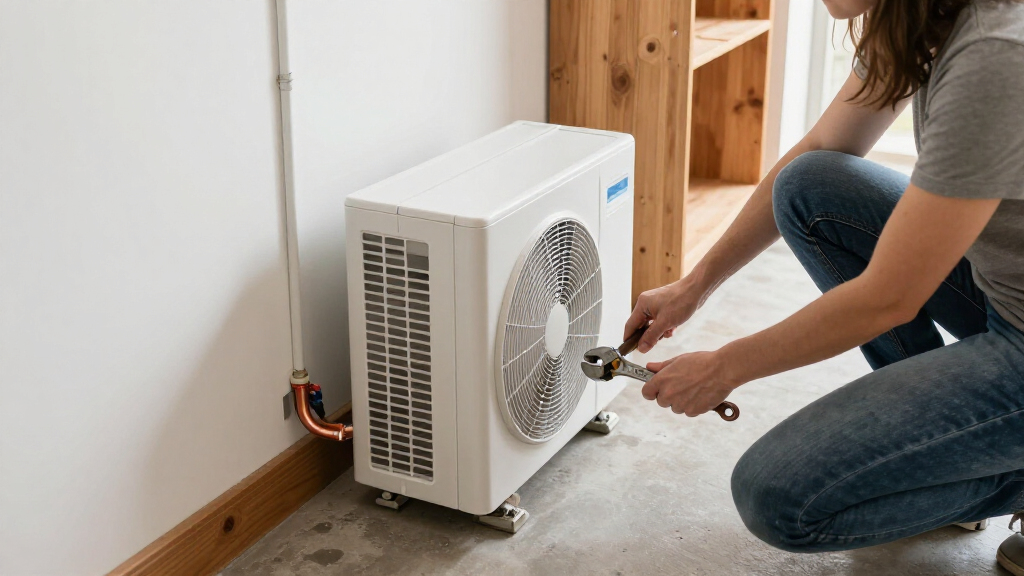
I ranked these seven systems by how well each can meet a distinct home heating need, weighing heating approach, stated capacity, installation demands, operating flexibility, and whether the unit also provides cooling. Whole-home potential and year-round utility give the DELLA Serena the lead for homes suited to ductless heat pumps. The Goodman furnaces follow for buyers with compatible ductwork who need central heating, with the higher-capacity model placed ahead for larger heating loads; neither is a universal pick because correct sizing and professional installation matter.
Room-level electric heaters and the radiant mat rank lower because their coverage is more localized, though that makes them useful for specific rooms, quiet operation, or warm floors. I considered practical tradeoffs such as fan noise, hardwiring, floor installation, maintenance, and the limits implied by each product’s stated capacity. The ranking reflects fit and versatility, not a claim that one system will outperform another in every home.
| home heating system | Model |
|---|---|
| HICFM 120V 1500W Wall-Mount El | HWS-15 |
| DELLA Serena 18,000 BTU 22 SEE | — |
| Goodman 100,000 BTU 80% Effici | GR9S801005CN |
| EnviMAX 220V Hardwired Electri | EM1022D |
| Comfort Temps 12,000 BTU Ductl | — |
| Goodman 80,000 BTU 80% Efficie | GR9S800803BN |
| HEATIT 35 sq. ft. Electric Rad | — |
Factors to Consider When Choosing Best Home Heating Systems
Choosing a heating system starts with the home and the way you use it, rather than with a wattage or BTU figure in isolation. These questions can help narrow the field before you compare equipment.
Match the system to the space you need to heat
Decide whether you need heat for one room, a zone, or the entire home. A wall heater can make sense for a chilly office or garage, but relying on several room heaters to replace central heat may add electrical demand and leave temperatures uneven. A furnace or mini split can cover a broader area, though actual coverage depends on insulation, ceiling height, climate, and layout. Avoid sizing by floor area alone when the home has open stairwells, drafty rooms, or unusual ceilings. Ask an HVAC professional to calculate the heating load before buying a permanent system. For a small targeted space, check the manufacturer’s coverage guidance and the room’s electrical requirements.
Check what your home can support
Existing ductwork, electrical circuits, and available wall space can narrow your choices before performance enters the discussion. A furnace generally relies on compatible ducts and fuel connections, while a ductless heat pump needs an indoor unit, outdoor unit, and a suitable path between them. Hardwired panel heaters and radiant floor mats can call for electrical work, so confirm circuit capacity and local code requirements with a qualified electrician. A common mistake is treating a product’s listed voltage as proof that a convenient outlet will work. Include installation access, permits, and any needed upgrades in the project plan. The system with the easiest equipment purchase may not be the easiest system to install in your particular home.
Compare heating types for your climate
Heat pumps move heat rather than generating it directly, which can make them a useful heating and cooling choice in suitable climates. Their output and efficiency can change as outdoor temperatures fall, so check the manufacturer’s performance data for local winter conditions. A gas furnace may appeal where gas service and ductwork are already in place, but its efficiency rating describes only part of the ownership picture. Electric resistance heaters provide direct heat without combustion, yet using them across a large home can demand substantial electricity. Do not assume one technology is always cheapest or most comfortable; local energy rates and weather matter. Ask installers to compare expected performance using the conditions and utility costs that apply to your home.
Plan for comfort, noise, and controls
How heat feels can matter as much as how quickly a room warms. Fan-driven units circulate air, which may help distribute warmth but creates airflow and sound; fanless convection avoids that moving-air feel but responds differently. Radiant floor heat warms surfaces underfoot and can be pleasant in a bathroom or other targeted zone, though it is not a quick whole-house retrofit. Thermostats and Wi-Fi controls can help schedule heating, but they cannot correct poor placement or an undersized system. Consider whether a room needs fast temperature changes or steady background warmth. Check control compatibility and sensor placement before assuming a smart feature will manage every zone independently.
Look beyond the equipment to ownership needs
Purchase decisions should account for installation, routine service, expected equipment life, and how easily a system can be repaired. Furnaces and mini splits have different service needs, while electric room heaters generally avoid combustion-system maintenance but still need safe installation and care. Ask what filters, inspections, or seasonal tasks apply, and whether local technicians can service the make and model. Compare warranties and installer responsibilities in writing rather than relying on a product name or headline specification. If a system will be your primary heat source, consider backup plans for outages or equipment failure. Paying more can make sense when it provides a system sized for the home and professionally installed, rather than simply adding features you will not use.
Frequently Asked Questions
Can a ductless mini split heat my whole home?
It can heat a whole home if the equipment is sized for the home’s heat loss and the indoor units can distribute warmth across its layout. A single indoor head may leave closed rooms or distant areas cooler, even when the main living space feels comfortable. Ask an installer whether one unit is enough or whether multiple zones are needed. Check the model’s heating output at the outdoor temperatures common in your area. If you already have ducts in good condition, compare the installation scope with a central system before deciding.
Should I choose an 80,000 BTU or 100,000 BTU furnace?
Choose based on a heating-load calculation, not on the assumption that more capacity will heat the home better. An oversized furnace can cycle frequently and may create uneven comfort, while an undersized unit can struggle during cold weather. Home size, insulation, air leakage, windows, and local climate all affect the required output. The two Goodman models in this roundup share an 80% efficiency rating and single-stage operation, so capacity is the key distinction shown here. Have a qualified contractor assess the home and confirm compatibility with existing ductwork.
Is a wall heater enough to heat a home?
A wall heater is usually better suited to one room or a small zone than as the only heat source for an entire home. Its ability to warm a space depends on insulation, drafts, room layout, and the heater’s rated output. Multiple electric heaters can increase circuit demand, so check with an electrician before adding them in several rooms. A fan model may spread warmth more actively, while a fanless panel may suit spaces where quiet operation matters. For primary whole-home heat, compare a properly sized central or multi-zone system.
Can I install radiant floor heating in an existing room?
It may be possible, but the work depends on the floor construction, access beneath the finished surface, and the electrical connection required by the mat. Retrofitting can involve lifting or replacing flooring, which may make a small project more involved than the mat itself suggests. Check whether the product is approved for the planned floor covering and installation location. A limited mat area can add comfort underfoot without providing enough heat for the whole room. Have an electrician and flooring professional confirm the plan before materials are installed.
What should I compare before replacing my furnace with a heat pump?
Compare the home’s heating load, the heat pump’s output in cold weather, available electrical service, and the condition of existing ducts. Also check local electricity and fuel costs, since operating expenses depend on both equipment performance and utility rates. A heat pump can add cooling as well as heating, which may change the value of the project if you currently lack central air. Some homes benefit from keeping a furnace as backup or pairing systems, depending on climate and installation goals. Ask contractors to explain their assumptions and provide a design suited to local winter temperatures.
Conclusion
For the broadest mix of ductless heating, cooling, and connected controls, the DELLA Serena is my best overall pick for a home suited to a mini split. The Comfort Temps is my value-oriented choice for buyers who need a smaller-capacity ductless system and can confirm it fits their space. For a larger home with compatible ducts, I would compare the Goodman 100,000 BTU furnace with the 80,000 BTU model after a professional load calculation; neither should be selected by capacity alone. The HICFM is the more approachable room-heating option for buyers who want fan-assisted heat, while the EnviMAX suits quiet, fanless supplemental warmth. Choose the HEATIT mat for targeted floor comfort, not as a whole-home system. The right pick depends on whether you need central coverage, ductless flexibility, or warmth in one specific spot.
Halloween Picks
halloween
As an affiliate, we earn on qualifying purchases.