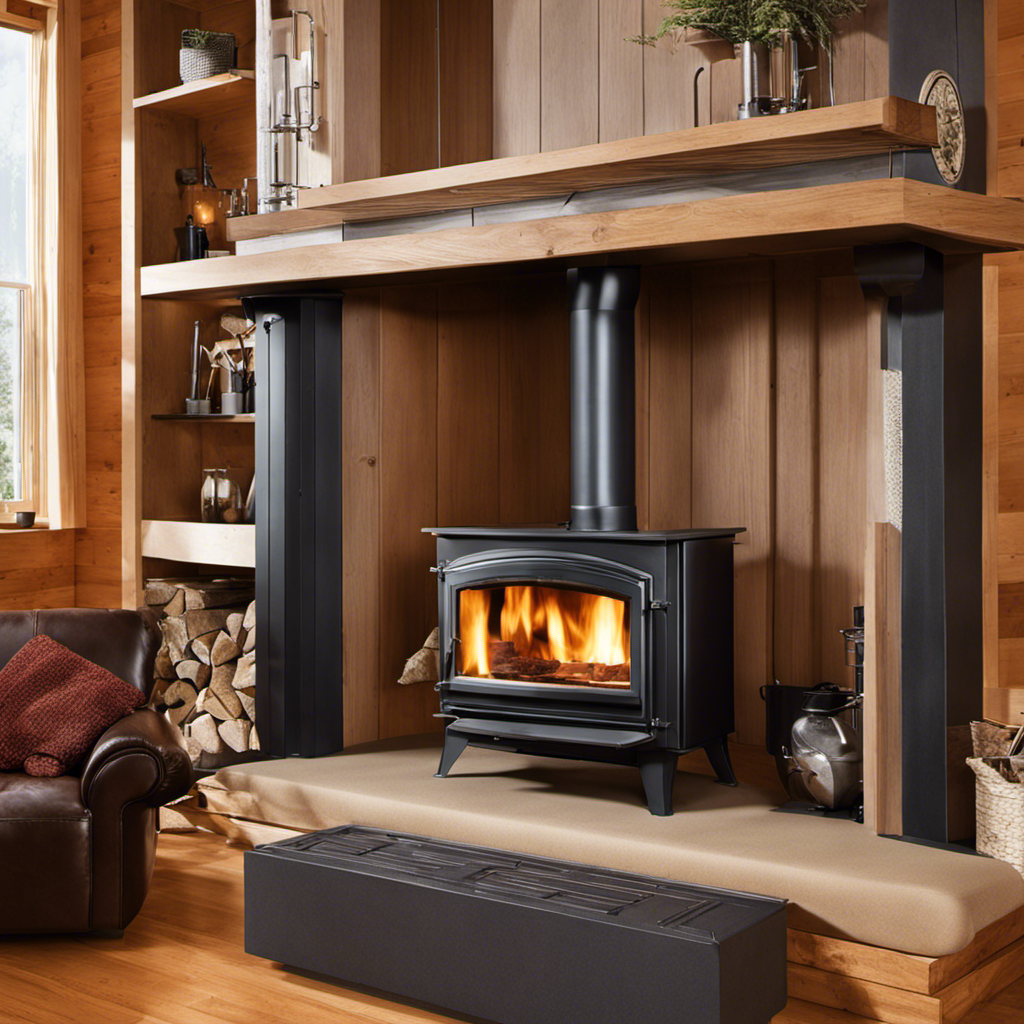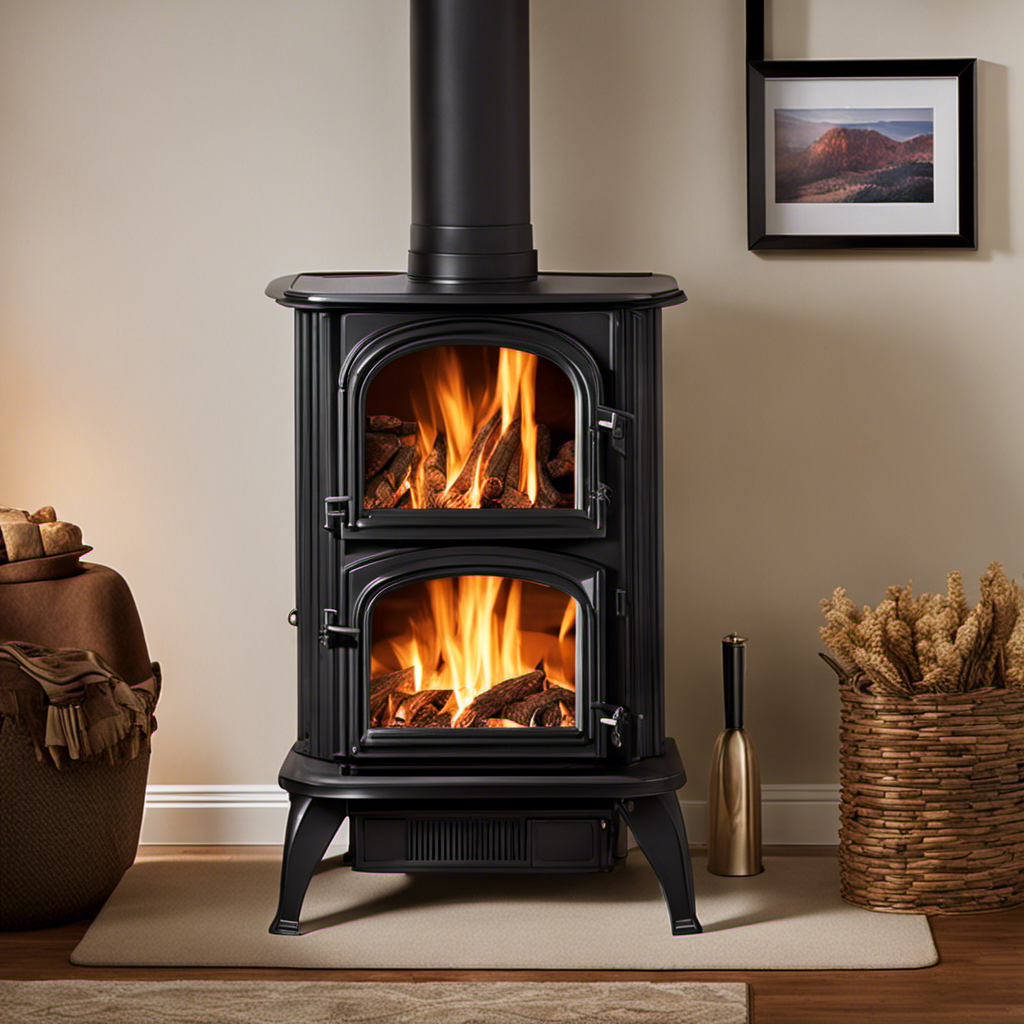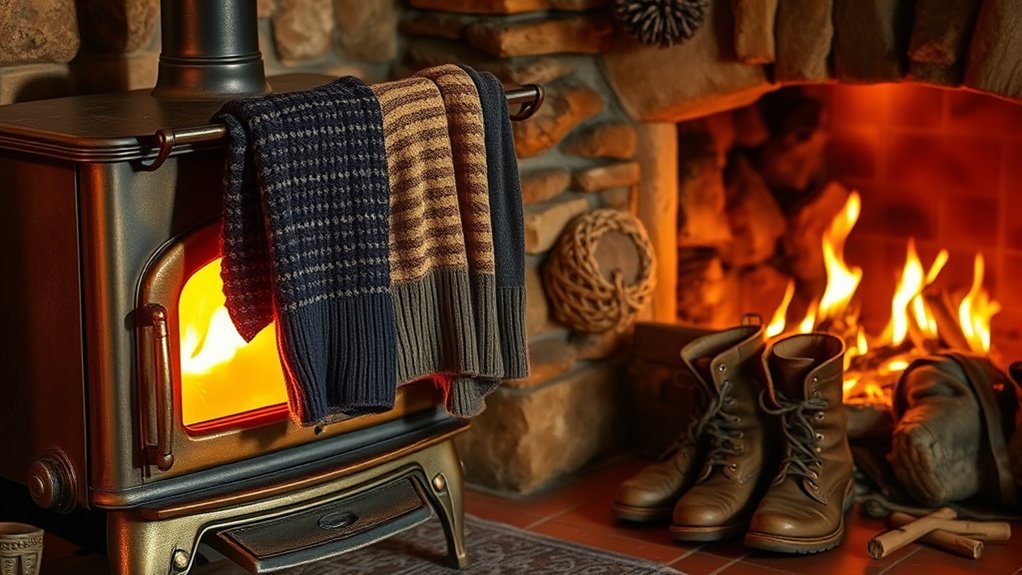

Using your wood stove to dry clothes and boots is an efficient, cozy method that saves time and energy. Hang garments on a rack or line at a safe distance from the hot surface, making sure to avoid direct contact with flames or scorching areas. Keep flammable materials away and check regularly to prevent overheating or damage. Proper safety measures make sure you get dry gear without risking fire or harm—there’s much more to optimize this process effectively.
Key Takeaways
- Use a heat-resistant drying rack or line at a safe distance from the stove to prevent contact with flames or hot surfaces.
- Regularly check garments to avoid overheating, scorching, or damage during the drying process.
- Hang wet clothes and boots near the stove in well-ventilated areas to utilize heat efficiently and safely.
- Avoid placing clothing directly on the stove or flames; ensure flammable materials are kept away for safety.
- Consider supplementary methods like dehumidifiers or newspaper stuffing in boots to speed up drying safely.
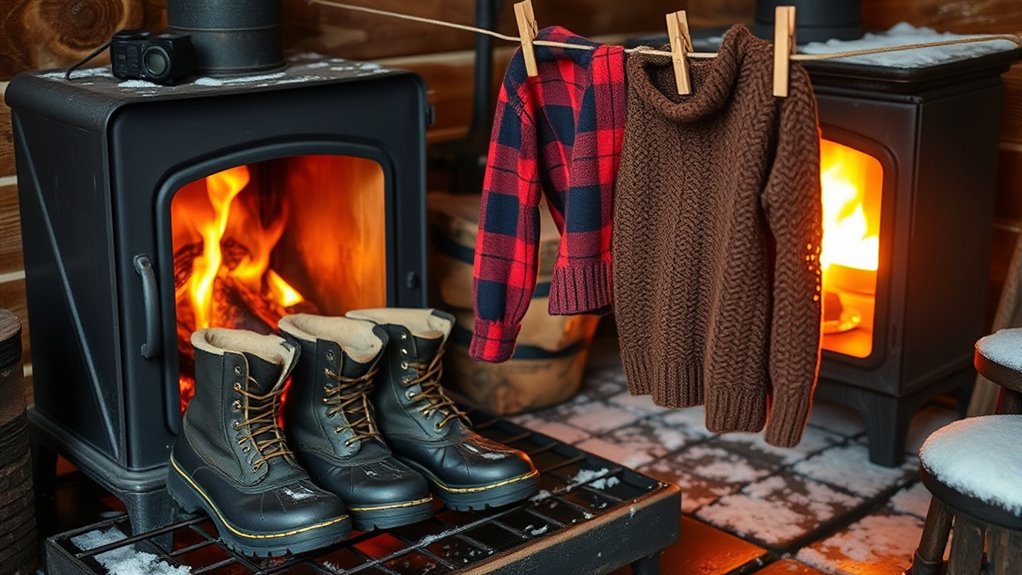
During cold, damp days, using your wood stove to dry clothes and boots can be an efficient and cozy solution. Instead of letting wet garments hang uselessly or risking mold growth, harnessing the heat from your stove can save time and provide warmth simultaneously. However, safety precautions are essential to prevent accidents. Never place clothing directly on the stove’s flames or hot surfaces, as this can cause fires or damage to your garments. Use a proper drying rack or a heat-resistant line positioned at a safe distance from the stove. Keep flammable materials away to reduce fire hazards, and ensure that your stove area stays well-ventilated to avoid the buildup of dangerous fumes. Regularly inspect your stove and its surroundings to confirm there are no cracks or leaks that could pose safety risks.
While drying clothes and boots on or near the stove is convenient, it’s wise to contemplate alternative drying methods, especially if you’re concerned about safety or damage. For instance, using a dedicated clothes dryer, if available, is a quick and reliable option. If you prefer a more energy-efficient approach, hanging garments near a radiator or in a well-ventilated room with good airflow can be effective. You might also consider using a dehumidifier, which accelerates drying by removing excess moisture from the air. For boots, stuffing them with newspaper or absorbent towels can help draw out moisture before placing them near the stove. These methods reduce the risk of accidental fires or damage caused by prolonged exposure to heat. Additionally, understanding heat transfer principles can help optimize your drying process for safety and efficiency.
If you choose to dry clothes and boots on your wood stove, always monitor the process. Check frequently to ensure they’re not overheating or coming into contact with the stove’s surface. It’s also a good idea to turn garments occasionally to promote even drying and prevent scorching. This approach not only keeps your clothes and boots dry but also maintains safety standards and prolongs their lifespan. Remember, the key is balancing efficiency with caution. While your wood stove offers a cozy and effective dry environment, respecting safety precautions and exploring alternative methods can help you avoid potential hazards. With proper care and attention, you can make the most of your stove’s heat to dry your belongings safely and comfortably during those chilly, damp days.
heat-resistant drying rack for clothes
As an affiliate, we earn on qualifying purchases.
As an affiliate, we earn on qualifying purchases.
Frequently Asked Questions
Is It Safe to Dry Clothes Directly on a Wood Stove?
No, it’s not safe to dry clothes directly on a wood stove because of flammable materials and stove safety concerns. Placing fabrics directly on the stove can cause fires or damage the stove. Instead, use a drying rack nearby, keeping clothes at a safe distance. Always make certain you follow manufacturer guidelines for stove safety, and never compromise precautions to avoid risking fire hazards or damaging your heating appliance.
How Long Does It Typically Take to Dry Clothes Using Stove Heat?
Drying clothes with stove heat is like watching a pot boil—timing varies. Typically, it takes 1-3 hours, depending on clothing thickness and stove temperature. Thicker fabrics need more time, and a higher stove temperature speeds up the process, but be cautious to prevent damage. Check frequently to avoid overheating or shrinking your clothes. Adjust the heat and position for ideal drying, and you’ll have dry clothes in no time.
Can Drying Clothes Near a Wood Stove Cause Fire Hazards?
Drying clothes near a wood stove can pose fire hazards if you’re not careful. Always maintain proper fire safety by keeping clothing at a safe distance and never leaving them unattended. Overexposure to heat can also cause clothing damage, so monitor the drying process closely. To stay safe, use a designated drying rack and avoid direct contact with the stove’s flames or hot surfaces.
What Are the Best Materials for Drying Clothes on a Wood Stove?
Drying clothes on a wood stove is like giving your laundry a cozy hug. Use natural fabrics like cotton, wool, and linen—they dry faster and are less likely to shrink or get damaged. Opt for sturdy drying rack options, like metal or wooden racks, that can withstand heat. Avoid synthetic fabrics, which can melt or release fumes. Keep clothes at a safe distance from direct flames for safety.
How Do I Prevent Moisture Buildup and Mold When Drying Clothes?
To prevent moisture buildup and mold when drying clothes, you need good ventilation strategies and moisture control. Make certain your space has proper airflow by opening windows or vents nearby, and consider using a small fan to circulate air. Avoid overloading the drying area and regularly check for excess humidity. By managing airflow and moisture levels, you’ll keep your space dry, mold-free, and safe while effectively drying your clothes and boots on the wood stove.
boot drying newspaper stuffing
As an affiliate, we earn on qualifying purchases.
As an affiliate, we earn on qualifying purchases.
Conclusion
By harnessing your wood stove’s heat, you turn a simple task into an efficient solution. Just remember, don’t let the fire burn out before your clothes and boots are dry; patience is key. With a little effort, you can keep your footwear and garments fresh without extra energy costs. When used wisely, this method proves that sometimes, the best way to get things done is to work with what you have—making the most of your resources.

Fireplace Gloves Fire Heat Resistant: Dark-Grey 16IN 932℉ – Fireproof Leather for Fireplace Fire Pit Wood Stove Campfire Furnace BBQ Grill Oven Stick Mig Welding Welder Gear – Birthday Gift XL
GREAT FIRE & HEAT RESISTANCE: Made from premium fireproof leather exterior, insulating aluminum foil middle layer, a soft,…
As an affiliate, we earn on qualifying purchases.
As an affiliate, we earn on qualifying purchases.
dehumidifier for drying clothes
As an affiliate, we earn on qualifying purchases.
As an affiliate, we earn on qualifying purchases.