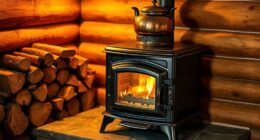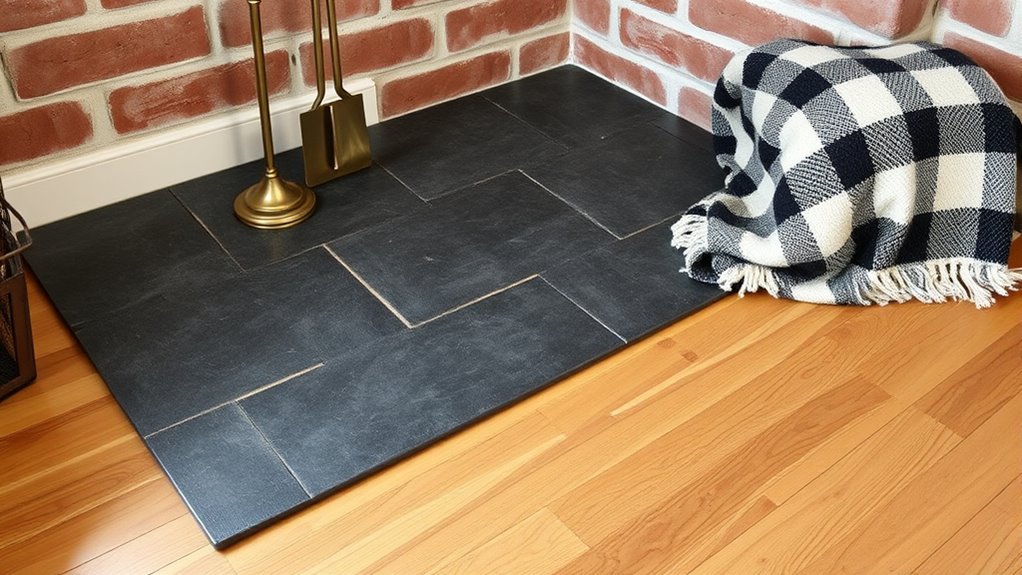
To create an affordable DIY hearth pad, choose fireproof materials like bricks, fire-resistant tiles, or concrete, and measure carefully to make certain of at least 6 inches of extension beyond your fireplace opening. Prepare a clean, level surface, and use heat-resistant mortar or adhesive to secure the materials firmly. Wearing protective gear and working slowly helps make certain safety and a sturdy finish. For more tips on building a safe, budget-friendly hearth pad, keep exploring the steps below.
Key Takeaways
- Choose affordable, fire-resistant materials like fireproof tiles, bricks, or concrete that meet safety standards.
- Measure and plan your hearth pad size, extending at least 6 inches beyond the fireplace opening for proper coverage.
- Use cost-effective, high-temperature adhesive or mortar to secure materials, ensuring safety and durability.
- DIY installation with basic tools minimizes labor costs and allows customization to fit your space and budget.
- Regularly inspect and maintain the pad to prolong its lifespan without significant ongoing expenses.
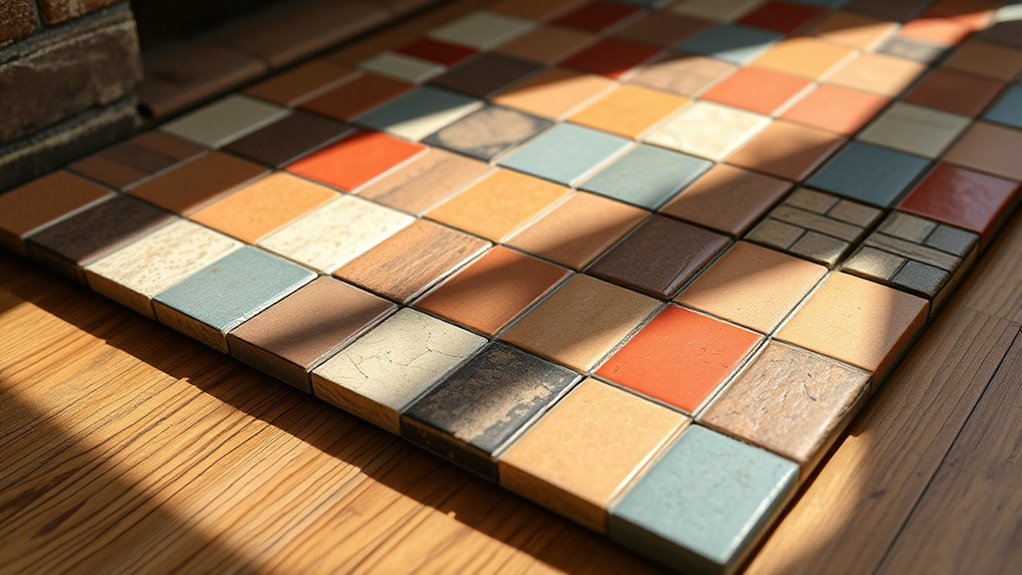
Are you looking for an easy way to protect your floors and enhance the safety of your fireplace? Creating a DIY hearth pad is a practical solution that can save you money while providing effective protection. The first step is understanding the importance of using fireproof materials. These materials are specifically designed to withstand high temperatures, reducing the risk of accidental fires or damage to your flooring. Common fireproof options include bricks, concrete, fire-resistant tiles, or specialized fireproof mats. When selecting your materials, always prioritize safety precautions by ensuring they are rated for use around fireplaces and meet local building codes. This not only guarantees durability but also peace of mind.
Once you’ve chosen your fireproof materials, measure the area around your fireplace carefully. You want your hearth pad to extend beyond the fireplace opening by at least 6 inches on all sides for maximum safety. Use a tape measure to get precise dimensions, and mark the boundaries clearly on your chosen surface. If you’re working with tiles or bricks, consider creating a level surface to prevent tripping hazards. You might need to use a level or a straightedge to ensure your hearth pad is even and secure. Safety precautions also include wearing gloves and protective eyewear during installation, especially if you’re handling sharp-edged materials like tiles or bricks.
Preparing the base surface is another essential safety step. Make sure the area beneath your hearth pad is clean, dry, and free of debris. For added stability, you can consider applying a layer of fireproof mortar or adhesive designed for high temperatures. This helps prevent shifting or cracking over time. When laying down your materials, work slowly and carefully, pressing each piece firmly into place to ensure a secure fit. Proper installation not only enhances safety but also prolongs the lifespan of your DIY hearth pad.
Finally, once your hearth pad is installed, double-check for any loose edges or uneven spots. It’s a good idea to periodically inspect the pad for wear or damage, especially after heavy use or during seasonal changes. Remember, the key to a successful DIY hearth pad is using fireproof materials and following safety precautions diligently. By doing so, you create a safer environment around your fireplace without overspending. This simple project not only protects your floors but also adds a customized touch to your home’s coziness and safety.
Frequently Asked Questions
Can I Use Recycled Materials for My Hearth Pad?
Yes, you can use recycled materials for your hearth pad. Recycled options like reclaimed wood, old tiles, or repurposed bricks are eco-friendly choices that add charm and character. Just guarantee these materials can withstand heat and are safely used around a fireplace. Using recycled materials not only saves money but also promotes sustainability, making your hearth pad both functional and environmentally responsible. Always verify the safety and durability before installation.
How Do I Prevent the Pad From Slipping?
Imagine your hearth pad as a brave ship, steady against shifting waters. To prevent slipping, you should secure it with non-slip mats underneath, creating a firm grip. Additionally, adhesive strips along the edges or corners act like anchors, holding it in place. By combining these simple solutions, you’ll guarantee your hearth pad stays put, providing safe, reliable protection for your floor without any worries about slipping.
Are There Flame-Resistant Options Available?
Yes, flame-resistant options are available for your hearth pad. You can use fire-resistant coatings to treat materials or opt for heatproof fabrics like asbestos-free fire-resistant blankets or mats. These materials help prevent flames from spreading and enhance safety. Just guarantee the products are rated for high temperatures and suitable for indoor use. Combining these options with a slip-resistant base creates a safe, budget-friendly hearth pad.
How Thick Should the Hearth Pad Be?
You should choose a fire-resistant hearth pad that’s about 1/2 inch to 1 inch thick for effective floor protection. The pad thickness depends on the fire-resistant materials you select, such as fire-resistant cement board or ceramic tile, which provide adequate protection without adding bulk. Confirm the pad is thick enough to prevent heat transfer and damage to your floor, but not so thick that it hampers installation or aesthetics.
Can I Customize the Size Easily?
Yes, you can easily customize the size of your hearth pad. With some basic tools and measurements, you have excellent sizing flexibility and can tailor the pad to fit your space perfectly. You can cut materials like fire-resistant tile or stone to your desired dimensions, making it simple to create a custom hearth pad that meets your specific needs and enhances your fireplace area.
Conclusion
Building your own hearth pad is a budget-friendly way to protect your floors and add style. With over 60% of home fires starting near heating sources, a sturdy, DIY pad can considerably boost safety. Plus, creating it yourself means you can customize the size and design to fit your space perfectly. So, grab your tools and get started—protecting your home doesn’t have to break the bank, and the peace of mind is priceless.