
TL;DR
U.S. Rep. Rob Menendez introduced the Socket Full of Sunshine Act, described in the source report as the first federal bill aimed at legalizing plug-in solar panels. It would require state public utility commissions to consider rules enabling the systems and create a program to help lower-income households afford them; the bill’s prospects and implementation details remain unclear.
U.S. Rep. Rob Menendez, a New Jersey Democrat, introduced the Socket Full of Sunshine Act on Monday, a bill the source report describes as the first federal legislation aimed at legalizing solar panels that plug into a standard electrical outlet. It would direct state public utility commissions to consider rules enabling the systems and establish a program to help lower-income households afford them.

Get backup power and energy gear delivered free with Prime
- Fast, free delivery on millions of items
- Prime Video, Amazon Music and more included
- Member-only deals all year
The bill’s stated approach is to address a regulatory patchwork rather than set out, in the information provided, one nationwide operating standard. It would require all state public utility commissions to consider rules that could enable plug-in solar. The source report does not give the bill text or specify what rules commissions would have to adopt, or by when.
The legislation would also create a program to help lower-income households pay for plug-in solar systems. The report does not identify the program’s funding source, eligibility criteria or administrators. Those details will matter in determining who could receive assistance and how it would work.
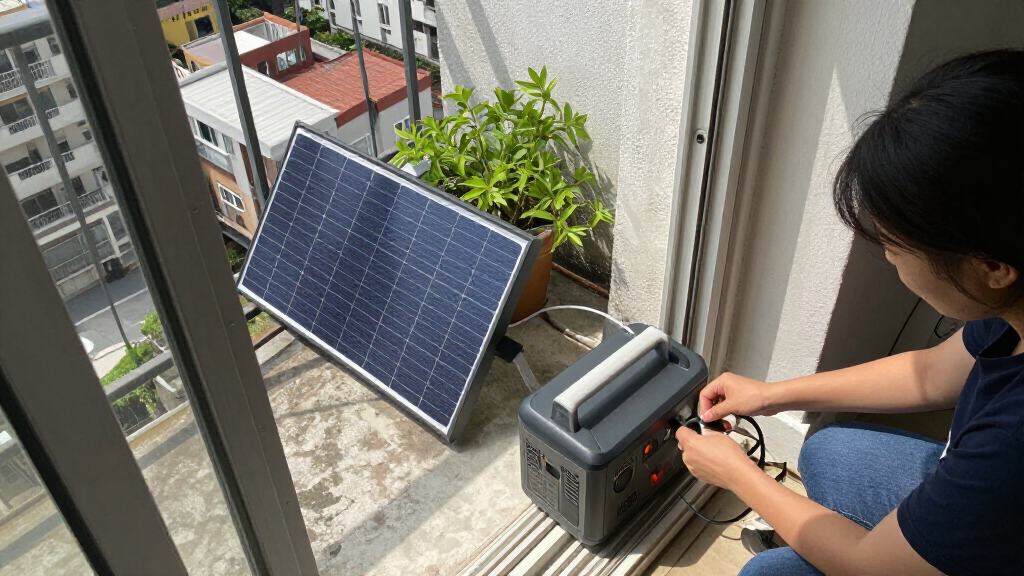
These systems, often called balcony solar, typically use one to four panels connected to a normal 120-volt outlet. The source report says they can supply some household loads while the sun is shining, including a laptop, refrigerator, air conditioner or other small appliances. Output depends on the system and conditions; the bill’s introduction does not itself authorize every system for use.
A Federal Push Against State-by-State Rules
The proposal could affect renters and other households that may not be able to install rooftop solar, if state rules allow plug-in systems and safe products are available. Unlike a larger rooftop installation, a small setup may offer a lower-cost way to offset some electricity use. The bill’s assistance provision also signals an effort to address upfront costs for households with limited budgets, though its practical reach cannot be assessed without program details.
For consumers, the central issue is not simply whether a panel can connect to an outlet. Rules must address safe operation and how a system interacts with a home’s electrical supply and utility network. The source report says the United States lacks a single standard allowing safe use of the technology. A federal requirement for commissions to consider rules could prompt more coordinated review, but it would not, based on the description provided, automatically create a uniform national permission to install plug-in solar.
The possible household savings cited in the report are estimates, not guaranteed results. It says payback can be as short as 2.5 years, compared with more than 10 years for a typical, more powerful rooftop array, and that savings can reach hundreds of dollars annually depending on local electricity rates. Actual costs and savings would vary by location, equipment, sunlight and household electricity use.
Products Worth Considering

Shark WANDVAC Power PET Cordless Handheld Vacuum, White, WV410WH

LEVOIT Vital 200S-P Smart Air Purifier for Large Rooms, White

Levoit Vital 100S-P Air Purifier
As an affiliate, we earn on qualifying purchases.
States Have Taken Different Paths
U.S. rules for balcony solar have developed state by state. According to the source report, Utah passed the first state law legalizing plug-in solar last year. This year, 10 additional states passed laws, including California, Colorado, Maryland and Virginia. Those states are awaiting plug-in solar kits certified as safe by a nationally recognized testing laboratory, such as UL Solutions, the report says.
Lawmakers in more than 20 other states introduced balcony-solar bills this year but did not pass them. That record provides the immediate backdrop for Menendez’s federal proposal: interest has spread, but legislation and product availability remain uneven. The source report does not list all 10 states or describe the specific requirements in each state.
The bill’s description also does not say that it would override existing state laws. Its stated mechanism is to require utility commissions to consider enabling rules. The distinction matters: consideration by a commission is not the same as a rule being adopted, a system being certified, or a household being cleared to connect one.
Bill Text and Rollout Details Await
The available report does not provide the bill text, its congressional number, committee referral, co-sponsors or a timetable for action. It is also unclear whether the measure has support beyond Menendez or when it might receive a hearing or vote.
Important implementation questions remain open. The report does not explain how commissions would meet the requirement to consider rules, what safety criteria would apply, whether the federal government would set deadlines, or how the proposed assistance program would be funded and administered. It also does not establish whether the bill would change any existing state requirements.
Product certification and consumer economics are unresolved as well. The report says states that passed laws are waiting for kits certified by a nationally recognized testing laboratory. It does not identify when those products will be available in each state or provide a bill-specific estimate of costs or savings. Menendez’s claims about affordability and reduced bills should be understood as the proposal’s rationale, not a guaranteed outcome.
Congressional Action and State Rules
The next concrete milestone is the bill’s movement through Congress, including any committee referral, hearings, changes to its text or consideration by lawmakers. The source report does not say when any of those steps will occur. Until the bill advances, its introduction represents a proposal, not a change in federal law.
State utility commissions would also have a role if the measure became law, because the bill would require them to consider enabling rules. The eventual effect on households would depend on the final federal language, state decisions, safety standards and the availability of certified equipment. Readers considering plug-in solar should check the rules and product requirements that apply where they live rather than assume that introduction of the bill makes installation legal nationwide.
Key Questions
What is the Socket Full of Sunshine Act?
It is a bill introduced by Rep. Rob Menendez. As described in the source report, it would require state public utility commissions to consider rules enabling plug-in solar and create a program to help lower-income households afford systems.
Does the bill make balcony solar legal nationwide now?
No. The report describes an introduced bill, not an enacted law. Its introduction does not by itself change state rules or authorize households to connect a system.
What are plug-in or balcony solar panels?
They are small solar setups, typically one to four panels, that connect to a standard 120-volt outlet. Their output is limited and depends on sunlight and the system, but the report says they may supply some household appliances while generating power.
Which states have passed balcony-solar laws?
The source report says Utah passed the first state law last year and 10 more states passed laws this year, including California, Colorado, Maryland and Virginia. It does not name all 10 states, and it says those states are awaiting certified kits.
How much could households save?
The report says savings can reach hundreds of dollars a year depending on local electricity rates, and estimates a payback period as short as 2.5 years for some systems. Those are not guaranteed results; actual costs and savings depend on local conditions and equipment.
Source: rss