Airflow blind spots often cause rooms to stay cold by blocking or diverting air circulation. Large furniture, curtains, or structural features can create thermal barriers, preventing warm air from reaching certain spots. Poor vent placement near windows or in corners worsens this issue, trapping cold air in specific areas. To fix this, you can adjust vents, move obstacles, or add fans. Keep exploring to discover more tips on eliminating these cold spots and improving your room’s comfort.

Get backup power and energy gear delivered free with Prime
- Fast, free delivery on millions of items
- Prime Video, Amazon Music and more included
- Member-only deals all year
Key Takeaways
- Obstructed vents and furniture block airflow, creating cold pockets and uneven temperature distribution.
- Poor vent placement near windows or in corners hampers proper air circulation.
- Thermal barriers like curtains or large objects prevent warm air from reaching all room areas.
- Closed or blocked vents reduce airflow, causing cold spots to persist.
- Lack of cross-ventilation and inadequate fan use hinder airflow, maintaining cold zones.

Have you ever wondered why some areas in your space seem to stay stuffy or uncomfortable despite good ventilation? It’s often because of airflow blind spots—those hidden spots where air doesn’t circulate properly. These areas are typically caused by ventilation inefficiencies, which prevent warm or cooled air from reaching every corner of your room. When air isn’t flowing smoothly, it creates zones of stagnation, making certain spots feel much colder or warmer than others. Recognizing these blind spots is the first step in fixing your room’s temperature issues.
Airflow blind spots cause stagnation, making parts of your space uncomfortably warm or cold. Recognize and fix them for better comfort.
One common reason for airflow blind spots is the presence of thermal barriers. These barriers are obstacles like furniture, curtains, or structural features that block or divert airflow. While they might seem insignificant, they can disrupt the natural flow of air, causing it to bypass certain areas altogether. For example, a large bookshelf placed directly in front of a vent can prevent warm air from spreading evenly across the room. The result? Cold spots linger, and your heating system works harder to compensate, often leading to energy waste.
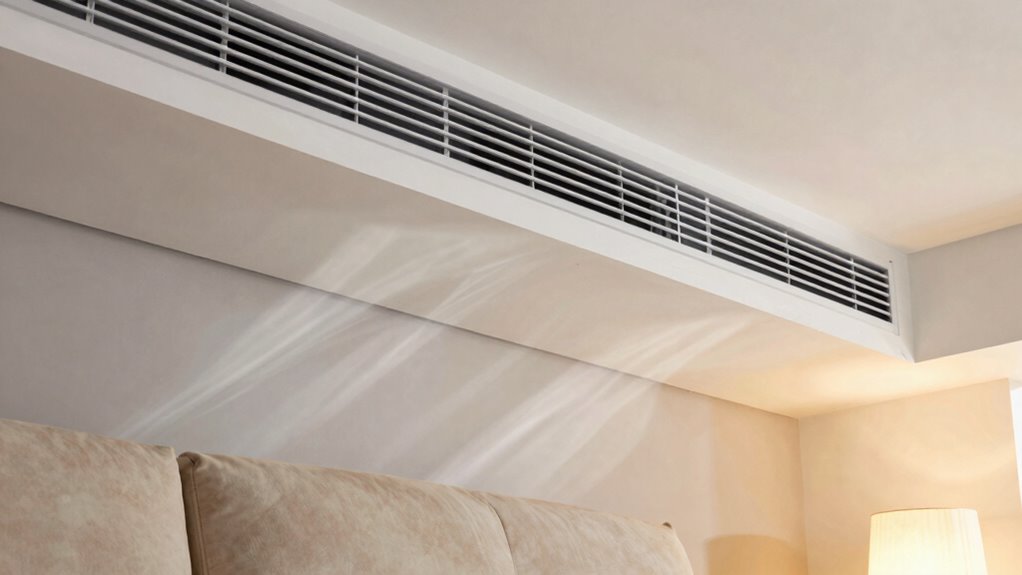
Another factor that contributes to these blind spots is poor placement of your vents and returns. If vents are positioned near windows or in corners, the air might be pulled away from the central parts of the room or pushed into areas that don’t circulate well. Over time, this uneven distribution creates pockets where the air becomes stagnant or excessively cold. Additionally, if your vents are blocked or closed, it worsens the problem, intensifying the effect of thermal barriers and reducing overall ventilation efficiency. Improving ventilation flow can help mitigate these issues by promoting better air circulation. Proper vent placement is crucial for preventing airflow stagnation and ensuring even temperature distribution.
You can start addressing these blind spots by analyzing your room’s airflow patterns. Move furniture, adjust vent placement, or add fans to improve circulation. Opening windows on opposite sides of the room can also help, creating cross-ventilation that breaks down thermal barriers. Remember, effective airflow isn’t just about having vents; it’s about ensuring that air moves freely and reaches every corner. When you identify and eliminate these airflow blind spots, you’ll notice a more consistent temperature, less cold spots, and a more comfortable space overall. Paying attention to airflow dynamics can help you better understand how air moves within your space.
Ultimately, understanding how ventilation inefficiencies and thermal barriers impact airflow helps you troubleshoot and optimize your indoor climate. Small adjustments can make a big difference, transforming your space from stuffy or uneven to evenly warm and inviting. Recognizing these hidden blind spots is key to achieving better comfort and energy efficiency in your home or workspace. Paying attention to ventilation inefficiencies can lead to more effective solutions and improved airflow distribution. Additionally, addressing thermal barriers can significantly enhance your room’s temperature consistency and overall comfort.
As an affiliate, we earn on qualifying purchases.
Frequently Asked Questions
How Can I Identify Hidden Airflow Blind Spots in My Home?
To identify hidden airflow blind spots, observe your home’s airflow patterns by feeling for drafts around windows, doors, and vents. Check for ventilation gaps where air may escape or enter unintentionally, such as behind furniture or near electrical outlets. Use a tissue or smoke pencil to detect subtle air movements. Addressing these gaps and understanding airflow patterns helps improve heating efficiency, making your room warmer and more comfortable.
Do Blind Spots Affect Heating Efficiency as Well as Cooling?
Blind spots are like hidden cul-de-sacs in your home’s airflow patterns, affecting both heating and cooling efficiency. These gaps and obstructions disrupt proper circulation, causing hot or cold spots to linger. Insulation gaps and poorly sealed vents prevent warm air from reaching all areas evenly, making your heating system work harder. Addressing these blind spots guarantees your home stays comfortable year-round, saving energy and reducing utility bills.
Can Furniture Placement Influence Airflow Blind Spots?
Yes, furniture placement can influence airflow blind spots. When you arrange furniture poorly, it creates airflow obstruction, which can block warm or cool air from circulating properly. To improve airflow, keep pathways clear and avoid placing large furniture against vents or in front of windows. Thoughtful furniture arrangement helps eliminate blind spots, ensuring better temperature distribution and increased comfort in your room.
Are There Specific Seasons When Blind Spots Become More Problematic?
Have you noticed how some rooms feel colder during certain times of the year? Seasonal fluctuations and weather variations make airflow blind spots more problematic in winter and fall, when outside temperatures drop and heating struggles to reach every corner. During these seasons, cold air settles into hidden spots, making it harder to keep your space warm. Are you prepared to identify and address these blind spots for maximum comfort year-round?
What Tools Are Best for Detecting Airflow Issues in a Room?
You should use airflow sensors and thermal imaging tools to detect airflow issues effectively. Airflow sensors help identify where air isn’t circulating properly, while thermal imaging reveals temperature differences caused by poor airflow, especially in hidden blind spots. By combining these tools, you can pinpoint problem areas accurately, ensuring your room maintains a consistent, comfortable temperature. Regularly checking these spots with such tools keeps your space energy-efficient and cozy year-round.
Conclusion
Just like shadows hide unseen corners, airflow blind spots quietly steal your warmth, leaving rooms colder than they should be. Recognize these hidden pockets where air slips away, and you take back control of your comfort. By addressing these silent gaps, you illuminate the path to a warmer, cozier space. Don’t let these unseen barriers keep you in the cold—shine a light on them and reclaim the warmth that’s rightfully yours.
Halloween Picks
halloween
As an affiliate, we earn on qualifying purchases.