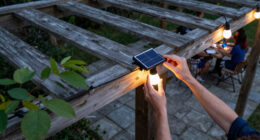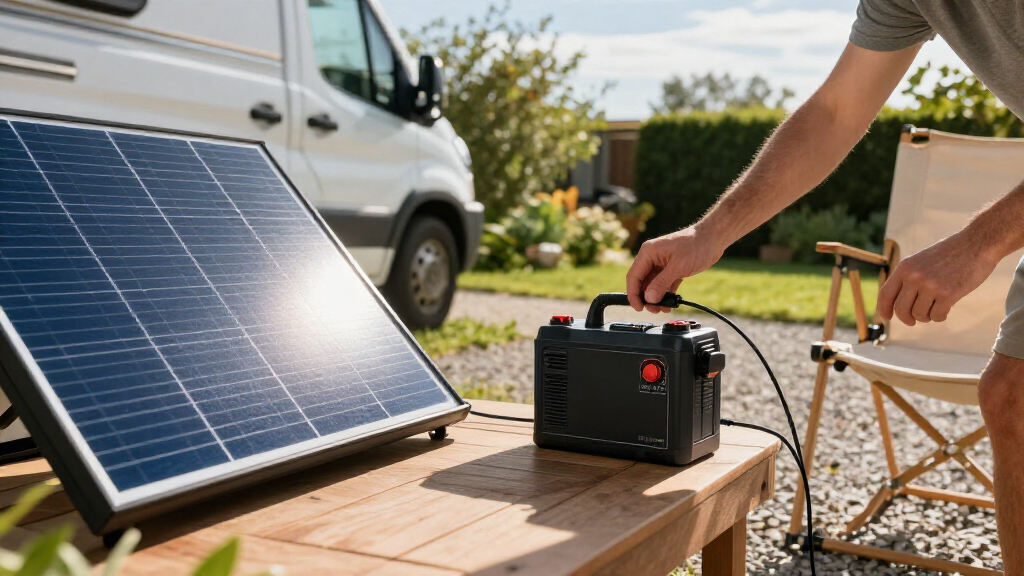
Solar-powered battery chargers split into two very different jobs: portable power banks for charging personal devices and solar panels made to maintain 12-volt vehicle batteries. My best overall pick is the SUNER POWER 20W 12V Trickle Charger for buyers who want a dedicated vehicle-battery setup with an MPPT controller; for portable charging, the BLAVOR 20,000mAh is a more practical everyday-size option, while the GULLVEN 49,800mAh brings four panels and built-in cables for off-grid trips. The main tradeoff is portability versus charging capacity, and a small power-bank solar panel should not be mistaken for a full-size battery-maintenance panel. Read on for the full breakdown, including which type fits your devices, car, boat, or RV.

Get backup power and energy gear delivered free with Prime
- Fast, free delivery on millions of items
- Prime Video, Amazon Music and more included
- Member-only deals all year
Key Takeaways
- Dedicated 12V panels are the better fit for vehicle batteries: the SUNER POWER 20W model pairs a purpose-built panel with an MPPT controller, while power banks in this roundup are intended for personal devices.
- Portable-bank capacity claims do not tell the whole story: the 20,000mAh BLAVOR models favor a more manageable carry size, while the roughly 39,000–50,000mAh options emphasize larger reserves and often add cables, lights, or extra panels.
- Panel area separates the GULLVEN from most power banks: its four built-in solar panels give it a different solar-charging approach than compact models with a single small panel, though actual performance still depends on sunlight and placement.
- Vehicle chargers differ by wattage and controller: the SUNER POWER, POWOXI, Voltset, and generic 12V kits are the relevant group for maintaining compatible batteries; compare controller protection and mounting needs, not just panel wattage.
- Convenience features can add bulk: built-in cables, wireless charging, and flashlights reduce the need for extra accessories, but buyers focused on dependable solar input should prioritize panel design and the intended battery type.
| BLAVOR 20,000mAh Solar Power Bank with Wireless Charging |  | Best for Multi-Device Convenience | Battery capacity: 20,000mAh | Built-in cables: 2 USB-C, 1 iOS, 1 USB-A | Ports: USB-C, USB-A, iOS; 3 total | VIEW LATEST PRICE | See Our Full Breakdown |
| SOARAISE 48,000mAh Solar Power Bank with Wireless Charging and 4 Built-In Cables |  | Best for High-Capacity Group Charging | Battery capacity: 48,000mAh | Battery type: Lithium-polymer | Solar panels: 4 | VIEW LATEST PRICE | See Our Full Breakdown |
| GULLVEN 49,800mAh Solar Power Bank with 4 Built-in Cables, 4 Solar Panels, 22.5W Fast Charging and Flashlight |  | Best for Rugged, Higher-Output Camping | Battery capacity: 49,800mAh | Charging power: 22.5W | Solar panels: 4 | VIEW LATEST PRICE | See Our Full Breakdown |
| SUNER POWER 20W 12V Solar Battery Trickle Charger with MPPT Controller |  | Best for Maintaining 12V Batteries | Maximum power: 20W | Output voltage: 12V DC | Charging modes: 12V, 12V AGM, 12V lithium | VIEW LATEST PRICE | See Our Full Breakdown |
| SUNER POWER Waterproof 12W 12V Solar Battery Charger & Maintainer Pro |  | Best Compact Panel for 12V Maintenance | Output voltage: 12V DC | Input voltage: 12V DC | Maximum power: 12W | VIEW LATEST PRICE | See Our Full Breakdown |
| YELOMIN 38800mAh Solar Power Bank with LED Flashlights |  | Best for High-Capacity Backup | Brand: YELOMIN | Model: S1008D | Battery capacity: 38,800mAh | VIEW LATEST PRICE | See Our Full Breakdown |
| POWOXI 7.5W 12V Solar Battery Charger and Trickle Maintainer Kit |  | Best for Basic Vehicle Battery Maintenance | Brand: POWOXI | Input voltage: 12 V | Output voltage: 12 V | VIEW LATEST PRICE | See Our Full Breakdown |
| BLAVOR 10,000mAh Solar Power Bank with Wireless Charging |  | Best Compact Solar Power Bank | Battery capacity: 10,000mAh | USB-C output: Up to 20W | Charging standard: Qi wireless | VIEW LATEST PRICE | See Our Full Breakdown |
| POWOXI 20W 12V Solar Battery Charger and Trickle Maintainer Kit |  | Best Feature-Rich Vehicle Maintainer | Output voltage: 18 V | Amperage: 1.1 A | Controller: Three-stage PWM | VIEW LATEST PRICE | See Our Full Breakdown |
| BLASOUL 49,800mAh Solar Power Bank with Wireless Charging and Built-In Cables |  | Best for Multi-Device Convenience | Brand and model: BLASOUL PD-W49 | Battery capacity: 49,800mAh | Built-in cables: iOS, USB-C, and Micro-USB output; USB-A input | VIEW LATEST PRICE | See Our Full Breakdown |
| YELOMIN 38,800mAh Solar Power Bank with USB-C, Dual LED Flashlights, and 3 Ports |  | Best for Multi-Device Backup | Battery capacity: 38,800mAh | Ports: 2 USB-A outputs; 1 USB-C input/output | Output current: 2.4A | VIEW LATEST PRICE | See Our Full Breakdown |
| Durecopow 20,000mAh Solar Power Bank with Built-In Cables and Dual Flashlight |  | Best for Cable-Free Packing | Battery capacity: 20,000mAh | Connector type: USB Type-C | Built-in cables: Type-C, Lightning, Micro USB, and USB-A input | VIEW LATEST PRICE | See Our Full Breakdown |
| 12V Solar Battery Charger Trickle Maintainer Kit for Car |  | Best for Infrequently Used Vehicles | Output voltage: 12V DC | Compatible batteries: 12V rechargeable batteries; listed types include lead-acid, lithium, LiFePO4, GEL, AGM, and flooded | Connections: 12V cigarette-lighter plug and alligator clips | VIEW LATEST PRICE | See Our Full Breakdown |
| Voltset 20W 12V Solar Panel Battery Charger Kit |  | Best for Weather-Exposed 12V Setups | Panel power: 20W | Output voltage: 12V | Maximum voltage: 18V | VIEW LATEST PRICE | See Our Full Breakdown |
| solar powered battery charger | Dimensions | Battery capacity | Weight |
|---|---|---|---|
| BLAVOR 20,000mAh Solar Power B | 1.5 × 3.85 × 7.28 in | 20,000mAh | — |
| SOARAISE 48,000mAh Solar Power | 6.38 × 3.43 × 1.57 in | 48,000mAh | — |
| GULLVEN 49,800mAh Solar Power | — | 49,800mAh | — |
| SUNER POWER 20W 12V Solar Batt | 15.9 × 13.1 × 0.12 in | — | 1.38kg |
| SUNER POWER Waterproof 12W 12V | 0.6 × 9.4 × 16.5 in | — | 3.3lb |
| YELOMIN 38800mAh Solar Power B | 5.9 × 2.95 × 0.98 in | 38,800mAh | 9.9 oz |
| POWOXI 7.5W 12V Solar Battery | — | — | — |
| BLAVOR 10,000mAh Solar Power B | 5.9 × 3.1 × 0.8 in | 10,000mAh | 9.3 oz |
| POWOXI 20W 12V Solar Battery C | — | — | — |
| BLASOUL 49,800mAh Solar Power | — | 49,800mAh | 490g |
| YELOMIN 38,800mAh Solar Power | 5.9 × 2.95 × 0.98 in | 38,800mAh | 9.9 oz |
| Durecopow 20,000mAh Solar Powe | — | 20,000mAh | — |
| 12V Solar Battery Charger Tric | 13.3 × 4.9 × 0.5 in | — | 1.2 lb |
| Voltset 20W 12V Solar Panel Ba | 12.68 × 14.96 × 1.65 in | — | — |
More Details on Our Top Picks
BLAVOR 20,000mAh Solar Power Bank with Wireless Charging
The BLAVOR is the most flexible pocket power bank in this group for people carrying a mix of devices. Its four built-in cables reduce the need to pack separate leads, while wireless charging adds another option for compatible phones and Apple Watch. Compared with the SOARAISE 48,000mAh, it has less stored capacity, but its 20W USB-C output is specified at a higher rate than the SOARAISE’s 5V/3A USB-C output. The tradeoff is that BLAVOR’s stated maximum output power is 18W, which conflicts with its 20W USB-C specification, so buyers should not assume both figures apply simultaneously. Solar is listed as a power source, but no charging rate is provided; I’d treat the panel as a backup feature, not a dependable way to refill the bank. IPX5 protection and camp lights add utility outdoors, though the built-in extras make it less streamlined than a basic charger.
Pros:- Four built-in cable types reduce the number of separate leads to carry.
- Wireless charging supports compatible phones and Apple Watch.
- USB-C output is specified at 20W for faster wired charging.
- IPX5 protection, flashlight, camping light, and compass add outdoor utility.
Cons:- Solar charging performance is not specified, limiting confidence in it as a solar-recharge solution.
- The listed 18W maximum output conflicts with the 20W USB-C output specification.
- Its 20,000mAh capacity is lower than the SOARAISE and GULLVEN banks in this lineup.
Best for: Travelers and campers who want one power bank to serve several device types, with built-in cables, wireless charging, and lighting.
Not ideal for: Buyers who need a clearly documented solar recharge rate or a high-capacity bank for extended off-grid use.
- Battery capacity:20,000mAh
- Built-in cables:2 USB-C, 1 iOS, 1 USB-A
- Ports:USB-C, USB-A, iOS; 3 total
- Wireless charging:Qi-compatible; phones and Apple Watch
- USB-C output:20W
- Maximum output power:18W
- Water resistance:IPX5
- Dimensions:1.5 × 3.85 × 7.28 in
Our verdict“Choose the BLAVOR for cable and charging-method flexibility, but not if solar recharging or maximum stored capacity is your main priority.”
SOARAISE 48,000mAh Solar Power Bank with Wireless Charging and 4 Built-In Cables
The SOARAISE makes the strongest case here for keeping several devices going from one large portable bank. Its 48,000mAh capacity, four built-in cables, wireless charging, and stated support for up to seven simultaneous devices suit group outings better than the smaller BLAVOR 20,000mAh. Four solar panels offer more panel area than a single-panel power bank, but the product data gives no solar charging rate, and real-world input will depend on sun and placement. That makes solar a supplementary option rather than a predictable refill plan. The USB-C output is listed at 5V/3A, so buyers prioritizing faster wired output may prefer the GULLVEN’s specified 22.5W charging. The SOARAISE instead leans on capacity and charging options. Its dimensions are provided, but total product weight is not, leaving packability harder to judge for hikers.
Pros:- 48,000mAh capacity provides more stored energy than the BLAVOR 20,000mAh.
- Four solar panels provide a solar input option.
- Four built-in cables plus wireless charging support varied devices.
- Listed support for up to seven simultaneous devices suits group use.
Cons:- Solar charging speed is not specified and will depend on outdoor conditions.
- The 5V/3A USB-C output is less compelling for buyers seeking higher-wattage charging than the GULLVEN.
- Total power bank weight is not listed, making carry weight difficult to assess.
Best for: Families or small groups who want a shared high-capacity power bank with several cable types and multiple charging methods.
Not ideal for: Hikers who need a lightweight, clearly documented solar setup or buyers who prioritize higher specified output wattage.
- Battery capacity:48,000mAh
- Battery type:Lithium-polymer
- Solar panels:4
- Ports:2 USB-A outputs; 1 USB-C input/output
- Built-in cables:USB-C, Phone, USB-A, Micro
- USB-C output:5V/3A
- Maximum simultaneous devices:7
- Dimensions:6.38 × 3.43 × 1.57 in
Our verdict“Pick the SOARAISE when shared capacity and charging flexibility matter more than documented solar speed, low carry weight, or high-wattage output.”
GULLVEN 49,800mAh Solar Power Bank with 4 Built-in Cables, 4 Solar Panels, 22.5W Fast Charging and Flashlight
Among the portable banks in this group, the GULLVEN combines the highest stated capacity with the clearest higher-output claim: 49,800mAh and 22.5W charging. That makes it a stronger fit than the BLAVOR 20,000mAh when a trip calls for more stored power and faster specified output. Four foldable solar panels provide more collection area than a single-panel design, while the listed maximum solar current of 1,280mA gives buyers a useful figure absent from the SOARAISE listing. It still cannot promise a quick solar refill; sunlight and panel placement affect input, and its large battery is better replenished from a wired source when available. The four cable types, three ports, and torch/SOS/strobe light favor practical outdoor use. The cost of that capacity is a bulkier travel proposition, and the description warns that the battery may exceed some airlines’ carry-on limits.
Pros:- 49,800mAh capacity is among the largest in this roundup.
- 22.5W charging is a higher specified output than the SOARAISE’s 5V/3A USB-C.
- Four foldable panels and a stated 1,280mA maximum solar current provide more solar detail than several competing banks.
- IP65 protection, reinforced corners, and torch, SOS, and strobe modes suit outdoor use.
Cons:- The high battery capacity may exceed some airlines’ carry-on limits.
- Solar charging speed still depends on available sunlight and panel placement.
- Its large-capacity design is less suited to buyers who prioritize a compact, light everyday bank.
Best for: Campers and outdoor travelers who want substantial stored capacity, multiple cable types, rugged protection, and a specified higher-wattage output.
Not ideal for: Air travelers who need uncomplicated carry-on compliance or anyone expecting the solar panels to rapidly refill a nearly depleted high-capacity battery.
- Battery capacity:49,800mAh
- Charging power:22.5W
- Solar panels:4
- Maximum solar current:1,280mA
- Built-in cables:iOS, USB-C, USB-A, Micro USB
- Ports:USB-C, Micro USB, USB-A; 3 total
- Flashlight modes:Torch, SOS, strobe
- Protection:IP65 waterproof protection
Our verdict“Choose the GULLVEN for rugged trips where capacity and specified output matter, but check airline battery rules and plan on wired recharging when possible.”
SUNER POWER 20W 12V Solar Battery Trickle Charger with MPPT Controller
This SUNER POWER is a different kind of solar battery charger from the BLAVOR and GULLVEN: it is designed to maintain a 12V vehicle or deep-cycle battery, not charge phones from a portable power bank. Its 20W panel and MPPT controller pair with bulk, absorption, and float stages, stopping at full charge and resuming when the battery drops. That automatic maintenance behavior makes it better suited to a parked car, boat, or RV than the handheld banks, which store energy for later device charging. Selectable modes cover standard 12V, AGM, and lithium setups, with compatibility also listed for several lead-acid battery types. Compared with the SUNER POWER 12W maintainer, this version offers more rated panel power, but it remains limited to 12V systems. The thin panel needs careful handling during mounting, and the SAE harness and suction cups favor straightforward setups over permanent custom installations.
Pros:- 20W panel provides more rated power than the SUNER POWER 12W maintainer.
- MPPT control and three-stage charging support automatic battery maintenance.
- Selectable modes cover standard 12V, AGM, and lithium batteries.
- SAE harness, suction cups, charge indicators, and multiple safety protections support practical setup.
Cons:- It maintains compatible 12V batteries rather than serving as a phone-charging power bank.
- Compatibility is limited to 12V systems.
- The thin panel needs careful handling during installation.
Best for: Owners of parked cars, boats, RVs, or other equipment with compatible 12V batteries who want solar trickle maintenance.
Not ideal for: Phone and tablet users seeking a portable power bank, or owners of battery systems outside the listed 12V compatibility.
- Maximum power:20W
- Output voltage:12V DC
- Charging modes:12V, 12V AGM, 12V lithium
- Charging stages:Bulk, absorption, float
- Battery compatibility:Flooded, gel, AGM, SLA, VRLA, maintenance-free, and LiFePO4
- Connector:Plug-and-play SAE harness
- Dimensions:15.9 × 13.1 × 0.12 in
- Weight:1.38kg
- Protection features:Overcharge, over-discharge, overvoltage, overcurrent, overload, short circuit, reverse polarity, and overtemperature
Our verdict“Choose this 20W SUNER POWER for maintaining a compatible 12V vehicle or marine battery, not for charging handheld electronics.”
SUNER POWER Waterproof 12W 12V Solar Battery Charger & Maintainer Pro
The SUNER POWER 12W is aimed at the same vehicle-battery job as the 20W SUNER POWER, but its lower rated output makes it a more modest option for maintaining a compatible battery rather than a faster-charge choice. Its MPPT controller and bulk, absorption, and float stages automate the process: charging stops when the battery is full and resumes after discharge. The listed compatibility spans common lead-acid types and LiFePO4, while supplied connection options include alligator clips, a cigarette-lighter connector, and bare wire. Compared with the 20W model, this version gives up rated panel power but lists tempered solar glass, a corrosion-resistant frame, and waterproof and spark-proof construction. It still cannot replace the BLAVOR or other portable banks for charging phones directly, and its 12V focus rules out other battery voltages. The listed 3.3-pound weight also makes it less convenient for frequent carrying.
Pros:- MPPT control and three-stage charging support automatic 12V battery maintenance.
- Compatible with listed flooded, gel, AGM, SLA, maintenance-free, and LiFePO4 batteries.
- Alligator clips, cigarette-lighter connector, and bare wire provide varied connection options.
- Tempered solar glass and a corrosion-resistant frame are specified for outdoor exposure.
Cons:- 12W rated power is lower than the 20W SUNER POWER option.
- Designed for 12V batteries, not direct charging of phones or other handheld devices.
- At 3.3 pounds, it is less convenient to carry frequently than a portable power bank.
Best for: Drivers, boat owners, and RV users who want a 12V battery maintainer with several connection options and weather-resistant construction.
Not ideal for: Anyone needing a portable phone charger, a non-12V battery solution, or more rated solar power than the 20W SUNER POWER provides.
- Output voltage:12V DC
- Input voltage:12V DC
- Maximum power:12W
- Charging technology:Ultra-Smart MPPT
- Charging stages:Bulk, absorption, float
- Battery compatibility:Lead-acid types including flooded, gel, AGM, SLA, maintenance-free, plus LiFePO4
- Connectors:Alligator clips, cigarette lighter, bare wire
- Dimensions:0.6 × 9.4 × 16.5 in
- Weight:3.3lb
Our verdict“Pick this 12W model for weather-resistant maintenance of a compatible 12V battery when its connection options matter more than the higher output of the 20W version.”
YELOMIN 38800mAh Solar Power Bank with LED Flashlights
The YELOMIN makes the most sense for campers who want a large reserve of phone power, not a solar panel that can refill a battery quickly. Its 38,800mAh capacity and three charging ports let you top up compatible devices, while the solar panel is best treated as an emergency trickle when USB charging is unavailable. Compared with the BLAVOR 10,000mAh Solar Power Bank, it offers far more stated capacity but lacks that model’s wireless charging and 20W USB-C output. The dual LED lights, SOS and strobe modes, port covers, and carabiner add practical outdoor utility. The tradeoff is its 9.9-ounce weight, which is noticeable on a hike, and its solar input is too slow to replace wall charging for routine use.
Pros:- 38,800mAh stated capacity provides a substantial reserve for compatible devices
- Two USB-A outputs and a USB-C input/output support charging multiple devices
- Dual LED lights include steady, SOS, and strobe modes
- Carabiner and port covers suit outdoor carry
Cons:- Solar charging is slow and intended only as supplemental backup
- At 9.9 ounces, it adds appreciable weight to a small hiking kit
Best for: Campers who want a high-capacity backup battery with emergency lighting and can recharge it by USB before a trip
Not ideal for: Ultralight hikers or buyers who expect sunlight to recharge a large power bank quickly
- Brand:YELOMIN
- Model:S1008D
- Battery capacity:38,800mAh
- Ports:2 USB-A outputs; 1 USB-C input/output
- Weight:9.9 oz
- Dimensions:5.9 × 2.95 × 0.98 in
- Charging:USB-C and supplemental solar charging
- Flashlight modes:Steady, SOS, and strobe
Our verdict“Choose the YELOMIN if you want a large USB-recharged power reserve with outdoor lights, but skip it if solar charging speed or low pack weight is your priority.”
POWOXI 7.5W 12V Solar Battery Charger and Trickle Maintainer Kit
This POWOXI serves a different job from portable solar power banks: it is built to help maintain a 12V vehicle battery, not charge a phone or act as a portable battery pack. At 7.5 watts and 0.41A output current, it suits a parked car, motorcycle, boat, or ATV that gets regular sunlight and needs a modest maintenance charge. Its built-in controller, blocking diode, and overvoltage and short-circuit safeguards add protection for a simple setup. Compared with the POWOXI 20W 12V Solar Battery Charger, this model has less output and no listed mounting bracket or USB cable, so it is the more basic choice. In return, it offers straightforward vehicle-outlet or alligator-clip connections and a status LED. Sunlight limits its usefulness, and its low current is not meant for rapid recovery of a depleted battery.
Pros:- Built-in controller and blocking diode help guard against electrical issues
- Tempered-glass panel with ABS and polycarbonate frame is suited to outdoor placement
- Can connect through a vehicle power outlet or SAE-to-alligator-clip cable
- Two-color LED indicates sunlight reception and charging connection
Cons:- 0.41A output current is for maintenance rather than rapid charging
- Charging depends on sunlight and may be limited by parking location or weather
Best for: Owners of parked cars, motorcycles, or boats who want a simple solar maintainer for a compatible 12V battery
Not ideal for: Drivers who need to recharge a deeply depleted battery quickly or want a charger for phones and other portable electronics
- Brand:POWOXI
- Input voltage:12 V
- Output voltage:12 V
- Output current:0.41 A
- Connections:Vehicle power outlet or SAE-to-alligator-clip cable
- Panel materials:Tempered glass, ABS, polycarbonate, and solar silicon
- Protection:Blocking diode, overvoltage protection, and short-circuit protection
Our verdict“Pick this POWOXI for basic, low-current maintenance of a compatible 12V vehicle battery, not for fast charging or portable-device power.”
BLAVOR 10,000mAh Solar Power Bank with Wireless Charging
The BLAVOR is the most compact-feeling choice here for buyers who value convenient phone charging over a large energy reserve. Its 10,000mAh capacity, Qi wireless charging, and USB-C output up to 20W make it more versatile for everyday carry than the vehicle-focused POWOXI 7.5W maintainer. It can charge up to three devices at once, and its IPX5-rated exterior, dual flashlights, and compass carabiner add outdoor-ready details. The main solar caveat is that the supplied information gives no solar recharge rate, so I would treat sunlight as a backup rather than a dependable way to refill it. The listed power source is corded electric, too. Compared with the larger-capacity YELOMIN, this BLAVOR is easier to pack, but it offers much less stated battery capacity.
Pros:- Qi wireless charging and USB-C output up to 20W provide flexible phone charging
- Can charge up to three devices simultaneously
- IPX5 rating and dustproof and shockproof features suit outdoor carry
- Dual flashlights and compass carabiner add practical accessories
Cons:- Solar recharge rate is not provided, making solar performance difficult to judge
- 10,000mAh capacity is modest compared with the YELOMIN 38,800mAh power bank
Best for: Day hikers and everyday phone users who want a compact backup with wireless charging and weather-resistant features
Not ideal for: Travelers who need a large multi-day power reserve or expect solar to be their primary way to recharge
- Battery capacity:10,000mAh
- USB-C output:Up to 20W
- Charging standard:Qi wireless
- Device charging:Up to 3 devices at once
- Water resistance:IPX5
- Weight:9.3 oz
- Dimensions:5.9 × 3.1 × 0.8 in
- Additional features:Dual flashlights and compass carabiner
Our verdict“Choose this BLAVOR for a compact, feature-rich phone backup, but not for high-capacity storage or predictable solar recharging.”
POWOXI 20W 12V Solar Battery Charger and Trickle Maintainer Kit
This POWOXI earns its place for vehicle owners who want more monitoring and connection options than the basic POWOXI 7.5W maintainer. Its 20W panel and three-stage PWM controller are intended to maintain compatible 12V batteries, with safeguards for overcharge, over-discharge, overload, short circuits, and reverse polarity. A mounting bracket helps position the panel toward the sun, while the included SAE-to-USB cable adds a way to charge mobile devices. That extra flexibility does not make it a general-purpose high-power solar charger: the 1.1A output still points to maintenance rather than fast battery recovery, and its 5V USB output is a secondary convenience. Compared with the 7.5W POWOXI, it offers more output and monitoring features, but buyers must still provide adequate sunlight and match the setup to the battery.
Pros:- 20W panel offers more rated output than the POWOXI 7.5W maintainer
- Three-stage PWM controller includes multiple battery and circuit protections
- Mounting bracket helps orient the panel toward sunlight
- Included SAE-to-USB cable provides a 5V output for mobile devices
Cons:- 1.1A output is aimed at maintaining batteries rather than quickly charging them
- Performance depends on available sunlight and correct battery compatibility
Best for: Owners of compatible 12V car, boat, tractor, or ATV batteries who want a mounted maintenance panel with electrical protections
Not ideal for: People seeking a portable power bank, rapid battery charging, or a solar kit for devices without compatible connections
- Output voltage:18 V
- Amperage:1.1 A
- Controller:Three-stage PWM
- USB output:5 V via included SAE-to-USB cable
- Battery compatibility:12V batteries, including LiFePO₄ and lithium-ion
- Protection:Overcharge, over-discharge, short circuit, overload, and reverse polarity
- Included features:Mounting bracket and dual LED monitoring
Our verdict“Choose this model over the 7.5W POWOXI if you want a more feature-rich 12V maintainer with a mounting bracket, not a fast charger or portable solar bank.”
BLASOUL 49,800mAh Solar Power Bank with Wireless Charging and Built-In Cables
The BLASOUL is designed to reduce cable clutter: its three built-in output cables cover iOS, USB-C, and Micro-USB devices, while wireless charging supports compatible phones. That makes it a better fit for groups or mixed-device trips than the BLAVOR 10,000mAh Solar Power Bank, with a much larger stated capacity and up to 22.5W wired charging. Its IP65 rating, shock-resistant construction, and steady, SOS, and strobe flashlight modes also suit outdoor backup use. The limitation is central to this roundup: solar charging is described as emergency backup, not a practical primary refill method. At 490g, it is also a substantial carry, and wireless charging only helps compatible devices. I would choose it for connection convenience and reserve capacity, not for lightweight travel or solar-first charging.
Pros:- Built-in iOS, USB-C, and Micro-USB output cables reduce separate cord needs
- 49,800mAh stated capacity and up to 22.5W wired charging support multi-device backup
- Wireless charging supports compatible devices at up to 15W
- IP65-rated, shock-resistant design and three-mode flashlight suit outdoor use
Cons:- Solar recharging is described as emergency backup rather than the primary charging method
- At 490g, it is a relatively heavy option for carrying on foot
- Wireless charging is limited to compatible devices and actual speeds vary
Best for: Families or group travelers carrying a mix of iOS, USB-C, and Micro-USB devices who want built-in cords and a large backup reserve
Not ideal for: Ultralight travelers or buyers who need a power bank that can be reliably recharged mainly from its solar panel
- Brand and model:BLASOUL PD-W49
- Battery capacity:49,800mAh
- Built-in cables:iOS, USB-C, and Micro-USB output; USB-A input
- Maximum wired charging power:22.5W
- Maximum USB-C cable output:20W
- Maximum wireless charging power:15W
- Water and dust resistance:IP65
- Weight:490g
- Flashlight modes:Steady, SOS, and strobe
Our verdict“Pick the BLASOUL for a large, cable-ready backup shared across mixed devices, but skip it if you need a lightweight or solar-first charger.”
YELOMIN 38,800mAh Solar Power Bank with USB-C, Dual LED Flashlights, and 3 Ports
For a pocketable solar-assisted power bank, the YELOMIN pairs a 38,800mAh battery with three outputs, so it can share stored power across several compatible devices. That makes it a better fit for group outings than a smaller-capacity model, though its solar panel is best treated as an emergency trickle source—not a dependable way to refill the bank during a short trip. Compared with the Durecopow 20,000mAh, it offers nearly twice the stated capacity and a USB-C input/output, while the Durecopow counters with built-in cables that reduce packing clutter. The YELOMIN’s dual LED lights add steady, SOS, and strobe modes, and its port covers and carabiner suit outdoor carry. The tradeoff is clear: solar replenishment can take many hours of effective sunlight, so charge it from USB before leaving.
Pros:- 38,800mAh capacity provides substantial stored backup power.
- Two USB-A outputs and USB-C input/output support several compatible devices.
- Dual LED lights offer steady, SOS, and strobe modes.
- Lightweight 9.9-ounce design has a carabiner and protective port covers.
Cons:- Solar charging is supplemental and may take dozens of hours of effective sunlight or longer.
- No built-in charging cables, unlike the Durecopow model.
- Designed for USB devices rather than maintaining 12V vehicle batteries.
Best for: Campers and day-trip groups who want a high-capacity stored-power bank with multiple outputs and emergency lighting.
Not ideal for: Buyers expecting the solar panel to quickly recharge the battery, or anyone who needs a dedicated 12V vehicle-battery maintainer.
- Battery capacity:38,800mAh
- Ports:2 USB-A outputs; 1 USB-C input/output
- Output current:2.4A
- Voltage:3.7V
- Weight:9.9 oz
- Dimensions:5.9 × 2.95 × 0.98 in
- Flashlight modes:Steady, SOS, and strobe
- Charging:USB-C and supplemental solar charging
- Warranty:12 months
Our verdict“Choose the YELOMIN for high-capacity USB backup and outdoor lighting, but plan to recharge it by USB rather than relying on its small solar panel.”
Durecopow 20,000mAh Solar Power Bank with Built-In Cables and Dual Flashlight
The Durecopow’s strongest advantage is practical: three built-in charging cables cover Type-C, Lightning, and Micro USB, so a mixed-device group can leave several loose leads at home. Its 20,000mAh capacity is more modest than the YELOMIN 38,800mAh, making this the more convenient carry choice rather than the longer-running backup bank. Three output ports and USB-C input/output still allow multiple compatible devices to charge, while the dual flashlight’s SOS and strobe modes add useful emergency signaling. Reinforced silicone corners and covered ports offer some protection for outdoor use, but the resistance claims come without an IP rating, so I would not treat it as waterproof. Solar recharging is listed, yet no charging rate is supplied; like the YELOMIN, it makes more sense as a power bank with solar backup than as a solar-first charger.
Pros:- Built-in Type-C, Lightning, and Micro USB cables reduce separate cable packing.
- Three outputs and USB-C input/output support multiple compatible devices.
- Dual LED flashlight includes steady, SOS, and strobe modes.
- Reinforced silicone corners and covered port add outdoor-use protection.
Cons:- 20,000mAh capacity is substantially lower than the YELOMIN 38,800mAh.
- Solar charging speed is not specified.
- Water, shock, and dust resistance claims are not accompanied by an IP rating.
Best for: Travelers or families carrying a mix of USB-C, Lightning, and Micro USB devices who want fewer separate cables to pack.
Not ideal for: Buyers needing a clearly rated waterproof device, a stated solar recharge rate, or more stored capacity than the YELOMIN provides.
- Battery capacity:20,000mAh
- Connector type:USB Type-C
- Built-in cables:Type-C, Lightning, Micro USB, and USB-A input
- Ports:3 total; 2 USB outputs and 1 Type-C input/output
- Output current:2.4A
- Voltage:5V
- Battery cell type:Lithium-ion
- Lighting:Dual LED flashlight; steady, SOS, and strobe
- Additional features:LED battery indicators, carabiner, and compass
Our verdict“Pick the Durecopow when built-in cables matter more than maximum capacity, and skip it if you need verified ingress protection or predictable solar charging performance.”
12V Solar Battery Charger Trickle Maintainer Kit for Car
Unlike the YELOMIN and Durecopow, this SUNAPEX kit is not a pocket charger for phones: it is a 12V battery maintainer for vehicles and equipment that sit unused. Its 1.8A panel, built-in controller, and included cigarette-lighter plug or alligator clips offer two connection routes, while indicator lights show sunlight exposure and charging activity. The controller is described as stopping when the battery is full and resuming as voltage drops, a useful distinction for long-term maintenance. Compared with the Voltset 20W kit, this option supplies fewer installation details and lacks an advertised IP67 rating or mounting bracket, but it is lighter at 1.2 pounds and has suction cups for window mounting. Compatibility is claimed across several battery types, so I would check the vehicle and battery requirements before connecting. It is for maintaining charge, not fast recovery of a depleted battery.
Pros:- Built-in controller is described as stopping charge when the battery is full and restarting as voltage drops.
- Cigarette-lighter plug and alligator clips provide alternative connection methods.
- Indicator lights show sunlight exposure and charging status.
- Lightweight panel includes suction cups for window mounting.
Cons:- 1.8A output is suited to maintaining charge rather than quickly replenishing a depleted battery.
- No USB output is listed for charging phones or tablets.
- Weather protection is described as sealed and waterproof without an IP rating.
Best for: Owners of cars, boats, lawnmowers, or other 12V equipment that remain parked for extended periods and need solar maintenance.
Not ideal for: Phone and tablet users seeking USB charging, or vehicle owners who need a higher-output panel with specified weather protection and mounting hardware.
- Output voltage:12V DC
- Compatible batteries:12V rechargeable batteries; listed types include lead-acid, lithium, LiFePO4, GEL, AGM, and flooded
- Connections:12V cigarette-lighter plug and alligator clips
- Dimensions:13.3 × 4.9 × 0.5 in
- Weight:1.2 lb
- Charge control:Built-in controller with automatic stop and resume behavior
- Status indicators:Red sunlight indicator and green charging indicator
- Warranty:One year
Our verdict“Choose this SUNAPEX kit to maintain a compatible 12V battery in a vehicle that sits idle, not to charge portable electronics or rapidly revive a flat battery.”
Voltset 20W 12V Solar Panel Battery Charger Kit
The Voltset is the more installation-ready choice for a stationary 12V battery: its 20W monocrystalline panel comes with a 10A controller, adjustable bracket, O-rings, and alligator clips. The controller’s listed overcharge, short-circuit, and reverse-polarity protections help reduce common connection risks, while the IP67-rated construction gives it a clearer outdoor-weather specification than the SUNAPEX maintainer. That makes Voltset the stronger fit for a boat, RV, or other exposed setup, though 20W remains modest for large batteries or substantial power demand. It also requires adequate sunlight, and the panel is far less portable than either USB power bank. Compared with SUNAPEX’s 1.8A, suction-cup-oriented kit, Voltset provides a higher stated panel wattage and mounting hardware; it is still a maintainer-scale solar solution, not a rapid charger.
Pros:- 20W monocrystalline panel and included 10A controller suit a dedicated 12V setup.
- IP67-rated construction is specified for outdoor exposure.
- Controller lists overcharge, over-discharge, short-circuit, and reverse-polarity protection.
- Adjustable bracket, O-rings, and alligator clips are included.
Cons:- 20W output may charge larger batteries slowly or fall short of higher power needs.
- Requires adequate sunlight to produce useful charging output.
- Panel kit is less portable and less useful for direct phone charging than the YELOMIN or Durecopow power banks.
Best for: RV, boat, and outdoor-equipment owners who want a mounted 12V solar maintainer with a specified weather-resistance rating and included installation hardware.
Not ideal for: People seeking a compact USB power bank, or owners of large or deeply discharged batteries who need fast charging.
- Panel power:20W
- Output voltage:12V
- Maximum voltage:18V
- Maximum current:10A
- Panel material:Monocrystalline silicon
- Dimensions:12.68 × 14.96 × 1.65 in
- Connector:SAE to SAE
- Compatible batteries:LiFePO4, AGM, Gel, flooded, and lithium-ion
- Included components:10A controller, adjustable bracket, O-rings, and alligator clips
Our verdict“Choose Voltset for a weather-exposed, mounted 12V battery-maintenance setup with included hardware, but look elsewhere for fast charging or portable USB power.”
How We Picked
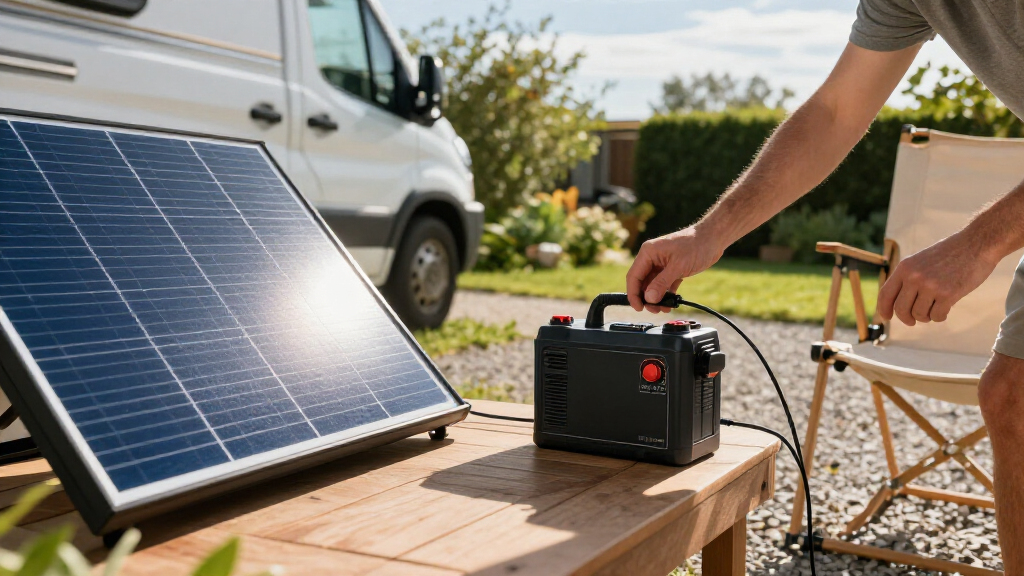
I separated the lineup by its intended job before ranking it: portable power banks are for phones and small devices, while 12V solar maintainer kits are designed for compatible vehicle batteries. Comparing those categories as if they served the same purpose would obscure the most important buying decision. Within each group, I considered stated capacity or panel wattage, controller features, charging connections, portability, weather protection where specified, and how easily the product fits common use cases such as camping, storage, or keeping a vehicle battery maintained.
The ranking favors a clear match between design and task over a long feature list. The SUNER POWER 20W model leads for dedicated 12V maintenance because it combines a higher stated wattage with an MPPT controller; the BLAVOR 20,000mAh is the portable-bank pick for buyers who want a more manageable capacity and wireless charging. Higher-capacity banks and multi-panel designs earn attention for longer outings, but their added size and reliance on sun exposure are tradeoffs. I do not treat advertised capacity or wattage as a guarantee of real-world charging speed, since sunlight, device demand, battery condition, and system compatibility all affect results.
Factors to Consider When Choosing Solar Powered Battery Chargers
Before comparing capacities, decide what battery you are trying to charge. A phone power bank, a car starter battery, and a boat’s deep-cycle battery need different equipment and connection methods. These checks can help prevent a mismatch that no extra cable or flashlight feature can fix.
Choose Between a Power Bank and a 12V Maintainer
Start with the destination, not the solar panel. A portable power bank stores energy for USB devices and may accept solar input, while a 12V maintainer kit is designed to connect to a compatible vehicle battery. A power bank is not a substitute for a car-battery charger, and a trickle maintainer is not a convenient phone-charging pack. If you need both, plan on two devices or verify that a product explicitly supports both jobs. This distinction matters more than comparing headline capacity figures across the whole category.
Treat Solar Charging as Sun-Dependent
A solar panel’s output changes with cloud cover, shade, angle, season, and the time it spends in direct sun. Small panels built into portable banks are convenient for topping up during an outing, but they may recharge the bank slowly; they are not a dependable replacement for charging it from a wall outlet before departure. Larger dedicated panels can collect more energy, yet still need good placement and suitable exposure. For trips where a charged phone is a safety need, bring a bank charged in advance and treat solar input as a supplement. Avoid leaving a device in a hot, enclosed place just to keep its panel exposed.
Match 12V Kits to the Battery and Vehicle
For a car, boat, trailer, or RV battery, confirm the kit’s voltage and intended battery compatibility before connecting it. Check how the controller manages charging and whether it is part of the kit, since a panel without suitable regulation may not be appropriate for direct battery connection. Look at the included connectors and mounting method too: a useful kit needs to reach the battery safely and stay positioned in usable light. A maintainer can help offset gradual discharge during storage, but it is not the same as a charger designed to recover a deeply discharged battery. Follow the battery and charger instructions, especially when selecting a connection point.
Compare Usable Capacity, Not Just the Label
Power-bank capacity is a starting point, not a promise of how many full phone charges you will get. Conversion losses, the device being charged, cable quality, and simultaneous use of lights or multiple outputs all affect what reaches your device. A bank near 20,000mAh may be easier to carry than a model advertised near 50,000mAh, while the larger unit may suit longer trips if its added weight is acceptable. Fast-charge output and port compatibility also matter: a high-capacity bank can still be inconvenient if it does not match your devices. Choose a size based on how many devices you need to support between reliable charging opportunities.
Weigh Convenience Features Against Bulk
Built-in cables can reduce packing clutter, and a flashlight can be useful around camp or in a car. Wireless charging adds convenience for compatible phones, but it may take more time and can make alignment or a protective case relevant. Multiple panels can provide more solar collection area, though they can make a bank less compact and may need careful placement. Decide which extras replace something you already carry rather than choosing a model simply because it has the longest feature list. If low weight and a simple setup matter most, a smaller bank may be easier to use than a feature-heavy one.
Check Durability, Storage, and Maintenance Needs
Outdoor use exposes chargers to rain, dust, heat, knocks, and long periods in storage, so check the stated protection and handling instructions rather than assuming that “solar” means weatherproof. A water-resistant panel does not necessarily make every cable, port, or power-bank body safe to leave outdoors. For vehicle maintainers, consider where the panel will sit and whether its cable can be routed without pinching or abrasion. Store portable banks within the temperature range specified by the manufacturer and recharge them periodically if they will sit unused. A low-maintenance setup is usually the one whose placement, connections, and storage routine you can actually follow.
Frequently Asked Questions
Can a solar power bank charge a car battery?
Not in the same way as a dedicated 12V solar battery maintainer. The portable power banks in this roundup are designed around charging personal devices through their outputs, while vehicle kits connect to a compatible battery through a panel and charge controller. Do not try to adapt a USB power bank to a car battery unless the manufacturer explicitly supports that use. If your goal is maintaining a parked car, choose a purpose-built 12V kit and confirm its battery compatibility and connection instructions.
Is a built-in solar panel enough to recharge a power bank?
It can provide supplemental charging, but the small panel on a portable bank may take a long time to add meaningful energy. Results depend on direct sunlight, panel angle, shade, and how much power the bank is using at the same time. For a trip, charge the bank from a reliable source before leaving and treat its solar panel as a backup. Buyers who expect to replenish substantial capacity from sunlight should compare panel area and use a separate, larger solar panel if the product supports one.
Should I pick a 20,000mAh power bank or a roughly 50,000mAh model?
Choose based on how much device power you need between charging opportunities and how much size you are willing to carry. The BLAVOR 20,000mAh options make more sense for routine carry or shorter outings, while the larger SOARAISE, GULLVEN, and BLASOUL models emphasize a bigger advertised reserve and added convenience features. Actual device charges will be lower than a simple capacity comparison suggests because conversion and charging losses reduce usable energy. If weight and pack space matter, a smaller bank plus a planned recharge may be more practical than carrying a larger unit.
What should I check before leaving a 12V solar maintainer connected to a parked vehicle?
Confirm that the kit supports your battery type and voltage, includes an appropriate charge controller, and is intended for the connection method you plan to use. Read the manufacturer’s instructions for polarity, fuse protection, panel placement, and whether the setup is suitable for unattended use. Keep the panel positioned for sunlight without blocking visibility or creating a cable pinch point. A maintainer can offset some gradual discharge, but it does not repair a failing battery or replace proper battery inspection.
Which features matter most for camping: wireless charging, built-in cables, or a flashlight?
Prioritize the feature that replaces gear you would otherwise pack. Built-in cables can simplify charging several device types, while a flashlight is useful when you need light without unpacking another item; wireless charging is convenient only if your phone supports it and you accept its charging tradeoffs. For a camping trip, usable stored capacity, dependable wired output, and a plan for recharging often matter more than any single extra. If solar recharging is part of the plan, check the panel design rather than assuming the convenience features signal strong solar performance.
Conclusion
For a single recommendation across this mixed category, I’d choose the SUNER POWER 20W 12V Trickle Charger as best overall for buyers who specifically need to maintain a compatible vehicle battery; it is not a phone power bank. For best value in portable convenience, the BLAVOR 20,000mAh stands out as a more manageable everyday option with wireless charging. The best premium-style portable pick for buyers who want a larger advertised reserve and extra charging conveniences is the GULLVEN 49,800mAh with four built-in panels, cables, and a flashlight, though it is less compact. For beginners, the BLAVOR 10,000mAh is the simpler, smaller starting point if modest device charging is enough. For specific needs, choose a POWOXI, Voltset, or other compatible 12V kit for a parked car, boat, or RV, and select a high-capacity bank such as the SOARAISE or BLASOUL when multiple devices and fewer wall-charging opportunities matter more than pack size.
Black Friday Picks

Sonos One SL (3-Pack) – Microphone-Free Speaker, Black
As an affiliate, we earn on qualifying purchases.