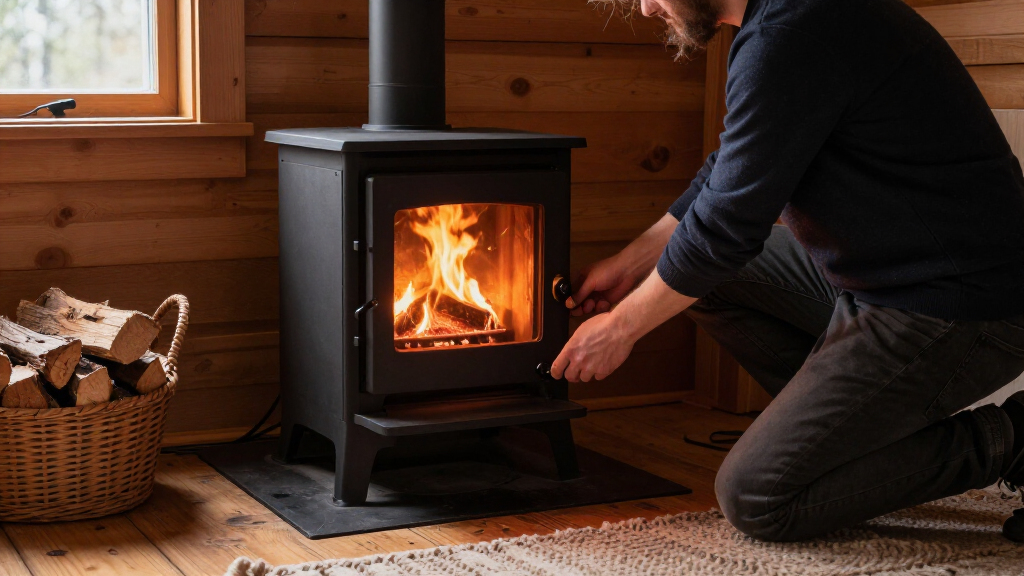

Small pellet stoves can heat a compact home or a frequently used room, but the right choice depends on usable floor space, power access, and how often you want to refill the hopper. I name the Castle 41278 Serenity best overall for its smart controller and 40-pound hopper, while the US Stove Wiseway stands out for buyers who want a non-electric design and the Comfort Glow WMPS7000 for wall-mounted placement. These options make different tradeoffs: convenience and capacity can mean a larger unit or reliance on electricity, while unusual installation styles may limit placement. I also include a wood-burning stove so readers can compare a compact alternative, not mistake it for a pellet model. Read on for the full breakdown and guidance on matching a stove to your room and routine.

Get backup power and energy gear delivered free — and shop member deals
- Fast, free delivery on millions of items
- Access to Prime Big Deal Days deals on October 6–7
- Prime Video, Amazon Music and more included
Key Takeaways
- The Castle Serenity is the most balanced pellet pick in this lineup: its smart controller and 40-pound hopper pair convenience with fewer refill interruptions than the ComfortBilt HP40 Alpine’s 25-pound hopper.
- Power access changes the shortlist: the US Stove Wiseway uses a non-electric design, while the controller-equipped and remote-equipped models rely on powered features.
- A small stove is not automatically suited to a small room: the Castle and ComfortBilt are both listed for up to 1,500 square feet, so buyers should compare that claim with their actual heat loss and room layout.
- Installation style can matter as much as stove size: the wall-mounted Comfort Glow WMPS7000 suits buyers seeking a different placement approach, but it cannot be treated as a standard freestanding substitute.
- The US Stove TH-100 is a different fuel category: it burns wood rather than pellets, so it belongs on the list only for shoppers open to a wood-burning alternative.
| Castle 41278 Serenity Pellet Stove with Smart Controller, 1,500 sq. ft. Heating Capacity, 40 lb Hopper, Black |  | Best Overall for Small-to-Midsize Spaces | Model: 41278 | Fuel type: Wood pellets | Heating capacity: Up to 1,500 sq. ft. | VIEW LATEST PRICE | See Our Full Breakdown |
| Comfort Glow Pellet Stove – 60 lb Hopper – CGPS2100 |  | Best for Longer Burn Time | Model: CGPS2100 | Heating area: Up to 2,200 sq. ft. | Hopper capacity: 60 lb | VIEW LATEST PRICE | See Our Full Breakdown |
| US Stove GW1949 Wiseway Non-Electric Pellet Stove |  | Best for Off-Grid Use | Model: GW1949 | Operation: Non-electric, natural gravity feed | Heat output: 40,000 BTU | VIEW LATEST PRICE | See Our Full Breakdown |
| Canyon Lodge Small Pellet Stove |  | Best Compact Freestanding Pick | Model: C20W | Heating coverage: 800–1,200 sq. ft. | Heat output: 28,423 BTU | VIEW LATEST PRICE | See Our Full Breakdown |
| Comfort Glow WMPS7000 Wall-Mounted Pellet Stove with Remote |  | Best for Saving Floor Space | Model: WMPS7000 | Heating area: Up to 1,000 sq. ft. | Installation: Wall-mounted, direct vent | VIEW LATEST PRICE | See Our Full Breakdown |
| US Stove TH-100 Wood-Burning Stove, 750 Sq. Ft. |  | Best for Small, Pellet-Free Heating | Fuel type: Wood | Heating area: Up to 750 sq. ft. | Heat output: 26,000 BTU | VIEW LATEST PRICE | See Our Full Breakdown |
| Cleveland Iron Works H130W Cast Iron Pellet Stove |  | Best for Large Areas and Long Refill Intervals | Fuel type: Pellet | Heating coverage: 2,000–3,000 sq. ft. | Heat output: 29,501 BTU | VIEW LATEST PRICE | See Our Full Breakdown |
| ComfortBilt HP40 Alpine Pellet Stove, 1,500 sq. ft., 25 lb. Hopper, Black |  | Best Compact Pellet Stove with Convenient Controls | Fuel type: Pellet | Coverage: Up to 1,500 sq. ft. | Heat output: 26,224 BTU per hour | VIEW LATEST PRICE | See Our Full Breakdown |
| small pellet stove | Hopper capacity | Heat output | Model | Fuel type |
|---|---|---|---|---|
| Castle 41278 Serenity Pellet S | 40 lb | 32,000 BTU | 41278 | Wood pellets |
| Comfort Glow Pellet Stove | 60 lb | — | CGPS2100 | — |
| US Stove GW1949 Wiseway Non-El | 60 lb | 40,000 BTU | GW1949 | — |
| Canyon Lodge Small Pellet Stov | 24 lb | 28,423 BTU | C20W | — |
| Comfort Glow WMPS7000 Wall-Mou | 28 lb | — | WMPS7000 | — |
| US Stove TH-100 Wood-Burning S | — | 26,000 BTU | — | Wood |
| Cleveland Iron Works H130W Cas | 90 lb. | 29,501 BTU | — | Pellet |
| ComfortBilt HP40 Alpine Pellet | 25 lb. | 26,224 BTU per hour | — | Pellet |
More Details on Our Top Picks
Castle 41278 Serenity Pellet Stove with Smart Controller, 1,500 sq. ft. Heating Capacity, 40 lb Hopper, Black
I’d put the Castle Serenity near the top for buyers who want a manageable footprint of heating without giving up scheduling controls. Its stated capacity of up to 1,500 square feet is less ambitious than the Comfort Glow CGPS2100, but that makes it a more fitting match for modest homes or a main living area rather than a larger open plan. The 40-pound hopper can run for up to 24 hours between refills, while manual, thermostat, weekly, and eco modes give owners several ways to manage heat through the day. The tubeless fire chamber is designed to simplify cleaning. Its tradeoff is a one-year limited warranty, shorter than the coverage listed for the Comfort Glow models, and it still needs regular pellet refills.
Pros:- Four operating modes, including thermostat, weekly, and eco settings
- 40-pound hopper offers up to 24 hours between refills
- Tubeless fire chamber is designed for easier cleaning
- Remote control is included
Cons:- One-year limited warranty is shorter than the listed warranties on the Comfort Glow models
- 24-hour maximum burn time means frequent refills compared with the 60-pound-hopper alternatives
- Truck delivery requires a phone number to arrange an appointment
Best for: Owners of modest homes or main living areas who want programmable operation and a hopper sized for roughly daily refills.
Not ideal for: Buyers heating more than 1,500 square feet or prioritizing the longer hopper interval and longer stated warranty of the Comfort Glow CGPS2100.
- Model:41278
- Fuel type:Wood pellets
- Heating capacity:Up to 1,500 sq. ft.
- Heat output:32,000 BTU
- Efficiency:Greater than 75%
- Hopper capacity:40 lb
- Operating modes:Manual, thermostat, weekly, eco
- Voltage and operating wattage:120 V; 77 W
- Warranty:1-year limited
Our verdict“Choose the Serenity if your space fits its 1,500-square-foot rating and you value flexible controls over the larger hopper of the Comfort Glow CGPS2100.”
Comfort Glow Pellet Stove – 60 lb Hopper – CGPS2100
The Comfort Glow CGPS2100 is the strongest fit here when a small-stove buyer wants fewer trips to refill rather than the smallest heating capacity. Its 60-pound hopper is listed for up to 30 hours of continuous burn, compared with up to 24 hours for the Castle Serenity and up to 35 hours for the wall-mounted WMPS7000. The stated coverage reaches 2,200 square feet, so it suits a larger open area better than the Canyon Lodge C20W, though its output may be more than a compact room needs. A thermostat, LED panel, and remote make day-to-day adjustment straightforward, while the 200 CFM blower helps distribute heat. The tradeoff is a larger capacity-oriented design, and the hopper still needs refilling after its stated maximum interval.
Pros:- 60-pound hopper provides up to 30 hours of continuous burn time
- Heating coverage is rated up to 2,200 square feet
- Digital LED thermostat panel and remote are included
- Mobile-home approved and equipped with a cool-touch handle and automatic shut-off
Cons:- The 2,200-square-foot capacity may be more than needed in a compact space
- The hopper still requires refilling after up to 30 hours
- The supplied product data does not list heat output or stove dimensions for fit comparison
Best for: Households heating a larger open-plan area that want a 60-pound hopper, thermostat control, and fewer refill interruptions.
Not ideal for: Buyers with a small room or tight footprint who would rather have the Canyon Lodge C20W’s smaller stated coverage or the Comfort Glow WMPS7000’s wall-mounted format.
- Model:CGPS2100
- Heating area:Up to 2,200 sq. ft.
- Hopper capacity:60 lb
- Stated burn time:Up to 30 hours
- Blower flow rate:200 CFM
- Controls:Digital LED panel with thermostat; remote included
- Mobile-home approval:Yes
- Safety features:Cool-touch handle; automatic shut-off
- Warranty:2 years
Our verdict“Pick the CGPS2100 if extended burn intervals and broader coverage matter more than a smaller heating range or wall-mounted installation.”
US Stove GW1949 Wiseway Non-Electric Pellet Stove
The US Stove Wiseway stands apart from the electrically controlled options in this group: its natural gravity-feed design operates without electricity. That makes it the clearest choice for off-grid settings or buyers who want to avoid powered feed components, while the Castle Serenity and Comfort Glow CGPS2100 offer more automated controls for routine scheduling. The Wiseway is rated at 40,000 BTU and up to 2,000 square feet, so it has more heating capacity than the Canyon Lodge C20W, but its 52-inch height and 131-pound weight call for a deliberate floor-plan and installation check. A 60-pound hopper is listed for up to 30 hours of burn time. The main compromises are manual operation and a propane-torch start, which is less convenient than the Canyon Lodge’s automatic ignition.
Pros:- Natural gravity-feed operation does not require electricity
- 40,000 BTU output and coverage up to 2,000 square feet
- 60-pound hopper is listed for up to 30 hours of burn time
- Firebox warranty is three years
Cons:- Propane torch is required for starting
- At 52 inches tall and 131 pounds, it needs careful placement and handling
- No automatic ignition or remote controls are listed, unlike the Canyon Lodge C20W
Best for: Off-grid homeowners or cabin owners who need pellet heat without electricity and can accommodate a tall, heavy freestanding stove.
Not ideal for: Buyers who want automatic ignition, remote control, or programmable operation; the Wiseway requires a propane torch to start and lacks powered controls.
- Model:GW1949
- Operation:Non-electric, natural gravity feed
- Heat output:40,000 BTU
- Coverage:Up to 2,000 sq. ft.
- Hopper capacity:60 lb
- Stated burn time:Up to 30 hours
- Vent size:3 in
- Dimensions and weight:24 in D × 15 in W × 52 in H; 131 lb
- Warranty:3 years on firebox; 1 year on cabinet
Our verdict“Choose the Wiseway for electricity-free pellet heating if you accept torch lighting and a larger, taller freestanding unit.”
Canyon Lodge Small Pellet Stove
Among the freestanding choices, the Canyon Lodge C20W has one of the clearest small-space profiles: its stated coverage is 800–1,200 square feet, below the Castle Serenity’s 1,500-square-foot rating and well below the Comfort Glow CGPS2100. Its 24-pound hopper also keeps capacity modest, which may suit buyers who do not need the long refill intervals of a 60-pound model. Automatic ignition and smart-home control add convenience the non-electric US Stove Wiseway does not offer, while the included fresh air kit and quiet blower address installation and everyday comfort. The tradeoff is its weight: at nearly 150 pounds, it is not easy to reposition once installed. Its maximum burn time is not specified in the supplied data, so buyers should not assume it matches larger-hopper alternatives.
Pros:- Coverage range of 800–1,200 square feet suits smaller spaces
- Automatic ignition and smart-home control are included
- Fresh air kit comes with the stove
- Quiet blower and air-wash viewing glass support comfortable everyday use
Cons:- 149.9-pound weight makes positioning and relocation difficult
- 24-pound hopper is much smaller than the 40-pound Castle Serenity and 60-pound Comfort Glow CGPS2100 hoppers
- Maximum burn time is not provided in the supplied product data
Best for: Owners of smaller homes or living areas who want a freestanding stove with automatic ignition, app-based control, and a fresh air kit.
Not ideal for: Anyone who needs to move the stove frequently, wants a large hopper, or is heating an area beyond its stated 1,200-square-foot maximum.
- Model:C20W
- Heating coverage:800–1,200 sq. ft.
- Heat output:28,423 BTU
- Hopper capacity:24 lb
- Dimensions:20.55 in D × 18.23 in W × 32.13 in H
- Weight:149.9 lb
- Ignition and control:Automatic ignition; smart-home control for iOS and Android
- Included component:Fresh air kit
- Material:Carbon steel
Our verdict“Choose the C20W for compact-area heating with automatic and smart controls, provided its weight and smaller hopper fit your plans.”
Comfort Glow WMPS7000 Wall-Mounted Pellet Stove with Remote
The Comfort Glow WMPS7000 is the distinctive pick for rooms where floor area matters more than maximum heating reach. Its wall-mounted, direct-vent format frees floor space, unlike the freestanding Castle Serenity or Canyon Lodge C20W, and the included wall venting kit reduces the number of separate parts a buyer must source. Coverage is rated up to 1,000 square feet, making it better suited to a compact home or defined living area than the larger CGPS2100. The 28-pound hopper is listed for up to 35 hours, longer than the Castle’s stated 24-hour run time despite its smaller capacity; burn duration can depend on operating conditions. A remote and front controls simplify adjustment. Installation is the key tradeoff: performance depends on following the wall-mounting and venting instructions closely.
Pros:- Wall-mounted design preserves floor space
- Rated to heat areas up to 1,000 square feet
- 28-pound hopper is listed for up to 35 hours of burn time
- Remote, front controls, and complete wall venting kit are included
Cons:- Wall mounting and venting must follow installation guidelines closely
- Coverage is lower than the Castle Serenity and Comfort Glow CGPS2100
- A wall-mounted format offers less placement flexibility than freestanding models
Best for: Owners of compact homes or rooms who want pellet heat without using valuable floor space and can follow the specified wall-venting installation requirements.
Not ideal for: Buyers who need freestanding placement, coverage beyond 1,000 square feet, or a stove they can install without careful attention to venting guidelines.
- Model:WMPS7000
- Heating area:Up to 1,000 sq. ft.
- Installation:Wall-mounted, direct vent
- Hopper capacity:28 lb
- Stated burn time:Up to 35 hours
- Blower:150 CFM
- Certification:EPA certified; Certification Number 223-19
- Included components:Remote control and complete wall venting kit
- Warranty:2-year manufacturer warranty
Our verdict“Choose the WMPS7000 when reclaiming floor space is the priority and its 1,000-square-foot coverage suits your room.”
US Stove TH-100 Wood-Burning Stove, 750 Sq. Ft.
The TH-100 is a wood stove, not a pellet stove, so it suits buyers open to cordwood rather than anyone seeking pellet-fuel convenience. Its coverage of up to 750 square feet makes it the smallest-scale heater in this group, better matched to a modest home or a zone-heating plan than the Cleveland Iron Works H130W, which is rated for much larger areas. Logs up to 11 inches and a stated burn time of up to eight hours offer practical flexibility, while EPA certification and 75% efficiency give buyers useful performance context. The tradeoff is a less complete setup: the stove pipe and blower are not included, so you’ll need to plan for those separately. Choose it for compact wood heat; skip it if pellet operation is a requirement.
Pros:- Rated to heat spaces up to 750 square feet, a smaller coverage target than the H130W.
- Accepts logs up to 11 inches.
- Burn time is stated as up to eight hours.
- EPA certified with 75% efficiency.
Cons:- Burns wood rather than pellets, so it does not meet a strict pellet-stove need.
- Stove pipe and blower are not included, adding components to source separately.
Best for: Owners of smaller homes or a single zone who prefer burning cordwood and can arrange the required venting components.
Not ideal for: Buyers specifically shopping for a pellet stove, or anyone who wants a package with stove pipe and blower included.
- Fuel type:Wood
- Heating area:Up to 750 sq. ft.
- Heat output:26,000 BTU
- Maximum log length:11 in.
- Burn time:Up to 8 hours
- Efficiency:75%
- Certification:EPA certified
- Not included:Stove pipe and blower
Our verdict“Choose the TH-100 for compact, cordwood-fired zone heating; pass if you need a pellet stove or a more complete included setup.”
Cleveland Iron Works H130W Cast Iron Pellet Stove
The H130W is the high-capacity outlier here: its stated 2,000–3,000-square-foot coverage and 90-pound hopper target larger homes and fewer refill stops, rather than the compact footprint implied by this roundup. By comparison, the ComfortBilt HP40 Alpine is rated for 1,500 square feet and has a 25-pound hopper, making it a more space-conscious choice but one that calls for more frequent refills. The H130W adds app control and a programmable thermostat, useful for adjusting heat and schedules remotely, plus a cast iron body. Those benefits come with substantial installation and placement demands: it weighs 304.2 pounds, needs direct venting, and burns pellets. Its 1-year limited warranty is also a short stated coverage period. I’d choose it for capacity and control, not for a small room or easy relocation.
Pros:- Rated to cover 2,000–3,000 square feet, more than the HP40 Alpine’s 1,500-square-foot rating.
- 90-pound hopper supports longer operation between refills than the HP40 Alpine’s 25-pound hopper.
- Mobile app control and a programmable thermostat allow remote adjustments and scheduling.
- Cast iron construction.
Cons:- At 304.2 pounds, it is difficult to move and needs careful placement planning.
- Requires pellet fuel and direct-vent installation.
- The stated warranty is limited to 1 year.
Best for: Owners of larger homes who want pellet heat, fewer hopper refills, and the ability to adjust settings through a mobile app.
Not ideal for: Buyers heating a small area, needing a lightweight stove, or unable to accommodate direct-vent installation and pellet storage.
- Fuel type:Pellet
- Heating coverage:2,000–3,000 sq. ft.
- Heat output:29,501 BTU
- Hopper capacity:90 lb.
- Material:Cast iron
- Ventilation:Direct vent
- Dimensions:31.1 × 27.84 × 33.42 in. (D × W × H)
- Weight:304.2 lb.
- Smart control:Mobile app control for iOS and Android
Our verdict“Pick the H130W for large-area pellet heating and a generous hopper, but choose the HP40 Alpine if a smaller, lighter unit is a better fit.”
ComfortBilt HP40 Alpine Pellet Stove, 1,500 sq. ft., 25 lb. Hopper, Black
Among the pellet models here, the HP40 Alpine is the clearest fit for modest spaces: its 21 × 17-inch footprint and 167-pound weight are easier to plan around than the 304.2-pound Cleveland Iron Works H130W. Its coverage is rated to 1,500 square feet, so it offers more reach than the wood-burning TH-100 while staying below the H130W’s large-home range. Five power settings, programmable thermostat control, remote operation, and auto ignition reduce the need to manage every firing manually; a room blower helps distribute heat. The main compromise is the 25-pound hopper, which is much smaller than the H130W’s 90-pound capacity and may mean more frequent refills. It also requires direct venting and pellet fuel. This is the better match for buyers who value a compact, feature-rich pellet unit over long intervals between fills.
Pros:- Rated for spaces up to 1,500 square feet, a more modest target than the H130W.
- Compact 21 × 17-inch footprint and 167-pound weight are easier to accommodate than the H130W.
- Five power settings, programmable thermostat, remote control, and auto ignition offer flexible operation.
- Includes a room blower and removable ash pan; EPA and CSA certified.
Cons:- The 25-pound hopper may require more frequent refills than the H130W’s 90-pound hopper.
- Direct-vent installation is required.
- Pellet fuel is required, so it is not an option for buyers who prefer cordwood.
Best for: Owners of smaller homes or defined living areas who want pellet heat with remote control, programmable settings, and a relatively compact footprint.
Not ideal for: Buyers heating a large home, seeking long stretches between refills, or unable to install direct venting.
- Fuel type:Pellet
- Coverage:Up to 1,500 sq. ft.
- Heat output:26,224 BTU per hour
- Hopper capacity:25 lb.
- Efficiency:81%
- Power settings:5
- Ventilation:Direct vent
- Dimensions:21 in. D × 17 in. W × 30 in. H
- Certifications:EPA and CSA
Our verdict“Choose the HP40 Alpine for compact pellet heating with convenient controls, but favor the H130W if larger coverage and fewer hopper refills matter more.”

How We Picked
I ranked these products around the practical questions behind a search for small pellet stoves: how much space and heat a model is meant to serve, how much fuel it holds, how its controls affect daily use, and whether its design fits the buyer’s room and power setup. I gave weight to usable capacity and convenience, but did not treat a larger hopper or a higher stated heating area as an automatic win; either can be a poor match for a genuinely small space.
The Castle Serenity leads for its combination of a smart controller and 40-pound hopper. I ranked the Wiseway and wall-mounted WMPS7000 as distinct alternatives for buyers with specific power or placement needs. The Comfort Glow CGPS2100 and Canyon Lodge offer additional pellet-stove choices, while the Cleveland Iron Works H130W and ComfortBilt HP40 Alpine add different build and capacity considerations. The TH-100 ranks as a wood-burning alternative rather than a direct pellet-stove rival. Because the supplied product details do not establish dimensions, efficiency, venting requirements, or included installation parts for every model, I avoid treating those as confirmed advantages.
| small pellet stove | Fuel type |
|---|---|
| Castle 41278 Serenity Pellet S | Wood pellets |
| Comfort Glow Pellet Stove | — |
| US Stove GW1949 Wiseway Non-El | — |
| Canyon Lodge Small Pellet Stov | — |
| Comfort Glow WMPS7000 Wall-Mou | — |
| US Stove TH-100 Wood-Burning S | Wood |
| Cleveland Iron Works H130W Cas | Pellet |
| ComfortBilt HP40 Alpine Pellet | Pellet |
Factors to Consider When Choosing Small Pellet Stoves
Choosing a compact stove is less about finding the smallest-looking model and more about matching heat output, installation constraints, and daily operation to the space you actually use. I would settle these points before comparing controls or appearance.
Match Heating Capacity to the Room, Not the Whole House
Start with the rooms you want to heat and how well they hold warmth, rather than relying on a maximum square-foot figure alone. Ceiling height, insulation, windows, layout, and local winter conditions can all change how much heat a space needs. A stove listed for a broad area may cycle or feel excessive in a small, well-insulated room, while an open plan can spread heat unevenly. Avoid choosing extra capacity as a safety margin without checking whether the model can run comfortably at a lower setting. Ask the seller or installer how the stove performs at its minimum output and whether that suits your intended room.
Measure the Full Installation Footprint
The stove body is only part of the space a pellet appliance needs. Check required clearances, vent routing, access for servicing, and room to load fuel before deciding that a model fits. Wall-mounted placement can free floor area, but it introduces its own mounting and venting constraints; a freestanding model may be easier to position but occupy more usable floor space. Measure the path from delivery access to the final location as well as the proposed installation area. Have a qualified installer confirm local code requirements and clearances before purchase, since product dimensions alone do not prove a safe fit.
Balance Hopper Size Against Refill Habits
A larger hopper can reduce how often you carry and load pellets, which matters if the stove will run for long stretches or if refilling is inconvenient. It also adds bulk, and hopper capacity does not by itself tell you how long a load will last; burn rate and heat demand matter too. A smaller hopper may suit occasional room heating or a tighter footprint, especially if you are nearby to top it up. Compare the capacity with your likely operating schedule rather than treating the largest number as best. Ask how easy the hopper is to access and whether its lid can open fully in the intended location.
Plan for Electricity, Controls, and Backup Heat
Many pellet stoves use powered components, so check what needs electricity and what happens during an outage. A non-electric design can appeal where power is unreliable, but confirm its operating method and installation needs instead of assuming every part works without electricity. Smart controls and remotes can make routine adjustments easier, yet they do not replace a clear understanding of startup, shutdown, and cleaning. If the stove is a primary heat source, plan a backup option for outages or service interruptions. Buyers who only need occasional supplemental heat may value simple controls more than automation.
Check Fuel, Cleaning, and Service Access
Pellet stoves need regular attention to ash, burn components, and venting; the exact schedule depends on the model and how often it runs. Before buying, read the manual for cleaning frequency, required tools, and access to components that need routine care. Confirm that the recommended pellet type is readily available where you live and that you have a dry place to store bags. A stove that is difficult to clean can become a poor fit even if its controls look convenient. Also check warranty terms and local service availability, since specialized parts or service may affect ownership more than a small difference in features.
Decide Whether You Need Pellets or a Different Fuel
Pellet and wood stoves solve related heating problems but call for different fuel handling and operating routines. The TH-100 burns wood, so it should not be compared as though it shares pellet-stove controls, hopper use, or fuel storage. Wood may suit buyers who already have a dependable supply and prefer that fuel, while pellets can offer a more standardized loading routine. Before switching fuel types, check local rules, venting needs, and the work involved in storing and handling each fuel. Keep the comparison focused on your actual heating habits rather than the word “stove” in a product name.
Frequently Asked Questions
Is a stove rated for 1,500 square feet too large for a small room?
Not automatically, but a maximum coverage claim does not show how the stove behaves in a much smaller space. Room insulation, layout, ceiling height, climate, and the stove’s minimum heat output all affect fit. The Castle Serenity and ComfortBilt HP40 Alpine both list a 1,500-square-foot heating capacity, so buyers targeting one small room should ask about low-output operation before choosing either. A qualified installer can help assess the room and placement. Do not rely on the coverage figure alone to predict comfort.
Can I use a pellet stove during a power outage?
It depends on the model and which components require electricity. The US Stove Wiseway is explicitly described as non-electric, which makes it a distinct option for shoppers concerned about power access. For other models, check the manual for electrical requirements and outage behavior rather than assuming a stove will keep running. A battery backup or generator may be possible for some units, but compatibility and safe setup need confirmation. If the stove is your main heat source, plan another backup as well.
Should I choose a larger hopper or a smaller stove footprint?
Choose based on the constraint that matters more in your home: fewer refills or easier placement. A larger hopper can reduce loading frequency, but it may add to the unit’s size and does not guarantee longer operation without knowing burn rate. A smaller-capacity hopper can be a reasonable trade if the stove runs intermittently and is easy to access. Check the full dimensions, clearances, and lid access before deciding. The 40-pound Castle and 25-pound ComfortBilt illustrate why hopper capacity should be compared alongside the installation footprint, not by itself.
Is a wall-mounted pellet stove a good choice for a small home?
It can suit a home where floor space is at a premium, but wall mounting does not remove the need for safe clearances, venting, and service access. Confirm that the mounting surface and proposed location meet the manufacturer’s requirements, and have an installer review the plan before purchase. The Comfort Glow WMPS7000 is the lineup’s wall-mounted option, making it more relevant to buyers with a placement constraint than to those seeking a conventional freestanding unit. Check how fuel loading and routine cleaning work in the intended position. If installation flexibility is your main concern, compare the complete setup rather than the stove body alone.
Can the US Stove TH-100 replace a pellet stove?
It can serve as a compact heating option for someone willing to burn wood, but it is not a pellet stove: the TH-100 is identified as wood-burning and rated for 750 square feet. That means the fuel supply, storage, loading routine, and installation details differ from the pellet models in this roundup. Choose it only if wood fits your habits and local requirements. If you specifically want pellet fuel or pellet-stove controls, compare the pellet models instead. Confirm venting and installation needs with the manufacturer and a qualified professional before buying.
Conclusion
For the broadest mix of everyday convenience and hopper capacity, I recommend the Castle 41278 Serenity as best overall. The Comfort Glow CGPS2100 is my value-oriented pick for buyers who want a straightforward pellet-stove option, though I would confirm its dimensions and installation requirements before choosing it for a tight space. For a premium-style feature set, consider the ComfortBilt HP40 Alpine if its listed 1,500-square-foot capacity fits your plan and a 25-pound hopper suits your refill routine. Beginners who want smart controls may prefer the Castle, while buyers prioritizing non-electric operation should shortlist the US Stove Wiseway. For limited floor space, compare the wall-mounted Comfort Glow WMPS7000; for buyers open to wood fuel, the US Stove TH-100 is a separate alternative, not a pellet model. Before settling on any pick, verify room sizing, clearances, venting, power needs, and local installation rules.
Fall Picks
fall essentials
As an affiliate, we earn on qualifying purchases.