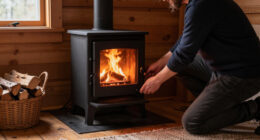
An air purifier for a gas stove can help reduce airborne particles and some cooking odors, but it cannot replace a range hood that vents outdoors. My best overall pick is the Coway Airmega 150 for its HEPA and carbon filters, air-quality monitor, and automatic mode; the Sans HEPA Air Purifier stands out for larger open spaces, while the Blueair Blue Pure 511i Max suits smaller kitchens where compact size matters. The main tradeoffs are room coverage, carbon-filter capacity, noise, and how often filters need replacing. Keep reading for the full breakdown and guidance on matching an air purifier to your kitchen.

Get backup power and energy gear delivered free — and shop member deals
- Fast, free delivery on millions of items
- Access to Prime Big Deal Days deals on October 6–7
- Prime Video, Amazon Music and more included
Complete the kit


Key Takeaways
- The Coway Airmega 150 ranks first because its carbon and HEPA filtration are paired with an air-quality monitor and auto mode, giving it a more kitchen-focused feature mix than the simpler compact models.
- Large-room coverage varies widely: the Sans is listed for 1,854 square feet and one MOOKA model for 2,200 square feet, but a large coverage figure alone does not show how quickly air is cleaned at a useful setting.
- Carbon filtration deserves special attention around gas cooking. HEPA filters capture particles, while activated carbon is the part intended to reduce some gases and odors; check its amount and replacement options before buying.
- Compact picks trade reach for easier placement. The Clorox Small Room, Levoit small purifier, MOOKA 430-square-foot model, and Blueair 511i Max are better fits for smaller areas than for an open kitchen connected to other rooms.
- None of these purifiers replaces source control. Use an outdoor-venting range hood when available, and treat a purifier as an added layer rather than a substitute for ventilation or proper stove maintenance.
| Clorox Small Room Air Purifier with True HEPA Filter |  | Best Compact Pick | Room coverage: Up to 200 sq ft | Filtration: True HEPA, 2-stage 360° system | Particle retention size: 0.1 micron | VIEW ON AMAZON | See Our Full Breakdown |
| Coway Airmega 150 Air Purifier for Home and Bedroom up to 1,035 sq ft with HEPA and Carbon Filters, Air Quality Monitor, Auto Mode, 3-Year Warranty |  | Best for Odor-Conscious Kitchens | Coverage: Up to 1,035 sq ft | Filtration: HEPA, activated carbon, washable filter | Air-quality features: Air-quality monitor and auto mode | VIEW ON AMAZON | See Our Full Breakdown |
| MOOKA H13 True HEPA Air Purifier for Large Rooms up to 1200ft² with Aromatherapy and Night Light |  | Best Quiet Large-Room Pick | Coverage area: Up to 1,200 sq ft | Filter type: H13 HEPA | Particle retention size: 0.3 micrometers | VIEW ON AMAZON | See Our Full Breakdown |
| MOOKA Air Purifier for Bedroom and Home, Compact HEPA Air Cleaner for 430 sq ft |  | Best Desk-Side Pick | Coverage area: Up to 430 sq ft | Filter type: H13 HEPA | Noise level: 15 dB | VIEW ON AMAZON | See Our Full Breakdown |
| Sans HEPA Air Purifier for Whole Home & Large Rooms, 1,854 Sq Ft – White |  | Best Large-Area Carbon and HEPA Pick | Coverage area: Up to 1,854 sq ft | Filtration: True 3-in-1 HEPA, activated carbon, UV-C | Noise level: 25 dB | VIEW ON AMAZON | See Our Full Breakdown |
| Blueair Blue Pure 511i Max Air Purifier for Home and Bedroom |  | Best for Quiet, Connected Small Rooms | Coverage area: Up to 1,138 sq ft per hour | Filtration technology: HEPASilent dual filtration | Particle removal efficiency: 99.97% down to 0.1 microns | VIEW ON AMAZON | See Our Full Breakdown |
| MOOKA Air Purifier for Large Rooms up to 1076 ft² with True HEPA Filter |  | Best for Simple, Quiet Large-Room Use | Coverage area: 1,076 ft² | Filtration: True HEPA and activated carbon | Particle size: Captures particles as small as 0.3 microns | VIEW ON AMAZON | See Our Full Breakdown |
| Levoit Air Purifiers for Home Bedroom Dorm Room, Small Quiet Air Purifier |  | Best Compact Pick for a Small Kitchen | Coverage area: 255 sq. ft. | Coverage timing: Up to 255 sq. ft. in 60 minutes | Noise level: 27–45 dB | VIEW ON AMAZON | See Our Full Breakdown |
| MOOKA Air Purifier for Home and Large Rooms up to 2200 ft² with HEPA Filter, Black |  | Best for Large Open-Plan Spaces | Coverage area: Up to 2,200 ft² | Filtration system: Three-stage HEPA with activated carbon | Noise level: 20 dB in sleep mode | VIEW ON AMAZON | See Our Full Breakdown |
| KNKA Air Purifier for Home and Bedroom Up to 1147 ft² in 1 Hour, APH3000, White |  | Best for Frequent Particle Refreshing | Coverage area: Up to 1,147 ft² | Air refresh rate: 4.8 times per hour in a 237 ft² room | Filtration efficiency: 99.97% of particles down to 0.3 microns | VIEW ON AMAZON | See Our Full Breakdown |
| air purifier for gas stove | Noise level | Coverage area |
|---|---|---|
| Clorox Small Room Air Purifier | 23 dB | — |
| Coway Airmega 150 Air Purifier | — | — |
| MOOKA H13 True HEPA Air Purifi | 13 dB | Up to 1,200 sq ft |
| MOOKA Air Purifier for Bedroom | 15 dB | Up to 430 sq ft |
| Sans HEPA Air Purifier for Who | 25 dB | Up to 1,854 sq ft |
| Blueair Blue Pure 511i Max Air | As low as 19 dB | Up to 1,138 sq ft per hour |
| MOOKA Air Purifier for Large R | 20 dB | 1,076 ft² |
| Levoit Air Purifiers for Home | 27–45 dB | 255 sq. ft. |
| MOOKA Air Purifier for Home an | 20 dB in sleep mode | Up to 2,200 ft² |
| KNKA Air Purifier for Home and | 24 dB in sleep mode | Up to 1,147 ft² |
More Details on Our Top Picks
Clorox Small Room Air Purifier with True HEPA Filter
For a gas-stove kitchen, I’d treat the Clorox Small Room Air Purifier as a helper for airborne particles, not a fix for cooking gases. Its True HEPA, 360-degree filtration is specified to capture particles down to 0.1 microns, while the compact body and quiet 23 dB operation suit a small kitchen-adjacent room or breakfast nook. The supplied details don’t list an activated-carbon filter, so I wouldn’t choose it as the main option for reducing gas odors or combustion-related gases; ventilation and a working range hood remain key. Compared with the Coway Airmega 150, it is much smaller and simpler, but it gives up the Coway’s stated carbon filtration and room coverage. Its 200-square-foot limit also makes it a poor fit for open-plan spaces.
Pros:- True HEPA filtration is specified for particles as small as 0.1 microns.
- Compact 7.5-inch footprint fits on a small surface.
- Quiet 23 dB operation suits bedrooms or nearby workspaces.
- Adjustable speeds and a timer allow basic control over operation.
Cons:- No activated-carbon stage is listed, limiting its fit for odors and gas-related pollutants.
- Coverage is limited to rooms up to 200 square feet.
- The filter requires replacement every 6–12 months.
Best for: Someone seeking a quiet, compact purifier for particle reduction in a small kitchen-adjacent room, alongside proper range ventilation.
Not ideal for: People who want a primary purifier for gas-stove odors or gases, or need coverage beyond 200 square feet.
- Room coverage:Up to 200 sq ft
- Filtration:True HEPA, 2-stage 360° system
- Particle retention size:0.1 micron
- Noise level:23 dB
- Wattage:12 watts
- Dimensions:7.5″ D × 7.5″ W × 9.5″ H
- Weight:3.2 pounds
- Controls and features:Touch/button controls, adjustable speeds, timer, auto mode
Our verdict“Choose the Clorox for quiet particle filtration in a small room, but look to a purifier with specified carbon filtration for odor reduction.”
Coway Airmega 150 Air Purifier for Home and Bedroom up to 1,035 sq ft with HEPA and Carbon Filters, Air Quality Monitor, Auto Mode, 3-Year Warranty
Among these five, the Coway Airmega 150 is one of the more relevant choices for a gas-stove home because its listed filtration includes both HEPA and activated carbon. HEPA targets airborne particles, while carbon is the part intended to help with odors; neither makes a purifier a replacement for a range hood or proper ventilation. Its air-quality monitor and auto mode can adjust operation as readings change, which is more hands-off than the basic controls on the Clorox Small Room Air Purifier. The claimed coverage of up to 1,035 square feet also suits a larger shared living area better than the Clorox’s 200-square-foot rating. The tradeoff is that the available details don’t specify carbon capacity or gas-removal performance, so I wouldn’t assume it can control every cooking emission. Filter upkeep is also part of ownership.
Pros:- Includes both HEPA and activated-carbon filtration.
- Air-quality monitor and auto mode can adjust fan operation.
- Stated coverage up to 1,035 square feet suits larger rooms better than the Clorox.
- Cartridge design is intended to simplify filter replacement.
Cons:- The supplied specifications do not state carbon quantity or gas-specific removal capability.
- Filter replacement is required for continued performance.
- Large-area coverage figures alone do not establish performance in every room layout.
Best for: Households wanting HEPA particle filtration plus a listed carbon stage and automatic fan adjustment in a bedroom or living area near the kitchen.
Not ideal for: Buyers seeking verified gas-specific removal performance or a purifier that can replace a kitchen exhaust hood.
- Coverage:Up to 1,035 sq ft
- Filtration:HEPA, activated carbon, washable filter
- Air-quality features:Air-quality monitor and auto mode
- Filter design:Cartridge
- Warranty:3 years
- Intended settings:Home, bedroom, and living areas
Our verdict“Pick the Coway if you want carbon and HEPA filtration with automatic adjustment, while keeping kitchen ventilation as the primary control for stove emissions.”
MOOKA H13 True HEPA Air Purifier for Large Rooms up to 1200ft² with Aromatherapy and Night Light
The MOOKA H13 True HEPA is a quiet, light-duty option for someone prioritizing particle filtration across a larger room: the listing claims coverage up to 1,200 square feet and operation at 13 dB. Its HEPA filter is described as capturing particles down to 0.3 micrometers, but the supplied specs do not list activated carbon. That distinction matters around a gas stove: this model may help with particles, but the available data doesn’t support choosing it for gas or odor reduction. Compared with the Coway Airmega 150, MOOKA offers a lower stated noise level and extras such as a child lock and night light, while Coway is the clearer fit for odor-conscious buyers because it specifies a carbon filter. MOOKA’s filter replacement interval is relatively frequent at every 3–6 months, and its large coverage claim should not be confused with gas-specific performance.
Pros:- H13 HEPA filtration is listed for particles down to 0.3 micrometers.
- Very low stated noise level of 13 dB.
- Includes a child lock, timer, night light, and filter-change indicator.
- Lightweight 3.4-pound body is easier to move between rooms.
Cons:- No activated-carbon filter is listed for odor or gas reduction.
- Filter replacement is specified every 3–6 months.
- The 1,200-square-foot coverage claim does not establish gas-removal performance.
Best for: People who want a quiet purifier for particle filtration in a large bedroom or living area and value a night light, timer, and child lock.
Not ideal for: Gas-stove households whose main goal is reducing cooking odors or gas-related pollutants, since activated carbon is not listed.
- Coverage area:Up to 1,200 sq ft
- Filter type:H13 HEPA
- Particle retention size:0.3 micrometers
- Noise level:13 dB
- Power:24V DC, 4 watts
- Dimensions:6.7″ D × 6.7″ W × 11.1″ H
- Weight:3.4 pounds
- Additional features:Aromatherapy, timer, child lock, night light, filter-change indicator
- Filter replacement interval:Every 3–6 months
Our verdict“Choose this MOOKA for quiet, broad-area particle filtration and convenience features, not as a gas-stove odor-control solution.”
MOOKA Air Purifier for Bedroom and Home, Compact HEPA Air Cleaner for 430 sq ft
This compact MOOKA H13 HEPA purifier makes the most sense for a desk, bedroom, or small room near—but not in place of—a properly ventilated kitchen. Its listed 430-square-foot coverage is more flexible than the Clorox’s 200-square-foot limit, while the USB power connection may make it convenient where a standard purifier cord is awkward. The 15 dB noise rating, sleep mode, timer, and night light favor quiet personal or overnight use. For a gas-stove roundup, though, a key limitation is the missing detail: the description mentions smoke and odors, but the supplied specifications list H13 HEPA rather than activated carbon or a gas-specific rating. Compared with the Coway Airmega 150, this MOOKA is smaller and more feature-oriented, but Coway provides clearer evidence of a carbon stage. Filter replacement frequency is also unspecified.
Pros:- Compact desktop design can fit where a larger purifier would be inconvenient.
- H13 HEPA filtration is listed for particle reduction.
- Quiet 15 dB operation with sleep mode, timer, and night light.
- USB A-to-C power provides flexible placement options.
Cons:- Activated-carbon filtration is not included in the supplied specifications.
- USB power may restrict placement based on available ports or adapters.
- Filter replacement frequency is not specified.
Best for: A renter or desk-based user seeking a small, quiet purifier for particles in a bedroom or compact room near the kitchen.
Not ideal for: People who need documented carbon filtration, gas-specific performance, or a clearly stated filter replacement schedule.
- Coverage area:Up to 430 sq ft
- Filter type:H13 HEPA
- Noise level:15 dB
- Power source:USB A-to-C, wide voltage
- Features:Sleep mode, aroma function, timer, night light
- Child lock:Yes
- Warranty:2-year limited replacement
- Certifications:GRS, ETL, FCC, CARB, DOE
Our verdict“This MOOKA suits a small-space buyer focused on quiet particle filtration, but the Coway is a stronger match when a listed carbon stage matters.”
Sans HEPA Air Purifier for Whole Home & Large Rooms, 1,854 Sq Ft – White
The Sans HEPA Air Purifier is the broad-coverage choice here for buyers who want both particle filtration and an explicitly listed activated-carbon stage. Its 1,854-square-foot coverage claim is the largest among these five, making it a more plausible fit for an open living area than the Clorox or compact MOOKA models. For gas-stove use, carbon is relevant to odors, but the supplied details don’t give a gas-specific removal rate or carbon capacity; I would still rely on an effective range hood and ventilation for cooking emissions. The 3-in-1 system also includes UV-C, while real-time air-quality monitoring offers feedback during operation. Compared with the Coway Airmega 150, Sans claims wider coverage and adds UV-C, but its filter replacement interval is every three months, a more demanding schedule than the Coway details provide. At 11 pounds, it also takes more room than compact options.
Pros:- Largest stated coverage in this group at 1,854 square feet.
- Combines True HEPA, activated carbon, and UV-C in a 3-in-1 system.
- Real-time air-quality monitoring is listed.
- 25 dB noise level is suited to quieter shared spaces.
Cons:- Filter replacement is required every three months.
- Its 20-inch width and 11-pound weight make it less suited to compact rooms.
- The supplied data does not specify gas-specific removal rates or carbon capacity.
Best for: Owners of open-plan homes who want a large-area purifier with listed HEPA and carbon filtration, plus air-quality monitoring.
Not ideal for: People with a small kitchen or tight placement area, or buyers expecting documented gas-specific removal from a purifier alone.
- Coverage area:Up to 1,854 sq ft
- Filtration:True 3-in-1 HEPA, activated carbon, UV-C
- Noise level:25 dB
- Dimensions:20″ × 10″ × 11.5″
- Weight:11 pounds
- Filter replacement interval:Every 3 months
- Monitoring:Real-time air-quality monitoring
- Particle filtration claim:Captures 99.9% of ultrafine particles
Our verdict“Choose Sans for broad-area HEPA and carbon filtration with monitoring, provided you have room for it and accept frequent filter changes.”
Blueair Blue Pure 511i Max Air Purifier for Home and Bedroom
For a small kitchen that opens into a bedroom or apartment living area, the Blueair Blue Pure 511i Max pairs quiet operation with app-based air-quality monitoring. Its HEPASilent dual filtration is listed as capturing 99.97% of particles down to 0.1 microns, a finer stated threshold than the MOOKA B-D02L’s 0.3-micron specification. That addresses airborne particles, but the supplied details do not establish how well its filter handles gas-stove gases such as nitrogen dioxide; particle filtration is not a substitute for a range hood vented outdoors. The compact design and stated minimum noise of 19 dB suit nearby sleeping spaces, while app control adds remote monitoring. Compared with the Levoit Core Mini-P, this offers app features and a much larger stated coverage area, but it is still not my pick for a large, open kitchen. Filter replacements are an ongoing requirement.
Pros:- HEPASilent dual filtration is specified to capture 99.97% of particles down to 0.1 microns.
- App control and air-quality monitoring allow remote checks.
- Minimum stated noise level of 19 dB suits bedrooms and nearby sleep areas.
- Compact design fits more easily into smaller rooms than the large-room MOOKA models.
Cons:- Particle filtration does not establish removal of gas-stove gases such as nitrogen dioxide.
- Limited suitability for larger open-plan spaces compared with the MOOKA 2200 ft² model.
- Replacement filters add ongoing maintenance.
Best for: Apartment dwellers with a small kitchen near a bedroom who want quiet operation and app-based air-quality monitoring.
Not ideal for: People seeking a primary control for gas-stove emissions, or those needing one purifier to serve a large open-plan kitchen and living area.
- Coverage area:Up to 1,138 sq ft per hour
- Filtration technology:HEPASilent dual filtration
- Particle removal efficiency:99.97% down to 0.1 microns
- Noise level:As low as 19 dB
- App control:Yes
- Design:Compact Scandinavian-inspired design
Our verdict“Choose the Blueair for a compact, quiet room near a gas kitchen when app monitoring matters more than large-space coverage.”
MOOKA Air Purifier for Large Rooms up to 1076 ft² with True HEPA Filter
The MOOKA B-D02L is a straightforward choice for households wanting large-room particle filtration without relying on app controls. Its True HEPA and activated-carbon filtration is specified for pet dander, smoke, odors, and particles as small as 0.3 microns; for a gas-stove kitchen, that combination is more relevant than particle filtration alone, though the supplied data does not quantify removal of stove gases. A stated 1,076 ft² coverage puts it near the Blueair 511i Max on paper, but the Blueair offers app monitoring and a finer stated particle threshold. MOOKA instead provides four fan modes, timers, and a child lock, making everyday operation simple. At 20 dB, it is positioned for quiet rooms, too. The tradeoff is regular filter replacement every 3–6 months and less convenience when accessing the power adapter, which sits behind the bottom cover.
Pros:- True HEPA and activated-carbon filtration address particles and odors.
- Stated coverage of 1,076 ft² suits larger shared spaces.
- Four fan modes and timer settings offer simple operating choices.
- Child lock helps prevent accidental changes to settings.
Cons:- The product details do not quantify removal of gas-stove gases.
- Replacement filter interval of 3–6 months may mean frequent upkeep.
- Power-adapter access requires opening the bottom cover.
Best for: Households with a large living area near the kitchen that want HEPA and activated-carbon filtration, physical controls, and a child lock.
Not ideal for: Buyers who want app-based monitoring, quantified gas removal, or minimal filter-maintenance demands.
- Coverage area:1,076 ft²
- Filtration:True HEPA and activated carbon
- Particle size:Captures particles as small as 0.3 microns
- Noise level:20 dB
- Timer settings:1, 2, 4, and 8 hours
- Fan modes:Sleep, low, medium, and high
- Child lock:Yes
- Replacement filter interval:3–6 months
Our verdict“Pick the MOOKA B-D02L for quiet, large-room filtration with simple controls, but not if app monitoring or verified gas removal is a priority.”
Levoit Air Purifiers for Home Bedroom Dorm Room, Small Quiet Air Purifier
The Levoit Core Mini-P suits a small kitchen or nearby room where floor space matters more than broad coverage. Its stated reach is 255 sq. ft. in 60 minutes, far below the Blueair Blue Pure 511i Max and both large-room MOOKA models, so I would treat it as a localized option rather than a purifier for an open kitchen and living area. The compact 6.5-by-6.5-inch footprint makes placement easier on a counter or small table, and sleep mode helps when the purifier sits near a bedroom. The built-in fragrance sponge adds an optional scent feature, but fragrance does not remove pollutants or gas-stove gases. Unlike the Blueair, this Levoit has no smart connectivity, and the supplied product information does not specify a filtration standard or gas-removal performance. Replacement filters remain part of ownership.
Pros:- Compact 6.5-by-6.5-inch footprint fits tight spaces.
- Stated coverage of 255 sq. ft. suits a small room or localized placement.
- Sleep mode supports quieter use near sleeping areas.
- Built-in fragrance sponge allows optional aromatherapy.
Cons:- Coverage is far smaller than the Blueair 511i Max or large-room MOOKA models.
- No smart connectivity features are listed.
- Supplied details do not specify filtration efficiency or gas-stove gas removal.
- Replacement filters are needed over time.
Best for: Dorm residents, renters, or cooks with a small enclosed kitchen who need a compact purifier for a limited area.
Not ideal for: People with open-plan kitchens, larger rooms, or a need for app monitoring and clearly specified gas-removal performance.
- Coverage area:255 sq. ft.
- Coverage timing:Up to 255 sq. ft. in 60 minutes
- Noise level:27–45 dB
- Dimensions:6.5 × 6.5 × 10.4 in
- Power adapter:100–240V, 50/60Hz
- Aromatherapy:Built-in fragrance sponge
Our verdict“Choose the Core Mini-P for a small, enclosed kitchen or dorm room, not for cleaning air across an open-plan home.”
MOOKA Air Purifier for Home and Large Rooms up to 2200 ft² with HEPA Filter, Black
For a kitchen that opens into a broad living space, this MOOKA’s 2,200 ft² stated coverage gives it the widest reach in this group. Its three-stage HEPA system includes activated carbon, a useful pairing for airborne particles and odors, while the PM2.5 sensor and auto mode can adjust operation as particle readings change. Those features make it more responsive than the simpler MOOKA B-D02L, which offers timers and fan modes but no listed air-quality sensor. The distinction matters for gas cooking: a PM2.5 reading tracks fine particles, not every gas such as nitrogen dioxide, and the product details do not quantify gas removal. Sleep mode is listed at 20 dB, but the larger capacity may be unnecessary in a small kitchen. Filter reminders are provided after 2,000 hours, and filter replacement remains part of upkeep.
Pros:- Largest stated coverage in this lineup at 2,200 ft².
- Three-stage HEPA filtration includes activated carbon for particles and odors.
- PM2.5 sensor and auto mode provide readings and automatic fan adjustment.
- Sleep mode is listed at 20 dB, with a filter reminder after 2,000 hours.
Cons:- PM2.5 monitoring does not measure all gas-stove pollutants.
- The product details do not quantify removal of nitrogen dioxide or other stove gases.
- Large stated coverage may be unnecessary for a small or enclosed kitchen.
- Filter replacement is still required, and the interval depends on use.
Best for: Households with a large open-plan kitchen and living area that want broad coverage, automatic fan adjustment, and air-quality readings.
Not ideal for: People with a small kitchen, or anyone relying on a purifier as a substitute for outdoor-vented cooking exhaust or verified gas removal.
- Coverage area:Up to 2,200 ft²
- Filtration system:Three-stage HEPA with activated carbon
- Noise level:20 dB in sleep mode
- Fan speeds:Four adjustable speeds
- Timer:2, 4, 6, and 8 hours
- Power consumption:0.63 kWh per 24 hours at maximum speed
- Sensor:PM2.5 air-quality sensor
- Filter reminder:After 2,000 hours
- Certifications:CARB, ETL, DOE
Our verdict“Choose this MOOKA for a large open-plan home needing broad particle and odor filtration with auto monitoring, while keeping a vented hood as the primary gas control.”
KNKA Air Purifier for Home and Bedroom Up to 1147 ft² in 1 Hour, APH3000, White
The KNKA APH3000 stands out for its stated 4.8 air refreshes per hour in a 237 ft² room, a useful reference for buyers who want frequent circulation in a kitchen-sized space. It is specified to capture 99.97% of particles down to 0.3 microns and includes real-time air-quality monitoring with auto-adjusting fan speeds. That gives it a clearer particle-performance specification than the Levoit Core Mini-P, whose supplied details omit filtration efficiency, while the MOOKA 2200 ft² model is better suited to a much larger open-plan area. The KNKA’s listed coverage reaches 1,147 ft², but that figure alone does not show how quickly it cleans a particular room; the stated refresh rate applies to the smaller 237 ft² room. Its 24 dB sleep mode is quiet, though filters need replacement every 3–6 months. Particle capture also does not establish removal of gas-stove gases.
Pros:- Captures 99.97% of particles down to 0.3 microns.
- Stated 4.8 air refreshes per hour in a 237 ft² room helps clarify performance in a kitchen-sized space.
- Real-time air-quality monitoring can guide automatic fan adjustment.
- Sleep mode is listed at 24 dB.
Cons:- The 4.8 refreshes-per-hour figure applies to a 237 ft² room, not the full 1,147 ft² coverage claim.
- Filter replacement is recommended every 3–6 months.
- Particle filtration specifications do not establish removal of gas-stove gases.
Best for: Cooks with a medium-sized kitchen or nearby room who value a stated room refresh rate, particle filtration, and automatic fan adjustment.
Not ideal for: People with a very large open-plan space, or buyers who need documented gas removal or infrequent filter replacement.
- Coverage area:Up to 1,147 ft²
- Air refresh rate:4.8 times per hour in a 237 ft² room
- Filtration efficiency:99.97% of particles down to 0.3 microns
- Noise level:24 dB in sleep mode
- Filter replacement interval:Every 3–6 months
Our verdict“Pick the KNKA for frequent particle refreshes and auto-adjustment in a medium-sized kitchen, but use a vented hood to manage cooking gases.”

How We Picked
I ranked these models for the particular demands of a gas-stove kitchen, rather than treating them as interchangeable general-purpose purifiers. I prioritized the presence of both HEPA and carbon filtration, practical room fit, useful controls such as auto mode or air-quality monitoring, and how readily a buyer can place and maintain the unit near a cooking area. Since the supplied product details do not specify carbon quantity, gas-removal test results, or comparable clean-air delivery rates for every model, I avoid treating advertised square footage as proof of equal performance.
The Coway Airmega 150 leads because its stated carbon and HEPA filters are complemented by monitoring and automatic operation. Larger MOOKA, Sans, and KNKA options rank as alternatives for broader floor plans, but their coverage claims do not alone establish stronger gas removal. Compact units remain useful for smaller kitchens or nearby rooms, yet rank lower for whole-area cooking emissions. I also weighed likely tradeoffs: footprint, noise at higher fan speeds, filter upkeep, and whether a product description provides enough information to judge kitchen-specific use.
Factors to Consider When Choosing Air Purifier For Gas Stove
Choosing a purifier for a gas stove takes more than matching a room-size number. I would first plan for ventilation and then decide what the purifier should handle: particles, some odors and gases, or air circulation across a connected space. These checks can prevent a common mismatch: buying a small unit for an open-plan kitchen or expecting a standard HEPA filter to remove gases.
Check Carbon Filtration, Not Just HEPA
HEPA filtration targets particles, including airborne cooking particles, while activated carbon is used to adsorb some odors and gases. The word “carbon” on a product page does not reveal how much carbon is present or how well a unit performs against specific pollutants. Look for details about the carbon filter’s size, replacement availability, and any relevant gas-removal test data. A thin carbon layer may be useful for occasional odors but is not the same as a substantial adsorbent bed. If reducing cooking gases is your main goal, compare those details before choosing based on a HEPA label alone. Keep using an outdoor-venting hood where possible, since capturing emissions at the stove is more direct than cleaning them after they spread.
Match Clean-Air Output to the Whole Cooking Area
Room coverage claims are not directly comparable unless their assumptions and fan speeds match. A purifier advertised for a large area may clean it slowly, or only at a setting too loud for everyday use. Check the clean-air delivery rate and the air changes per hour for a room size close to your kitchen, when those figures are provided. For an open-plan home, include connected dining and living areas rather than measuring only the kitchen footprint. A properly sized unit near the cooking zone may be more useful than a much larger purifier placed far away. Avoid blocking its intake or outlet with cabinets, walls, or countertop clutter.
Treat Ventilation as the First Layer
A purifier is not a range hood and does not capture emissions at their source. If your hood vents outdoors, use it while cooking and allow it to run briefly afterward, following the manufacturer’s guidance. A recirculating hood can help with grease and odors when its filters are maintained, but it does not send indoor air outside. If the kitchen lacks effective ventilation, a purifier may reduce some airborne pollutants, but it cannot make every gas-stove emission disappear. Regular burner and appliance maintenance also matters; unusual flames, persistent odors, or suspected leaks call for prompt attention rather than a purifier purchase. This layered approach helps set realistic expectations for every model in the roundup.
Balance Fan Speed, Noise, and Placement
Rated performance often depends on fan speed, and a quiet low setting may move less air than a cooking episode requires. Think about whether the purifier can sit near the kitchen without obstructing walkways or being exposed to splashes, grease, or heat. If noise would keep you from running it, a theoretically powerful model may deliver little practical benefit. Auto mode and air-quality sensing can make operation easier, but sensor readings do not prove that every gas has been removed. For connected rooms, consider whether one central placement can draw air from the cooking area or whether separate units would be more practical. Choose a position that allows free airflow and routine access for cleaning and filter changes.
Estimate Filter Upkeep Before Buying
Cooking can load filters with particles and odors, so maintenance affects long-term usefulness. Check how often the manufacturer recommends replacing each filter, whether the carbon component is replaceable separately, and whether washable prefilters need regular cleaning. A purifier with accessible replacement parts may be a better fit than one with appealing coverage but unclear filter availability. Do not rely only on a filter-life indicator: actual replacement needs depend on use, room conditions, and the manufacturer’s instructions. Budget attention as well as money for upkeep, especially if you cook often or fry at high heat. If maintenance will be easy to forget, favor a model with clear alerts and straightforward filter access.
Know When Paying More Makes Sense
Extra capacity is useful only when it solves a real fit problem. A larger purifier may be worthwhile for a connected kitchen and living area, but it does not automatically provide better gas removal if its carbon stage is limited. Features such as air-quality monitoring and auto mode can make regular use simpler, while basic controls may be enough for someone who prefers a fixed fan setting. Before paying for a larger unit, compare its clean-air output, carbon-filter details, noise, and replacement-filter options. For a small, enclosed kitchen, compact size and convenient upkeep may matter more than a broad coverage claim. Spend toward verified performance and practical operation rather than feature count alone.
Frequently Asked Questions
Can an air purifier make a gas stove safe to use without a range hood?
No purifier replaces source ventilation. A purifier can filter some airborne particles and, if it has suitable carbon media, may reduce some odors and gases, but it does not capture emissions at the burner or guarantee their removal. An outdoor-venting range hood is the preferred way to exhaust cooking emissions. If you have no hood, use any available ventilation and follow local public-health guidance for gas appliances. For suspected leaks or persistent unusual odors, leave the area and contact the appropriate utility or emergency service rather than relying on a purifier.
Is a HEPA filter enough for gas-stove emissions?
No: HEPA filtration is aimed at particles, not gases. It can help capture airborne particles from cooking, but reducing gases and odors calls for an adsorbent such as activated carbon. Carbon filters vary in quantity and performance, so the presence of a carbon layer is not a guarantee of effective gas removal. Check for information about the media and any relevant test results, and keep expectations tied to the specific pollutants tested. For source control, ventilation remains the more direct measure.
Should I choose a larger purifier if my kitchen opens into a living room?
Usually, size for the connected air volume, not just the kitchen footprint. A purifier rated for a small room may have limited effect when air moves freely between the kitchen, dining area, and living room. Compare clean-air delivery and air-change figures at a room size that includes those spaces, rather than relying on the largest advertised square-foot number. Placement also matters: the unit needs clear airflow and should be reasonably close to the cooking area without sitting beside heat or splashes. For a large open plan, one high-capacity unit or multiple appropriately sized units may be more practical than a compact model.
Where should I place a purifier while cooking?
Place it near the kitchen’s airflow path, with open space around its intake and outlet, but not directly beside a burner, sink, or greasy cooking surface. Keep it out of the way of the range hood’s capture area so it does not disrupt airflow or become coated with grease. Avoid corners or furniture that block circulation, and follow the manufacturer’s clearance instructions. A purifier works best as supporting filtration for air that has already escaped the cooking zone, while the hood handles source capture. If the kitchen opens into other rooms, positioning at the boundary can help circulate air through the shared area.
How often will I need to replace the filters in a kitchen purifier?
There is no single replacement interval for every household. Follow the model’s instructions and pay attention to filter-life indicators, visible buildup, and lingering odors, while remembering that indicators may track time or airflow rather than specific gas removal. Frequent cooking, frying, and smoke can load filters faster than light use. Check whether the prefilter can be cleaned and whether the carbon stage is replaced separately, since that affects maintenance and ongoing availability. Do not wash a filter unless the manufacturer explicitly says it is washable, because water can damage filter media.
Conclusion
For most buyers who want a balanced kitchen-oriented feature set, I recommend the Coway Airmega 150 as best overall, thanks to its stated HEPA and carbon filters plus monitoring and auto mode. The MOOKA 430-square-foot purifier is my best value-style pick for a smaller, more contained area, while the Sans HEPA model is my premium-style choice for broad spaces when its listed coverage fits your floor plan and you have checked the carbon-filter details. Beginners may prefer the Blueair Blue Pure 511i Max for a compact setup, especially in a smaller kitchen or nearby room. For a specific need, such as a large open-plan layout, compare the Sans, large MOOKA models, and KNKA by verified clean-air output and filter specifications rather than coverage claims alone. Whichever you choose, pair it with effective ventilation and treat the purifier as an additional layer, not a replacement for an exhaust hood.
Halloween Picks
halloween
As an affiliate, we earn on qualifying purchases.