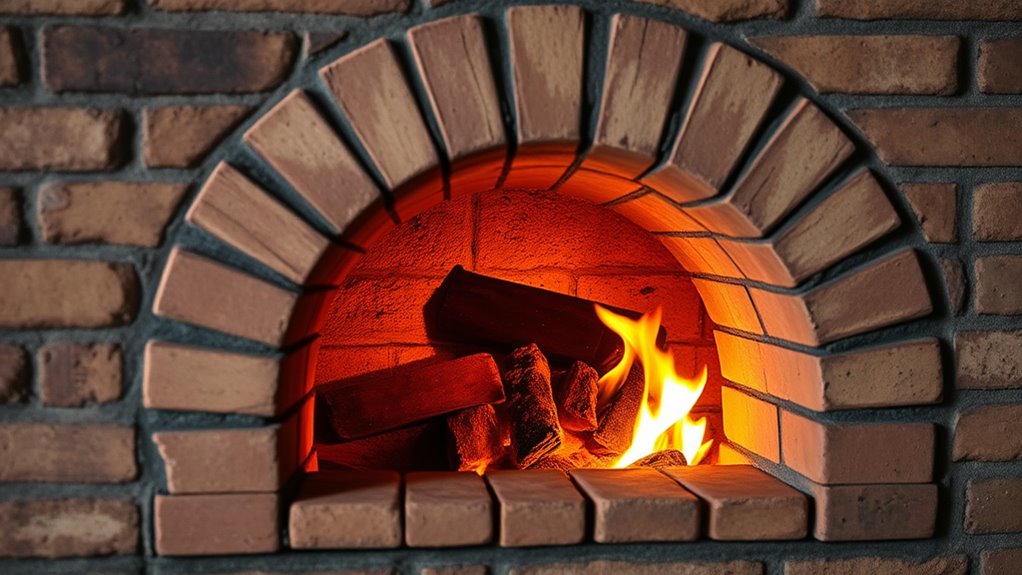

Masonry heaters and Kachelofen are traditional heating systems designed to store heat in large, dense masonry to provide steady, long-lasting warmth. You build them with thick bricks or stone that absorb and slowly radiate heat over many hours, reducing fuel use and maintaining a comfortable indoor temperature. Their efficient design minimizes temperature swings and offers eco-friendly warmth. If you want to discover how these systems work and their advantages, explore further to learn more.

Get backup power and energy gear delivered free with Prime
- Fast, free delivery on millions of items
- Prime Video, Amazon Music and more included
- Member-only deals all year
Key Takeaways
- Masonry heaters and Kachelofen are traditional heating systems that store heat in dense masonry for long-lasting, efficient warmth.
- They utilize large, thermal mass materials like bricks or stone to absorb and gradually release heat.
- Designed with thick walls and dense structure, they maximize heat retention and minimize heat loss.
- These systems reduce fuel consumption and environmental impact by providing consistent, steady heat over extended periods.
- Regulated by safety and efficiency standards, they combine traditional charm with modern eco-friendly heating advantages.
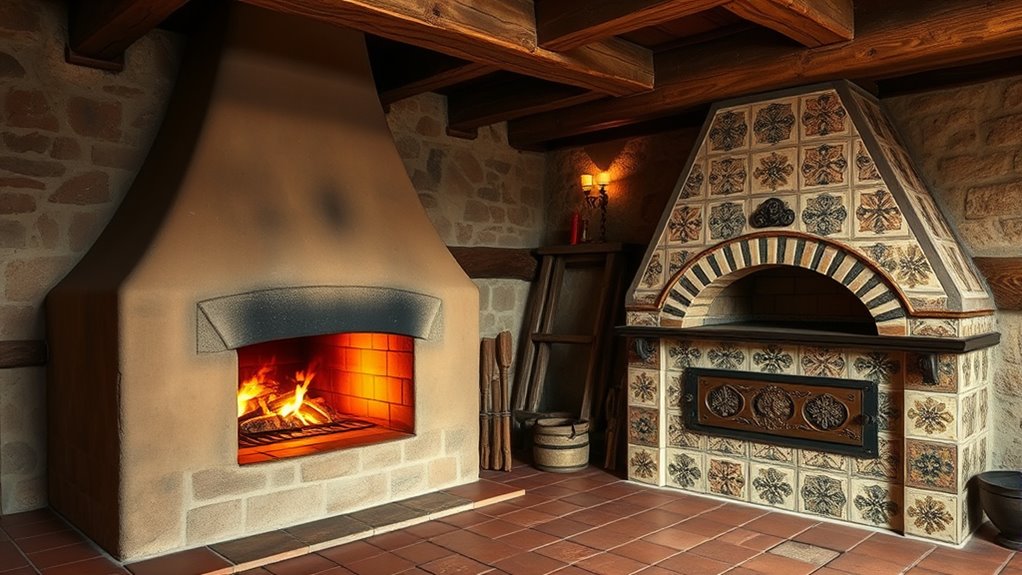
Masonry heaters and Kachelofen are traditional heating systems that efficiently store and radiate heat, making them popular in many European homes. These systems rely on their incredible thermal mass to absorb heat from a fire and then release it slowly over time. When you build a fire in such a heater, the large, dense masonry absorbs and retains the warmth, acting as a thermal reservoir. This process ensures that your home stays warm long after the flames have died down, thanks to the heater’s excellent heat retention capabilities. Unlike conventional heating methods that cycle on and off frequently, masonry heaters and Kachelofen work by storing heat and releasing it gradually, providing a consistent and comfortable indoor temperature.
Masonry heaters and Kachelofen store and radiate heat efficiently for long-lasting warmth.
The key to their efficiency is the substantial thermal mass of the masonry material—often bricks, stone, or clay—that forms the core of the heater. This mass acts like a heat battery, soaking up the heat from your fire and holding onto it for hours. As the fire burns, the heat is transferred into the mass, which then radiates warmth evenly across the room. Because of this, you don’t need to burn wood constantly; a single, well-managed fire can keep your home cozy for a full day or even longer. This not only saves energy but also reduces the amount of wood you need to burn, making these systems environmentally friendly and cost-effective over time.
You’ll notice that the design of these heaters emphasizes maximizing heat retention. Their thick walls and dense structure slow down the transfer of heat from the fire to the outside environment, ensuring that warmth isn’t lost quickly. The heat stored in the thermal mass naturally radiates out through the surface of the heater, creating a gentle, steady warmth that’s healthier for your indoor environment than forced-air systems. Plus, because the heat is released gradually, you avoid the uncomfortable temperature swings typical of more modern, rapid-heating systems.
In addition, the regulations and standards governing these systems help ensure their safety and efficiency, encouraging proper design and operation. In essence, masonry heaters and Kachelofen are about leveraging thermal mass to optimize heat retention. They’re built to absorb heat efficiently, hold onto it, and then radiate it slowly over time. This means you gain a reliable, consistent source of warmth that’s not only effective but also energy-efficient. With proper design and operation, these traditional systems can provide comfort, save on fuel costs, and add a charming, historic touch to your home.
As an affiliate, we earn on qualifying purchases.
Frequently Asked Questions
What Are the Environmental Benefits of Masonry Heaters?
You benefit from masonry heaters because they use renewable energy efficiently, reducing your reliance on fossil fuels. Their design guarantees complete combustion, which lowers emissions and helps cut down on air pollution. By storing and slowly releasing heat, these heaters maximize energy use, leading to significant emission reduction. This eco-friendly approach not only saves you money but also contributes to a healthier environment by minimizing your carbon footprint.
How Long Does It Take to Heat a Room With These Systems?
It usually takes about 1 to 2 hours to heat a room with these systems, depending on the size and insulation. Thanks to their thermal mass, masonry heaters absorb heat quickly during firing and release it slowly over time. This means you get consistent warmth, and the heating speed guarantees your space warms up efficiently without sudden temperature swings. You’ll enjoy cozy comfort with minimal energy waste.
Are Masonry Heaters Suitable for Small or Large Homes?
Masonry heaters offer size flexibility, making them suitable for both small and large homes. You can customize their size to fit your space, ensuring efficient heating. However, consider installation considerations, such as chimney height and room layout, to maximize performance. With proper planning, these heaters provide consistent warmth across various home sizes, making them a versatile and effective heating option regardless of your home’s scale.
What Maintenance Is Required to Keep Them Efficient?
To keep your masonry heater or Kachelofen efficient, you need to regularly clean the chimney and remove ash buildup. Schedule chimney cleaning at least once a year to prevent soot blockages, and frequently remove ash from the firebox to maintain proper airflow. Also, check for any cracks or damage. These simple steps guarantee your heater burns cleanly, heats effectively, and lasts longer.
Can These Heaters Be Integrated With Modern Smart Home Systems?
Yes, these heaters can be integrated with modern smart home systems. You can connect them for smart home integration, allowing you to control and monitor the heater remotely. Many models offer automation compatibility, so you can program heating schedules or adjust settings via your smart home app. Just make certain the heater’s system supports smart technology and check compatibility with your existing automation devices for seamless control.
Conclusion
You might be surprised to learn that masonry heaters can store and radiate heat for up to 24 hours, making them incredibly energy-efficient. By choosing a kachelofen, you not only enjoy cozy warmth but also reduce fuel consumption markedly—up to 50% compared to traditional stoves. Embracing these traditional heating methods can lower your energy bills and carbon footprint while providing consistent, comforting heat all winter long. Consider a masonry heater or kachelofen for a smarter, warmer home.
Halloween Picks
halloween
As an affiliate, we earn on qualifying purchases.