
Cast iron stoves in the 18th and 19th centuries transformed home cooking and heating by offering durable, efficient appliances with innovative features like multiple burners and adjustable vents. They retained heat longer and provided consistent warmth, making meal preparation easier and household chores more manageable. These stoves became symbols of technological progress, improving domestic life and comfort. To discover how they shaped daily routines and design trends, keep exploring this fascinating era.
Open a free Amazon Business account
Business pricing, bulk buying and tax-exempt orders.
As an affiliate, we earn on qualifying purchases.
Key Takeaways
- Cast iron stoves replaced open hearths, offering efficient, controllable heating and reliable cooking surfaces in the 18th and 19th centuries.
- They introduced features like multiple burners and adjustable vents, enhancing cooking precision and meal preparation.
- Known for durability, cast iron stoves withstood high temperatures and rough handling, becoming long-term household investments.
- Their adoption improved indoor warmth, reduced household labor, and symbolized technological progress in domestic life.
- The stoves’ durable design and decorative elements made them central, long-lasting appliances reflecting 18th and 19th-century aesthetic and functional values.
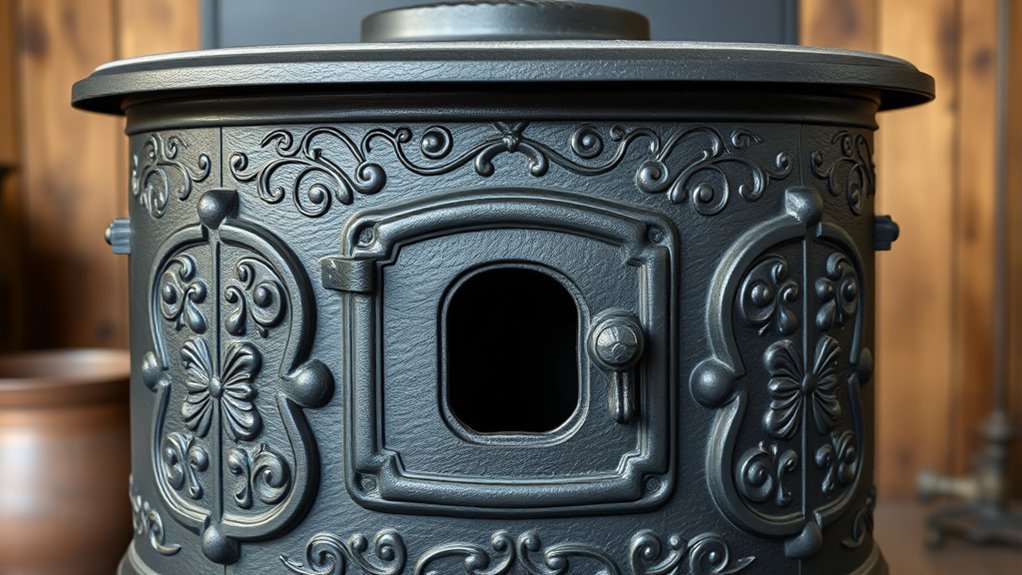
Have you ever wondered why cast iron stoves have remained popular for centuries? The answer lies in their remarkable ability to adapt to and shape the cooking innovations of the 18th and 19th centuries. During this period, homes began to shift from open hearths to more enclosed, efficient heating and cooking appliances. Cast iron stoves stood out because of their superior heating efficiency, providing consistent warmth and reliable cooking surfaces that transformed daily life. Unlike open fires, which wasted heat and required constant tending, these stoves retained heat longer and distributed it evenly, making them a practical upgrade for households seeking better control over indoor temperature and meal preparation.
As you explore their history, you’ll see that cast iron stoves contributed profoundly to cooking innovations. They introduced features like multiple burners, oven compartments, and adjustable air vents, which allowed for more precise temperature control. This was a game-changer compared to traditional open fires, where heat levels were unpredictable. With a cast iron stove, you could simmer, bake, or boil with confidence, and the versatility opened new culinary possibilities. They also made it easier to cook larger meals and prepare food more efficiently, saving time and effort in the kitchen. These improvements aligned perfectly with the growing emphasis on domestic science and the desire for more modern, reliable cooking methods.
The durability of cast iron was another factor that reinforced their popularity. These stoves could withstand high temperatures and rough handling, making them a long-term investment for families. Their robust construction meant they didn’t crack or warp easily, unlike some earlier cooking devices. Over time, manufacturers refined the design, adding decorative elements and improving functionality, which kept these stoves both practical and appealing. This durability, combined with their heating efficiency, meant they could serve as the centerpiece of a household’s kitchen for decades.
Furthermore, cast iron stoves played a role in societal changes, as their efficiency and reliability helped free up household labor, particularly for women. With more dependable heating and cooking appliances, women could focus on other tasks or leisure activities, contributing to shifts in domestic life. The stove’s ability to improve heating efficiency also meant homes stayed warmer for longer, enhancing comfort during cold seasons. In essence, cast iron stoves didn’t just revolutionize cooking—they became symbols of technological progress and domestic convenience during the 18th and 19th centuries. Their enduring popularity is a testament to how well they integrated cooking innovations with practical heating solutions, shaping daily life in ways that still resonate today. Additionally, the incorporation of decorative elements in their design reflected the aesthetic values of the period, making them not only functional but also visually appealing household items.
cast iron stove with multiple burners
As an affiliate, we earn on qualifying purchases.
As an affiliate, we earn on qualifying purchases.
Frequently Asked Questions
How Did Cast Iron Stove Manufacturing Evolve During the 18TH Century?
During the 18th century, cast iron stove manufacturing evolved through industrial innovations and design advancements. You notice improvements in production techniques, making stoves more durable and efficient. As manufacturing methods advanced, designs became more intricate, allowing for better heat distribution and aesthetic appeal. These innovations helped meet growing demand, transforming stoves from simple heating devices to essential household fixtures, setting the stage for further developments in the 19th century.
What Were the Primary Materials Used in Early Cast Iron Stove Construction?
You’ll find that early cast iron stoves primarily used cast iron alloys, which combined iron with carbon and other elements for durability. Manufacturing techniques involved melting these alloys in furnaces and pouring them into molds to shape the stove components. These methods allowed for efficient production and stronger, heat-retentive stoves, shaping the evolution of kitchen technology during that era.
How Did Regional Differences Influence Stove Design and Usage?
You might think regional variations and cultural influences had little impact on stove design, but evidence suggests otherwise. Different regions favored specific features—like ornate decorations in Europe or simple, robust designs in America—that reflected local tastes and needs. These distinctions influenced how stoves were used and integrated into daily life, showing that regional differences shaped not just appearances but also the functionality and cultural significance of these heating devices.
Were Cast Iron Stoves Environmentally Sustainable in Past Centuries?
You might think cast iron stoves were environmentally sustainable, but their environmental impact was significant. They consumed large amounts of resources like iron and coal, raising concerns about resource sustainability. While durable and long-lasting, their production and operation contributed to pollution and resource depletion. Overall, they weren’t entirely eco-friendly, and their environmental footprint highlights the importance of considering resource sustainability in historical technology.
What Safety Considerations Were Associated With Early Cast Iron Stoves?
You should be cautious because early cast iron stoves posed serious safety risks. Fire hazards were common if you didn’t keep a close eye on the flames, and ventilation issues could lead to dangerous carbon monoxide buildup. These stoves often lacked modern safety features, making it essential for you to guarantee proper installation and regular maintenance. Ignoring these concerns could have had disastrous consequences, so stay vigilant and prioritize safety.
Conclusion
You’ve learned how cast iron stoves revolutionized heating and cooking in the 18th and 19th centuries, transforming daily life. Did you know that by the mid-1800s, over 80% of homes in America had a cast iron stove? This statistic shows how quickly these durable, efficient appliances became household essentials. Their impact on comfort and convenience was truly remarkable, shaping modern home heating and cooking practices that still influence us today.
NFL season / tailgating Picks
team gear
As an affiliate, we earn on qualifying purchases.