To make a self-powered stove fan with thermoelectric modules, you’ll attach the modules between the hot stove surface and a heat sink, ensuring solid thermal contact with thermal paste or conductive material. This setup converts heat into electricity to power the fan, improving heat circulation and distribution. Proper placement on high-heat areas maximizes power output. If you’re curious about assembling these components effectively, you’ll find plenty of tips to get started.
Key Takeaways
- Select thermoelectric modules with high efficiency and place them on high-heat stove areas for maximum temperature difference.
- Use thermal paste or conductive material to ensure solid thermal contact between the stove surface and modules.
- Mount the modules securely to facilitate heat transfer and connect them to a small fan for air circulation.
- Position the fan to optimize heat distribution and room comfort, utilizing the generated electrical power.
- Test and adjust module placement for optimal performance, ensuring continuous operation powered solely by stove heat.
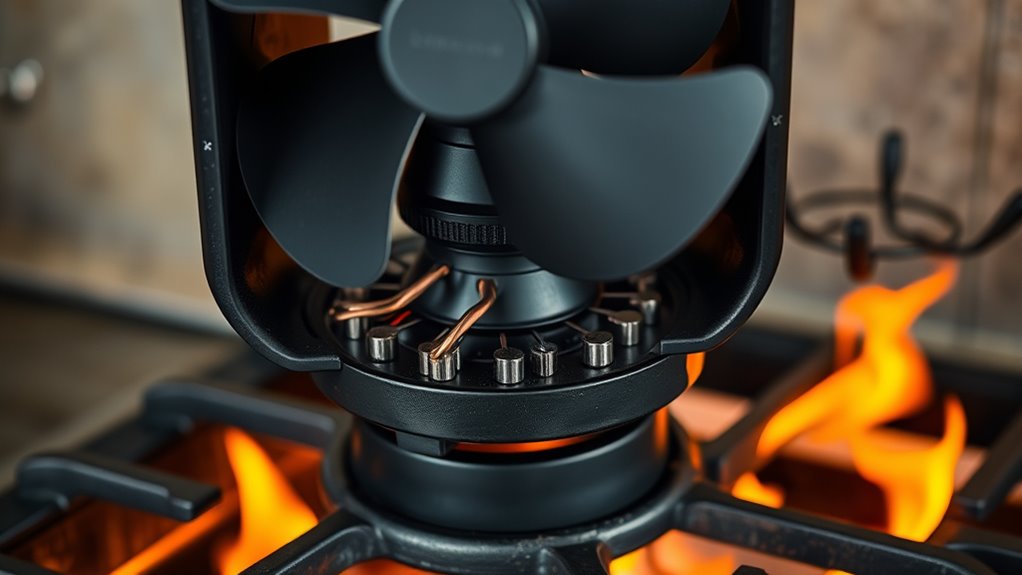
A self-powered stove fan with thermoelectric modules offers an innovative way to improve heating efficiency without relying on external power sources. These devices capitalize on the heat generated by your stove to produce electricity, which then powers the fan. This setup enhances heat transfer by circulating warm air more effectively throughout the room, ensuring you get the most out of your heating source. As a result, your stove’s heat isn’t just contained where it’s generated; it’s dispersed more evenly, reducing hot and cold spots and creating a more comfortable environment.
Harness stove heat with thermoelectric fan for efficient, even warmth—no external power needed.
The core of this technology lies in thermoelectric modules, which convert temperature differences directly into electrical energy. When placed on a hot surface, such as your stove, one side of the module heats up while the other remains cooler. This temperature differential is critical; the greater the difference, the more efficiently the device generates power. Your goal is to maximize this heat transfer, ensuring the thermoelectric modules operate at ideal efficiency. Proper placement on the stove surface, where the heat concentration is highest, is essential for achieving this. By doing so, you’re not only powering the fan but also improving the overall device efficiency, making the system sustainable and cost-effective. Additionally, understanding heat transfer principles can help optimize the placement and performance of your thermoelectric modules.
Design considerations focus on ensuring effective heat transfer from the stove to the thermoelectric modules. Good thermal contact is crucial, so you’ll want to use thermal paste or a similar conductive material between the stove surface and the modules. This minimizes heat loss and maximizes the temperature differential, which directly influences the amount of electricity generated. As the fan starts to spin, it helps distribute heat more evenly across the room, further improving heat transfer from the stove into your living space. This continuous cycle enhances the overall heating performance and reduces energy waste.
Building your own self-powered stove fan involves selecting suitable thermoelectric modules, ensuring solid thermal contact, and mounting the fan in a way that effectively circulates air. By focusing on maximizing heat transfer, you improve the device’s efficiency, making it a practical, sustainable solution for heating. This means you get a quieter, more energy-efficient fan that’s powered solely by the heat from your stove. In the end, you’ll enjoy better heat distribution, lower energy costs, and a smarter way to stay warm—no external power needed.
As an affiliate, we earn on qualifying purchases.
Frequently Asked Questions
How Long Does the Fan Operate on a Single Stove Heat Cycle?
You can expect your self-powered stove fan to operate for about 30 to 60 minutes on a single heat cycle, depending on the stove’s thermal efficiency. The fan’s durability ensures it keeps running smoothly during this time, but prolonged use may cause wear. To maximize runtime, maintain ideal thermoelectric module contact and keep the fan clean, so it operates efficiently throughout the heat cycle.
Can the Fan Work With Different Stove Types and Sizes?
Yes, your fan can work with different stove types and sizes. Stove compatibility depends on the heat source’s temperature and surface area, but the fan’s adaptability allows it to function across various models. As long as the stove generates enough heat to power the thermoelectric modules, the fan will operate efficiently. You just need to make certain of proper placement for maximum airflow and safety regardless of your stove’s size or type.
What Is the Expected Lifespan of the Thermoelectric Modules?
You can expect the thermoelectric modules to last around 10 to 20 years, depending on usage and maintenance. Warranty coverage often includes potential defects, but replacement costs can vary if the modules fail outside warranty. To maximize lifespan, keep the modules clean and make certain proper heat flow. Regular checks help identify issues early, reducing the risk of unexpected replacements and ensuring your stove fan remains efficient over time.
Is the Fan Safe to Use Around Children and Pets?
Yes, the fan is safe to use around children and pets when you follow proper precautions. Child safety and pet safety are important, so keep the fan out of reach to prevent accidental contact with hot surfaces. make sure it’s installed securely and turned off when not in use. Regularly check for any damage, and supervise its operation to minimize any risk to your loved ones.
How Does Ambient Room Temperature Affect Fan Performance?
Think of your stove fan like a vintage radio, which relies on stable signals. Ambient room temperature impacts heat transfer and temperature stability, directly affecting your fan’s efficiency. Warmer rooms boost heat transfer, making the fan work better, while colder rooms reduce it, causing slower operation. Keep your environment consistent to maintain ideal performance, ensuring your self-powered fan runs smoothly and quietly, no matter the season.
Conclusion
Now, with your self-powered stove fan, you harness heat, generate energy, and circulate air—all from the stove’s own warmth. Feel the warmth rise, the air move, and the heat cycle endlessly. You create a cycle of comfort, efficiency, and innovation. With every use, you turn heat into movement, energy into comfort, and your kitchen into a smarter, more sustainable space. Embrace the power of heat, the flow of air, and the promise of self-sufficiency.