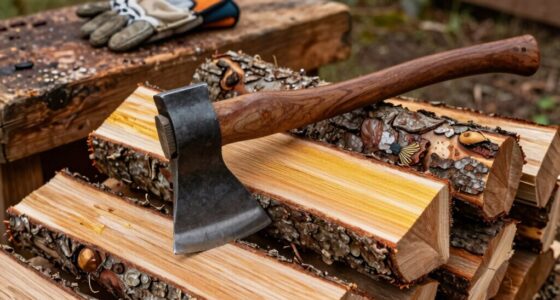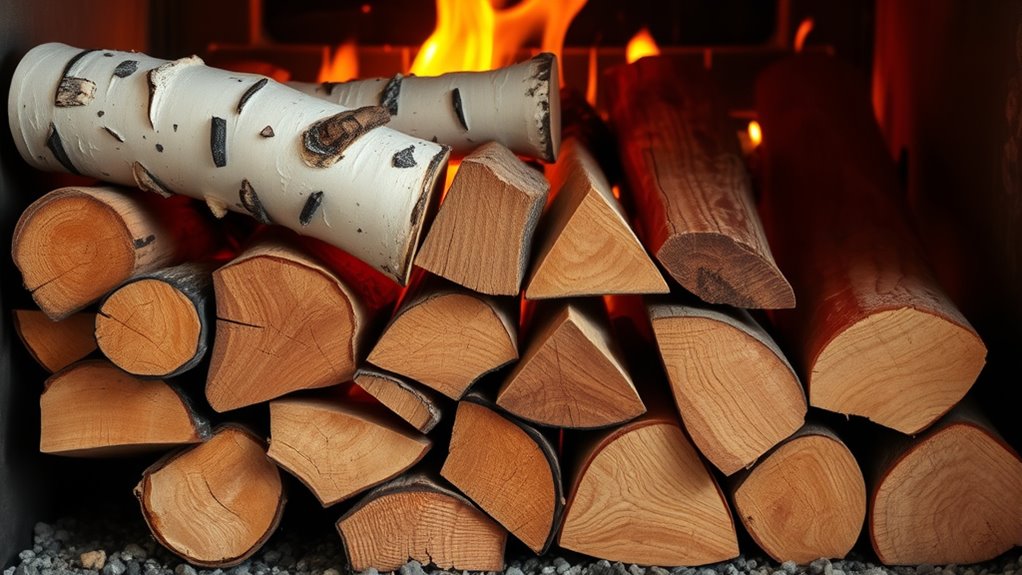

For a steady, medium heat fire, choose birch, maple, and cherry wood. These woods burn reliably, producing consistent warmth and pleasant aromas. Properly seasoned, they ignite easily, burn cleaner, and create less smoke and ash than softer woods. Using these options guarantees efficient heat and a cozy atmosphere. If you want to know how to prepare and maximize these firewoods for your fire, there’s more helpful tips to explore.
Key Takeaways
- Birch, maple, and cherry woods burn steadily at medium heat with minimal smoke and sparks.
- Properly seasoned (6-12 months) enhances their efficiency, reducing smoke and increasing heat output.
- These woods produce pleasant aromas and are ideal for cozy, consistent fires.
- They serve as cleaner alternatives to softwoods, offering balanced warmth and easy ignition.
- Store and prepare these woods correctly to ensure optimal medium heat performance and safety.

Are you looking for firewood that provides reliable medium heat for your fires without excessive smoke or ash? If so, choosing the right wood is vital. Birch, maple, and cherry are excellent options that deliver consistent warmth while keeping your fire clean and manageable. These woods burn steadily, produce a pleasant aroma, and offer a good balance between heat output and ease of use. To maximize their performance, it’s important to understand how to prepare them properly, including wood seasoning tips that guarantee your firewood burns efficiently and minimizes smoke.
When considering these woods, keep in mind that they are natural charcoal alternatives, offering a cleaner burn compared to certain softwoods. Birch, in particular, burns quickly but produces minimal smoke and sparks, making it a popular choice for medium heat fires. Maple also provides steady heat and a sweet scent when burned, making your fires more enjoyable. Cherry, known for its attractive appearance and fragrant smoke, creates a cozy atmosphere without overwhelming your space with smoke or ash. These woods are ideal for medium heat needs because they generate enough warmth to keep your home comfortable without the intense heat or excessive residue associated with larger, denser hardwoods.
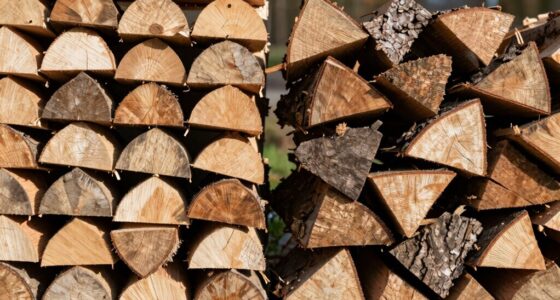
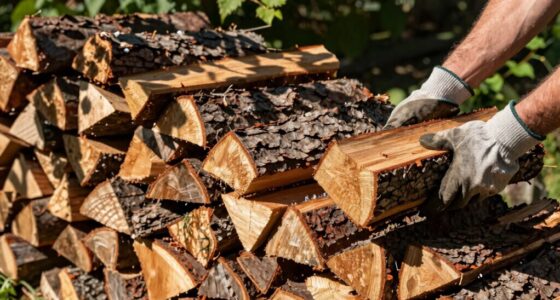
Proper wood seasoning is crucial because freshly cut wood contains a high moisture content, which leads to inefficient burning and increased smoke. Wood seasoning tips include splitting the logs into smaller pieces to facilitate drying and stacking them in a dry, well-ventilated area. It’s best to let the wood cure for at least 6 to 12 months, depending on the climate, to reduce moisture content to a safe level—around 20%. Properly seasoned wood ignites more easily, burns cleaner, and produces less smoke and ash. This not only improves your fire’s efficiency but also prolongs the life of your stove or fireplace. Additionally, understanding the importance of wood seasoning can help you achieve the best results for medium heat fires.
In addition to seasoning, consider alternative methods like using kiln-dried wood if you want quick, reliable results. Kiln drying speeds up the seasoning process, ensuring your firewood is ready when you need it. Keep in mind that storing your firewood off the ground and covering it from rain helps preserve its dryness. By following these tips, you’ll enjoy a steady, medium heat with minimal smoke, making your fires cleaner, safer, and more enjoyable. Choosing birch, maple, or cherry, combined with proper seasoning techniques, guarantees a satisfying fire experience that balances warmth with convenience.
As an affiliate, we earn on qualifying purchases.
Frequently Asked Questions
How Long Does Each Type of Wood Typically Burn?
Birch typically burns for about 30-45 minutes, making it great for quick, warm fires. Maple usually lasts around 45-60 minutes, offering a decent burn time for longer cozy evenings. Cherry burns the longest, roughly 60-75 minutes, ideal for sustained indoor fireplace use. When considering burn time comparison, cherry is best for prolonged warmth, while birch and maple suit shorter sessions. All three are suitable for indoor fireplaces, providing reliable heat.
Which Firewood Produces the Least Creosote Buildup?
Like a gentle breeze clearing the sky, cherry wood produces the least creosote buildup. Its clean-burning properties help with creosote reduction, making it a smart choice for chimney safety. When you choose cherry, you’re reducing the risk of chimney fires and ensuring a safer, cleaner burn. Stay vigilant with regular chimney maintenance, but cherry’s natural qualities give you peace of mind, keeping your home warm and safe.
Are These Woods Suitable for Indoor Fireplaces?
Yes, birch, maple, and cherry are suitable for indoor fireplaces. They create a warm indoor ambiance with their attractive firewood aesthetics, making your fires visually appealing. These woods burn steadily with medium heat, providing consistent warmth without excessive creosote buildup. Just make certain they’re properly seasoned to maximize their beauty and performance, and enjoy a cozy, inviting atmosphere in your home.
How Does Moisture Content Affect Burning Efficiency?
Moisture content considerably impacts burning efficiency; drier wood burns hotter and cleaner. You should use moisture measurement tools, like a moisture meter, to guarantee your firewood is properly seasoned. Well-seasoned wood typically has a moisture level below 20%. Applying seasoning techniques, such as stacking wood properly and letting it cure for at least 6-12 months, helps reduce moisture content, making your fires more efficient and producing less creosote buildup.
Can These Woods Be Stored Outdoors Without Deterioration?
Can these woods be stored outdoors without deterioration? With proper outdoor storage and weather resistance measures, yes, you can. Keep the wood off the ground, cover it with a breathable tarp, and guarantee good airflow to prevent moisture buildup. Doing so helps protect Birch, Maple, and Cherry from rain, snow, and humidity, maintaining their quality and ready-to-burn condition. Wouldn’t you want your firewood to last longer and burn better?
Conclusion
When choosing firewoods like birch, maple, and cherry for medium heat, you’re getting reliable warmth and pleasant aroma. Each burns differently, so pick the one that suits your needs best. Remember, a well-chosen firewood can turn a chilly evening into a cozy retreat. Don’t put all your eggs in one basket—try different woods to find your favorite. With a bit of experimenting, you’ll keep the fire going strong and enjoy the warmth all season long.