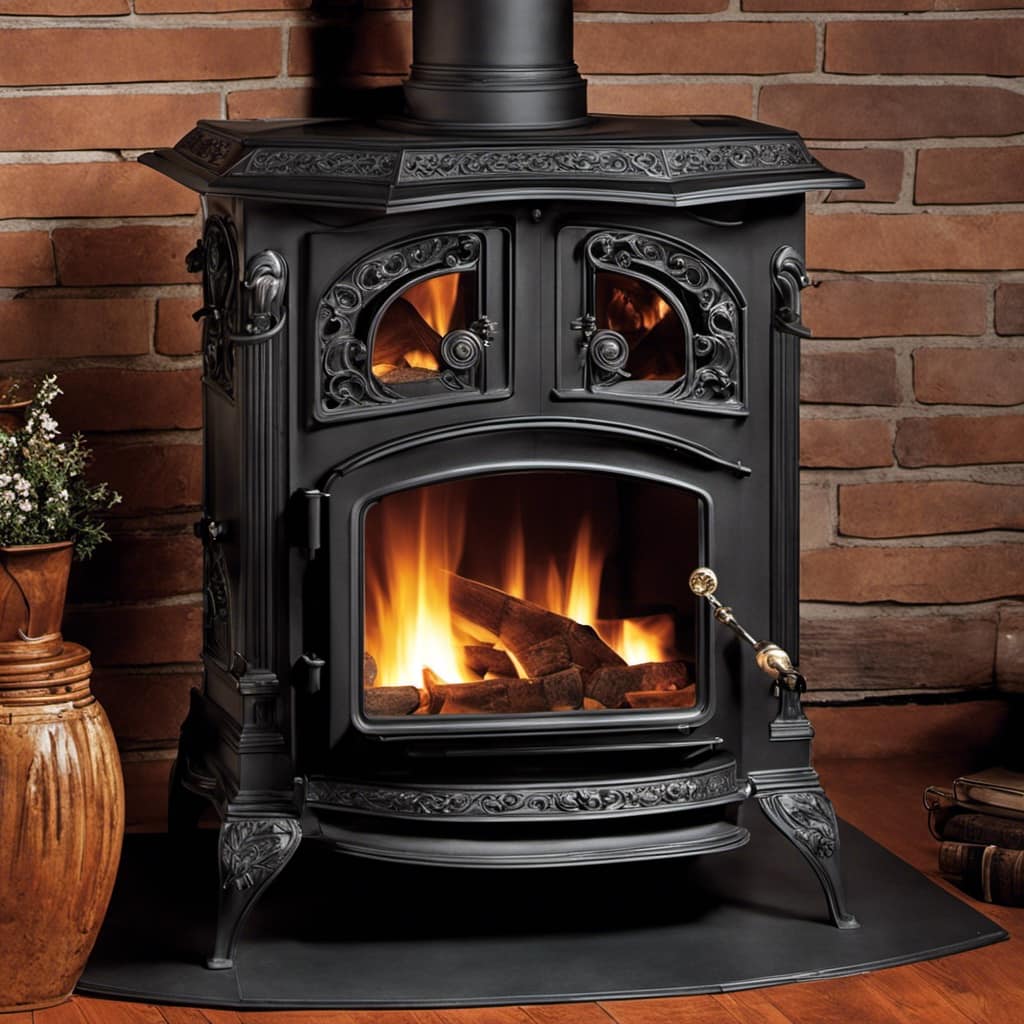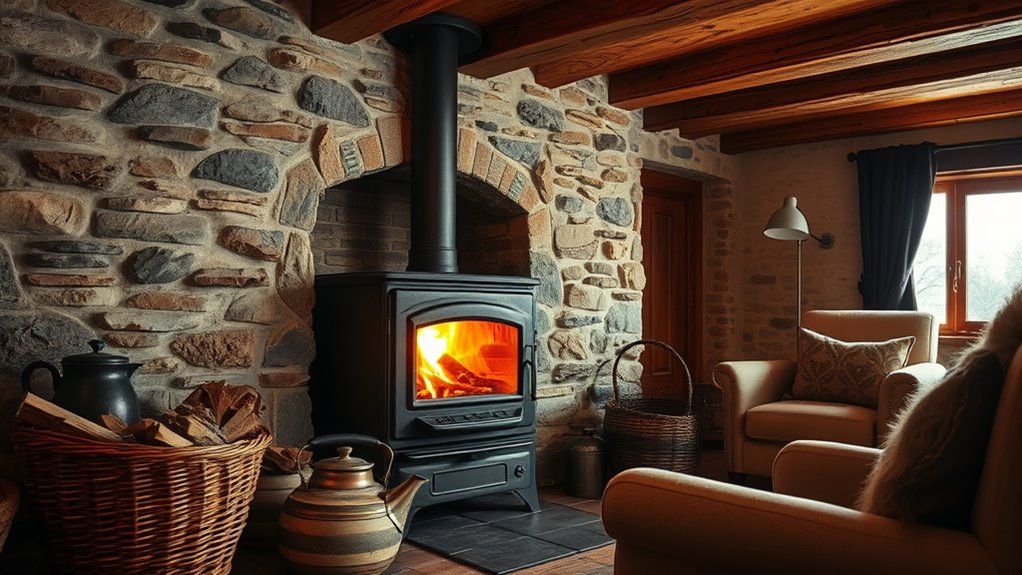

Zone heating with a wood stove lets you target specific areas of your home for warmth, saving energy and reducing costs. By focusing heat where you need it most, you avoid wasting energy on unused spaces. Proper installation, using dry wood, and controlling airflow can boost efficiency and safety. Maintaining your chimney and choosing strategic locations further improve performance. Keep exploring to discover how you can make the most of your wood stove’s zone heating capabilities.
Key Takeaways
- Zone heating with a wood stove allows targeted warmth, reducing energy waste in unused areas.
- Proper installation on non-combustible surfaces and optimal placement enhance zone heating efficiency.
- Using adjustable dampers or thermostatic controls helps regulate heat output in specific zones.
- Regular chimney maintenance ensures safe venting and maximizes stove performance for zone heating.
- Burning dry, seasoned wood improves combustion efficiency and maintains consistent warmth in designated areas.
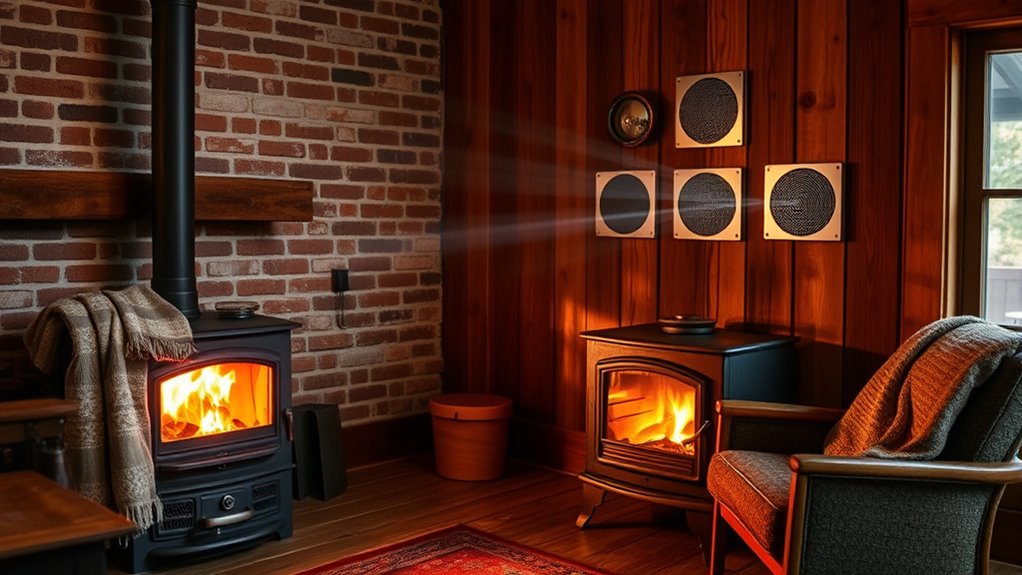
If you’re looking to cut heating costs and increase comfort, zone heating with a wood stove offers an effective solution. By focusing heat on specific areas rather than the entire house, you can considerably reduce energy bills while maintaining a cozy environment where you need it most. To maximize the benefits, it’s essential to understand wood stove efficiency. Modern stoves are designed to burn wood more completely, extracting maximum heat from each log, which means less fuel is needed to keep your space warm. Look for stoves with high efficiency ratings—these models convert more of the wood’s energy into usable heat, reducing waste and ensuring your stove performs at its best over time. Improving combustion efficiency can also be achieved through proper airflow regulation, which optimizes burning conditions and enhances overall performance.
Maximize comfort and savings with high-efficiency wood stoves for effective zone heating.
However, as you harness the warmth from your wood stove, safety should always be a priority. Chimney safety is critical because a well-maintained chimney prevents dangerous creosote buildup, which can cause chimney fires. Regular inspections and cleanings are crucial, especially during the heating season. Make it a habit to have a professional check your chimney at least once a year, or more often if you burn wood frequently. Proper chimney maintenance not only safeguards your home but also ensures that your stove operates efficiently, reducing emissions and improving overall wood stove efficiency. Additionally, choosing a certified stove model can help guarantee compliance with safety and efficiency standards.
When setting up your zone heating system, choose a location for your wood stove that promotes good airflow and minimizes fire hazards. Ensure your stove is installed on a non-combustible surface and maintain safe clearances from furniture, curtains, and other combustibles. Proper installation also involves connecting the stove to a well-maintained chimney that vents smoke safely outside, which further supports chimney safety and enhances stove efficiency. Using dry, seasoned wood will boost combustion, producing more heat and less creosote, which keeps your chimney cleaner and safer. Moreover, modern stoves often feature advanced emission controls, which help reduce the release of pollutants, making your heating more environmentally friendly.
Controlling the heat output is another way to enhance zone heating. Many modern wood stoves come with adjustable dampers or thermostatic controls, allowing you to regulate airflow and maintain a steady temperature. This not only improves wood stove efficiency but also ensures consistent comfort in your designated zone. When you focus your heating efforts on specific areas, you reduce unnecessary heat loss, making your home more energy-efficient and lowering your overall heating expenses. In addition, exploring somatic therapy techniques can help manage stress and improve overall well-being, complementing your efforts to create a comfortable home environment. Ultimately, zone heating with a wood stove provides a practical way to stay warm and save money. By prioritizing wood stove efficiency and chimney safety, you protect your home and ensure your heating system works effectively throughout the season. With proper installation, regular maintenance, and smart operation, you’ll enjoy a cozy, efficient, and safe heating solution tailored to your needs.
Frequently Asked Questions
How Do I Prevent Drafts From Affecting Zone Heating Efficiency?
To prevent drafts from affecting your zone heating with a wood stove, start by sealing leaks around doors, windows, and vents using weatherstripping or caulk. Improve insulation in walls and ceilings to keep warm air in and cold drafts out. Consider installing draft stoppers or door sweeps on exterior doors. These draft prevention measures, combined with insulation improvements, help maintain consistent heat, ensuring your zone heating stays efficient and comfortable.
Can Zone Heating With a Wood Stove Cause Uneven Indoor Temperatures?
Like a painter’s brushstroke, zone heating with a wood stove can create uneven indoor temperatures. You might notice warmer spots near the stove and cooler areas farther away. To minimize this, guarantee proper thermostat placement and consider insulation improvements in colder zones. These steps help balance heat distribution, making your home more comfortable and efficient, despite the natural tendency for heat to concentrate near the stove.
What Safety Measures Are Recommended for Multi-Zone Wood Stove Setups?
To guarantee safety in multi-zone wood stove setups, you should install proper fireplace safety measures like smoke detectors and carbon monoxide alarms. Keep a clear area around the stoves to prevent fire hazards, and use dampers or vents to control airflow and prevent smoke from entering other zones. Regularly inspect chimneys for creosote buildup, and always follow manufacturer guidelines to prevent accidents and ensure effective smoke prevention.
How Does Zone Heating Impact Overall Indoor Air Quality?
Imagine how your indoor air quality changes as you zone heat with a wood stove. You might notice improved comfort, but it can also impact air circulation and pollutant levels. Poor circulation traps smoke and particulates, raising health risks. Proper ventilation becomes vital. When managed well, zone heating can maintain cleaner air, but neglecting air circulation could lead to higher pollutant levels, making your home less safe.
Are There Specific Types of Wood Better Suited for Zone Heating?
Yes, certain types of wood are better suited for zone heating. You should choose hardwoods like oak, maple, or hickory because they have higher wood density, which burns longer and produces more heat. Additionally, guarantee the wood has low moisture content—preferably below 20%—to burn efficiently and reduce creosote buildup. Properly seasoned, dense wood maximizes heat output and keeps your zone heating system running smoothly.
Conclusion
Think of your home as a cozy garden, where a wood stove acts as the sun. Just as the sun warms only certain plants, zoning allows you to nurture the rooms you use most, leaving others cool and quiet. By focusing your heat, you create a comfortable, efficient sanctuary—like a well-tended garden thriving in just the right spots. Embrace zoning, and watch your home blossom with warmth, comfort, and savings.