The proverb “Wood warms you thrice” highlights the effort involved in turning wood into comfort. You gather, chop, and burn the wood, each step adding physical, emotional, and cultural value. It emphasizes how hard work and patience pay off, creating a cozy, meaningful atmosphere. Its origins trace back to traditions emphasizing self-sufficiency, resilience, and community bonds with fire and wood. Keep exploring if you want to uncover more about this meaningful expression and its history.
Key Takeaways
- The proverb emphasizes the multiple efforts involved in preparing firewood—gathering, chopping, and burning—that provide warmth.
- It originates from traditional cultures where firewood was essential for survival, symbolizing self-sufficiency and labor.
- The phrase highlights the value of effort and patience in achieving comfort and tangible benefits.
- Historically, it reflects the cultural practice of sourcing and preparing wood as a communal or familial task.
- The proverb underscores the physical and symbolic significance of work, resilience, and the warmth that results from these efforts.
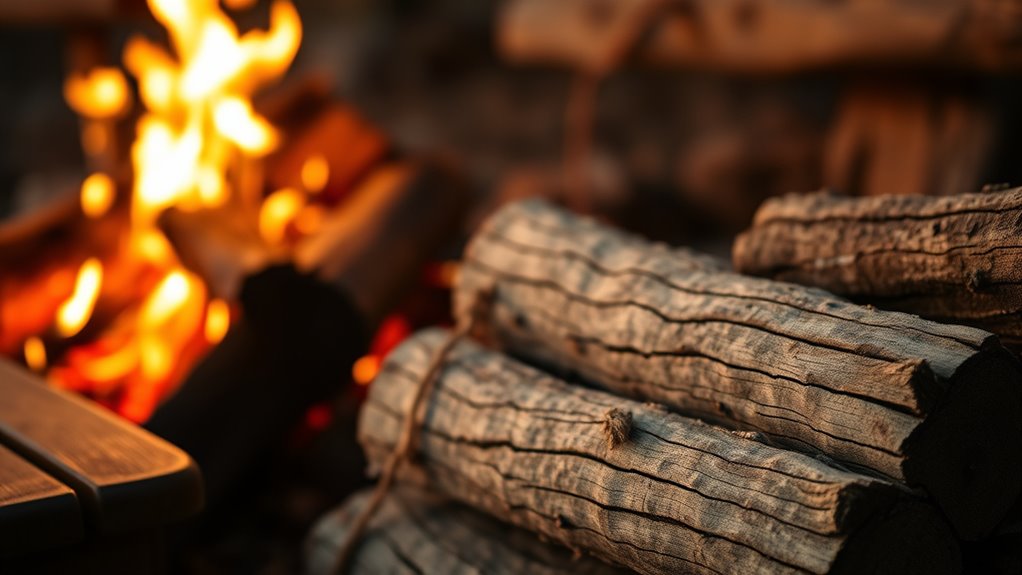
The proverb “Wood Warms You Thrice” highlights how gathering, chopping, and burning wood each take their own effort, making the warmth feel especially rewarding. When you consider the process, it’s easy to see why this saying emphasizes the value of hard work and patience. As you collect firewood, you’re not just gathering fuel—you’re engaging in a tradition that has sustained communities for generations. The act of preparing your firewood offers tangible firewood benefits, such as better heat efficiency and cost savings compared to modern heating methods. Well-seasoned wood, for example, burns more cleanly and produces more heat, meaning your effort results in a warmer, more comfortable space. Plus, sourcing your own wood can foster a sense of self-sufficiency, connecting you to ancient practices of survival and comfort. This process isn’t just practical; it’s imbued with cultural significance. In many societies, firewood gathering and wood-burning traditions reflect a community’s history, values, and relationship with nature. Whether it’s a rural family passing down knowledge or a community gathering around a communal fire, these customs reinforce bonds and preserve cultural identity.
The act of chopping wood itself is a physical effort that symbolizes resilience and skill. You must carefully select the right pieces, then use tools like an axe or maul with precision and strength. This labor-intensive step ensures that the firewood burns efficiently, creating a steady heat source. This physical effort also promotes physical health and endurance, reinforcing the importance of physical activity in maintaining overall well-being. The ritual of chopping also carries its own cultural weight, often handed down through generations as a rite of passage or a demonstration of hard-earned knowledge. Burning the wood completes the cycle, providing warmth and comfort that you can feel immediately. The warmth generated isn’t just physical; it’s emotional, creating a cozy atmosphere that fosters connection and relaxation.
Throughout history, the cultural significance of wood-burning has extended beyond mere utility. In many traditions, fires symbolize life, community, and renewal. Sharing a fire or hearth often means sharing stories, hospitality, and a sense of belonging. When you burn wood, you’re participating in a practice that’s woven into the fabric of countless cultures worldwide. This tradition reminds us that the effort we put into gathering and preparing firewood is more than just practical—it’s a way of honoring our ancestors, preserving cultural identity, and appreciating the simple, honest warmth that only a wood fire can provide.
Frequently Asked Questions
Are There Similar Proverbs in Other Languages?
Yes, you’ll find similar proverbs in other languages reflecting cultural variations and linguistic parallels. For example, in Spanish, there’s a saying “A buen hambre no hay mal pan” (No bread is bad when you’re hungry), emphasizing the value of basic needs. In Chinese, “One burns three times” shares a theme of effort and reward, showing how different cultures express the idea that effort multiplies benefits.
How Has the Proverb Evolved Over Time?
You’ll find that the proverb has evolved considerably over centuries, reflecting cultural evolution and linguistic shifts. Originally rooted in practical wisdom, it’s now used metaphorically to emphasize the value of effort. Interestingly, studies show that proverbs adapt to societal changes, with some phrases gaining new meanings. This evolution demonstrates how language and culture intertwine, shaping proverbs into timeless reflections on human experience that resonate across generations.
Who First Recorded This Proverb Historically?
You learn that the first recordings of the proverb “Wood Warms You Thrice” date back to early European sources, particularly in England. Historians believe it appeared in written form during the 17th or 18th century, capturing the idea that wood provides warmth through its use, its burning, and the process of chopping. These early texts help trace the proverb’s origins, showing how it spread across cultures as a piece of traditional wisdom.
Does the Proverb Have Cultural Significance?
You can see that the proverb has cultural significance because it reflects societal values about effort, patience, and preparation. It reminds you that warmth, comfort, or success often requires multiple steps or sacrifices. In many cultures, this saying underscores the importance of hard work and perseverance, shaping societal attitudes toward diligence. By embracing this wisdom, you honor shared values that emphasize that worthwhile rewards come from consistent effort over time.
Are There Modern Equivalents to This Saying?
Yes, modern equivalents to this saying emphasize practical wisdom and cultural echoes. You might hear phrases like “preparation is key” or “a stitch in time saves nine,” which highlight the value of planning ahead. These sayings remind you that investing effort or resources early on pays off later. They serve as cultural echoes of the original proverb, emphasizing that thoughtful action now can bring warmth or benefits multiple times over in the future.
Conclusion
So, next time you’re chopping wood, remember you’re not just warming yourself—you’re also fueling a timeless proverb that’s probably just trying to justify your chores. Sure, you get warm three times: once cutting, once stacking, and once sitting by the fire. But perhaps the real lesson is that some wisdom’s worth only when it reminds us how much effort we’re willing to endure for that fleeting comfort. Cheers to warming thrice—if only in your own humorous way.