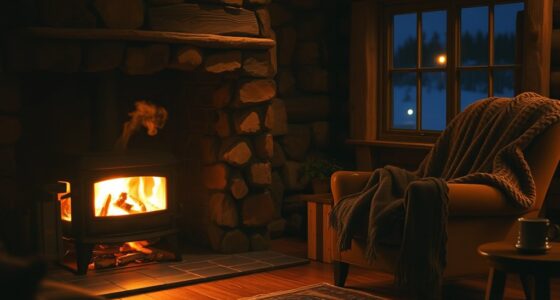
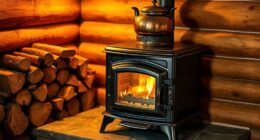
Yes, you can use a wood stove during power outages because it operates independently of electricity, providing reliable warmth when other heating methods fail. Proper maintenance, installation, and safety precautions ensure it’s safe and effective in keeping your home warm. Regular inspections and using seasoned wood help prevent problems like creosote buildup or chimney fires. To make sure you’ve got everything covered and stay safe, there’s more to take into account that can help you use your stove confidently during outages.
Key Takeaways
- Wood stoves operate independently of electricity, making them reliable heating sources during power outages.
- Proper maintenance and inspection are essential to ensure safe and efficient use during outages.
- Ensure chimney and flue are clear to prevent smoke and carbon monoxide buildup when using the stove.
- Use seasoned, dry wood to minimize creosote buildup and reduce fire hazards.
- Maintain proper ventilation and safety measures, including detectors and fire extinguishers, during extended use.
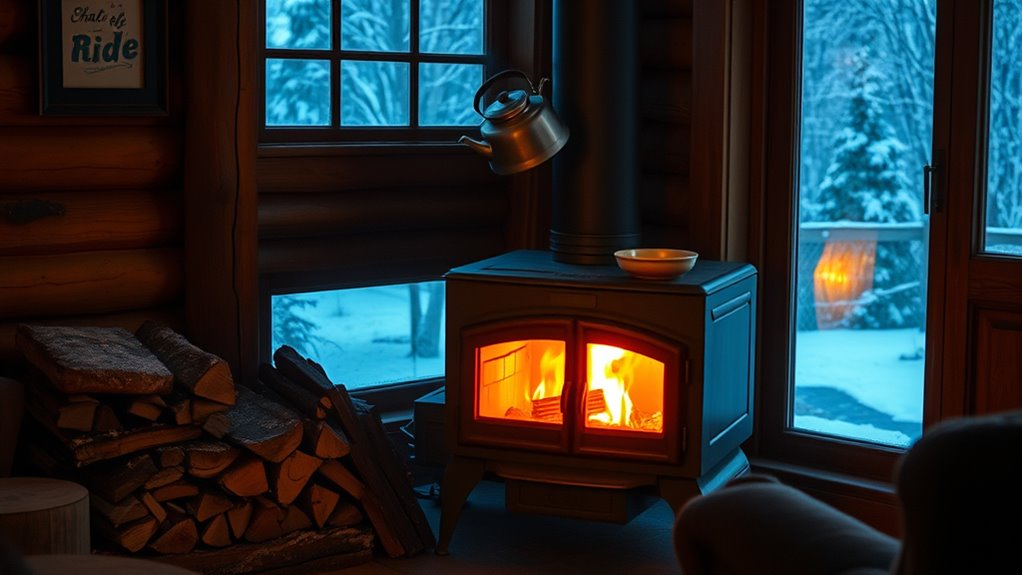
When the power goes out unexpectedly, a wood stove becomes an essential tool for staying warm and comfortable. Unlike electric heaters that rely on electricity, a properly maintained wood stove can operate independently, providing reliable heat during outages. However, using your stove safely is crucial. Fire safety must be your top priority to prevent accidents or house fires. Always ensure your stove is installed correctly, with proper clearance from combustible materials, and keep a fire extinguisher nearby. Before lighting the stove, check that the chimney and flue are clear of obstructions. Regular stove maintenance is vital for both safety and efficiency. This includes inspecting the chimney for creosote buildup, which can cause dangerous chimney fires if neglected. Clean out ash regularly, but leave enough to insulate the fire and help it burn efficiently. Use seasoned, dry wood to reduce smoke and creosote buildup, and avoid burning treated or painted wood, which can release toxic fumes. When operating the stove, always follow manufacturer guidelines, including proper startup and shutdown procedures. Never overload the stove, as this can lead to excessive smoke or dangerous overheating. Keep flammable objects like paper, curtains, or clothing away from the stove, and never leave a burning fire unattended for long periods. During a power outage, you might be tempted to use alternative sources like candles or portable stoves; be cautious with these options, especially around a wood stove, to prevent accidental fires. Good stove maintenance also involves regular inspections for signs of damage or wear, such as cracked firebricks or rust. Address any issues promptly to guarantee your stove remains safe and efficient. Additionally, ensure your smoke and carbon monoxide detectors are working properly before the outage, as a malfunction could delay your response to dangerous fumes. Proper ventilation is essential when using a wood stove during a power outage. Make sure the room is ventilated to prevent the buildup of dangerous gases, especially if the stove is used for extended periods. It is also beneficial to have fire safety knowledge to respond swiftly in case of an emergency. If you’re new to wood stove operation, consider reviewing safety tips and maintenance routines beforehand. Staying prepared can make all the difference, guaranteeing your stove provides warmth safely throughout the outage. With diligent stove maintenance and a focus on fire safety, your wood stove can be a reliable source of heat, giving you peace of mind during power interruptions.

Bluesea 30 Feet Chimney Sweep Kit, Ergonomic Chimney Cleaning Kit, Extends Up to 30 Feet, Chimney Cleaner, Chimney Cleaning Tools, Chimney Cleaning System with Strong Brush, 9 Flexible Chimney Rods
✅【THE LATEST GENERATION DESIGN】The chimney sweep kit has a sturdy, nice chrome button locking system to ensure that…
As an affiliate, we earn on qualifying purchases.
As an affiliate, we earn on qualifying purchases.
Frequently Asked Questions
Can Wood Stoves Operate Without Electricity for Ignition?
Yes, you can operate a wood stove without electricity for ignition. Many stoves have ignition alternatives, such as built-in piezo igniters or manual lighting methods. You simply need to use a match or lighter to ignite the fire through the firebox door or an designated opening. This way, even during power outages, you can keep your space warm by manually lighting your wood stove with ease.
Are There Safety Concerns Using Wood Stoves During Outages?
Of course, using your wood stove during an outage is perfectly safe—if you ignore fire safety and carbon monoxide risks. Just remember, a blocked chimney or improper venting can turn your cozy retreat into a deadly trap. Always guarantee proper ventilation, keep a carbon monoxide detector nearby, and never leave the stove unattended. After all, safety first, even when the power’s out and you’re craving s’mores.
How Long Can a Wood Stove Run Without Power?
A wood stove can run indefinitely during a power outage, as it doesn’t depend on electricity for operation. You should consider alternative fuel options like seasoned wood, which burns efficiently. Regular maintenance considerations include cleaning the chimney and checking seals to ensure safety and efficiency. Keep a supply of dry, seasoned wood on hand, and always follow safety guidelines to prevent hazards while using your stove during an outage.
Do Wood Stoves Require Electricity for Ventilation Systems?
Wood stoves generally don’t require electricity for ventilation systems because most rely on natural draft or gravity venting. However, some modern models with electrical components, like fans or blowers, do need power to operate ventilation systems effectively. During power outages, these electrical components won’t work, but your stove can still function using passive venting. Always check your specific stove’s ventilation system requirements to guarantee safe operation without electricity.
Can I Use a Wood Stove to Heat Multiple Rooms During an Outage?
During a power outage, you can absolutely use your wood stove to heat multiple rooms—it’s like having a portable sun in your home! This alternative heating method offers excellent fuel efficiency, ensuring you get maximum warmth with less wood. To do this, make sure your stove has proper ventilation and is positioned safely. With strategic placement, your wood stove can keep your entire home warm and cozy during any outage.

15" Oak Firewood Logs, with Fire Starters Set, Kiln-Dried Wood for Fire Pit, Seasoned Logs for Fireplace, Campfire, Firewood Bundle, Pizza Oven, Split Wood for Solo Stove, 1200 cub. in., 15-20lb
Premium Quality Firewood: Our kiln-dried firewood logs are perfect for any use, whether you need oak firewood, birch…
As an affiliate, we earn on qualifying purchases.
As an affiliate, we earn on qualifying purchases.
Conclusion
Using a wood stove during a power outage is like having a cozy campfire right in your home, providing warmth and comfort when you need it most. As long as your stove is well-maintained and properly ventilated, it can be a reliable source of heat during those dark, chilly nights. Just remember to keep safety in mind, and you’ll stay warm and safe, no matter how long the power’s out.
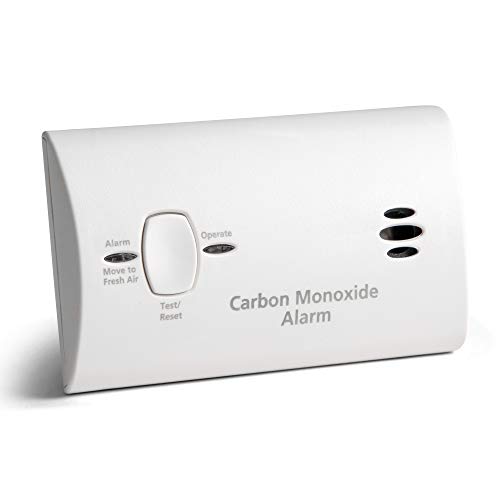
Kidde Carbon Monoxide Detector, Battery Powered CO Alarm with LEDs, Test-Reset Button, Low Battery Indicator, Portable
Electrochemical sensor technology detects CO gas
As an affiliate, we earn on qualifying purchases.
As an affiliate, we earn on qualifying purchases.

Kidde Multi Purpose Fire Extinguisher for Home, Office, Dorm, Residential, 1A10BC, 2 Pack
Reliable Fire Protection: Stop basic home fires involving trash, wood, paper, liquids, gases, and electrical equipment
As an affiliate, we earn on qualifying purchases.
As an affiliate, we earn on qualifying purchases.