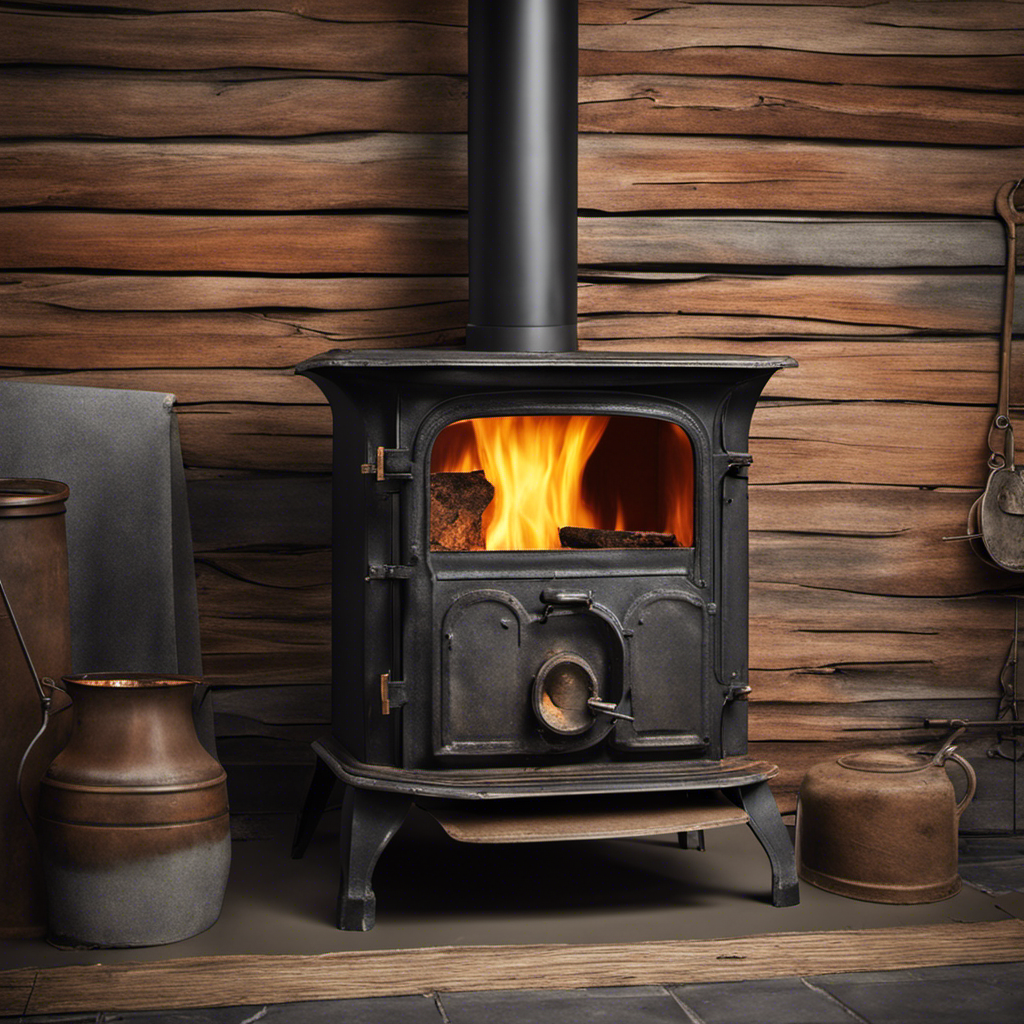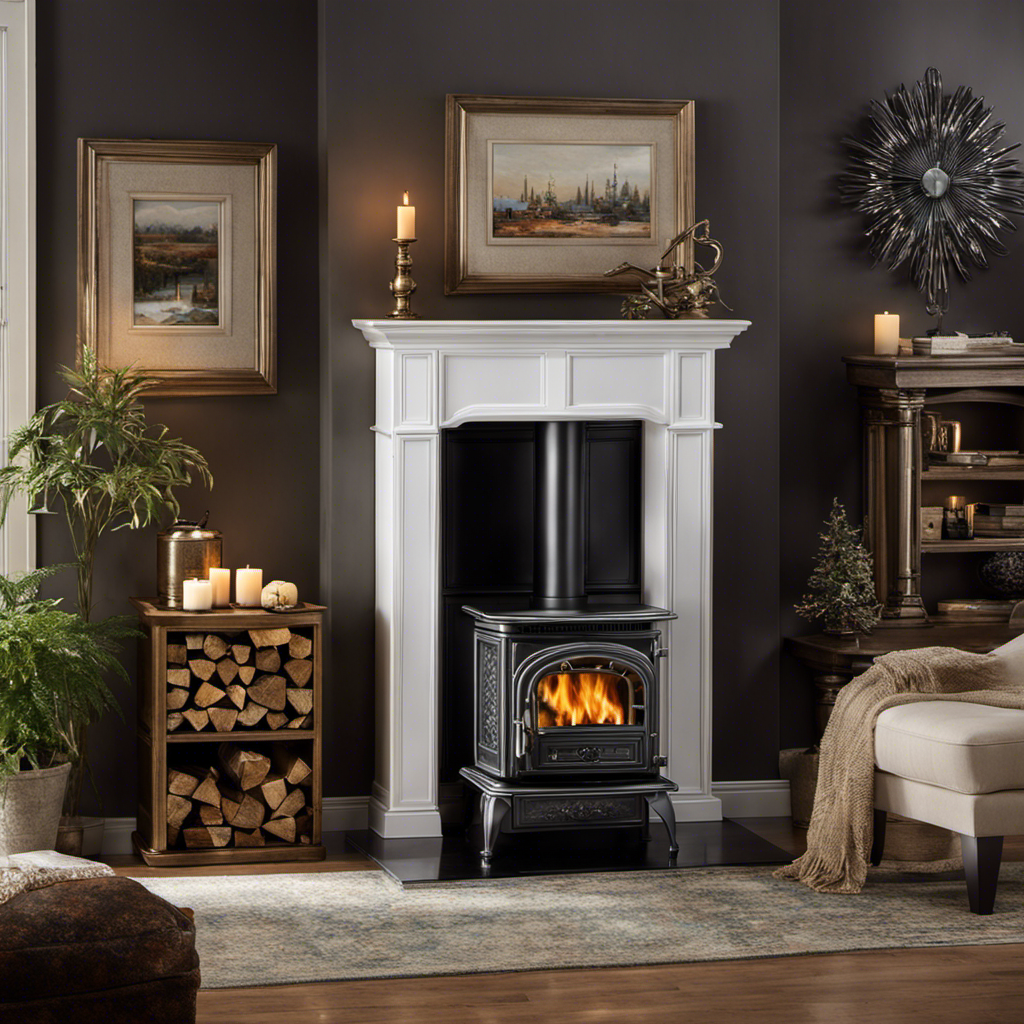

Using a wood stove along with proper insulation and solar power helps you achieve energy independence in your rural home. The stove provides reliable heat and reduces reliance on electricity or gas, while insulation keeps warmth inside and lowers fuel needs. Solar energy powers your appliances and lighting, further decreasing grid dependence. Combining these systems creates a sustainable, resilient setup that minimizes costs and boosts comfort. Discover how these solutions work together for a truly self-sufficient lifestyle.
Key Takeaways
- Wood stoves provide reliable, off-grid heating, reducing dependence on external energy sources in rural homes.
- Proper insulation enhances energy efficiency, lowering fuel use and prolonging stove lifespan.
- Combining solar power with wood stoves allows for renewable energy use and decreases reliance on grid electricity.
- Integrated systems improve overall energy independence, cutting costs and emissions while maintaining comfort.
- Additional energy-efficient materials and strategies optimize heat retention and promote sustainable rural living.
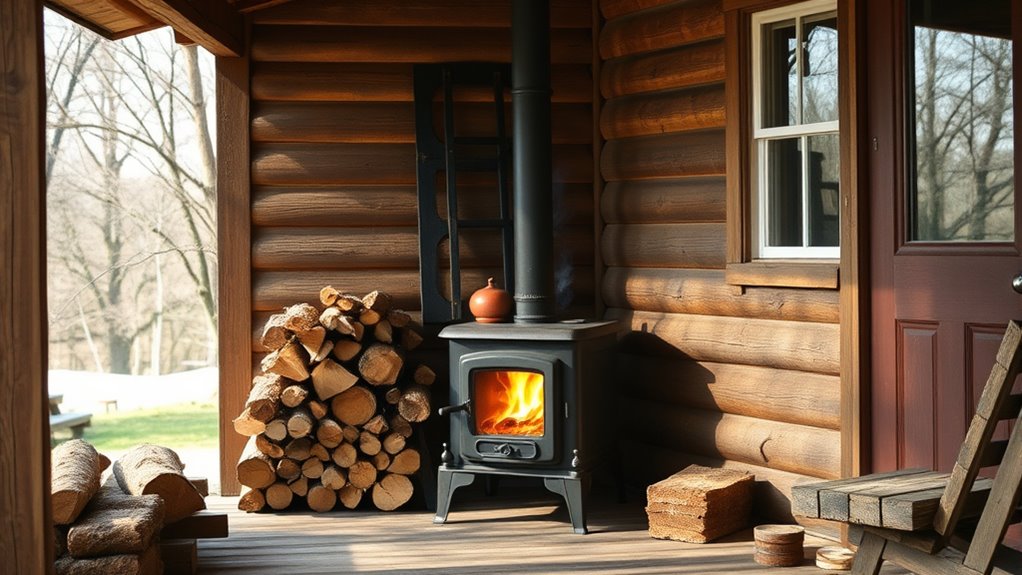
For many rural homeowners, wood stoves offer a practical way to achieve energy independence and reduce reliance on external power sources. These stoves are a reliable source of heat, especially when combined with other sustainable solutions like solar power and proper home insulation. By integrating a wood stove into your home, you can cut down on electricity or gas bills while maintaining a cozy environment during colder months. It’s a simple yet effective way to take control of your energy needs, particularly in remote areas where grid access might be limited or unreliable.
However, to maximize your energy independence, you should consider how your home’s insulation impacts your overall energy efficiency. Good insulation keeps the warm air inside and prevents heat from escaping, reducing the amount of fuel needed to keep your home comfortable. When your home is well-insulated, your wood stove doesn’t have to work as hard to heat your living space, which saves you wood and prolongs the life of your stove. Proper insulation also complements solar power systems by maintaining temperature stability, so your home remains livable even during less sunny days. This synergy between insulation, solar power, and a wood stove creates a balanced approach that minimizes dependence on external energy sources.
While solar power is often associated with generating electricity during sunny days, it can also play a significant role in reducing your overall energy consumption. You can use solar panels to power appliances and lighting, diminishing your need for grid electricity. During winter months or cloudy periods, your wood stove becomes the primary heat source, but solar power helps manage other energy needs around the house, making your home more self-sufficient. This combination allows you to harness renewable energy throughout the year, ensuring you’re less vulnerable to rising energy costs or outages.
In essence, combining a wood stove with solar power and solid home insulation creates an all-encompassing strategy for rural energy independence. You reduce external energy reliance while maintaining comfort and efficiency. Investing in quality insulation means less fuel consumption and lower emissions, while solar power supplies clean energy for daily needs. Meanwhile, the wood stove provides consistent heat during the coldest months. Together, these systems form a resilient, sustainable setup that empowers you to live more independently and sustainably in a rural setting. With thoughtful integration, you’ll enjoy greater control over your energy use, save money, and contribute to a healthier environment. Incorporating energy-efficient materials into your home can further enhance these benefits by reducing heat loss and increasing overall sustainability.
Top picks for "wood stov energy"
Open Amazon search results for this keyword.
As an affiliate, we earn on qualifying purchases.
Frequently Asked Questions
How Do Wood Stoves Compare to Solar Panels for Energy Independence?
Wood stoves and solar panels both support renewable energy and enhance your independence, but they serve different needs. Wood stoves provide reliable heat during winter, often at a lower initial cost, but require ongoing fuel. Solar panels harness sunlight, offering clean energy with a higher upfront cost but lower ongoing expenses. A cost comparison shows solar can save money long-term, while wood stoves give immediate warmth and independence.
What Are the Long-Term Maintenance Costs of Wood Stoves?
Think of your wood stove as a garden needing regular tending. Long-term costs include chimney cleaning to prevent buildup, which can be an ongoing expense, and occasional replacement parts like gaskets or fans. If you stay diligent with maintenance, costs stay manageable. Neglect, however, can lead to bigger repairs. Keep up with routine care, and your stove will serve you reliably for years, much like a well-tended garden yields abundant harvests.
Can Wood Stoves Be Integrated With Modern Home Automation Systems?
Yes, you can integrate wood stoves with modern home automation systems. By connecting your stove to smart thermostat integration, you gain control over temperature settings remotely. Some systems also allow remote monitoring, so you can check stove performance and fuel levels via your smartphone. This integration enhances convenience, energy efficiency, and safety, making it easier to manage your wood stove alongside your home’s smart technology.
Are There Government Incentives for Installing Wood Stoves?
Yes, you can often access government grants and tax incentives when installing a wood stove. These programs aim to promote energy efficiency and reduce emissions, making your upgrade more affordable. Check local, state, or federal resources to see what’s available in your area. Applying for these incentives can considerably lower your overall costs, helping you enjoy sustainable heating while saving money.
How Does Wood Stove Use Impact Indoor Air Quality?
Like Pandora’s box, using a wood stove can introduce air quality concerns into your home. You’ll need to be mindful of particulate emissions, which can cause health issues over time. Proper maintenance, good ventilation, and high-quality wood help reduce harmful emissions. While wood stoves provide warmth and independence, they can impact indoor air quality if not used responsibly, so stay vigilant to keep your home safe and healthy.
Conclusion
By choosing a wood stove, you reveal the secret to true energy independence, transforming your rural home into a fortress of self-reliance. It’s like wielding a mighty power that shrinks your reliance on external energy sources to almost nothing. Embrace this age-old technology, and you’ll find your home becomes a beacon of sustainability and resilience. With a wood stove, you’re not just heating your house—you’re igniting a revolution in self-sufficiency that’s as unstoppable as a wildfire.