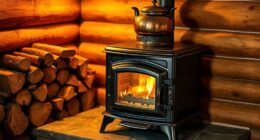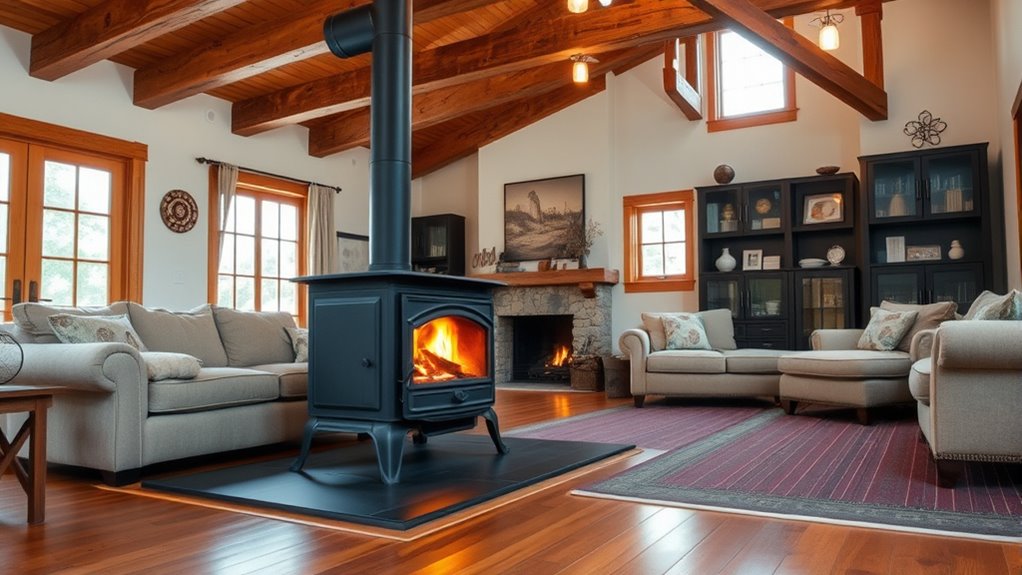

Combining wood stoves with other heating systems can boost your home’s energy efficiency and comfort. By switching between systems like pellet stoves and traditional wood burners, you can save on fuel costs and ensure reliable warmth during peak winter months. Proper chimney insulation and system integration are essential to maximize efficiency and safety. If you want to discover how to optimize your setup and maintain safe operation, there’s more useful information to explore.
Key Takeaways
- Combining wood stoves with other systems enhances overall home comfort and energy efficiency.
- Pellet stoves complement wood stoves by providing consistent, eco-friendly heat with minimal tending.
- Proper chimney insulation improves heat retention and safety when integrating multiple heating systems.
- Proper system placement and controls optimize fuel use and emission reduction across combined systems.
- Regular maintenance and correct installation ensure reliable operation and maximize the benefits of combined heating solutions.
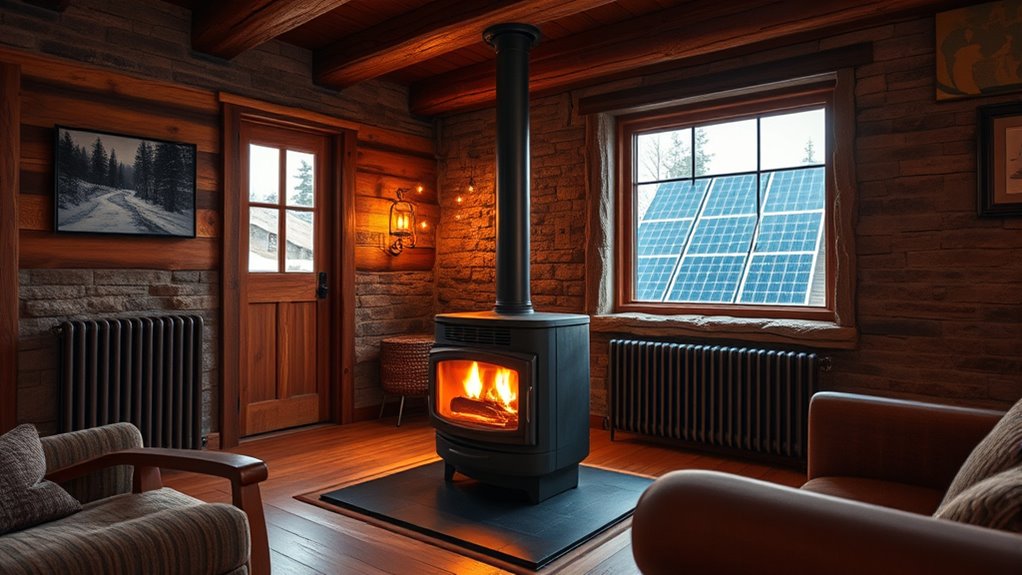
Many homeowners find that combining wood stoves with other heating systems offers a practical way to optimize comfort and energy efficiency. When you’re looking to create a reliable and cost-effective heating setup, integrating a pellet stove or ensuring proper chimney insulation can make a significant difference. Pellet stoves are an excellent complement because they provide consistent heat and can be easily controlled, reducing the need to constantly tend to the fire. They also burn cleaner than traditional wood stoves, making them a popular choice for those seeking eco-friendly options. By pairing a pellet stove with your existing wood stove, you can maintain warmth during peak winter months while saving on fuel costs. This combination allows you to switch between systems based on your energy needs, which enhances overall efficiency.
To maximize the benefits of these systems, you need to pay attention to chimney insulation. Proper insulation helps prevent heat loss as the exhaust gases travel out of your home, ensuring your chimney functions efficiently and reducing the risk of creosote buildup. When your chimney is well-insulated, your wood stove and pellet stove operate more effectively, and you’ll notice improved heat distribution. Additionally, good chimney insulation minimizes cold drafts and keeps the interior temperature more stable, making your heating system more reliable. It also helps protect your home from potential fire hazards related to poorly insulated chimneys, offering peace of mind. Furthermore, selecting the right chimney insulation material can significantly improve the overall efficiency of your heating system.
If you’re considering adding a pellet stove to your setup, think about the placement and how it complements your existing wood stove. Pellet stoves are typically easier to operate, with automatic feeding systems and thermostatic controls, which reduce manual effort. You can use the pellet stove to maintain a steady heat level, especially during nights or when you’re away from home, while the wood stove can serve as a primary source of heat during colder days. Combining these systems allows you to optimize your fuel usage, reduce emissions, and create a more flexible and efficient heating plan. Proper installation and maintenance of both systems, along with ensuring your chimney is well-insulated, will keep your home warm and your energy bills in check.
Ultimately, blending a pellet stove with your traditional wood stove and paying attention to chimney insulation empowers you to create a customized, efficient heating setup. This approach not only enhances comfort but also helps you control costs and reduce your environmental impact, making your home a cozy and responsible haven during winter.

Fireside Chimney Supply Basic FireSafe Chimney Liner Insert Kit with Insulation | Adjustable Fireplace Insert | Stainless Steel Chimney Liner Kit | Made in The USA | Heavy-Duty 6 Inch x 15 Feet
Premium 316 Stainless Steel for Maximum Durability & Safety: Engineered with high-grade 316L stainless steel, this FireSafe Chimney…
As an affiliate, we earn on qualifying purchases.
As an affiliate, we earn on qualifying purchases.
Frequently Asked Questions
Can a Wood Stove Be Integrated With a Solar Heating System?
Yes, you can integrate a wood stove with a solar heating system. Solar integration enhances your system compatibility by providing renewable energy and reducing reliance on traditional fuels. To do this effectively, you’ll need proper controls and a well-designed system that balances heat distribution. This setup allows you to maximize efficiency, save money, and enjoy consistent warmth year-round while making the most of your solar resources.
How Does Combining a Wood Stove Affect Home Energy Efficiency?
Combining a wood stove can boost your home’s energy efficiency by providing consistent heat and reducing reliance on other systems. To maximize benefits, you should improve insulation and consider venting options to prevent heat loss. Proper venting ensures safe operation and efficient heat circulation, while insulation keeps warmth inside. Together, these measures help your home stay cozy longer, lowering energy bills and making your heating setup more effective.
Are There Safety Concerns When Mixing Wood Stoves With Other Heating Methods?
Yes, there are safety concerns when mixing wood stoves with other heating methods. You need to prioritize ventilation safety to prevent carbon monoxide buildup, which can be deadly. Also, be aware of fire hazards from improper clearances or flammable materials near the stoves. Regularly inspect your systems, make certain proper chimney maintenance, and follow manufacturer guidelines to keep your home safe while enjoying multiple heating sources.
What Are the Cost Implications of Hybrid Heating Systems?
Hybrid heating systems can lead to significant cost savings over time, but you’re likely to face higher installation expenses initially. Investing in both a wood stove and a secondary system may increase upfront costs, but you can save on energy bills in the long run by efficiently switching between heat sources. Carefully evaluate these costs to determine if the potential savings outweigh the installation expenses for your home.
How Do I Prioritize Heating Sources During Peak Usage?
During peak usage, you should prioritize your primary heating source by adjusting your thermostat settings and utilizing zoning control. Set the thermostat higher for your main system, like your central heater, while lowering settings for less-used zones. Use zoning control to direct heat where it’s needed most, ensuring efficient energy use. This approach helps maintain comfort and reduces strain on your secondary heating sources, like your wood stove.

Freedom Stove PS21 Pellet Stove – Freestanding Heater with Wi-Fi, 24V Battery Backup, Stacked Tube Heat Exchanger, Smart Controls, DIY Ready, 5-Year Warranty
High-Efficiency Heating Generates up to 34,700 BTUs and heats areas from 800 to 1,800 sq ft using a…
As an affiliate, we earn on qualifying purchases.
As an affiliate, we earn on qualifying purchases.
Conclusion
By combining a wood stove with other heating systems, you create a versatile setup that’s as adaptable as a Swiss Army knife. This approach guarantees your home stays cozy and energy-efficient, even on the coldest days. Think of it as having your cake and eating it too—enjoying the warmth and savings without sacrificing comfort. So, mix and match your systems wisely, and you’ll keep your home warm and your wallet happy all winter long.

Ceramic Fiber Insulation, 1" Thick x 16" x 48", 2400F Fireproof Insulation Blanket, 3026E
Fire Proof Insulation: Ceramic fiber blanket insulation, rated to 2400 F
As an affiliate, we earn on qualifying purchases.
As an affiliate, we earn on qualifying purchases.
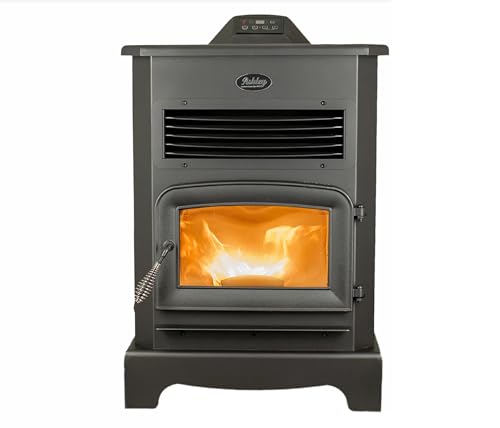
Ashley 3,000 Sq. Ft. Pellet Stove w/Wi-Fi
Heats Up to 3,000 sq ft of living space
As an affiliate, we earn on qualifying purchases.
As an affiliate, we earn on qualifying purchases.