To turn waste wood into fuel, you start with sustainable sourcing of reclaimed wood, sawdust, or shavings. You then dry and grind the raw materials into a consistent powder before compressing them through high-pressure rollers to form pellets. These are cooled, screened, and quality-checked to guarantee durability and efficiency. This process creates clean, renewable fuel from waste, with more details revealing how each step guarantees sustainability and performance.
Key Takeaways
- Sustainable raw materials like reclaimed wood, sawdust, and shavings are sourced responsibly to minimize ecological impact.
- Raw materials are dried and ground into uniform sawdust to ensure optimal pellet quality and energy efficiency.
- High-pressure compression with rollers shapes and bonds the raw material into durable, binder-free pellets.
- Pellets are cooled, screened, and quality-checked to remove fines and ensure consistent, high-quality output.
- The final pellets serve as a renewable, clean-burning fuel that reduces emissions and supports environmental sustainability.
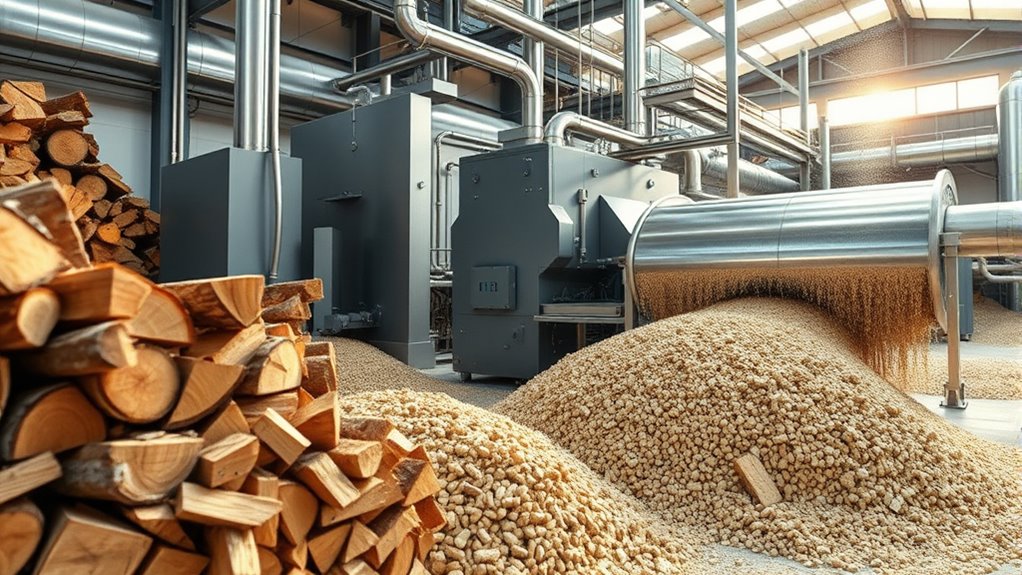
Have you ever wondered how wood pellets are made? The process begins with sourcing raw materials, and the importance of sustainable sourcing can’t be overstated. Reclaimed wood, sawdust, and wood shavings are typically used, but it’s crucial that these materials come from responsible sources that don’t harm forests or ecosystems. This guarantees that the manufacturing process remains environmentally friendly and supports the goal of reducing carbon footprints. When selecting raw materials, manufacturers prioritize those with minimal moisture content and free of contaminants, which directly impacts the pellet quality. High-quality raw materials lead to dense, uniform pellets that burn efficiently and produce less ash, making them more desirable for consumers and cleaner for the environment.
Once the raw materials are gathered, they undergo a drying process to lower moisture levels, usually to around 10-15%. This step is critical because excessive moisture weakens the pellet structure and decreases energy efficiency. After drying, the materials are ground into fine sawdust or powder, creating a consistent feedstock for pellet formation. This uniformity ensures the final product maintains high pellet quality, with smooth surfaces and consistent sizes. The ground material then moves into the pressing stage, where high-pressure rollers compress the material through a die. Heat is generated during compression, which helps bind the particles together without the need for binders or additives, maintaining the natural integrity of the pellets.
The pressing process is pivotal in shaping the pellets and determining their durability. Well-made pellets should be hard enough to withstand handling and transportation without breaking apart but still burn efficiently. After compression, the pellets are cooled to stabilize their structure and prevent excess dust from forming. Once cooled, they are screened to remove any fines or broken pieces, further improving overall pellet quality. This screening process ensures that only pellets meeting strict standards reach the market, offering reliable fuel for heating or power generation. Additionally, the production process benefits from precise gear shifting techniques to optimize machinery operation and efficiency.
Throughout the entire manufacturing process, quality control remains a priority. Manufacturers carefully monitor each step to guarantee that the final product aligns with safety, performance, and environmental standards. By focusing on sustainable sourcing, they minimize ecological impact, and through meticulous quality control, they produce pellets that burn cleaner, last longer, and provide consistent energy output. In essence, making wood pellets involves transforming waste wood into a renewable, efficient fuel source while upholding environmental responsibility and delivering a superior product for consumers.

JARYANNIX 220V Three-Phase 8mm Wood Pellet Maker with 2-Head Rollers, Agricultural Waste Pelletizer,130lbs/h Pellets for Small Farm Use
Wide Application : Transforms agricultural and forestry waste such as sawdust , rice husks , and corn stalks…
As an affiliate, we earn on qualifying purchases.
As an affiliate, we earn on qualifying purchases.
Frequently Asked Questions
What Types of Waste Wood Are Suitable for Pellet Production?
You can use various waste woods for pellet production, including sawdust, wood chips, and bark. Sawdust utilization is common because it’s fine and easy to process, while bark can be processed after bark processing to remove impurities. Make certain the waste wood is free of contaminants like paint or chemicals. Properly prepared waste wood provides a high-quality, sustainable fuel source, making your pellet production efficient and eco-friendly.
How Energy-Efficient Is the Pellet Manufacturing Process?
You’ll find that the pellet manufacturing process is quite energy-efficient, with studies showing it uses about 2-4 GJ per ton of pellets produced. By focusing on process optimization, manufacturers can minimize energy consumption while maximizing output. This means less environmental impact and lower costs. Your efforts in improving efficiency can lead to more sustainable production, making the process not only eco-friendly but also economically advantageous.
What Environmental Impacts Do Pellet Factories Have?
You might be concerned about the environmental impacts of pellet factories, especially their carbon footprint and air quality. These factories can emit particulate matter and greenhouse gases, affecting local air quality. However, if managed properly, they can have a lower carbon footprint compared to fossil fuels, since they use renewable waste wood. Implementing cleaner technologies and strict regulations helps minimize these impacts, making pellet production more environmentally friendly.
How Are the Pellets Stored to Prevent Spoilage?
You store the pellets in specialized storage facilities designed for moisture control, which is vital to prevent spoilage. Keep the environment dry by maintaining proper ventilation, and avoid exposure to rain or humidity. Use sealed containers or covered piles to protect the pellets. Regularly check the storage conditions, ensuring low humidity levels, and promptly remove any damp or moldy pellets to maintain quality and prevent spoilage.
What Are the Future Technological Advancements in Pellet Production?
Imagine a future where pellet production transforms dramatically. You’ll see innovative drying techniques that cut energy use and boost efficiency, making the process more sustainable. Automation integration will streamline operations, reducing human error and increasing output quality. These advancements promise to revolutionize how you produce and handle pellets, ensuring higher consistency and lower costs. Stay tuned—these innovations are poised to redefine the industry, leading to smarter, greener fuel solutions.

Beeswax Pellets for Candle Making – 0.44lb/2lb/5lb – Natural Beeswax for Candles, Lip Balms, and Skincare – Yellow Beeswax for DIY Projects – Ideal for Beginners and Experts(0.44lb)
【Premium Material】Our beeswax pellets are sourced from quality farms, carefully selected to ensure high standards.
As an affiliate, we earn on qualifying purchases.
As an affiliate, we earn on qualifying purchases.
Conclusion
Remember, every piece of waste wood has the potential to become valuable fuel. By turning scrap into pellets, you’re not just reducing waste—you’re creating clean energy and helping the environment. It’s true what they say: “One man’s trash is another man’s treasure.” Embrace the process, and you’ll see how sustainable practices can turn simple waste into a powerful resource, fueling a greener future one pellet at a time.
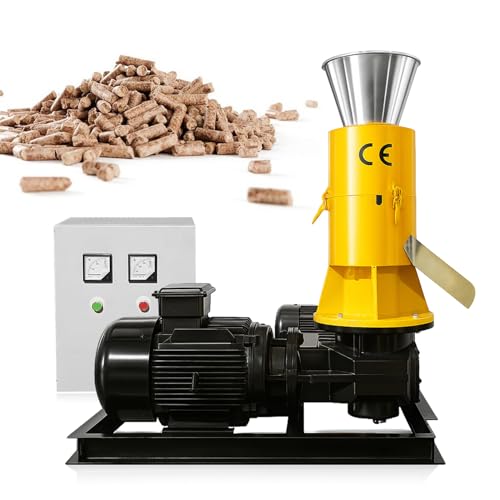
Bonxrdun Wood Chip Pellet Press, 15 kW Heavy-Duty Biomass Fuel Pelletizer, 300 kg/h Output, Three-Phase 220V 60Hz, 4 mm Die, Farm & Small-Plant Pellet Production Line
15 kW INDUSTRIAL MOTOR: This heavy-duty Wood Chip Pellet Press delivers a true 300 kg/h continuous output, turning…
As an affiliate, we earn on qualifying purchases.
As an affiliate, we earn on qualifying purchases.
wood pellet cooler and screener
As an affiliate, we earn on qualifying purchases.
As an affiliate, we earn on qualifying purchases.