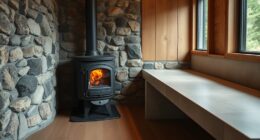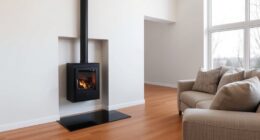
If you’re choosing between windowed and solid-door stoves, consider your preference for fire visibility versus simplicity. Windowed stoves let you enjoy the cozy glow and monitor the fire easily but require more maintenance and proper sealing to prevent smoke leaks. Solid-door models are easier to install, need less upkeep, and fit better in small spaces. To make the best choice, explore how installation, safety, and ambiance factors play a role for your lifestyle.
Key Takeaways
- Windowed stoves offer fire visibility and enhance ambiance but require regular glass cleaning and sealing for safety.
- Solid-door stoves are simpler to install and maintain, with fewer components needing attention.
- Glass doors may need more clearance and specialized venting, increasing installation complexity and cost.
- Windowed models often include heat-resistant glass, requiring periodic inspection and potential replacement if damaged.
- Choice depends on preference for aesthetics and ambiance versus ease of use and lower maintenance.
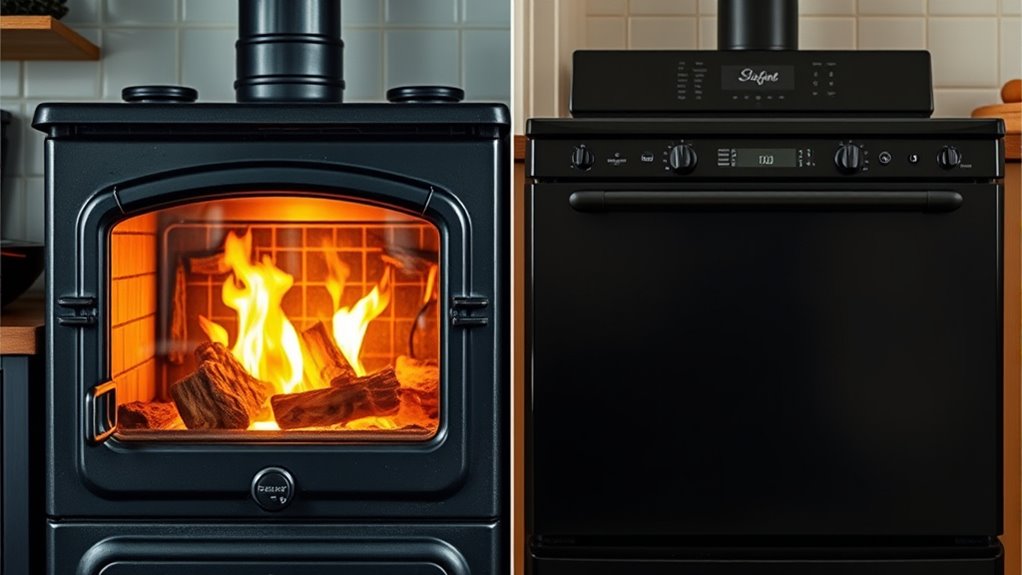
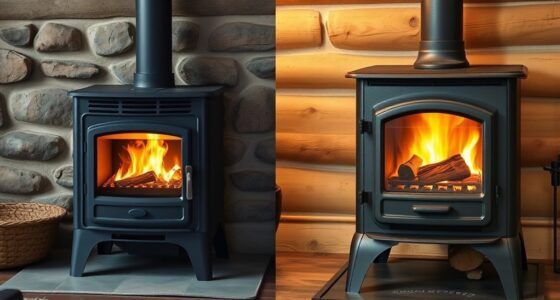
When choosing a wood stove, understanding the differences between windowed and solid-door models can help you make an informed decision. One of the key factors to consider is how each type affects installation options and maintenance requirements. Windowed stoves feature a glass door that allows you to see the fire inside, adding a cozy ambiance and making it easier to monitor burn status. However, this design also impacts installation because the glass must be properly sealed and often requires a specific clearance from combustible materials to prevent heat damage or accidental breakage. Proper sealing is essential to ensure safety and efficiency with windowed models. Solid-door stoves, on the other hand, do not have glass panels, which can simplify installation since they generally need less clearance and fewer specialized components. Additionally, the presence of a viewing window can influence the heat retention within your home, as glass can absorb and radiate heat differently than a solid door. Proper ventilation considerations are also important when installing either type of stove to ensure safe operation and effective heat distribution.
In addition, windowed stoves may need more frequent inspections of the glass to prevent safety hazards related to cracks or breakage. When it comes to installation options, windowed stoves may demand more attention to ventilation and clearance specifications due to the presence of the glass and its materials. The glass door can heat up considerably, so you’ll need to ensure proper spacing from walls and furniture. Some models come with additional safety features, such as heat-resistant glass or reinforced frames, but these can also increase the complexity and cost of installation. Solid-door models tend to be more straightforward in this regard, often fitting into a wider range of spaces without requiring extensive modifications or special venting setups. If your space is limited or you prefer an easier, less complicated installation process, a solid-door stove might be the better choice.
Maintenance requirements vary notably between these two types. Windowed stoves require regular cleaning of the glass to maintain visibility and prevent soot buildup, which can impact both appearance and efficiency. You’ll need to inspect the glass for cracks or damage periodically and replace it if necessary. Additionally, because the glass door must be sealed correctly to prevent smoke leaks, checking the door gasket and seals is an ongoing task. Regular glass cleaning can help prolong the lifespan of your stove and ensure optimal operation. Solid-door models generally have fewer components that need attention, but they still require routine ash removal, chimney cleaning, and inspection of the door seals for wear. Since they lack a viewing window, you won’t need to worry about glass maintenance, but you should still keep the stove and venting system clean to ensure safe and efficient operation.
Ultimately, your choice between windowed and solid-door stoves hinges on your priorities. If you enjoy watching the fire and want that aesthetic, the extra maintenance and careful installation of a windowed model are worth it. If you prefer simplicity, lower installation costs, and fewer maintenance concerns, then a solid-door stove might better fit your needs. Both options can provide reliable warmth, but understanding the nuances of installation options and maintenance requirements helps you pick the stove that aligns with your lifestyle and home setup.
Frequently Asked Questions
How Do Windowed Stoves Impact Heat Retention Compared to Solid-Door Models?
Windowed stoves typically have lower heat retention compared to solid-door models because the glass visibility allows heat to escape more easily. You might notice that they heat up faster and let you enjoy the view of the fire, but this can come at the expense of heat efficiency. If you prioritize warm, consistent heat, a solid-door stove often performs better, keeping more heat inside your space.
Are Windowed Stoves Safer for Children Than Solid-Door Stoves?
Yes, windowed stoves can be safer for children because they allow you to see the fire and monitor it easily, reducing the risk of burns or accidents. They act as a safety barrier, preventing kids from reaching into the flames or touching hot surfaces. However, always supervise children around any stove and consider additional safety features, like protective screens, to guarantee child safety and peace of mind.
Do Windowed Stoves Require More Maintenance Than Solid-Door Stoves?
Windowed stoves usually require more maintenance than solid-door stoves because their glass needs regular cleaning to maintain clear visibility. This added cleaning requirement can be time-consuming, especially if soot builds up. However, windowed stoves often have better fuel efficiency since you can monitor the fire without opening the door, reducing heat loss. So, while they demand a bit more cleaning, they can be more efficient and safer for monitoring the fire.
How Do Windowed Stoves Affect Viewing Angles and Interior Aesthetics?
You’ll find that windowed stoves enhance your interior design by offering clear viewing angles of the flames, creating a cozy atmosphere. Unlike solid-door models, they showcase fireplace decor and let you enjoy the fire’s glow from multiple angles. This openness adds a sense of spaciousness and warmth, making your space feel inviting. However, it can also mean more attention to maintaining the glass for a pristine look, balancing aesthetics with practicality.
Are There Specific Fuel Types Better Suited for Solid-Door Stoves?
You’ll find that solid-door stoves work well with various fuel types, but they excel with seasoned wood and high-quality pellets. These fuels maximize fuel efficiency and promote cleaner combustion technology, ensuring safer, more efficient heating. Avoid wet or low-quality fuel, as it hampers combustion and reduces efficiency. By choosing the right fuel, you’ll enjoy better heat output and longer-lasting performance from your solid-door stove.
Conclusion
Choosing between windowed and solid-door stoves depends on your priorities. If you love watching the fire, a windowed stove offers beauty and ambiance, like Sarah who enjoys cozy evenings watching her flames dance. On the other hand, if you prefer simplicity and efficiency, a solid-door model might suit you better. Ultimately, consider your aesthetic preferences and practical needs to make the best choice for your home.