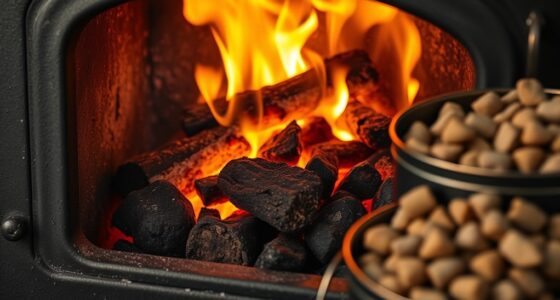
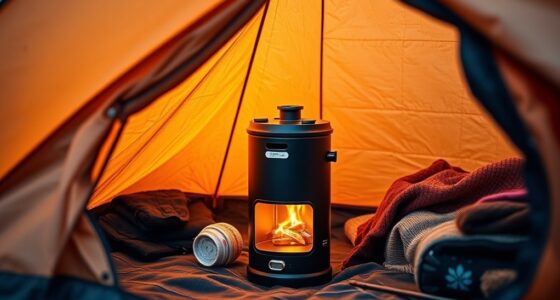
If you value eco-friendly heating and are willing to commit to regular maintenance, a catalytic stove makes a lot of sense. They burn fuel more completely, produce fewer emissions, and support sustainability. However, if you prefer low-maintenance options or lack the time for routine care, a catalytic stove might not be ideal. Want to understand what it takes to keep one efficient and eco-conscious? Keep exploring to find out more.

Get backup power and energy gear delivered free with Prime
- Fast, free delivery on millions of items
- Prime Video, Amazon Music and more included
- Member-only deals all year
Key Takeaways
- Catalytic stoves are eco-friendly and reduce emissions, appealing to environmentally conscious owners willing to perform regular maintenance.
- They require periodic cleaning and inspections, which may be inconvenient for those preferring low-maintenance heating options.
- Proper user education and awareness of operation extend catalyst lifespan and improve efficiency, benefiting dedicated users.
- The higher initial and maintenance costs may deter owners seeking a low-cost, hassle-free heating solution.
- Technological advances are improving durability, making catalytic stoves more suitable for owners committed to sustainable living practices.

Catalytic stoves offer an efficient way to heat your home while reducing emissions, making them a popular choice for eco-conscious homeowners. These stoves use a catalytic converter to burn off gases and smoke from the fire, resulting in cleaner combustion and less air pollution. If you’re looking to minimize your environmental impact, a catalytic stove can be a smart option, as it burns fuel more completely and produces fewer emissions compared to non-catalytic models. However, this efficiency comes with specific maintenance requirements that you need to take into account. The catalyst, typically made of ceramic or metal, can become clogged or damaged over time, which reduces the stove’s effectiveness and increases emissions. Regular inspections and periodic cleaning are necessary to keep the catalytic element functioning properly, ensuring you get the most out of your investment. If you’re willing to dedicate time and effort to maintenance, a catalytic stove can be a sustainable and cost-effective heating source. Additionally, understanding sustainable living practices can help you make more informed choices about the longevity and environmental impact of your stove.
But, the environmental benefits aren’t just about emissions; they also depend on how well you maintain the stove. If neglected, the catalytic converter can deteriorate or fail prematurely, leading to increased emissions and decreased efficiency. You might find that the stove requires more frequent repairs or part replacements, which can add to your overall maintenance costs. This maintenance requirement is a key factor in deciding if a catalytic stove fits your lifestyle. If you prefer a low-maintenance heating option, you might find these stoves less appealing, especially if you’re not comfortable performing regular upkeep or hiring professional services. On the other hand, if you’re committed to sustainable living and are prepared to learn about proper stove care, a catalytic stove offers a way to heat your home responsibly. Proper user education about stove operation can help extend the lifespan of the catalytic components and improve overall performance. Furthermore, advancements in catalyst materials are continuously being made to enhance durability and reduce environmental impact during manufacturing and disposal. Staying informed about technological innovations in this area can help you make better decisions regarding your stove’s long-term sustainability.
As an affiliate, we earn on qualifying purchases.
Frequently Asked Questions
How Long Do Catalytic Stoves Typically Last?
Catalytic stoves typically last around 5 to 10 years, depending on catalyst lifespan and maintenance. You might face durability concerns if you don’t regularly clean the catalyst or if you operate the stove improperly. Proper care, such as cleaning or replacing the catalyst when needed, can extend the stove’s life. Keep an eye on performance signs, and don’t delay repairs to maximize durability and enjoy efficient heating.
Are Catalytic Stoves Suitable for All Climate Zones?
Catalytic stoves aren’t suitable for all climate zones—think of them as delicate dancers in a storm. Their climate compatibility and regional suitability depend on your environment. In colder, damp regions, they excel, efficiently heating your space. But in hot, dry climates, they might struggle or produce excess humidity. So, you must consider your area’s climate to decide if a catalytic stove fits your needs, or if it’s better to choose a different heating method.
What Maintenance Is Required for Catalytic Stoves?
You need to regularly clean the catalytic combustor and replace it when it wears out to maintain fuel efficiency and emissions control. Checking and cleaning the stove’s air passages guarantees peak performance, and inspecting the catalyst for damage helps prevent emissions issues. Additionally, keep the stove’s exterior clean and follow the manufacturer’s maintenance schedule, so your catalytic stove continues to operate efficiently and eco-friendly.
Can Catalytic Stoves Be Used With Different Types of Fuel?
Catalytic stoves can be used with different types of fuel, but their fuel compatibility varies depending on the model. Some are designed for wood or coal, offering stove versatility, while others may only work efficiently with specific fuels. You should check the manufacturer’s guidelines to guarantee you’re using the right fuel type, as using incompatible fuel can damage the catalytic converter and reduce stove efficiency.
How Do Catalytic Stoves Compare in Cost to Non-Catalytic Stoves?
Catalytic stoves generally cost more upfront than non-catalytic ones due to higher installation costs and complex components. However, they tend to be more fuel-efficient, saving you money over time by burning fuel more completely. While the initial investment is higher, the improved fuel efficiency can offset costs in the long run, making catalytic stoves a smart choice if you prioritize energy savings and are willing to cover the higher initial expenses.
Conclusion
Choosing a catalytic stove depends on your priorities, your space, and your lifestyle. Will you prioritize efficiency, eco-friendliness, or ease of use? Will you embrace the maintenance or shy away from it? Ultimately, it’s about weighing the benefits against the drawbacks, understanding your needs versus your circumstances, and making an informed decision. Because whether you thrive on innovation or prefer simplicity, the right stove for you is the one that matches your goals, your habits, and your values.
Fall Picks
fall essentials
As an affiliate, we earn on qualifying purchases.